
Cowhorn vs Cayenne Pepper: Fresh Volume or Powder Heat?
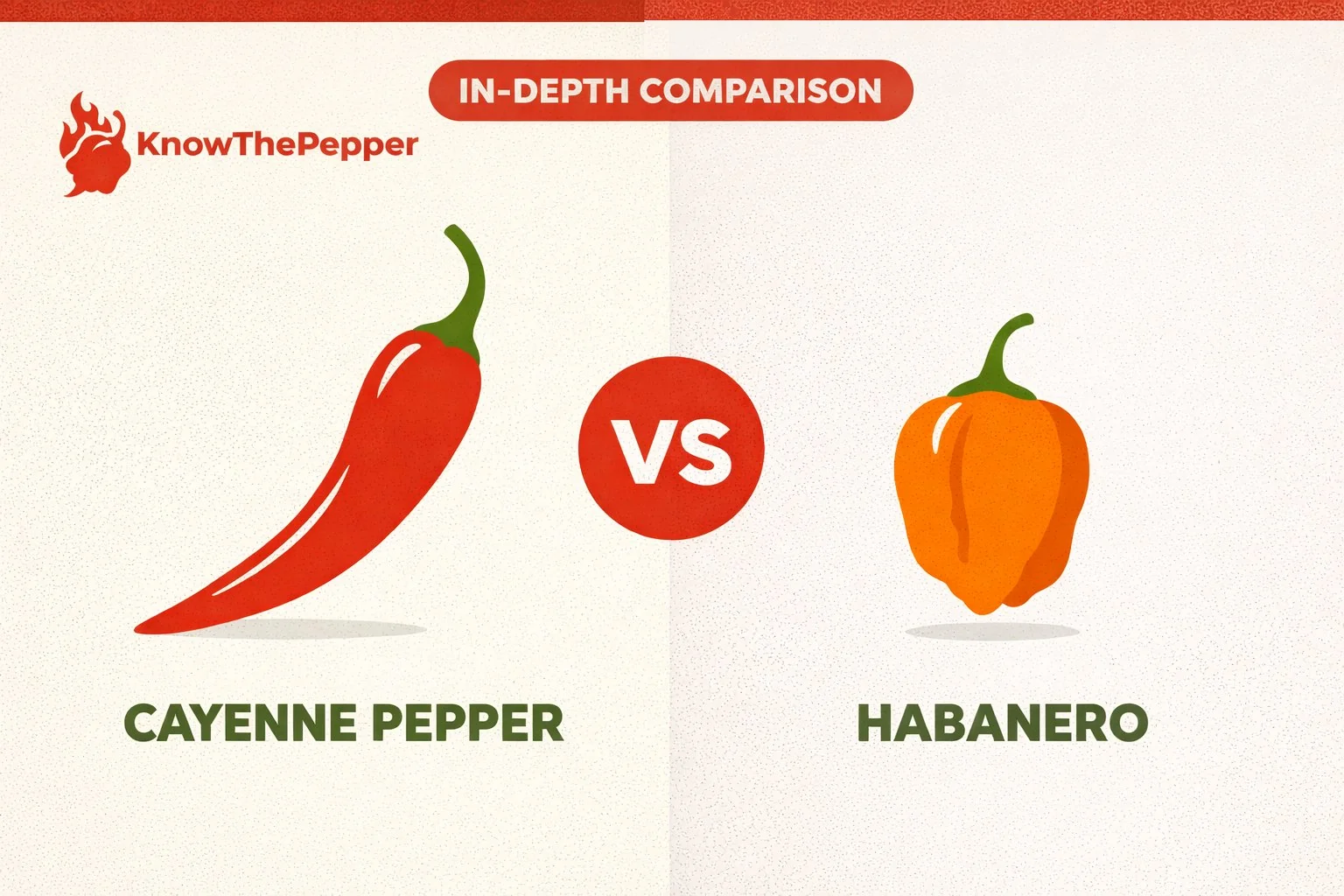
Cowhorn pepper is the big fresh pod choice for stuffing, roasting, and pickling. Cayenne pepper is the hotter thin-walled chile that works best dried, powdered, or blended into sauces.

Cowhorn Pepper
MediumCayenne Pepper
HotQuick Comparison
| Attribute | Cowhorn Pepper | Cayenne Pepper |
|---|---|---|
| Scoville evidence | 2.5K-5K SHU | 30K-50K SHU |
| Heat Tier | Medium | Hot |
| vs Jalapeño | 1x hotter | 6x hotter |
| Flavor | sweet and mild | direct pepper heat with a mild earthy note; the dried powder is less aromatic than a fresh pod |
| Species | Capsicum annuum | C. annuum |
| Origin | USA | Cayenne, French Guiana (namesake) |
How Does Pod Size Separate Cowhorn and Cayenne?
Size decides this comparison before flavor does. Cowhorn gives the cook fresh pepper volume.
Cayenne gives concentrated heat with very little flesh.
A whole cowhorn pod can run six to eight inches long, several times the length of a typical cayenne pod, which is exactly why one is built to be eaten as a vegetable and the other is built to be measured by the pinch.
Is Cayenne Hotter Than Cowhorn?
Cowhorn sits around 2,500 to 5,000 SHU. Cayenne usually lands around 30,000 to 50,000 SHU, so the hot pepper is roughly ten times stronger by upper range.
That gap changes portions. A handful of cowhorn rings can be pleasant in a pickle jar, while the same volume of cayenne would dominate the brine.
It also changes when you taste. Cowhorn gives a jalapeno-like warmth spread through thick flesh.
Cayenne feels sharper because thin walls and drying concentrate the burn.
Use the Scoville scale as a dosing reminder, not as the whole answer. The form of the pepper decides how fast that heat reaches the dish.
That roughly tenfold gap means a recipe cannot simply swap pod-for-pod between the two. A dish built around a whole cowhorn needs only a fraction of a whole cayenne pod to land in a similar heat range, even though both look like reasonably sized peppers on the cutting board.
When Should You Use Cowhorn or Cayenne?
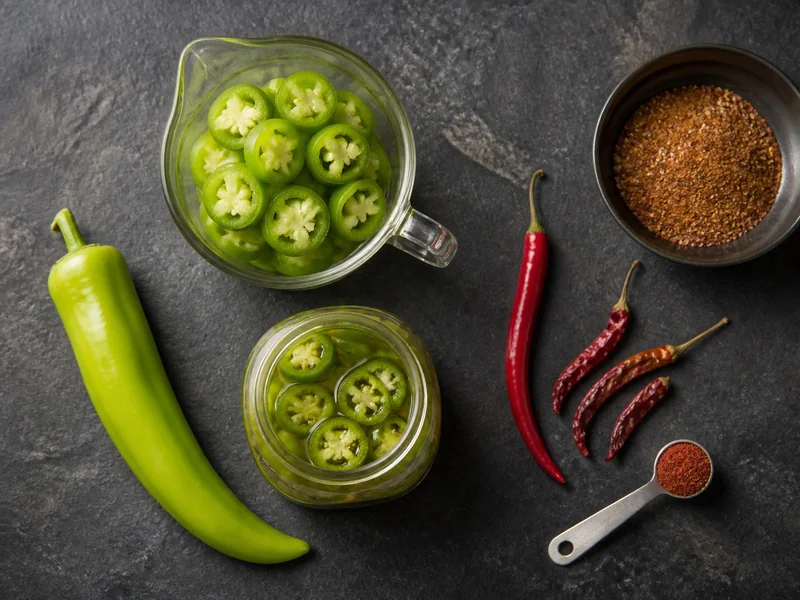
Cowhorn is useful when the pepper itself is part of the bite: stuffed halves, grilled strips, pickled rings, or roasted red flesh folded into sandwiches.
Cayenne is useful when the dish needs heat without extra vegetable mass. Ground powder disappears into rubs, soups, chili, beans, and hot sauce bases.
Cowhorn is a Southern pickling classic for exactly this reason: the thick flesh and firm wall hold their crunch and shape in vinegar brine through months of storage, unlike thinner-walled peppers that turn limp. Cayenne is the backbone of Cajun and Creole spice blends, blackening seasoning, and the dash added to gumbo or red beans and rice, where its neutral dry heat blends in without adding competing flavor.
Growing and Buying Cowhorn and Cayenne
Gardeners see the difference at harvest. Cowhorn plants carry large curved pods that can bend branches, so staking and timely picking matter.
Cayenne plants give slimmer pods that dry more easily. That makes cayenne the better home choice for powder if the goal is shelf-stable heat.
Markets split the two even more. Fresh cowhorn is usually a farmers market or garden pepper, especially in the American South.
Cayenne is easy to find as powder even when fresh pods are absent.
Heirloom seed companies like Baker Creek helped reintroduce cowhorn to wider gardening audiences as interest in traditional Southern varieties grew, after regional families quietly kept the seed line alive for generations before the heirloom movement formalized in the 1970s and 80s. That regional persistence is also why cowhorn seed is easier to find through specialty and heirloom catalogs than at a typical big-box garden center.
Can Cowhorn and Cayenne Replace Each Other?
Do not replace cowhorn with cayenne by count. Use cayenne only when the recipe can absorb a much hotter, thinner pepper, and reduce the amount sharply.
Replacing cayenne with cowhorn works only for fresh sauces or pickles where volume is welcome. For rubs and dry seasoning, use another dried chile or a measured cayenne substitute instead of forcing fresh cowhorn into the job.
For a pickling recipe specifically, no dried cayenne substitute recreates cowhorn's crunch and shape once it has spent weeks in brine, since powder or flakes simply dissolve into the liquid instead of holding a pod's structure.
| Recipe needs | Cowhorn supplies | Cayenne correction |
|---|---|---|
| Pickle volume | Thick fresh rings | Use another mild fresh pepper for bulk |
| Dry rub heat | Wrong wet form | Use measured powder |
| Fresh sauce | Flesh plus mild heat | Use a smaller amount and restore vegetable body |
| Shelf-stable seasoning | Poor fit unless dried fully | Whole dried pod, flakes, or powder |
Buying And Storage
Buy cowhorn pods firm and glossy, with no soft spots near the stem, since the thick flesh bruises easily once it starts to soften. Fresh pods keep about a week refrigerated, and they freeze well if sliced first, though the texture turns softer after thawing.
Buy cayenne as whole dried pods or as ground powder, and check that powder reads bright red rather than dull brown, since color fade signals lost potency. Store dried cayenne in a sealed container away from light and heat, where it holds useful strength for about a year.
If a recipe calls for fresh cowhorn and only dried cayenne is on hand, that swap will not work without a full recipe rebuild, since the volume and heat are too far apart to adjust with a simple ratio.
Cowhorn sold fresh should feel firm with taut, glossy skin, since wrinkled pods have already started losing the crunch that makes them worth pickling in the first place. Ground cayenne fades faster than the whole dried pod, so buying whole pods and grinding only what a recipe needs preserves more of the aroma over time.
What Sources Confirm About Cowhorn and Cayenne
USDA GRIN supports the shared Capsicum annuum species frame, while the Chile Pepper Institute supplies the heat-reference context. The useful distinction remains cultivar form: Cowhorn is a large fresh pod and cayenne is a slimmer pepper commonly dried for seasoning.
The stored sources do not establish the old story about 19th-century Southern gardens, specific state-by-state seed saving, 1970s heirloom formalization, French Guiana trade, or an 1878 isolation event. Those details have been removed because none changes the volume-versus-powder decision.
A buyer should verify the named cultivar, pod photograph, mature dimensions, ripe color, and listed heat. Long curved shape alone is not enough because several annuum peppers share it.
Portion And Form Matter More Than Nutrition
No cultivar-specific nutrient comparison was located for Cowhorn and cayenne. Generic fresh-pepper and ground-spice values cannot establish the exact vitamins in the pod or powder being used, especially when their serving sizes differ sharply.
Portion and form decide the recipe. Cowhorn can fill a measuring cup with fresh rings, while cayenne should be added as a small fresh piece, dried pod, flakes, or measured powder.
Wear gloves when cutting a large batch or grinding dried cayenne, and let grinder dust settle before opening the lid. Refrigerate fresh Cowhorn dry and intact, while keeping dried cayenne airtight away from light, heat, and steam.
Cowhorn Pepper vs Cayenne Pepper FAQ
- Heat - Chile Pepper Institute, NMSU
- Capsicum annuum L. - USDA GRIN Taxonomy
- Journal of Agricultural and Food Chemistry, capsaicinoid measurement background