
Cayenne vs Chile de Árbol: Powder and Pod Do Different Jobs
Cayenne is usually hotter and easier to dose, especially when a fine powder must disappear into a rub, soup, or finished sauce. Chile de árbol earns a whole-pod cooking step, and its heat band touches cayenne at 30,000 SHU, so choose by form and method before chasing a fixed conversion.

- Typical heat: 30,000 to 50,000 SHU vs 15,000 to 30,000 SHU
- Common pantry form: Fine ground powder vs Whole dried pod
- How it enters a dish: Measured and stirred in vs Toasted, steeped, crumbled, or blended
- Texture effect: Usually disappears vs Can add skin, seed, and chile body
- Best first choice: Rubs, soups, eggs, heat correction vs Salsa roja, chile oil, toasted sauces
Cayenne Pepper
HotDe Arbol
HotQuick Comparison
| Attribute | Cayenne Pepper | De Arbol |
|---|---|---|
| Typical heat | 30,000 to 50,000 SHU | 15,000 to 30,000 SHU |
| Common pantry form | Fine ground powder | Whole dried pod |
| How it enters a dish | Measured and stirred in | Toasted, steeped, crumbled, or blended |
| Texture effect | Usually disappears | Can add skin, seed, and chile body |
| Best first choice | Rubs, soups, eggs, heat correction | Salsa roja, chile oil, toasted sauces |
Is Cayenne Hotter Than Chile de Árbol?
Cayenne usually reaches the hotter part of this pairing. Cornell Cooperative Extension places cayenne at 30,000 to 50,000 SHU, while a Texas Cooperative Extension reference places chile de árbol at 15,000 to 30,000 SHU.
Those bands meet at 30,000 SHU, so the strongest listed árbol and the mildest listed cayenne can land at the same point. The useful conclusion is that cayenne has the higher ceiling, not that every spoonful of cayenne will feel exactly twice as hot as every árbol pod.
Scoville values describe capsaicinoid concentration in the pepper material. They do not account for how much chile enters the dish, whether the product contains seeds and inner tissue, or how evenly a powder disperses.
Form changes the experience even when the measured heat overlaps. Cayenne powder spreads through a pot or rub, while pieces of árbol can leave stronger pockets unless the pods are blended very smooth or infused and strained.
The upper limits give a 5 to 3 ratio, about 1.7 to 1, between 50,000 SHU cayenne and 30,000 SHU árbol. That ratio can guide a cautious first adjustment, but it cannot turn pods into a reliable teaspoon conversion.
Both named pepper types belong to Capsicum annuum. UC Master Gardeners list Cayenne or Ring of Fire and De Arbol within that species, which explains their botanical relationship while leaving room for different pod forms and kitchen uses.
Where the heat bands meet
| Comparison point | Cayenne | Chile de árbol |
|---|---|---|
| Listed low end | 30,000 SHU | 15,000 SHU |
| Listed high end | 50,000 SHU | 30,000 SHU |
| Shared boundary | 30,000 SHU | 30,000 SHU |
| Practical reading | Higher ceiling | Lower band with overlap |
How Do Cayenne and Chile de Árbol Differ in Form and Flavor?
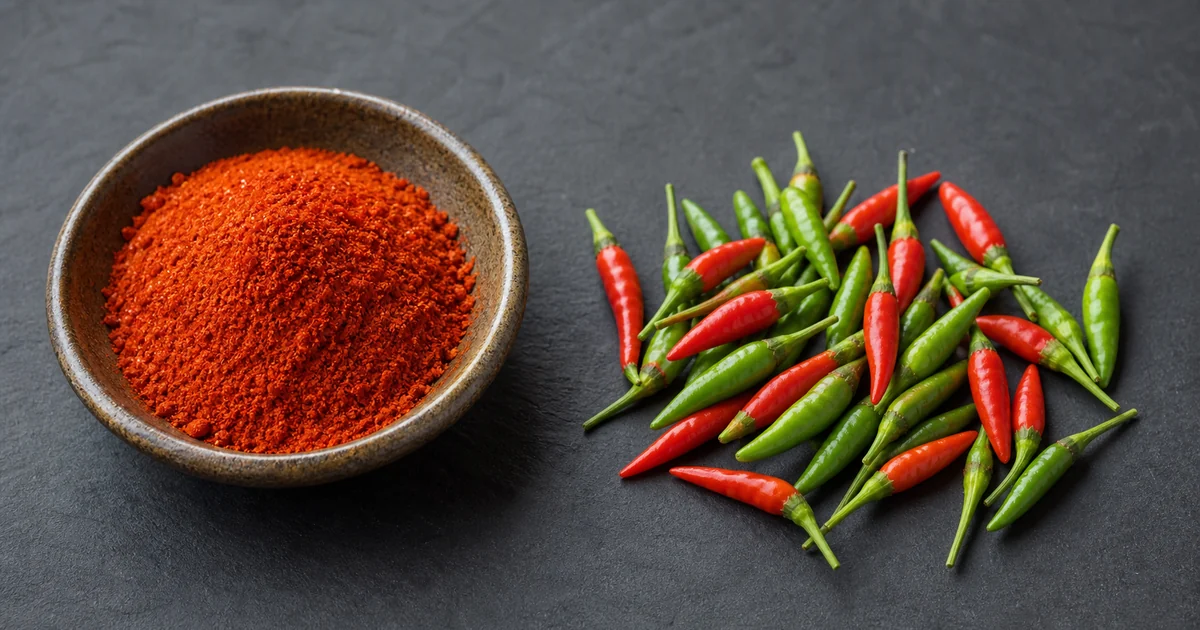
The biggest difference at the stove is often product form rather than a dramatic gap in heat. USDA Agricultural Research Service describes cayenne as a pepper commonly used dried and ground, so most cooks meet it as a fine red powder that adds heat without adding visible chile pieces.
Chile de árbol is commonly sold as a whole dried pod. UC Master Gardeners describe it as a slender pepper about 3 inches long and 1/2 inch wide, a size that makes it easy to toast, crumble, steep, or blend.
Grinding changes distribution. Utah State University Extension notes that a dried chile can be kept intact, crumbled, or powdered, and each choice changes how much surface area meets the food.
Fine cayenne disappears quickly into dry rubs, soups, eggs, and sauces. A whole or coarsely broken árbol keeps more of its skin and seed texture, which matters in salsa, infused oil, and dishes where the dried chile remains recognizable.
Chef Rick Bayless describes árbol as earthy and uses toasted pods with roasted garlic, water, vinegar, and salt in a bold red salsa. His method shows why árbol contributes more than heat when the recipe deliberately darkens and blends the whole chile.
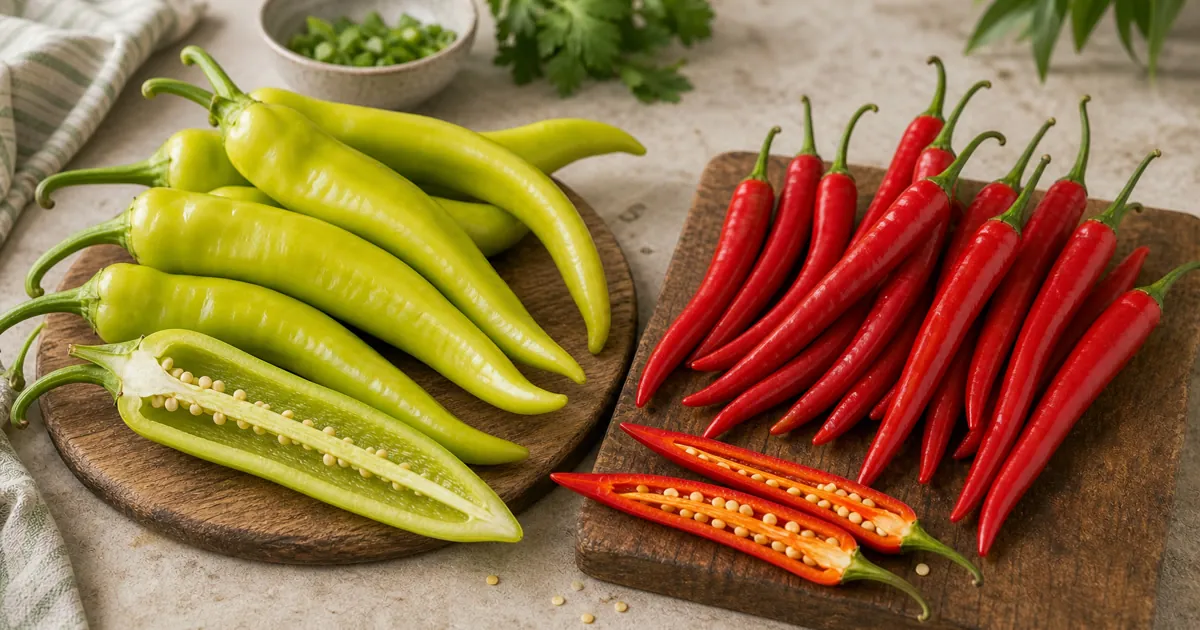
Cayenne can also come from a whole fresh or dried pod. Oregon State University Extension describes cayenne peppers as thin, long fruit used fresh or dried and powdered, so the label names a pepper type as well as the familiar ground spice.
That distinction prevents a common buying mistake. A jar marked cayenne should be treated as a concentrated seasoning, while a bag of árbol pods gives you an ingredient whose toast level, soaking liquid, and final texture remain under your control.
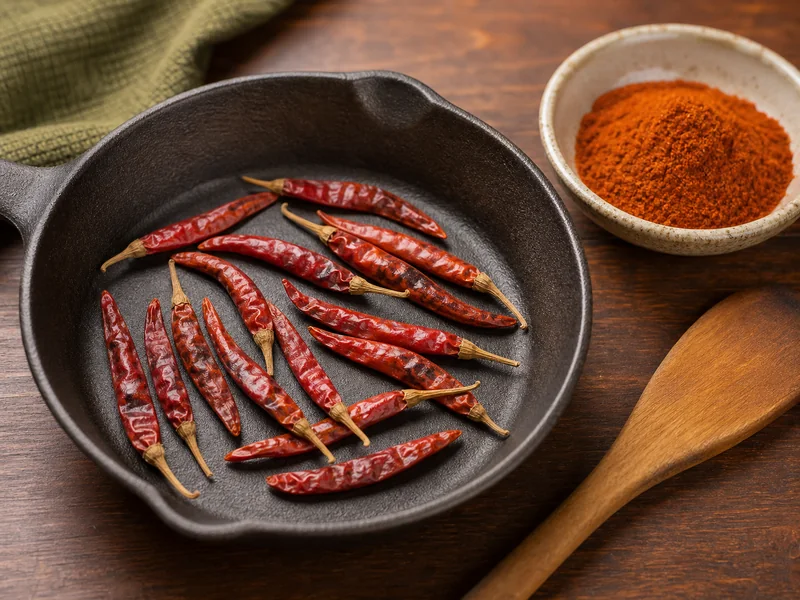
Cayenne is a pepper name and a product name
A fresh cayenne pod, a dried whole cayenne, and pure cayenne powder can come from the same pepper type, but they are not the same kitchen form. Oregon State University Extension explicitly lists cayenne as usable fresh, dried, and powdered.
Chile de árbol is also available ground, yet the whole dried pod is what makes this comparison useful. Read the package form before comparing the names, because powder versus pod changes dose, texture, and preparation.
Culinary Uses
Use cayenne when the recipe needs a measured dose that should disappear into the rest of the food. A pinch can sharpen a dry rub, bean pot, soup, hot honey, egg dish, or finished sauce without adding skins or changing the liquid balance.
Add cayenne early when it must bloom with other ground spices, or add it late when you are correcting the heat of a finished dish. In either case, stir thoroughly and wait for the powder to disperse before deciding whether the pot needs more.
Use chile de árbol when the recipe includes a dried-chile technique. Rick Bayless toasts árbol pods in an ungreased skillet for roughly 1 to 2 minutes, moving them constantly until they darken slightly and become aromatic, then blends them into salsa.
That short window matters because the pod is thin. Stop at fragrant and slightly darker rather than black, since a burned dried chile can make the entire sauce harsh.
For salsa roja, the whole pod can be toasted, softened in hot water, and blended with tomato, tomatillo, or garlic. For chile oil, broken pods or flakes can infuse fat and then remain for texture or be strained for a cleaner result.
For a rub or spice mix, cayenne is usually the easier choice because a measured powder distributes with salt and other ground spices. For a sauce built around roasted dried-chile flavor, árbol is the stronger choice because the cooking method can develop the pod before it is blended.
The dish can need both jobs. A sauce may use árbol for its toasted base and a small amount of cayenne for a final heat correction, provided you taste after blending instead of assuming the two additions are interchangeable.
Choose the product by the verb in the recipe. Shake, whisk, dust, or season points toward cayenne, while toast, soak, steep, fry, or blend points toward whole chile de árbol.
Match the chile to the cooking action
- Season a dry rub: use cayenne for an even measured dose.
- Correct a finished soup: stir in cayenne gradually.
- Build a toasted salsa: use whole árbol and stop before it blackens.
- Infuse oil: use broken árbol, then keep or strain the solids.
- Need both body and extra heat: build with a whole dried chile and finish carefully with cayenne.
Which Should You Choose, Cayenne or Chile de Árbol?
Choose cayenne for controlled, even heat with minimal texture. It is the practical option when you are seasoning a large volume, building a dry blend, or adjusting a dish after its other flavors are already in place.
Choose chile de árbol when a whole dried chile is part of the cooking method. It is the better fit for toasted salsa, chile oil, and preparations where the pod's skin, seeds, and browning contribute to the finished result.
If the label says cayenne powder, check whether the ingredient list contains only cayenne. Products sold as chili powder can include cumin, garlic, oregano, salt, or other chiles, so they do not behave like pure ground cayenne.
If you are buying árbol, look for pods that remain red rather than dull brown and that smell like dried chile rather than dust. Utah State University Extension says properly dried pods should be brittle before they go into room-temperature storage.
Neither pepper wins every dish. The decision is whether the chile should act as a dispersed seasoning or as a whole-pod ingredient that earns a preparation step.
Buy the form the recipe names
For cayenne, choose a small container that you can use while its aroma remains clear. A faded powder with little chile smell can still color food, but it gives you less flavor feedback when you dose it.
For árbol, choose intact red pods without moisture, mold, or insect damage. Brittle is correct for a fully dried pod, while soft damp spots signal a storage problem rather than freshness.
Check blends carefully. Pure cayenne and chili powder are different purchases when the latter contains cumin, garlic, oregano, salt, or other ground chiles.
Substitution
Cayenne can replace árbol when the missing job is heat, but it cannot reproduce a whole-pod cooking step. Start with roughly one-half of the cayenne you expect to need, stir it through the complete dish, then add more in small increments.
That cautious start follows the published heat bands rather than a fake pod count. Cayenne's 50,000 SHU ceiling is about 1.7 times árbol's 30,000 SHU ceiling, while individual products can sit elsewhere in either range.
If the original recipe toasts and blends árbol, replace its lost body separately. Guajillo or another suitable whole dried chile can supply skin, color, and blended solids, while a smaller amount of cayenne supplies additional heat.
Árbol can replace cayenne when you can grind it finely or infuse it into a liquid or fat. Remove the stem first, then decide whether the seeds and pale inner tissue belong in the finished texture.
Do not promise that one pod equals a fixed fraction of a teaspoon. UC Master Gardeners give a typical árbol pod size, but real pods vary in length, dryness, seed load, and heat, while commercial cayenne powders also vary by cultivar and age.
For a dry rub, grind árbol to a uniform powder and measure by weight if repeatability matters. Coarse flakes can create hot spots and may scorch sooner than the other ground spices on a high-heat grill.
For salsa, preserve the method before chasing the number. Toast and soften a whole dried chile for the sauce base, blend, then use cayenne only if the finished salsa still needs more heat.
For soup or beans, either product can work because the chile disperses through a large wet volume. Cayenne gives the cleanest correction, while árbol contributes more texture and a toasted dried-chile character when it is fried or blended first.
Keep aroma in and capsaicin off your hands
Utah State University Extension recommends drying chile pods until brittle and storing them at room temperature in plastic bags or glass jars. Keep the container dry and closed, since moisture can turn a shelf-stable ingredient into a spoilage risk.
University of Maine Extension recommends gloves when preparing hot peppers. Avoid touching your eyes, wash the knife and board after handling the pods, and let airborne powder settle before opening a grinder.
Store cayenne away from heat and steam. Shaking it directly over a boiling pot can draw moisture into the jar and makes it harder to control the amount.
Cayenne Pepper vs De Arbol FAQ
- Cornell Cooperative Extension - Pepper Secrets
- Texas Cooperative Extension - Pepper Scoville Reference
- UC Master Gardeners - Spring Garden Fair Peppers and Chiles
- Oregon State University Extension - Grow Your Own Peppers
- Utah State University Extension - How to Preserve Chiles
- USDA Agricultural Research Service - Cayenne Pepper
- Rick Bayless - Toasted Arbol Chile Salsa
- University of Maine Extension - Hot Pepper Handling