
Cayenne Pepper vs Chili Powder: Heat, Flavor, and When to Use Each
Cayenne pepper is a hot single-chile powder. Chili powder is usually a milder seasoning blend made with ground chiles plus spices such as cumin, garlic, oregano, and salt. Use cayenne for heat, and use chili powder for a rounded cooking base.

Cayenne Pepper
One hot chileChili Powder
Seasoning blend- Typical heat: 30,000 to 50,000 SHU vs Much milder, diluted by spices
- Flavor: Sharp, dry, direct heat vs Rounded by cumin, garlic, oregano
- Best job: A precise heat knob vs A ready seasoning base
Cayenne Pepper vs Chili Powder at a glance
| Attribute | Cayenne Pepper | Chili Powder |
|---|---|---|
| What it is | One ground chile, unsalted | A blend, sometimes salted |
| Typical heat | 30,000 to 50,000 SHU | Much milder, diluted by spices |
| Flavor | Sharp, dry, direct heat | Rounded by cumin, garlic, oregano |
| Best job | A precise heat knob | A ready seasoning base |
| Swap start | 1/8 to 1/4 tsp per 1 tsp powder | Add paprika, cumin, garlic to rebuild |
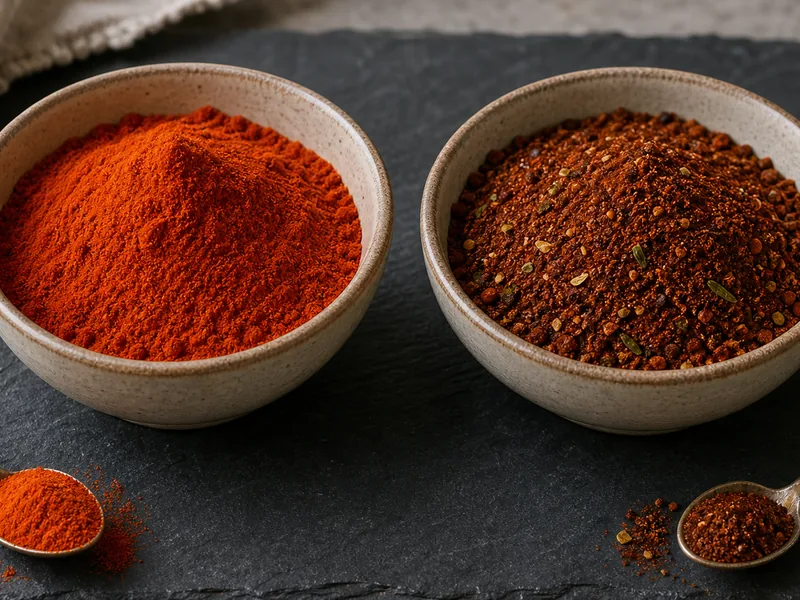
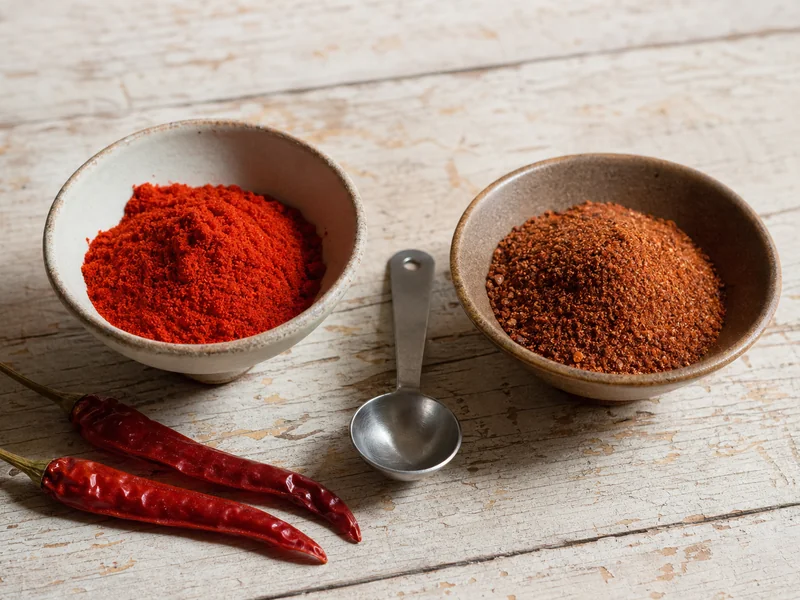
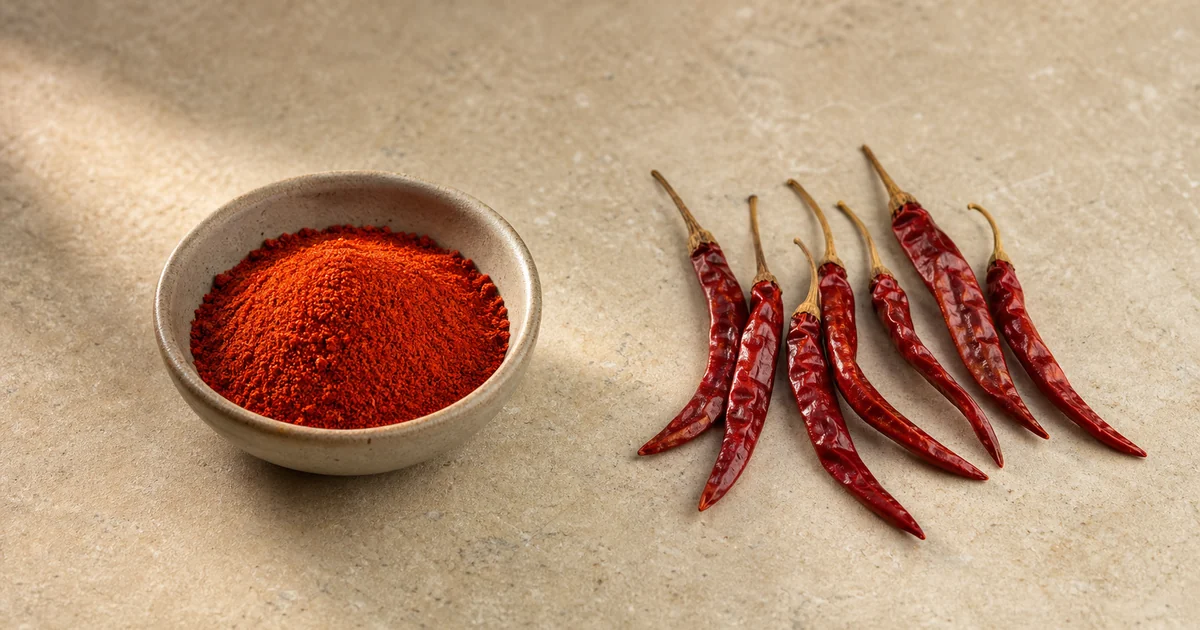
Cayenne Pepper and Chili Powder side by side
A clean heat knob for dishes that already taste complete.
A ready base that seasons a dish before it burns.
Is Cayenne Pepper the Same as Chili Powder?
Use cayenne when the dish needs clean heat and already has its seasoning. Use chili powder when the dish needs chile flavor plus cumin, garlic, oregano, and a milder red base.
The mistake is treating them as equal red powders. Cayenne changes heat fast.
Chili powder changes the whole seasoning profile.
Cayenne is usually just ground cayenne pepper. Chili powder in many U.S. kitchens is a blend, so if a recipe lists separate cumin and garlic, cayenne can add heat without doubling those spices.
If it leans on one spoonful of chili powder for the whole base, cayenne alone leaves the dish thin.
The simplest way to keep them straight: cayenne is a dial, chili powder is a recipe. You turn cayenne up or down to set heat on a dish that already tastes right.
You reach for chili powder when the dish still needs its whole seasoning built, and heat is only one part of that job.
Can You Substitute Cayenne for Chili Powder?
Cayenne commonly sits around 30,000 to 50,000 SHU on the Scoville scale, while many chili powder blends feel much milder because ground chile is diluted with other spices. That is why a one-to-one swap can overshoot the burn.
Start small and rebuild the missing seasoning:
| If the recipe asks for | Use cayenne like this | Add back |
|---|---|---|
| 1 tsp chili powder | 1/8 to 1/4 tsp cayenne | Paprika, cumin, garlic, oregano |
| 1 tbsp chili powder | 1/2 to 3/4 tsp cayenne | 2 to 3 tsp mild spice blend |
| Chili powder in a rub | A tiny pinch first | Build the rub around it |
The measuring spoon simply has less room for error with cayenne. That does not make it better, only sharper.
The blend side is the harder one to predict. A chili powder built on mild ancho behaves nothing like one built on hotter New Mexico chile or one with cayenne added, and some brands slip cayenne into the mix anyway.
So the ratios above are a starting point, not a rule.
Measure the first dose small, taste, and climb from there.
How Hot Is Cayenne Pepper?
Cayenne is not one fixed heat. Most jars land near 30,000 to 50,000 SHU, but the exact burn shifts with the chile lot, the grind, and how long the jar has been open.
Two supermarket brands can sit a noticeable step apart.
Age matters more than people expect. Ground cayenne loses punch over months as the oils that carry its heat break down, so a year-old jar can taste distinctly softer than a fresh one.
If a recipe that used to bite suddenly feels flat, the jar is usually the reason, not the measurement.
When the heat has to be right, test before you commit. Stir a small pinch into a spoonful of warm oil, wait a few seconds, and taste.
That reads the real strength of this jar, which is the only number that counts at the stove.
Chili powder is even harder to pin down, because its heat rides on whichever chile the blend was built from plus however much cumin, garlic, and salt dilute it. That is the deeper reason the safe move with either jar is to start low and build.
How Do Cayenne and Chili Powder Taste Different?
Cayenne tastes sharp and direct. It gives heat before it gives aroma.
Chili powder tastes rounder because the spices carry flavor even when the heat is low, with cumin for the familiar chili smell and garlic for savoriness.
A blind swap shows it fast in a pot of beans. Cayenne makes the beans hotter but not fuller.
Chili powder makes them taste seasoned before the heat is obvious.
Salt is the quiet variable. Cayenne is usually unsalted, while some chili powder blends include salt, so a one-for-one swap can change the seasoning of a dish that already has broth, cheese, or a salted rub.
So for a dish that already tastes complete but lacks fire, cayenne is cleaner. For a pot that tastes flat, chili powder or a full blend is the better fix.
Timing is part of the difference too. Cayenne hits fast and lingers, so the burn keeps building for a few seconds after the bite.
Chili powder spreads its warmth flat and steady across the whole mouthful.
You can feel it in wings versus a pot of chili: a cayenne-based buffalo sauce spikes and holds, while a bowl of chili stays warm and even from the first spoon to the last.
When Should You Use Cayenne or Chili Powder?
For chili, taco meat, and enchilada sauce, chili powder is the safer first pick because it builds a base, and cayenne can join later if the pot needs more heat. For hot sauce, spicy mayo, deviled eggs, and dry heat correction, cayenne is cleaner because it does not drag cumin into places cumin does not belong.
For barbecue rubs, combine them. Chili powder gives body and cayenne sets the heat ceiling.
Cayenne can also go in late. A pinch stirred into a finished soup lifts the burn without changing the seasoning plan.
Cayenne is cleaner
Hot sauce, spicy mayo, deviled eggs, ranch dip, spicy butter, and any dish that already tastes complete but needs more burn.
Chili powder is cleaner
Chili, taco meat, beans, enchilada sauce, taco soup, and dry seasoning packets, where the background spices belong.
In a dry rub, the two stack instead of competing. Chili powder lays the cumin-and-garlic base across the whole surface, and a light hand of cayenne sets the heat ceiling on top.
Add the cayenne last and taste the rub off your finger before it hits the meat, because the heat concentrates as the crust forms.
How Do You Fix Too Much Cayenne?
The two jars fail in opposite ways, so the rescue is different. If you added too much cayenne, do not reach for chili powder to balance it, because that adds seasoning and often more heat.
Stretch the dish instead with more beans, tomato, broth, dairy, or a starch that can carry the burn.
If you used cayenne and the dish tastes thin, the problem is missing body, not missing heat. Add paprika for color, cumin for warmth, garlic for savoriness, and a pinch of oregano to rebuild the blend cayenne never had.
If a chili powder dish tastes flat but not bland, it is usually low on salt or acid rather than heat, so a squeeze of lime often does more than another spoon of powder.
Where Cayenne Goes Beyond Tex Mex
Outside of chili and tacos, these two rarely meet. Chili powder lives in the Tex-Mex and chili-house role, where cumin and garlic belong.
Cayenne is a global finishing heat that turns up almost everywhere else.
Cajun cooking leans on it for blackening rubs and gumbo. A jar of hot honey gets its kick from cayenne.
Indian tempering, buffalo sauce, deviled eggs, spicy mayo, and a shake over pizza or popcorn all want clean heat with no seasoning attached to it.
That is the practical line. If a dish is not trying to taste like chili, cayenne is usually the right heat source, and reaching for chili powder there drags in flavors that fight the recipe.
Keep cayenne as the knob you turn when something simply needs to be hotter, and keep chili powder for when a dish needs its whole flavor built.
How Do You Make a Chili Powder Substitute?
A fast chili-powder stand-in
Mix 1/2 tsp paprika, 1/4 tsp cumin, 1/8 tsp garlic powder, a pinch of oregano, and a tiny pinch of cayenne. That lands closer to chili powder than cayenne alone.
Scale it only after tasting, since cayenne strength shifts with jar age and grind. If you overshoot the heat, add more food, fat, dairy, beans, or tomato rather than more powder.
Stocking Your Shelf
Buy cayenne when you want a heat knob. Buy chili powder when you want a seasoning shortcut.
If you cook both spicy sauces and Tex-Mex dishes, keep both and label the chili powder brand you like.
Check chili powder labels before a salt-sensitive dish, since some blends include salt and cayenne usually does not. If you run out mid-recipe, chili powder substitute ratios and a cayenne substitute cover each side.
Buy small jars unless you cook with these weekly, because chili powder loses aroma once the ground spices sit open.
Cayenne behaves differently from other red powders because it has less flavor padding. Paprika compared with cayenne is heat versus mild color, while serrano versus cayenne brings fresh green flavor into the decision.
Store both the same way: airtight, cool, and away from the light and steam over the stove, which age ground spice fastest. Buy cayenne in a small jar unless you cook spicy food every week, since its heat fades well before you finish a big one.
Cayenne Pepper vs Chili Powder
Reach for Cayenne Pepper when you want A precise heat knob.
Reach for Chili Powder when you want A ready seasoning base.
Cayenne Pepper vs Chili Powder FAQ
- New Mexico State University Chile Pepper Institute - Heat
- McCormick - Chili Powder Product Details
- McCormick Culinary - Dark Chili Powder Product Details
- USDA Recipe for Schools - Chili Powder