Red Pepper Flakes vs Crushed Red Pepper: Same or Different?
In most US recipes and spice aisles, red pepper flakes and crushed red pepper mean the same coarse dried chile seasoning. The useful differences come from the actual jar: chile blend, particle size, seed fragments, freshness, and when the flakes enter the dish.

Red Pepper Flakes
Common shaker nameCrushed Red Pepper
Common package name- What can vary: Brand, chile blend, particle size, freshness vs Brand, chile blend, particle size, freshness
- Best label clue: Ingredient list and visible texture vs Ingredient list and visible texture
- Cooking effect: Fine flakes spread sooner when bloomed or simmered vs Coarse pieces release more slowly and stay visible
Red Pepper Flakes vs Crushed Red Pepper at a glance
| Attribute | Red Pepper Flakes | Crushed Red Pepper |
|---|---|---|
| Usual US meaning | A coarse dried red chile seasoning | The same coarse dried red chile seasoning |
| What can vary | Brand, chile blend, particle size, freshness | Brand, chile blend, particle size, freshness |
| Best label clue | Ingredient list and visible texture | Ingredient list and visible texture |
| Cooking effect | Fine flakes spread sooner when bloomed or simmered | Coarse pieces release more slowly and stay visible |
| Starting swap | Equal measured volume when texture looks alike | Equal measured volume when texture looks alike |
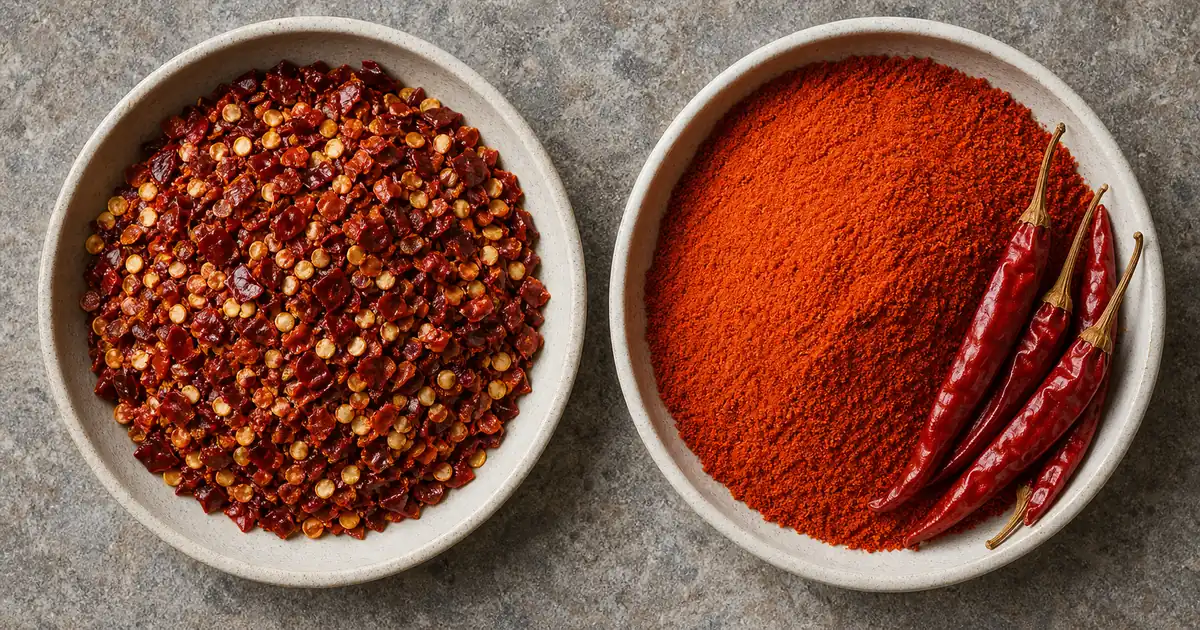
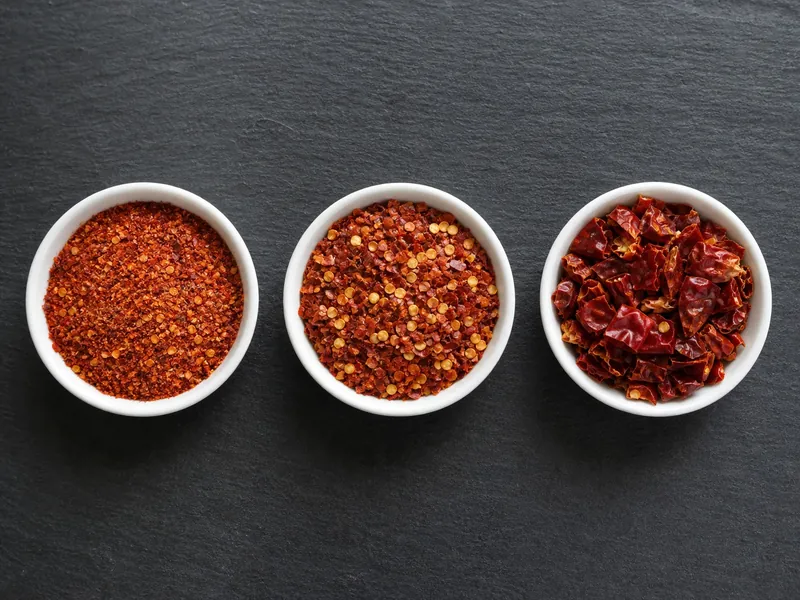
Red Pepper Flakes and Crushed Red Pepper side by side
Red pepper flakes usually names a mixture of dried chile skin, flesh, and seed fragments.
Crushed red pepper usually names the same product category, especially on US spice labels.
Are Red Pepper Flakes and Crushed Red Pepper the Same?
In most US kitchens, red pepper flakes and crushed red pepper are two names for the same coarse dried chile seasoning. A package can use one phrase on the front and the other in a recipe without signaling a dependable difference.
The product is made from dried red chile material broken into visible pieces rather than milled into a uniform powder. McCormick, for example, sells the category as crushed red pepper and lists crushed red pepper as its ingredient.
Names vary with brand, retailer, region, and recipe writer.
The jar itself provides better evidence than the wording alone.
A finely ground jar labeled flakes may act more like powder. A very coarse jar labeled crushed red pepper can release heat slowly and leave larger chewy pieces.
Look through the container before buying. Compare particle size, color, the amount of pale seed material, and whether the mixture looks bright or dusty.
Why Can Two Jars of Flakes Taste Different?
Two jars can share the same name and still taste different because the category is not a single cultivar with a fixed Scoville rating.
Producers may use cayenne-type peppers, other dried red chiles, or a blend selected for price, color, and heat.
The chile blend owns the heat
A hotter source pepper produces a hotter flake when processing and storage are comparable. The label often says only red pepper or crushed red pepper, so an exact SHU promise is not available from the category name.
Color is not a heat meter.
Deep red pieces can come from a mild ripe pepper, while paler material can still carry substantial capsaicin. Taste a new jar before using an old recipe quantity.
Seeds change texture more reliably than heat
Pale seeds are easy to see, which makes them a tempting explanation for a hot blend. Pepper seeds do not produce capsaicin, although they can carry it after touching the placenta and surrounding tissue.
A seed-heavy mixture may taste uneven because the seed fragments and chile flesh do not dissolve at the same rate. The ratio can also change mouthfeel and the visual appearance of a finished dish.
Freshness changes aroma before the jar becomes useless
Light, heat, oxygen, and time flatten the volatile aromas that make dried chile taste more than merely hot. An older jar may still burn while smelling dusty and tasting one-dimensional.
How Does Flake Size Change the Way Heat Spreads?
Particle size changes how quickly the seasoning gives up color, flavor, and capsaicin.
Fine fragments expose more surface area to oil or water, while large pieces hydrate and release more gradually.
| Texture in the jar | What happens in food | Best starting use |
|---|---|---|
| Fine flakes with some powder | Heat spreads quickly and evenly | Sauces, dressings, spice blends |
| Standard coarse flakes | Visible pieces and moderate release | Pizza, pasta, sauteed vegetables |
| Very coarse pieces | Slow hydration and distinct hot bites | Long simmers, infused oil that will be strained |
| Seed-heavy mix | More pale crunch and uneven texture | Finishing only when that texture is welcome |
The same teaspoon can therefore feel different even when both labels describe crushed red pepper. Volume measures empty space between particles, so a spoon of fine material can contain more pepper mass than a spoon of large flakes.
Weight is useful for scaling a tested batch, but home cooks rarely need a gram conversion for one skillet.
Start with less when the new jar looks finer than the old one.
When Should You Add Red Pepper Flakes?
Add the seasoning early when the dish needs heat distributed through fat or liquid.
Add it late when the goal is a sharp finish and visible flakes.
Bloom briefly in oil
Warm oil carries capsaicin and chile aroma through the dish.
Use moderate heat and a short bloom because small dry pieces can scorch, turn bitter, and smoke before onions or other wet ingredients cool the pan.
Garlic and flakes often enter near each other, but neither benefits from burning. Have the next wet ingredient ready before the spices hit the oil.
Simmer for integrated heat
Flakes added to tomato sauce, beans, soup, or braising liquid soften and distribute over time. Large pieces may remain visible, but the heat becomes less concentrated in individual bites.
Taste near the end instead of judging immediately after the flakes enter. Extraction continues as the food cooks and rests.
Finish for contrast
A final pinch keeps the aroma direct and the texture noticeable on pizza, noodles, eggs, roasted vegetables, or creamy soup. That same pinch can create isolated hot bites, so crush oversized pieces between the fingers only if direct skin contact is comfortable.
How Much Should You Use When Switching Jars?
When both jars contain a plain coarse dried red chile mixture, start with equal measured volume. This is a practical starting point, not proof that the heat is equal.
Compare the old and new textures side by side.
Use less of a finer, darker-smelling, or obviously hotter product, then increase after the seasoning has had time to spread.
- For a finishing pinch, taste one or two flakes before seasoning the plate.
- For a skillet, begin with half the intended amount when opening an unfamiliar jar.
- For a large sauce, test the new product in a small portion before scaling.
- For an infused oil, keep the same weight and infusion conditions only after a successful test batch.
Do not compensate for stale flavor by adding more until the dish becomes excessively hot.
Replace a flat jar when the missing property is aroma rather than capsaicin.
If a recipe specifies a named regional chile flake, the generic equal-volume rule stops. The named product may bring fruitiness, smoke, fermentation, or a different grind that the pizza-shaker blend cannot reproduce.
Are Named Chile Flakes the Same as Crushed Red Pepper?
Gochugaru, Aleppo pepper, pul biber, chile de arbol flakes, and Calabrian chile products are not guaranteed synonyms for generic crushed red pepper. Each can differ in cultivar, processing, moisture, salt, oil, and grind.
Gochugaru
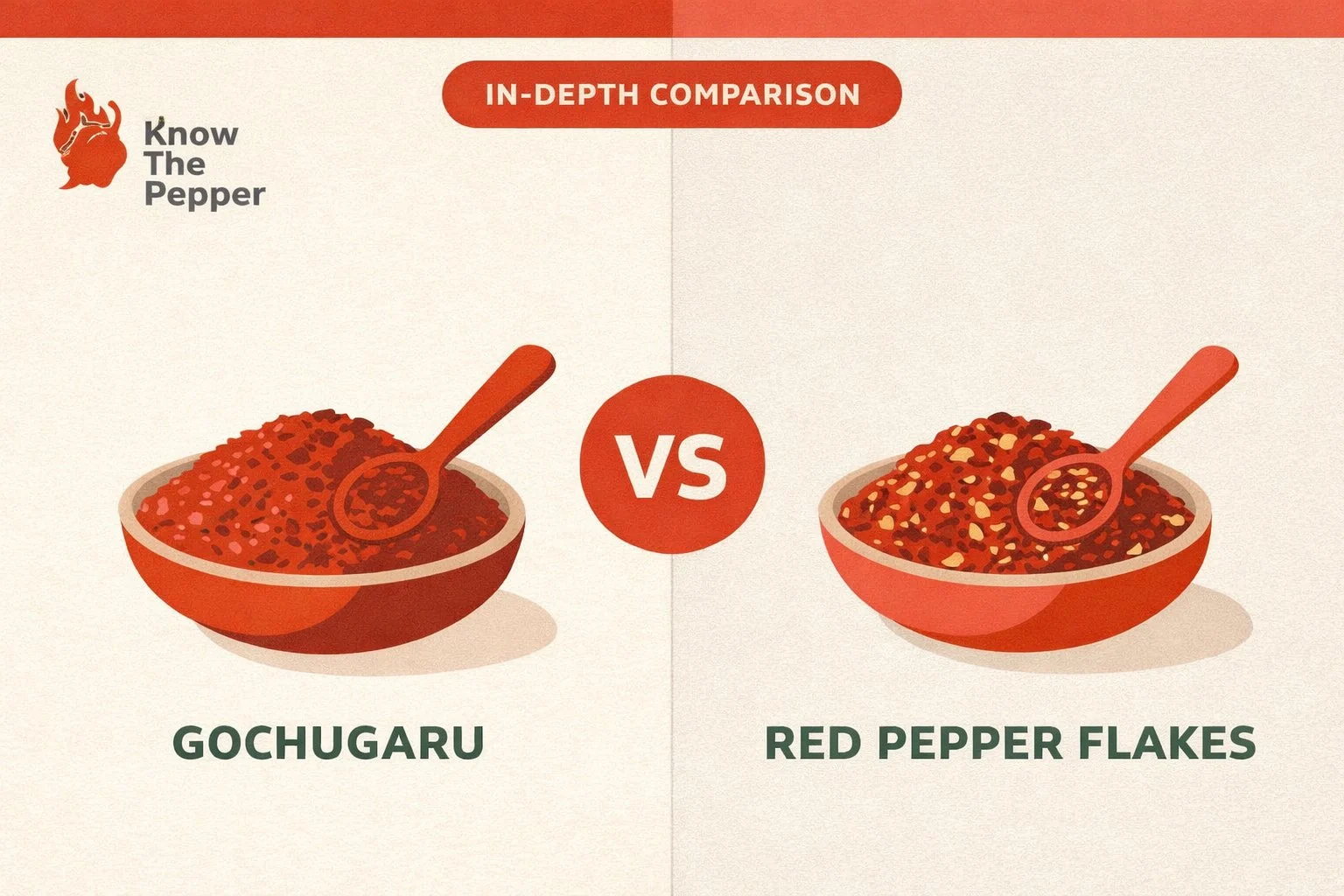
Korean gochugaru is sold in grinds selected for dishes such as kimchi, soups, and seasoning pastes. It often provides a broader red-pepper flavor and different texture than a generic hot shaker blend.
Aleppo-style flakes
Aleppo-style pepper is valued for fruity, earthy flavor and a moderate heat profile. Some retail products include salt or oil, which changes both measurement and storage.
Calabrian chile
Calabrian chile may appear dried, crushed, packed in oil, or made into paste. An oil-packed product adds moisture and fat, so it cannot replace dry flakes without changing the dish.
Cayenne powder
Ground cayenne has no coarse texture and disperses faster. It can supply heat, but an equal spoonful is not a reliable swap for flakes because grind density and surface area are different.
How to Buy and Store Red Pepper Flakes
Buy the smallest container that fits the household's actual use. A large restaurant-size jar costs less per ounce but loses aroma when it spends years beside a warm stove.
Choose packaging that lets you see the product or provides a recent lot and clear ingredient list. Bright red and rust tones are more promising than a uniformly gray-brown mixture, although color still cannot guarantee heat.
Store the closed jar in a cool, dark cabinet away from steam.
Shaking directly over a boiling pot sends moisture into the container and encourages clumping.
Use a dry spoon when the shaker cap is not suitable. Close the lid promptly so the seasoning spends less time exposed to kitchen air.
Check aroma, not only the calendar
Rub a small pinch between clean fingers and smell it. A useful jar should release a recognizable dried-chile aroma rather than only dust.
Discard material that shows moisture damage, mold, insects, or an abnormal odor. Replace a safe but flat jar when it no longer performs the flavor job, even if a small amount of heat remains.
Which Name Should a Recipe Use?
Write crushed red pepper flakes when a recipe accepts the common coarse shaker product. Adding flakes to the phrase helps readers picture the texture without pretending that two standardized ingredients exist.
Specify a brand, named chile, grind, or weight only when testing shows that the detail changes the result.
A recipe for chile oil may need exact particle size and weight, while a pizza topping can remain flexible.
Include the moment of addition because timing changes the effect. Bloom in oil for distributed heat, simmer for integration, or finish at the table for sharper contrast.
The most honest substitution note is short: red pepper flakes and crushed red pepper are usually interchangeable, but a new jar should be tasted because blend, grind, and freshness vary.
Red Pepper Flakes vs Crushed Red Pepper
Reach for Red Pepper Flakes when you want Ingredient list and visible texture.
Reach for Crushed Red Pepper when you want Ingredient list and visible texture.