

KnowThePepper
Calabrian Chili: Heat, Calabria Context and Kitchen Uses
Calabrian chili is a hot Italian chile tied to Calabria and the broader peperoncino tradition, commonly listed around 25,000 to 40,000 SHU. Its fruity, savory heat shows best in paste, crushed, dried, or oil-packed forms, so use it as a flavor-and-heat ingredient rather than a generic red chile flake.
- Species: C. annuum
- Heat tier: Hot (10K-100K SHU)
- Comparison: 3-16x hotter than a jalapeño, depending on where the jalapeño falls in its 2,500-8,000 SHU range
What Is Calabrian Chili Known For?
Calabrian chili is the hot red pepper profile behind many jars labeled peperoncino calabrese, crushed Calabrian pepper, or Calabrian chili paste. Secondary Scoville references commonly place it at 25,000-40,000 Scoville Heat Units, which puts it in the hot pepper range.
That is enough heat to matter in a sauce, but it is still a cooking pepper rather than a stunt pepper.
The source caveat matters.
No primary lab record pins one official SHU number for one Calabrian cultivar, and the market name can cover several regional hot pepper products. We keep the range because it is widely used in pepper references, but the article should frame it as a common listing, not a certified measurement for every jar.
The regional identity is stronger than the lab record. Italia.it describes peperoncino as red gold in Calabria and points to Diamante as a major chili-pepper center.
Slow Food documents the Tri Pizzi pepper around Spilinga and its role in nduja, the spreadable spicy salami associated with Calabrian butchery.
Botanically, the profile belongs with the C. annuum species group. In practical terms, the pepper changes character across fresh, dried, crushed, paste, and oil-packed forms.
The Calabrian chili substitute covers exact swaps, while Calabrian Chili vs Peperoncino sorts out which name applies to which pods.
Where Does Calabrian Chili Come From?
Calabrian chili is best understood through the region that made it famous.
Calabria sits at the southern end of mainland Italy, and the Italian pepper tradition there uses peperoncino in cured meats, pasta, sauces, preserved vegetables, condiments, and table seasoning. The pepper is not just heat.
It is a pantry habit.
Italia.it calls peperoncino Calabria's red gold and highlights Diamante's annual chili festival. That kind of public food identity is why Calabrian chili paste now shows up far outside Italy, especially in Italian-American restaurant cooking and retail jars.
The Slow Food Tri Pizzi entry gives a more local agricultural anchor. It describes a pepper grown around Spilinga and Monte Poro, where it is a fundamental ingredient in nduja and is also dried, powdered, and mixed with olive oil or vinegar for traditional uses.
That does not make every exported Calabrian chili jar the same cultivar, but it does show why the region has the strongest flavor association.
This page should avoid romance-copy shortcuts like terroir as proof. The defensible claim is narrower: Calabria has a strong documented peperoncino food culture, and Calabrian hot-pepper products are commonly used for fruity red heat in oil, paste, crushed, and dried forms.
How Hot Is Calabrian Chili? Heat and Flavor
The Calabrian Chili delivers 25K–40K Scoville Heat Units, placing it in the Hot tier (10K-100K SHU). That makes it roughly 3-16x hotter than a jalapeño, depending on where the jalapeño falls in its 2,500-8,000 SHU range.
Flavor notes: fruity, savory, lightly smoky heat.
What's in Calabrian Chili? Nutrition Facts
Calabrian chili is usually eaten by spoonful, pinch, or pod, not by a 100g serving. USDA FoodData Central can estimate generic hot-pepper nutrition, but it should not be presented as a Calabrian-chili-specific nutrient table.
Commercial paste also includes oil, salt, vinegar, or other ingredients that change the final numbers.
The practical concern is heat handling and label reading. The 25,000-40,000 SHU range is strong enough to irritate skin and eyes during batch prep.
The capsaicin heat chemistry guide explains the mechanism. This page should not turn capsaicin into a treatment or supplement claim.
For jarred paste and oil-packed pods, sodium and oil vary by brand. Check the label if those numbers matter.
Use clean utensils, keep opened jars refrigerated if the label requires it, and do not rely on a layer of oil as a food-safety control for homemade products.
How Do You Use Calabrian Chili in the Kitchen?
Calabrian chili is most useful when it brings both heat and seasoned red-pepper flavor.
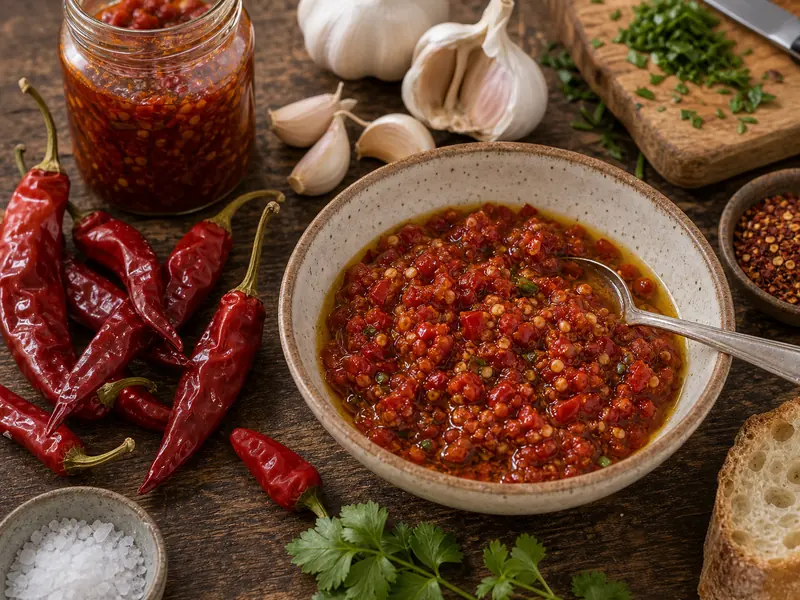
Paste is the easiest form to use: stir a small spoonful into tomato sauce, beans, aioli, compound butter, vinaigrette, pizza sauce, or a pan sauce. Oil-packed pods add the pepper plus chile-stained oil, so they spread heat more evenly through fat-rich dishes.
Dried flakes behave differently.
They are closer to crushed red pepper flakes, but usually with a fruitier, more savory profile when the product is good. Check Calabrian Chili vs Red Pepper Flakes when the recipe asks whether a pantry shake can replace a paste or oil-packed pepper.
Fresh Calabrian-style pods are less common outside specialty markets.
If you have fresh pods, treat them like a hot red Fresno-style cooking pepper: slice thin for sauces and sauteed vegetables, or roast before blending. The Calabrian Chili vs Fresno page is the better branch for fresh-market swaps.
For heat calibration, a cayenne pepper gives a sharper powder-forward burn, while Calabrian paste brings heat through oil and pulp. Aleppo Pepper vs Calabrian Chili is the better comparison when the question is warm, fruity flakes versus a hotter Italian paste.
| Form | What is in it | How to use it | What to watch for |
|---|---|---|---|
| Paste | Ground pepper, usually seasoned with salt and oil | A small spoonful stirred into tomato sauce, beans, aioli, compound butter, vinaigrette or a pan sauce | It is a condiment, so it carries salt and oil that a fresh pepper would not |
| Whole pods in oil | Small whole peppers plus chile-stained oil | Both go in. The oil spreads heat evenly through fat-rich dishes | The oil is part of the seasoning, so count it in the fat the dish already has |
| Dried flakes | Crushed dried pepper, closest to ordinary crushed red pepper | Where you want dry heat without adding moisture or salt | Behaves differently from the paste and is not a direct swap for it |
How Should You Buy and Store Calabrian Chili?
For retail buying, look for jars labeled Calabrian chili paste, peperoncino calabrese, crushed Calabrian pepper, or whole peppers in oil.
The best products should taste hot, fruity, savory, and red-pepper-forward, not just salty or flat. Check the ingredient list if you need a pure pepper product rather than a seasoned condiment.
Opened commercial paste or oil-packed pods should be stored according to the label, usually refrigerated after opening.
Use a clean dry spoon and keep the rim clean. Discard the jar if you see mold, gas pressure, off odors, or unusual cloudiness that the product label does not describe.
Dried Calabrian flakes or crushed pepper should stay in an airtight container away from light, heat, and moisture.
Whole dried pods keep aroma longer than pre-ground powder. If flakes smell dusty rather than fruity, they will still add heat but not the Calabrian flavor people are usually seeking.
Do not make shelf-stable pepper-in-oil, pickled peppers, or fermented pepper paste from this profile alone. Use a tested preservation recipe that specifies acid, salt, refrigeration, or heat processing.
Dried form: Dried Calabrian chili is commonly crushed or ground for pasta, pizza, cured meats, sauces, and pantry seasoning where a fruity hot pepper note matters.
What Can You Use Instead of Calabrian Chili?
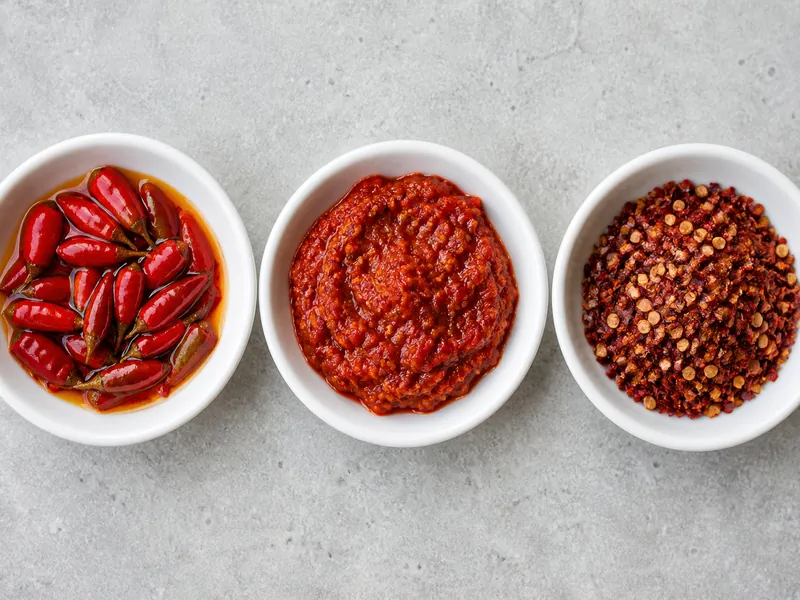
Compare substitutes for Calabrian Chili by form, flavor, and heat before choosing a ratio. Measured adjustments must account for the dish and the concentration of the replacement.
Direct comparisons show where flavor, form, and preparation differ in the Aleppo vs Calabrian and Calabrian Chili vs Peperoncino matchups.
Compare Calabrian Chili with: Calabrian Chili vs Peperone Di Senise
How Do You Grow Calabrian Chili Peppers?
If you buy true Calabrian chili seed, grow it like a warm-season C. annuum pepper and let the supplier's seed description define the exact plant habit. University of Minnesota Extension recommends starting pepper seed about eight weeks before outdoor planting and transplanting only after nighttime lows stay above 50 F.
Full sun, warm soil, steady moisture, and airflow matter more than a romantic Calabria story.
Container plants need consistent watering because small pots swing quickly from dry to soaked. In the ground, avoid heavy nitrogen once flowering begins or the plant may push leaves at the expense of pods.
Harvest fully red pods for the flavor people expect from Calabrian products.
Green pods may be edible, but they will not taste like the preserved red paste or crushed pepper most cooks are trying to recreate. Dry or process only sound pods.
Discard anything soft, moldy, or sunken.
For seed work, use pepper seed-saving guidance and isolate plants if you care about type.
For cold climates, overwintering peppers in cold climates is a separate project, not a promise that every Calabrian seedling will stay productive indoors. Use the pepper pests and diseases if leaves curl, spot, or show mite damage.
Calabrian Chili FAQ


- Italia.it - Peperoncino in Calabria
- Slow Food Foundation - Tri Pizzi Pepper
- True Leaf Market - Scoville Heat Scale
- University of Minnesota Extension - Growing peppers in home gardens
- USDA FoodData Central
Species classification: C. annuum - based on published botanical taxonomy.