Calabrian Chili vs Peperoncino: Are They Different?
Peperoncino is a broad Italian word for hot chile, while Calabrian chili identifies a regional style or product claim. They can overlap, so compare the cultivar when named, the ingredient list, and whether the package contains chopped chile, paste, flakes, whole pods, or infused oil.

Peperoncino is the broad Italian hot-chile term. Calabrian chili is the narrower regional description, and the ingredient form decides whether the dish receives pulp, paste, dry heat, or seasoned oil.
- Meaning: Regional Calabria claim vs Broad Italian hot-chile term
- Can overlap?: Yes vs Yes
- One fixed cultivar?: Not across all market products vs No
- Common forms: Chopped in oil and paste vs Flakes, whole dried, powder, and oil
- Best evidence: Origin plus ingredients vs Cultivar plus form
Calabrian Chili
HotPeperoncino
HotQuick Comparison
| Attribute | Calabrian Chili | Peperoncino |
|---|---|---|
| Meaning | Regional Calabria claim | Broad Italian hot-chile term |
| Can overlap? | Yes | Yes |
| One fixed cultivar? | Not across all market products | No |
| Common forms | Chopped in oil and paste | Flakes, whole dried, powder, and oil |
| Best evidence | Origin plus ingredients | Cultivar plus form |
Is Calabrian Chili a Type of Peperoncino?
Calabrian chili is a regional description rather than a fixed counterpart to every Italian hot pepper. Peperoncino is the broader Italian singular word used for a small hot chile.
That means the names can overlap.
A producer can accurately call a jar peperoncino calabrese because it contains Calabrian hot chile, but a package labeled only peperoncino may contain a different Italian hot pepper or a generic red chile chosen for flakes.
The English word pepperoncini creates a separate source of confusion. On many American menus and jars, pepperoncini means mild yellow-green pickled peppers, while Italian peperoncino normally points toward hot chile.
One extra letter changes what many English-speaking shoppers expect.
The comparison also does not support one universal heat ratio. The word peperoncino covers peppers with different genetics, and New Mexico State University explains that cultivar, environment, fruit age, and growing conditions all affect measured heat.
Secondary pepper references often place products sold as Calabrian chile around 25,000 to 40,000 SHU, but no primary laboratory record establishes that as one certified range for every Calabrian cultivar, jar, paste, or flake blend. Treat it as a common market estimate, not a promise about the spoon in your hand.
The Scoville scale measures pungency in pepper material. A prepared condiment can taste gentler because oil, vegetables, vinegar, or other ingredients dilute the chile solids, while a concentrated paste or a dense pinch of flakes can deliver more chile in one bite.
The useful answer is therefore about name level and product form, not a winner. Calabrian is the narrower regional description, peperoncino is the wider hot-chile term, and the actual ingredient list owns the final heat decision.
What each label can establish
| Evidence on the package | What it supports | What it does not guarantee |
|---|---|---|
| Peperoncino | An Italian hot-chile product | One cultivar or one SHU range |
| Calabrian or calabrese | A Calabria regional or style claim | One protected cultivar in every jar |
| Named cultivar and origin | A more specific identity to verify | Identical heat in every harvest |
| Paste, flakes, whole, or oil | How the chile enters the dish | The same spoon-for-spoon strength |
What Makes a Chili Calabrian?
Calabria gives the narrower name real regional context. Italia.it describes peperoncino as a defining ingredient in the region and points to Diamante as a center of chile culture, while Slow Food documents the Tri Pizzi pepper around Spilinga and Monte Poro and its role in 'nduja.
Those sources show a living regional tradition, but they do not make every red jar from Calabria the same cultivar. Italian peppers include multiple shapes, local selections, preparations, and levels of heat, so a geographic word should begin the inspection rather than end it.
A front label that says Calabrian chile, peperoncino di Calabria, or peperoncino calabrese gives you a regional claim.
Look next for a named pepper, place of production, producer, and ingredient list if those details matter to the dish or to the price.
A label that says only peperoncino gives you less identity information. It may still be an excellent whole dried chile, flake, powder, or oil, but the word alone cannot tell you whether the flavor will be fruity, smoky, sharp, or mostly neutral heat.
The physical form narrows the likely result. A jar with chile first in the ingredient list should contribute more solids than an oil whose pepper appears only as an infusion, while a paste with salt, vinegar, tomato, or other vegetables will season the dish beyond heat.
Use the package in this order.
This method protects you from two opposite mistakes. You will not dismiss a useful generic peperoncino simply because it lacks Calabria on the front, and you will not pay a regional premium while assuming that every Calabrian-labeled jar has identical heat and flavor.
What does the package say?
Read past the front label
- Read the geographic wording and any cultivar name.
- Identify whether you are buying chile solids, a paste, dry seasoning, or infused oil.
- Check where oil, salt, vinegar, sugar, and other vegetables appear in the ingredient list.
- Read the serving guidance, then taste a small amount before seasoning the whole dish.
How Do Paste, Flakes, Whole Chiles, and Oil Cook Differently?
The biggest cooking difference is often pulp versus seasoning. Chopped oil-packed chile and paste can become part of a sauce's body, while flakes and infused oil usually season a structure that already exists.
Oil-packed chopped Calabrian chile works when visible bits, fruit, oil, and heat should travel together. Stir it into tomato sauce, beans, braised greens, a sandwich spread, or a cheese mixture where the spoonful can disperse through other ingredients.
Paste is smoother and usually more concentrated by volume, although recipes vary by brand. It can disappear into mayonnaise, marinades, ragù, soup, or a finishing butter without leaving large pieces, but its salt and acid may change the seasoning sooner than plain chile would.
Dry peperoncino flakes add localized bursts of heat and a little dried-pepper aroma. They fit aglio e olio, pizza, roasted vegetables, and table seasoning because they cling to oil and food surfaces without adding jar liquid or much pulp.
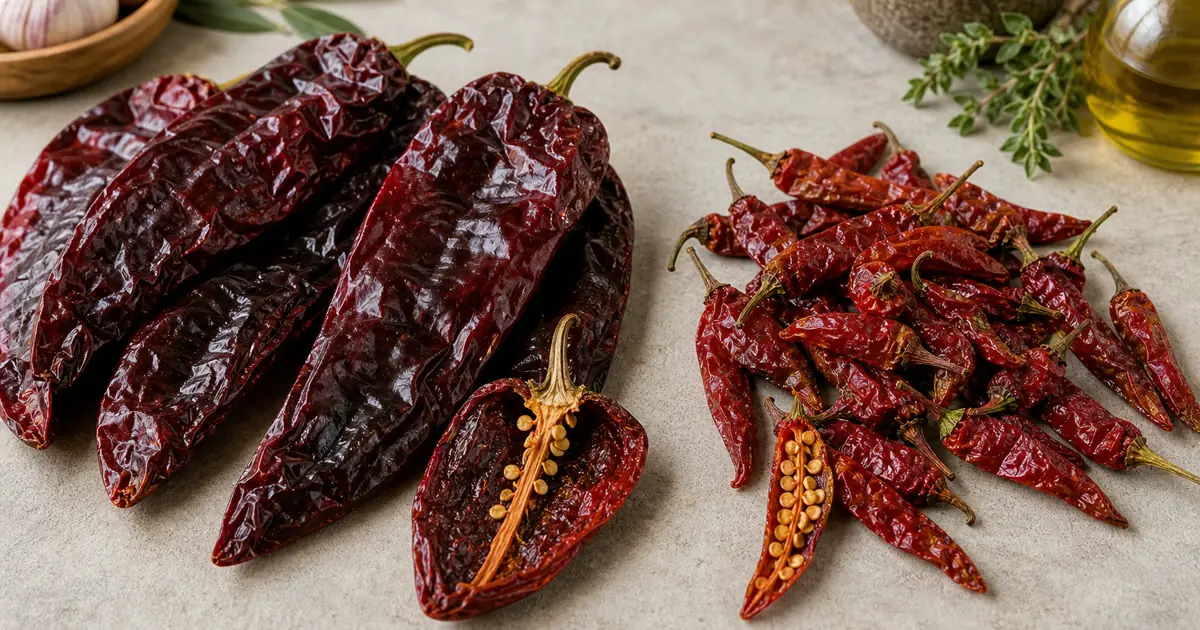
Whole dried pods give you the most control over preparation. You can toast them gently, crumble them, soak them for a blended sauce, or infuse them in a cooked dish, but one pod is not a reliable measuring unit because size, wall thickness, and heat vary.
Prepared chile oil spreads heat across a dish with almost no solids.
It is a finishing tool for pizza, soup, noodles, or grilled food, not an automatic replacement for the chopped pepper that thickens a sauce or spread.
To substitute, first match the missing form. Replace chopped chile with another chopped or rehydrated chile by drained weight, replace paste with a smooth chile base at a similar consistency, and replace flakes with a dry seasoning rather than with a wet spoonful.
Then correct the other parts separately. Account for oil, salt, vinegar, and water before adjusting heat because adding more of a salty paste just to chase burn can oversalt the food.
When the pantry offers only flakes for a recipe that needs Calabrian paste, bloom a small amount of flakes in the recipe's existing oil and supply body from the sauce itself. This preserves the dry seasoning role, but it does not create an exact paste copy.
When a recipe asks for generic peperoncino flakes and you have chopped Calabrian chile, drain a small amount and add it early enough to disperse. Reduce another source of oil or salt, then taste before adding more because the spoonful carries several ingredients at once.
For a broader list of replacements by dish and form, the Calabrian chili substitute page separates closer peppers from pantry workarounds. The core rule remains the same because form first, heat second produces a more faithful result than matching a country word alone.
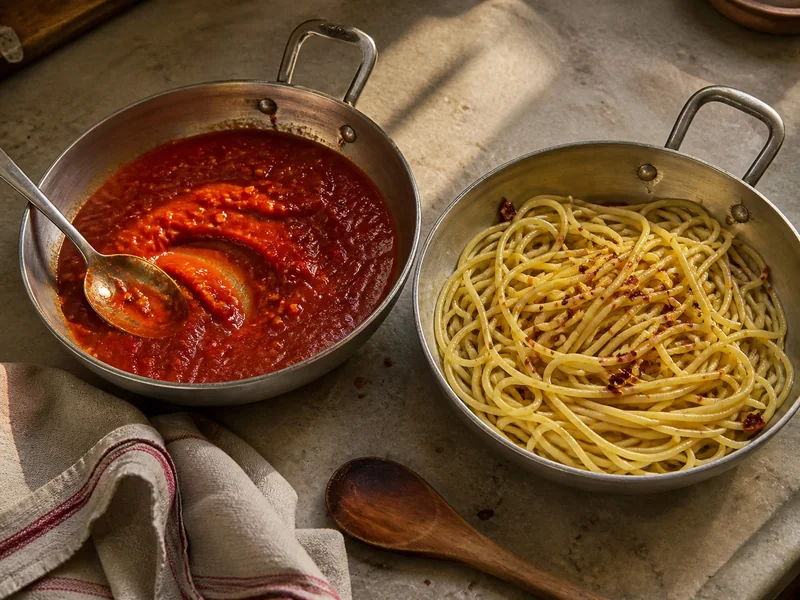
Match the form before the heat
| Product form | What it adds | Best starting jobs | Correction to expect |
|---|---|---|---|
| Chopped in oil | Pulp, oil, salt, and visible pieces | Tomato sauce, beans, sandwiches | Reduce other oil and salt after tasting |
| Paste | Concentrated smooth chile solids | Marinade, mayo, ragù, butter | Check salt, acid, and added vegetables |
| Dry flakes | Dry heat with little body | Pasta, pizza, roasting, table use | Add liquid or pulp when the recipe needs them |
| Whole dried pod | Customizable solids and aroma | Toasting, soaking, infusion | Measure prepared weight rather than pod count |
| Infused oil | Dispersed heat and fat | Finishing and drizzling | Supply chile solids separately when needed |
Which Should You Buy, Calabrian Chili or Peperoncino?
Buy Calabrian-labeled chopped chile or paste when the pepper should become part of a sauce, spread, marinade, or rich filling. The regional product is especially useful when you want chile fruit, oil, and savory seasoning in one measured spoonful.
Buy dry peperoncino flakes when the dish already has enough body and needs adjustable heat. Pasta, pizza, roasted vegetables, eggs, and table seasoning benefit from a dry form that can be added pinch by pinch.
Buy whole dried peperoncino when you want to choose the preparation yourself. It is the flexible option for gentle toasting, crumbling, soaking, or infusion, but it requires more work and a repeatable weight if you plan to make the same sauce again.
Choose chile oil when distribution matters more than pulp. A drizzle reaches a wide surface quickly, while chopped chile stays in distinct bites and paste integrates into a base.
Before paying, check three things.
There is no contradiction in choosing a Calabrian peperoncino product. The first word narrows the regional story and the second names the hot-chile category, while the jar or bag determines what the ingredient actually does in your food.
Three checks before paying
- Identity tells you whether the label names Calabria, a cultivar, a producer, or only the broad word peperoncino.
- Form tells you whether the dish receives pulp, dry particles, or mostly seasoned oil.
- Ingredients tell you how much salt, acid, oil, sugar, and other vegetables arrive with the chile.