Cherry Bomb vs Jalapeño: Choosing by Shape When the Heat Overlaps
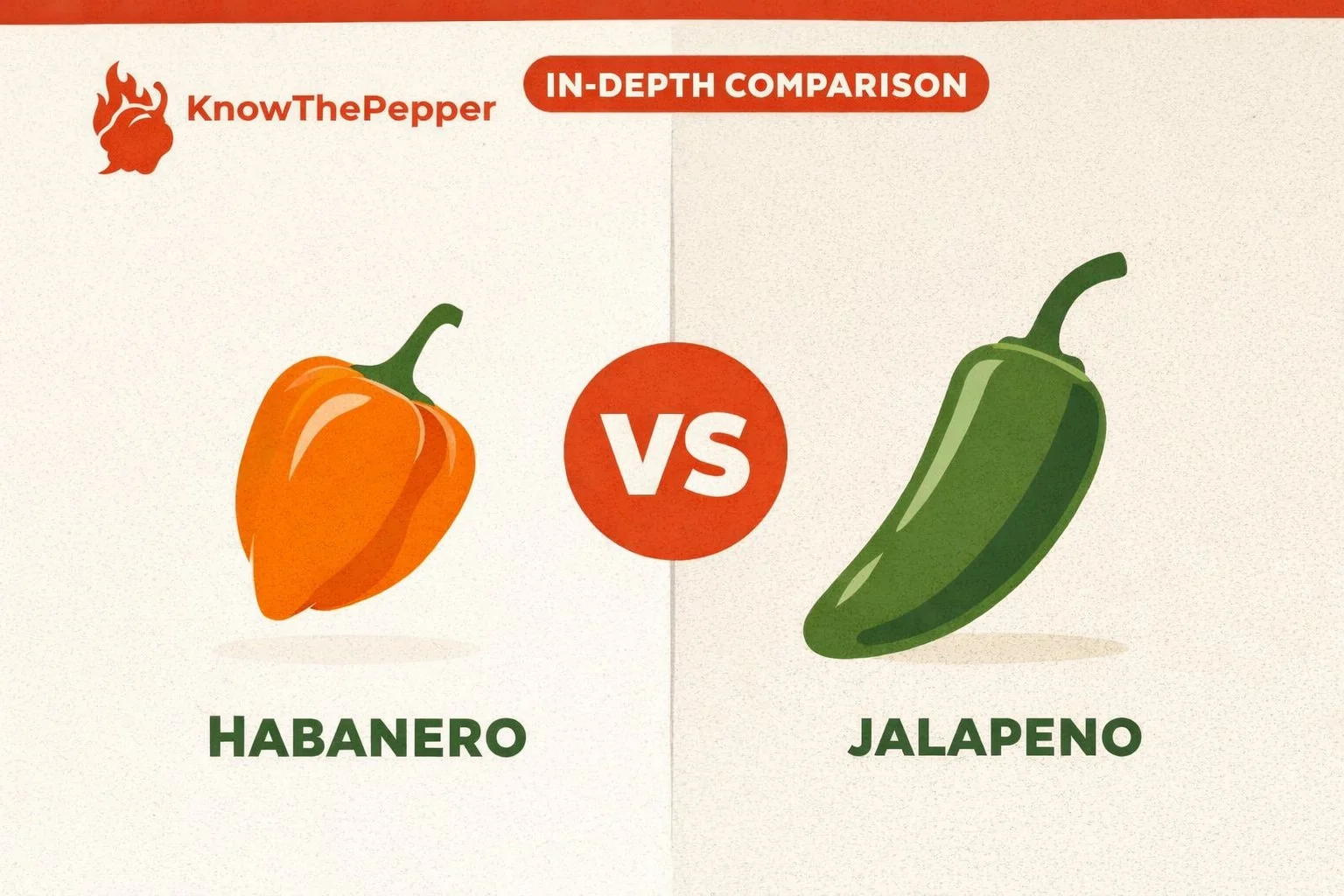
Cherry Bomb and jalapeño overlap in medium heat, but Cherry Bomb makes round cups and broad pieces while jalapeño makes long boats and compact rings. Choose by preparation geometry and flavor, then match prepared weight rather than pod count when substituting.

Cherry Bomb and jalapeño overlap in heat, but their geometry changes the kitchen job. Cherry Bomb makes round cups and broad pieces, while jalapeño makes long boats and compact rings.
- Typical heat: 2,500-5,000 SHU vs 2,500-8,000 SHU
- Shape: Round to slightly flattened vs Elongated and blunt-tipped
- Common color: Ripe red vs Harvested green
- Best stuffing cut: Top-cut deep cup vs Lengthwise shallow boat
- Best slicing cut: Broad halves or pieces vs Compact crosswise rings
Cherry Bomb Pepper
MediumJalapeño
MediumQuick Comparison
| Attribute | Cherry Bomb Pepper | Jalapeño |
|---|---|---|
| Typical heat | 2,500-5,000 SHU | 2,500-8,000 SHU |
| Shape | Round to slightly flattened | Elongated and blunt-tipped |
| Common color | Ripe red | Harvested green |
| Best stuffing cut | Top-cut deep cup | Lengthwise shallow boat |
| Best slicing cut | Broad halves or pieces | Compact crosswise rings |
Is Cherry Bomb Hotter Than Jalapeño?
Cherry Bomb pepper is not consistently hotter than its familiar green counterpart. Jalapeño overlaps its range, with Cherry Bomb commonly recorded at 2,500 to 5,000 SHU and jalapeño at 2,500 to 8,000 SHU.
At the shared 2,500 to 5,000 band, either pod can deliver similar warmth.
Jalapeño has the higher published ceiling, so its range includes hotter outcomes that the Cherry Bomb record does not.
A range is not a promise about one fruit.
New Mexico State University explains that genetics set heat potential while weather, water, fruit age, and other growing conditions influence the result.
The overlap makes a shape-based purchase more useful than declaring a heat winner. Cherry Bomb gives you a round thick-walled fruit, while jalapeño gives you an elongated thick-walled pod with more familiar green chile flavor.
Ripeness changes the sensory comparison too.
Cherry Bomb is commonly used ripe and red, which emphasizes sweetness and juiciness, while jalapeño is often sold green with a grassy, crisp flavor even though it can also ripen red.
For a heat-sensitive table, taste a small trimmed piece from the wall before committing the full batch. Keep the pale inner tissue out of that first sample because capsaicinoids concentrate around the placenta rather than originating in the seeds.
Use measured prepared pepper for the recipe and add more after tasting. Pod color, size, and surface marks cannot tell you an exact SHU value.
The heat ranges overlap
| Pepper | Common published range | Practical reading |
|---|---|---|
| Cherry Bomb | 2,500-5,000 SHU | Mild-to-medium warmth with a round ripe fruit |
| Jalapeño | 2,500-8,000 SHU | Overlaps Cherry Bomb and reaches a higher ceiling |
How Do Cherry Bomb and Jalapeño Differ in Shape and Flavor?
Cherry Bomb is a named round cultivar, not a generic name for every cherry-shaped pepper.
North Carolina State University's cultivar record identifies Cherry Bomb F1, while NC Extension places the common name within the broader cherry pepper group.
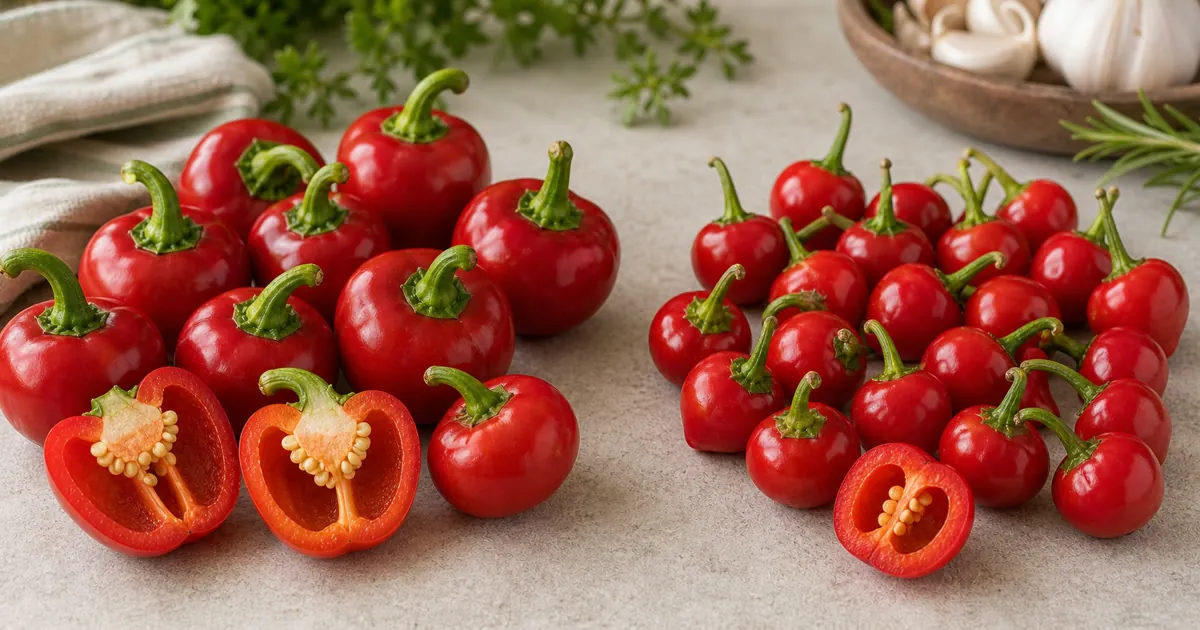
The ripe fruit is globe-shaped to slightly flattened, red, juicy, and thick-walled. Its round outline and short stem make it look closer to a miniature sweet pepper than to a jalapeño.
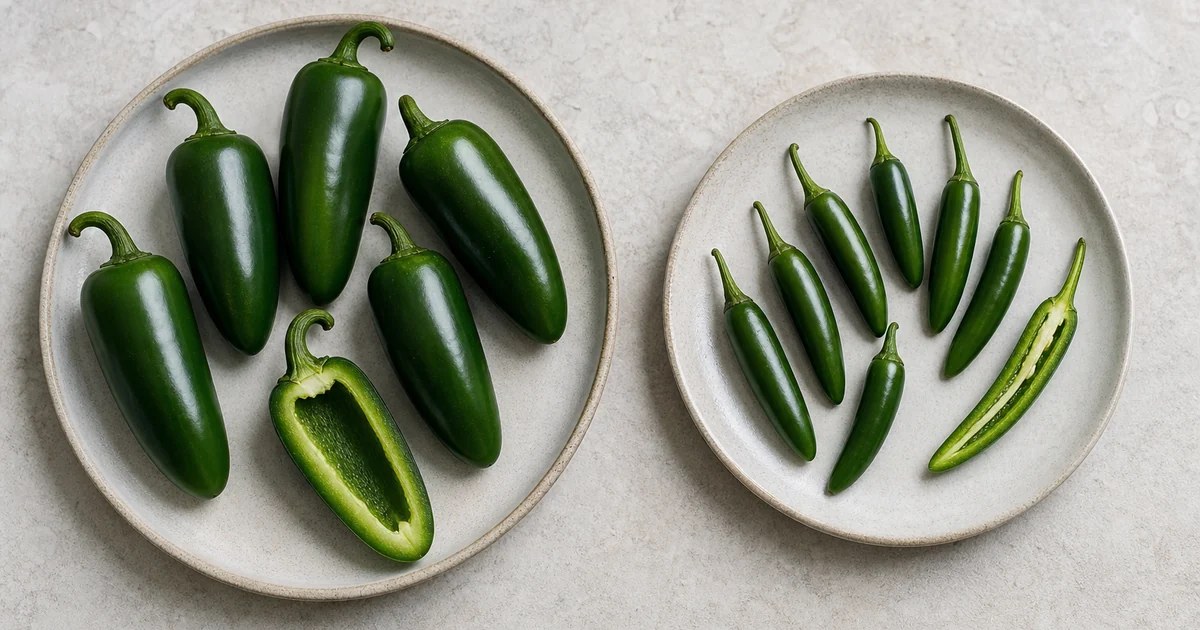
Jalapeño is elongated, blunt-tipped, and usually sold dark green.
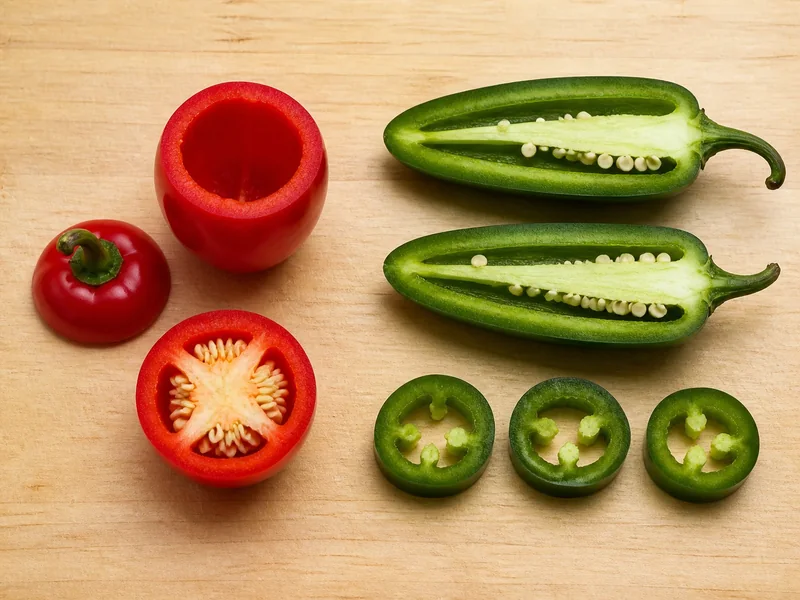
Its thick wall surrounds a narrower cavity that runs along the pod, so crosswise cuts produce compact rings and a lengthwise cut produces two shallow boats.
A top cut changes Cherry Bomb into a deep cup. Removing the cap and inner core preserves the round wall, which can hold a compact portion of rice, meat, cheese, breadcrumbs, or a pickled filling.
Cutting Cherry Bomb across the middle produces broad round pieces rather than tidy narrow rings.
That can work for antipasto or a sandwich, but the pieces cover more surface and do not imitate a jalapeño slice.
The preparation diagram shows the useful geometry. It is not a claim that every fruit has identical wall thickness, because growing conditions and individual size still vary.
Choose by the cut the dish needs. Round cups, broad halves, long boats, and narrow rings behave differently even when their heat overlaps.
Which Is Better for Stuffing, Cherry Bomb or Jalapeño?
Cherry Bomb is the better dedicated stuffer when you want a deep individual cup.
The round wall supports a compact filling and gives each diner a self-contained portion.
That depth suits rice, sausage, breadcrumbs, chopped vegetables, or a firm cheese mixture. A loose filling can spill as the pepper softens, so bind it enough to stay inside the cup.
Jalapeño is the familiar choice for poppers because a lengthwise half creates a long shallow boat. Cream cheese, shredded cheese, or a small meat filling can spread along the pod and brown across a wider exposed surface.
The portion is usually smaller and the chile flavor reaches every bite.
A dense filling can balance the pepper, but overfilling raises the chance that melted cheese runs onto the tray.
Wall thickness helps both peppers survive baking, but geometry changes timing.
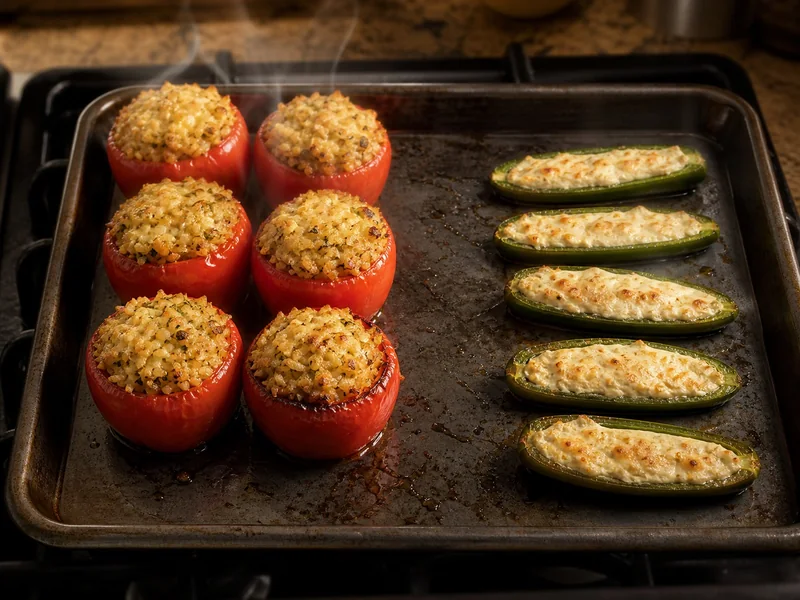
A deep Cherry Bomb cup shields the center, while a shallow jalapeño boat exposes more filling directly to oven heat.
Bake until the pepper wall is tender enough for the intended bite and the filling reaches its safe temperature. Do not use the pepper's color alone to judge a meat filling.
The cooked comparison image makes the tradeoff visible. Cherry Bomb produces an upright stuffed serving, while jalapeño produces a lower, longer popper with more browned filling on top.
For a mixed tray, keep the two fillings and positions identifiable. Their heat can overlap, but a hotter jalapeño and a milder Cherry Bomb should not be assumed to serve interchangeable diners.
Choose the stuffing format
| Decision | Cherry Bomb cup | Jalapeño boat |
|---|---|---|
| Portion | Deeper individual serving | Smaller elongated bite |
| Filling | Rice, meat, vegetables, firm cheese | Soft cheese or a thin meat filling |
| Oven exposure | Center is more sheltered | Filling browns across a wider surface |
Which Pepper Is Better for Pickling?
Both peppers work in pickled preparations, but they produce different pieces.
Jalapeño naturally becomes firm rings or lengthwise halves, while Cherry Bomb can be quartered, halved, or prepared as a hollow round fruit.
Jalapeño rings distribute through nachos, sandwiches, beans, and salads with predictable bite size. The compact ring carries flesh, skin, and some inner tissue in one piece.
Cherry Bomb gives you a broader, juicier bite. Halves and quarters suit antipasto, while a hollow whole fruit can hold cheese or another filling after it has been prepared through an appropriate recipe.
A whole round pepper needs a path for brine and heat to reach the interior.
Follow the preparation steps in the tested recipe instead of placing intact sealed fruits into a jar and assuming the center will process like a slice.
The National Center for Home Food Preservation includes banana, jalapeño, Hungarian, and other peppers in researched marinated-pepper guidance. Its formula, acid strength, jar size, headspace, and processing method work as a system.
Refrigerator pickles allow flavor adjustments for a chilled product, but they do not become shelf-stable merely because vinegar is present. Keep refrigerator recipes cold for the storage time their source specifies.
Choose jalapeño for small hot rings and Cherry Bomb for broader pieces or a round presentation. Let the tested recipe, not the visual appeal of the jar, decide safe shelf-stable preparation.
Can Cherry Bomb and Jalapeño Replace Each Other?
Yes, Cherry Bomb and jalapeño can replace each other when the dish needs fresh pepper flesh and their overlapping heat fits the diners. The swap changes shape, yield, sweetness, and green flavor even when the burn feels similar.
Do not swap by pod count.
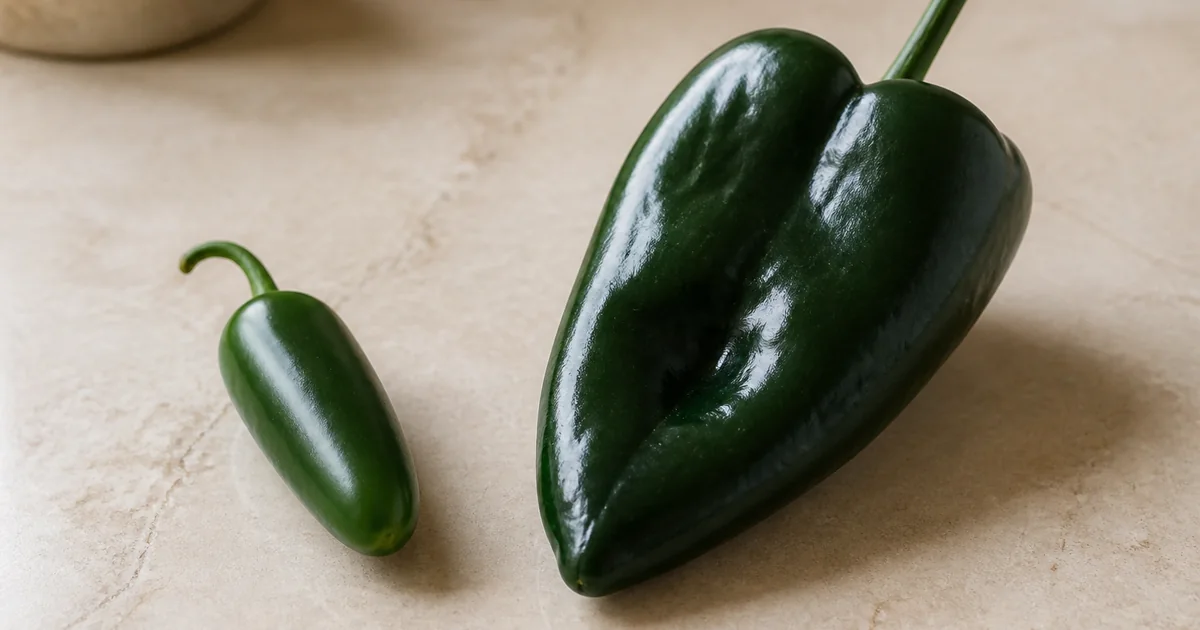
One round Cherry Bomb and one jalapeño can produce different prepared weights, surface areas, and cavity sizes.
For salsa or relish, stem and trim the pepper named in the recipe, then match its chopped volume or prepared weight with the replacement. Cherry Bomb makes the result redder, sweeter, and juicier, while jalapeño keeps a greener, grassier profile.
For pizza and sandwiches, decide whether broad Cherry Bomb pieces or compact jalapeño rings fit the bite.
A broad piece can dominate one mouthful even when the total pepper weight is unchanged.
For a cooked sauce, either pepper can soften into the base. Add the replacement before the final salt and acid adjustment, then let the heat disperse before tasting again.
For stuffing, treat the swap as a format change rather than a direct replacement.
A recipe designed for stuffed peppers in deep cups needs a different filling amount and tray arrangement when moved into jalapeño boats.
For pickled garnish, pickled jalapeños remain the natural choice for narrow rings. Cherry Bomb is the better choice when the dish benefits from a broad red piece, a juicy bite, or a round stuffed presentation.
The shortest rule is based on geometry. Choose Cherry Bomb for round cups and broad pieces, and choose jalapeño for long boats, compact rings, and green chile flavor.
A practical test batch makes the method repeatable.
If the trimmed recipe pepper weighs 100 grams, begin with 100 grams of the replacement, then record how much additional pepper or heat the finished dish actually needs.
If diners have different heat tolerances, divide the unseasoned base before adding the peppers. That preserves one texture and salt balance while letting the Cherry Bomb and jalapeño portions be adjusted independently.
Swap by prepared amount
| Swap direction | Match first | Expect to change |
|---|---|---|
| Jalapeño to Cherry Bomb | Prepared weight or chopped volume | Red color, sweetness, broad pieces |
| Cherry Bomb to jalapeño | Prepared weight or chopped volume | Green flavor, compact pieces, possible higher heat |