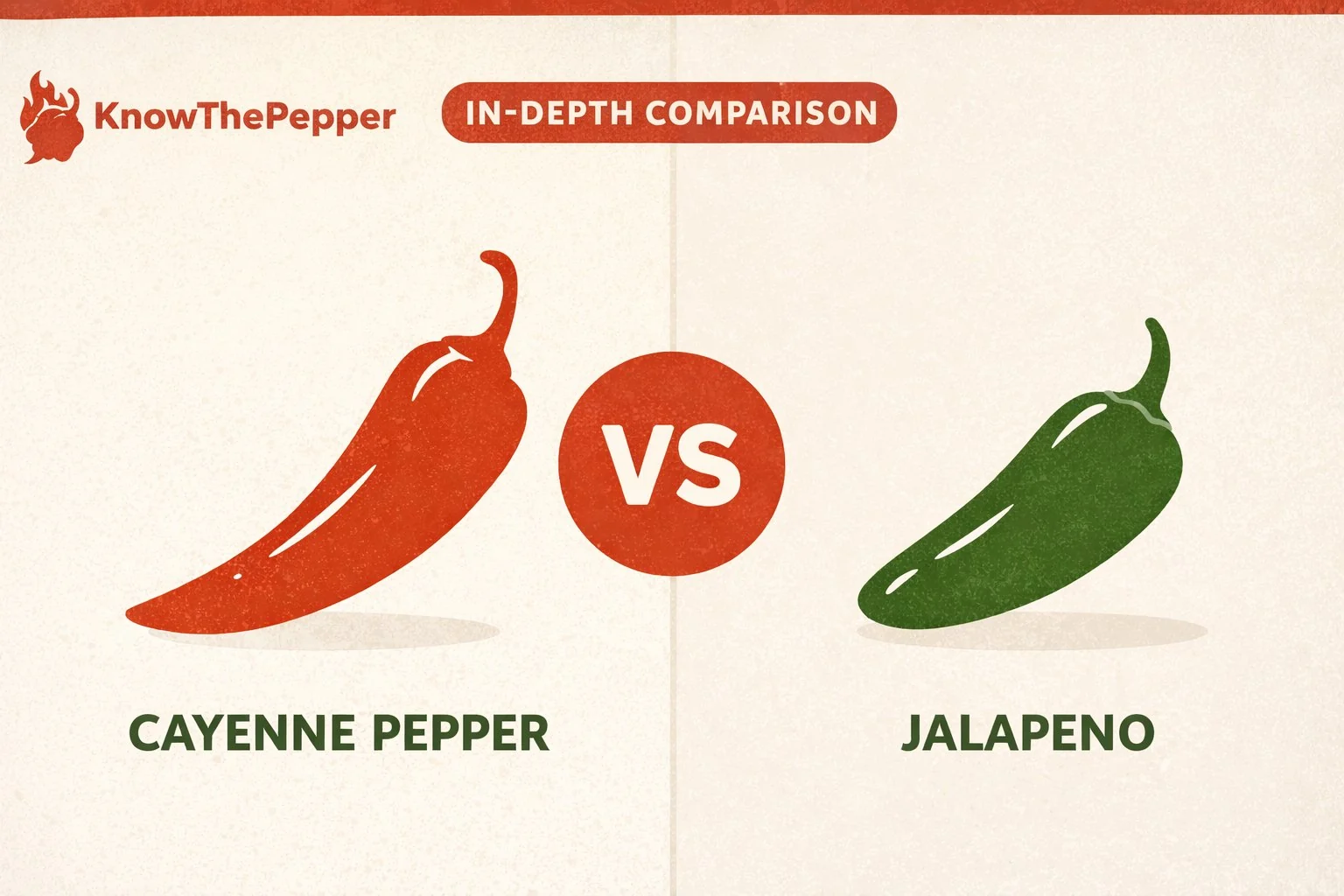
Cayenne and jalapeno do not solve the same problem. Cayenne usually lands at 30,000-50,000 SHU and often enters the dish as powder. Jalapeno stays around 2,500-8,000 SHU and brings fresh green bulk, crunch, and visible slices.
Comparison Contributor·Updated Jun 30, 2026·
Reviewed by
Karen Liu
Quick Comparison
Cayenne Pepper measures 30K–50K SHU while Jalapeño registers 3K–8K SHU. That makes Cayenne Pepper about 6.3x hotter by upper SHU range. Cayenne Pepper is known for its neutral and peppery flavor (C. annuum), while Jalapeño offers Grassy, crisp, lightly sweet when red notes (C. annuum).
Cayenne Pepper
30K–50K SHU
Hot · neutral and peppery
Jalapeño
3K–8K SHU
Medium · Grassy, crisp, lightly sweet when red
Heat difference: Cayenne Pepper is about 6.3× hotter by upper SHU range
Species: Both are C. annuum
Best for: Cayenne Pepper excels in everyday cooking and salsas, Jalapeño in fresh salsas and mild recipes
Cayenne usually lands at 30,000-50,000 SHU in the hot tier. Jalapeno stays around 2,500-8,000 SHU in the medium tier. On paper that makes cayenne much hotter, but in real cooking the bigger issue is delivery.
A little cayenne spreads through the whole pot at once. A sliced jalapeno leaves pockets of heat, crunch, and moisture. That is why one pinch of powder can outpace several rings in soup or chili, even before the recipe notices the missing fresh pepper texture.
Jalapeno tastes green, thick-walled, and a little sweet when ripe. Cayenne tastes dry, direct, and peppery.
That flavor gap shows up fast in salsa. Fresh jalapeno gives visible pieces and moisture. Cayenne disappears into the tomato and only leaves burn behind.
Use raw green jalapeños when you want crunch and grassy heat. Dice them small for pico de gallo, slice them thin for tacos and sandwiches, or mince one pod into guacamole when serrano would be too sharp.
If you want a pepper in the food, buy jalapenos. If you want a heat adjustment in the pantry, keep cayenne.
They can cross over in cooked sauces, but they are not parallel peppers. One is a fresh produce choice. The other is a dosing tool.
Can You Substitute One for the Other?
Start near 1:1 by amount. The heat ranges are close enough that flavor, form, and recipe role matter more than a strict Scoville conversion.
Growing Cayenne Pepper vs Jalapeño
Growing notes
Cayenne Pepper
Cayenne is one of the more forgiving hot peppers to grow, which explains its global reach. Start seeds indoors 8–10 weeks before last frost.
Cayenne wants 8+ hours of direct sun daily. It tolerates more heat than many peppers and continues setting fruit at temperatures that cause jalapeños to drop blossoms - a key advantage in hot summer climates.
Space plants 18–24 inches apart in well-drained soil with pH 6.0–6.
Growing notes
Jalapeño
Jalapeños are forgiving, but they still want warm pepper conditions. Start seed indoors about 8 weeks before transplanting or buy sturdy starts, then move plants outside after frost risk has passed and nights are reliably warm.
University of Minnesota Extension notes that peppers need warm soil, full sun, and steady moisture. In a garden bed, space jalapeño plants about 18-24 inches apart so air can move around the canopy.
Use a container only if it gives the roots enough room. A 5-gallon pot is a practical minimum for one plant, with drainage holes and a potting mix that does not stay soggy.
Where They Come From
Origin & background
Cayenne Pepper
French Guiana · C. annuum
Cayenne traces back to French Guiana on South America's northeastern coast, where indigenous peoples cultivated Capsicum annuum varieties long before European contact. Portuguese and Spanish traders carried the pepper eastward in the 16th century, and it took root across Asia, Africa, and Europe with remarkable speed.
By the 18th century, cayenne had become a staple in European apothecaries, listed as 'capsicum tincture' for digestive complaints and circulation. This medicinal reputation persisted well into the 19th century - cayenne tinctures appeared in the British Pharmacopoeia until the mid-20th century.
Origin & background
Jalapeño
Mexico · C. annuum
The name jalapeño points back to Jalapa, the older English spelling associated with Xalapa in Veracruz. That origin clue is useful, but it does not mean every modern jalapeño in a grocery bin came from Veracruz.
Modern jalapeño identity is also shaped by breeding. NMSU lists named jalapeño cultivars such as NuMex Primavera, NuMex Vaquero, and NuMex Jalmundo, and the Vaquero pedigree includes Early Jalapeño and TAM Jalapeño.
Buying & Storage
Whether you’re shopping for Cayenne Pepper or Jalapeño, the same quality indicators apply. Fresh peppers should feel firm and heavy for their size, with taut, glossy skin and no soft or wet spots. Minor stem cracks known as “corking” are perfectly normal and often indicate a mature, flavorful pod.
Selection
What to look for
Firm pods with taut skin and consistent color
Should feel heavy relative to size
Minor stem cracks (“corking”) are normal
Avoid anything soft, shriveled, or with dark wet spots
Storage
How to store them
Fresh: Paper bag, crisper drawer, 1 to 2 weeks
Frozen: Wash, dry, freeze on sheet pan, 6+ months
Dried: Airtight and away from light, up to 1 year
Mistakes to avoid
Common misses
Cayenne Pepper
Blaming the seeds. Membranes hold most capsaicin.
Adding heat too early. Capsaicin breaks down with cooking.
Not tasting individual pods. Heat varies 30%+.
Common misses
Jalapeño
Equating green with unripe. Different products.
Overcooking. Cell walls break down fast.
Sealed plastic storage. Causes rot. Use paper bags.
Final call
Cayenne Pepper vs Jalapeño
Cayenne Pepper and Jalapeño
occupy very different positions on the heat spectrum. Cayenne Pepper delivers about 6.3× more upper-range heat with its distinctive neutral and peppery character.
Jalapeño, with its Grassy, crisp, lightly sweet when red profile, excels in everyday cooking.
Heat gap about 6.3× by upper rangeCayenne Pepper neutral and pepperyJalapeño Grassy, crisp, lightly sweet when red
Start with form before you start with Scoville. A recipe that asks you to slice, seed, pickle, blister, or stuff the pepper is asking for jalapeno-like structure, not cayenne powder.
The reverse also matters. A spice blend, dry rub, or finishing shake wants the even spread that cayenne gives. Chopped jalapeno would add water and leave the heat uneven.
For a pot of beans or chili, 1/8 teaspoon cayenne is a safer starting point than one full chopped jalapeno if your only goal is heat. Taste, then climb.
For fresh salsa, go the other way. One jalapeno changes heat, texture, and color all at once. Cayenne can only change one of those.
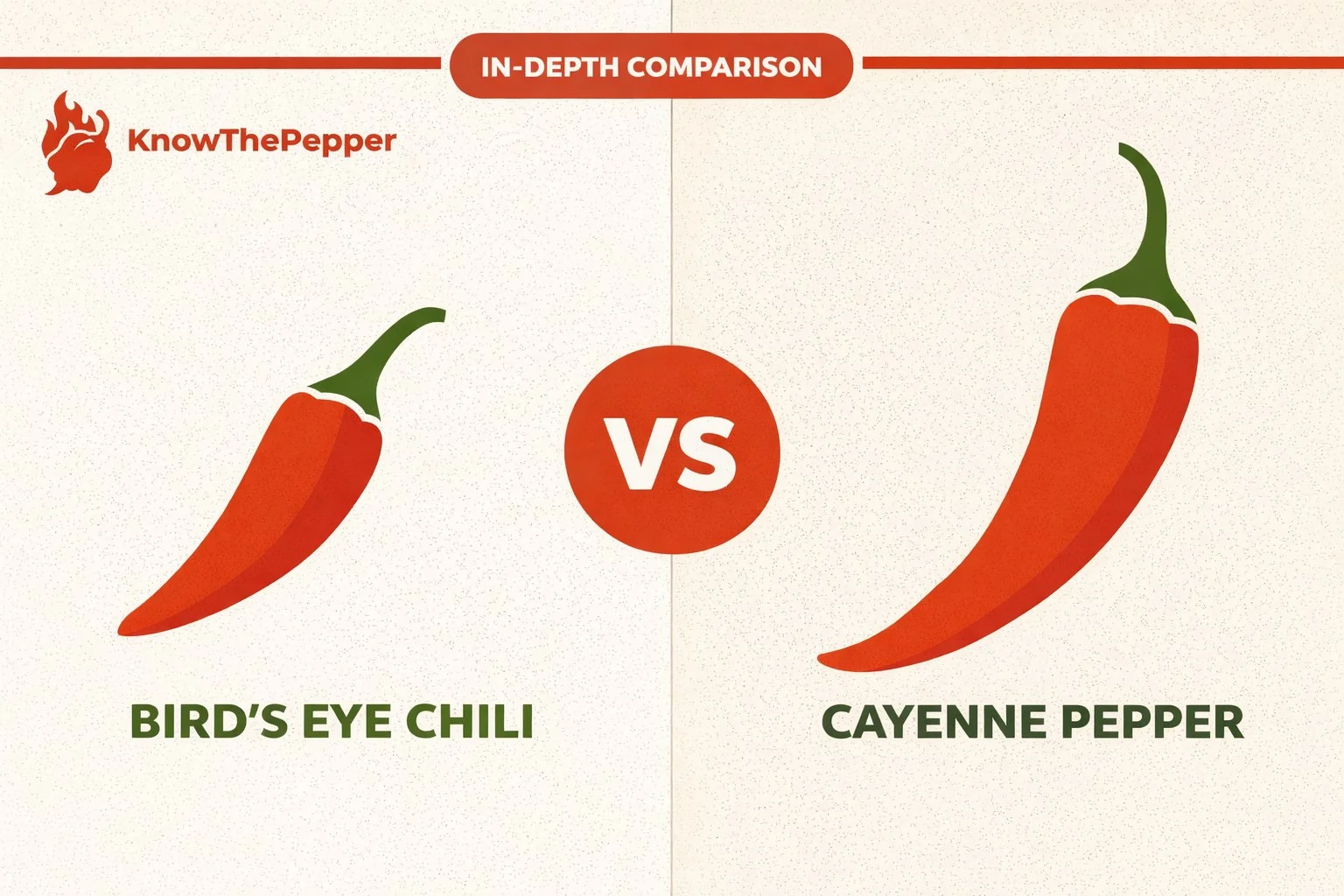
If you need the burn of cayenne but still want fresh pepper texture, use jalapeno plus a small pinch of cayenne instead of choosing one and losing the other. If you want the next hotter fresh branch, the birds eye versus jalapeno comparison shows how quickly the fresh lane can jump.
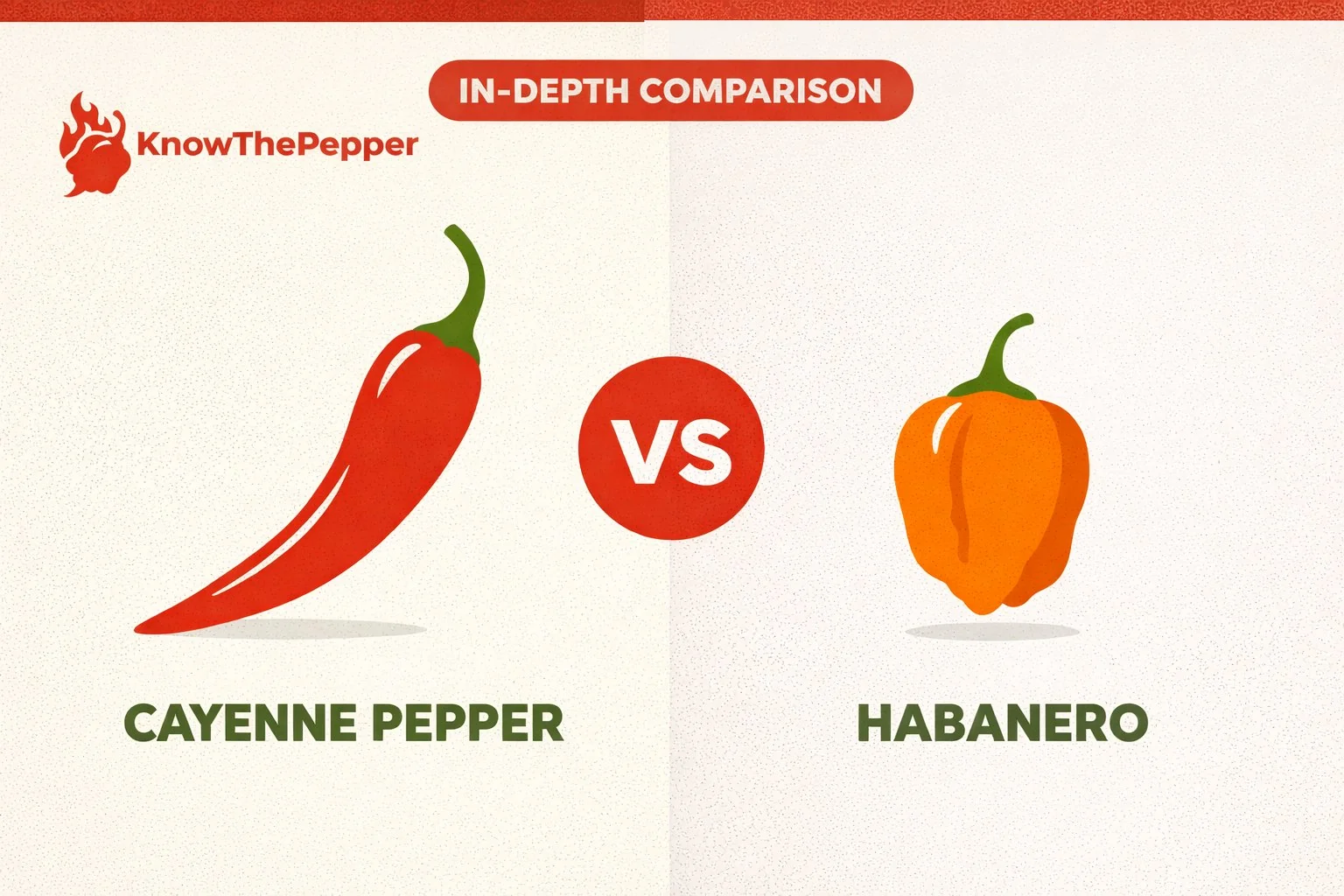
If you want to see where cayenne sits before the jump turns fruity and superhot, the cayenne versus habanero gap is the better heat map.
Pantry Vs Produce
Store jalapenos in the crisper and plan around one to two weeks. Store cayenne in a dry jar and worry more about freshness than spoilage.
Dull brick-brown cayenne usually means the jar has been sitting too long. Wrinkled jalapenos mean the produce has already started to lose water and snap.
Fact-Checked & Expert Reviewed
Editorial Standards: Head-to-head comparisons include blind tasting when applicable. Heat levels cross-referenced with multiple sources. All substitution ratios tested side-by-side.
Review Process:
Written by
James Thompson
(Lead Comparison Reviewer)
, reviewed by
Karen Liu
(Lead Fact-Checker & Science Editor)
. Last updated June 30, 2026.
Cayenne Pepper vs Jalapeño FAQ
Only for heat. Cayenne cannot replace jalapeno texture, moisture, or visible green pieces, so the salsa will taste different even if the burn lines up.
Fresh cayenne is closer in form, but it is still much hotter and thinner-walled than jalapeno. It works better in sliced or cooked dishes than powder does, but it still changes the recipe fast.
Powder spreads evenly through the whole dish, so every bite carries heat. Jalapeno often keeps its heat in slices or dice, which makes the burn less uniform.
Cayenne wins on shelf life because a dry spice jar can last many months. Fresh jalapenos are produce and usually need to be used within one to two weeks.