

KnowThePepper
Jalapeño: The Medium-Heat Benchmark, From Grassy Green Pods to Chipotle
Jalapeño is the everyday benchmark for medium chile heat. Clemson Cooperative Extension lists it at 2,500-8,000 SHU, enough for salsa, poppers, pickles, and hot sauce without crossing into serrano or habanero territory.
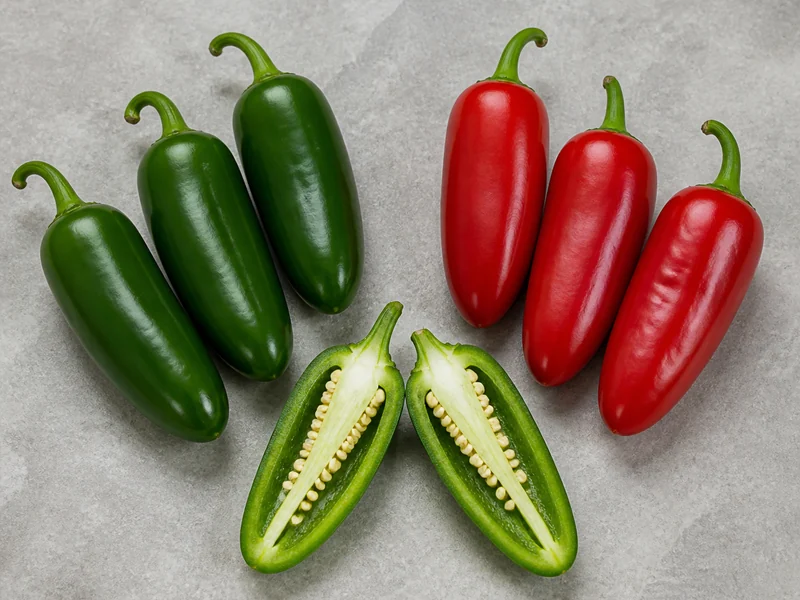
Fresh green pods taste grassy and crisp.
Fully red pods are sweeter and can be smoked into chipotle.
- Species: C. annuum
- Heat tier: Medium (1K-10K SHU)
What Is Jalapeño?
Jalapeño is a thick-walled Capsicum annuum chile tied to the Mexican pepper tradition. It is usually harvested green, before full ripeness, because that stage gives the crisp bite most cooks expect.
Clemson Cooperative Extension lists jalapeño at 2,500-8,000 SHU, placing it in the medium heat tier. That range sits above a poblano but below serrano's sharper bite, so one or two pods can heat salsa without taking over the whole bowl.
Fresh green pods taste grassy, crisp, and lightly bitter near the ribs. Fully red pods are sweeter, a little fruitier, and closer to the flavor that becomes chipotle once it is smoked and dried.
The shape matters in the kitchen. Jalapeños are short, bullet-shaped, and thick fleshed, so they slice cleanly for nachos, hold crunch in vinegar brine, and can be stuffed without collapsing.
The heat is not uniform. NMSU notes that capsaicinoid levels shift with genetics, weather, growing conditions, and fruit age, and its cultivar table includes jalapeño lines bred for different heat targets.
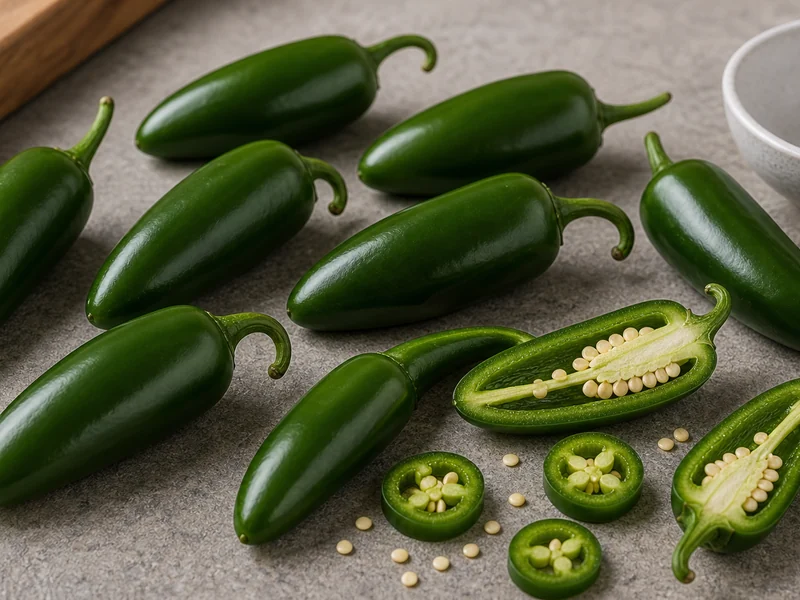
One practical detail fixes a lot of home-cooking heat surprises: seeds are not the source of the burn. NMSU places capsaicinoid glands on the fruit's placenta, the pale interior rib, so trimming that rib lowers heat more than shaking out seeds alone.
| Green, picked before full ripeness | Red, left to ripen | |
|---|---|---|
| Flavour | Grassy and crisp, lightly bitter near the ribs | Sweeter and a little fruitier |
| Best for | Pico de gallo, tacos, poppers, pickles, anywhere the crunch matters | Salsas that want sweetness, and colour against green peppers |
| What it can become | Nothing further, this is the finished stage most cooks buy | Chipotle, once it is smoked and dried |
| Heat | 2,500 to 8,000 SHU | The same range, since ripening moves the sugar rather than the capsaicin |
Where Does Jalapeño Come From?
The name jalapeño points back to Jalapa, the older English spelling associated with Xalapa in Veracruz. That origin clue is useful, but it does not mean every modern jalapeño in a grocery bin came from Veracruz.
Modern jalapeño identity is also shaped by breeding. NMSU lists named jalapeño cultivars such as NuMex Primavera, NuMex Vaquero, and NuMex Jalmundo, and the Vaquero pedigree includes Early Jalapeño and TAM Jalapeño.
That cultivar layer explains why seed packets can feel different from supermarket pods. A grocery jalapeño profile usually stays around 2,500-8,000 SHU, while specialty breeding lines may be selected for mildness, size, disease resistance, color, or much stronger heat.
For cooks, the most important historical split is fresh versus smoked. Green jalapeños became the fresh salsa, pickle, and stuffed-pepper workhorse, while fully ripe red jalapeños became the base material for chipotle.
What Does Jalapeño Taste Like, and How Hot Is It?
The Jalapeño delivers 2.5K–8K Scoville Heat Units, placing it in the Medium tier (1K-10K SHU).
Flavor notes: Grassy, crisp, lightly sweet when red.
What's in Jalapeño? Nutrition Facts
USDA FoodData Central lists raw jalapeño pepper at 29 calories per 100 grams, with 6.5 grams of carbohydrate, 2.8 grams of fiber, and 0.91 grams of protein. Those numbers describe raw pepper flesh, not a pickled or cheese-stuffed serving.
The same USDA entry reports 118.6 mg vitamin C, 248 mg potassium, 1,078 IU vitamin A, and 18.5 micrograms vitamin K per 100 grams. Treat that as nutrient context, not a health claim or a reason to eat large amounts of hot pepper.
The burn comes from capsaicinoids, not from calories. NMSU describes capsaicinoids as compounds produced on the placenta, and the way capsaicin behaves explains why oil, dairy fat, and careful trimming change how hot the same pod feels.
How Do You Cook With Jalapeño?
Use raw green jalapeños when you want crunch and grassy heat. Dice them small for pico de gallo, slice them thin for tacos and sandwiches, or mince one pod into guacamole when serrano would be too sharp.
Thick walls make jalapeño the right pepper for jalapeño poppers. They soften without turning watery, and the cavity is big enough for cream cheese, cheddar, or a meat filling.
Pickling changes the job. Pickled jalapeño rings trade some fresh green bite for vinegar snap, which is why they work so well on nachos, burgers, tortas, and rich beans.
Roasting pushes the flavor darker. Blister the skin under a broiler or over a flame, then chop the softened pepper into salsa, queso, or scrambled eggs. Cutting jalapeños cleanly first gives you control over how much placenta stays in the dish.
Red ripe pods are the chipotle bridge. If the goal is smoke instead of fresh crunch, smoking red jalapeños gives the dried form used in chipotle sauces, adobo, and dry chile blends.
For swaps, keep the dish job in view. A serrano matters when you need more heat in fresh salsa, while a poblano instead of a jalapeno matters when the recipe needs a larger stuffing pepper.
If the store is out, the jalapeño substitute choice depends on form: use a Fresno for raw salsa, serrano for more heat, and poblano only when mild size matters more than heat.
How Should You Buy and Store Jalapeño?
Buy jalapeños that feel firm, glossy, and heavy for their size. Avoid soft spots, sunken ends, and wet stems.
Those are storage problems, not signs of extra ripeness.
Corking, the tan or white stretch marks on the skin, is normal. It can show rapid growth or maturity, but it is not a reliable heat meter because NMSU ties heat to genetics, weather, growing conditions, and fruit age.
Choose green pods for crunch and grassy flavor. Choose red pods when you want sweeter heat, chipotle-style smoke, or a color contrast with green peppers like the purple jalapeño and Hungarian wax pepper in a mixed pickle.
Refrigerate fresh jalapeños dry and loosely wrapped. They usually keep one to two weeks, while sliced pods should be used sooner or frozen flat before bagging.
For longer keeping, pickle slices in a vinegar brine, freeze chopped pods for cooked dishes, or dry fully ripe red pods for a chipotle-style pantry pepper. Dried Mexican chile context matters here: a guajillo is a different dried cultivar, not a dried jalapeño.
What Is a Good Substitute for Jalapeño?
Compare substitutes for Jalapeño by form, flavor, and heat before choosing a ratio. Measured adjustments must account for the dish and the concentration of the replacement.
Direct comparisons show where flavor, form, and preparation differ in the Habanero vs Jalapeno and Jalapeno vs Serrano matchups.
Compare Jalapeño with: Jalapeño vs Cayenne · Jalapeño vs Anaheim · Jalapeño vs Banana · Jalapeño vs Thai Chili · Jalapeño vs Chipotle · Jalapeño vs Birds Eye Chili · Jalapeño vs Hungarian Wax · Jalapeño vs Fresno · Jalapeño vs Cherry Bomb · Jalapeño vs Purple Jalapeno · Jalapeño vs Carolina Reaper · Jalapeño vs Pepperoncini · Jalapeño vs Scotch Bonnet · Jalapeño vs Chipotle In Adobo Vs Morita Whats The Difference
How Do You Grow Jalapeño Peppers?
Jalapeños are forgiving, but they still want warm pepper conditions. Start seed indoors about 8 weeks before transplanting or buy sturdy starts, then move plants outside after frost risk has passed and nights are reliably warm.
University of Minnesota Extension notes that peppers need warm soil, full sun, and steady moisture. In a garden bed, space jalapeño plants about 18-24 inches apart so air can move around the canopy.
Use a container only if it gives the roots enough room. A 5-gallon pot is a practical minimum for one plant, with drainage holes and a potting mix that does not stay soggy.
Harvest does not have to wait for red color. UMN notes that jalapeños can be used while green.
Clip the stem instead of pulling so the plant keeps producing.
Leave some pods to ripen red when you want a sweeter flavor or plan to dry and smoke them. For a full season plan, the grow jalapeños from seed guide covers seed-starting calendars, fertilizer timing, container troubleshooting, and harvest staging.
Jalapeño FAQ


- Clemson Cooperative Extension - Pepper
- New Mexico State University Circular 706 - Chile Pepper Cultivars for New Mexico
- USDA FoodData Central - Peppers jalapeño raw
- University of Minnesota Extension - Growing peppers
- Merriam-Webster - Jalapeño definition and word history
Species classification: C. annuum - based on published botanical taxonomy.