
Anaheim Pepper vs Jalapeño: Which to Roast and Stuff, Which to Slice Raw
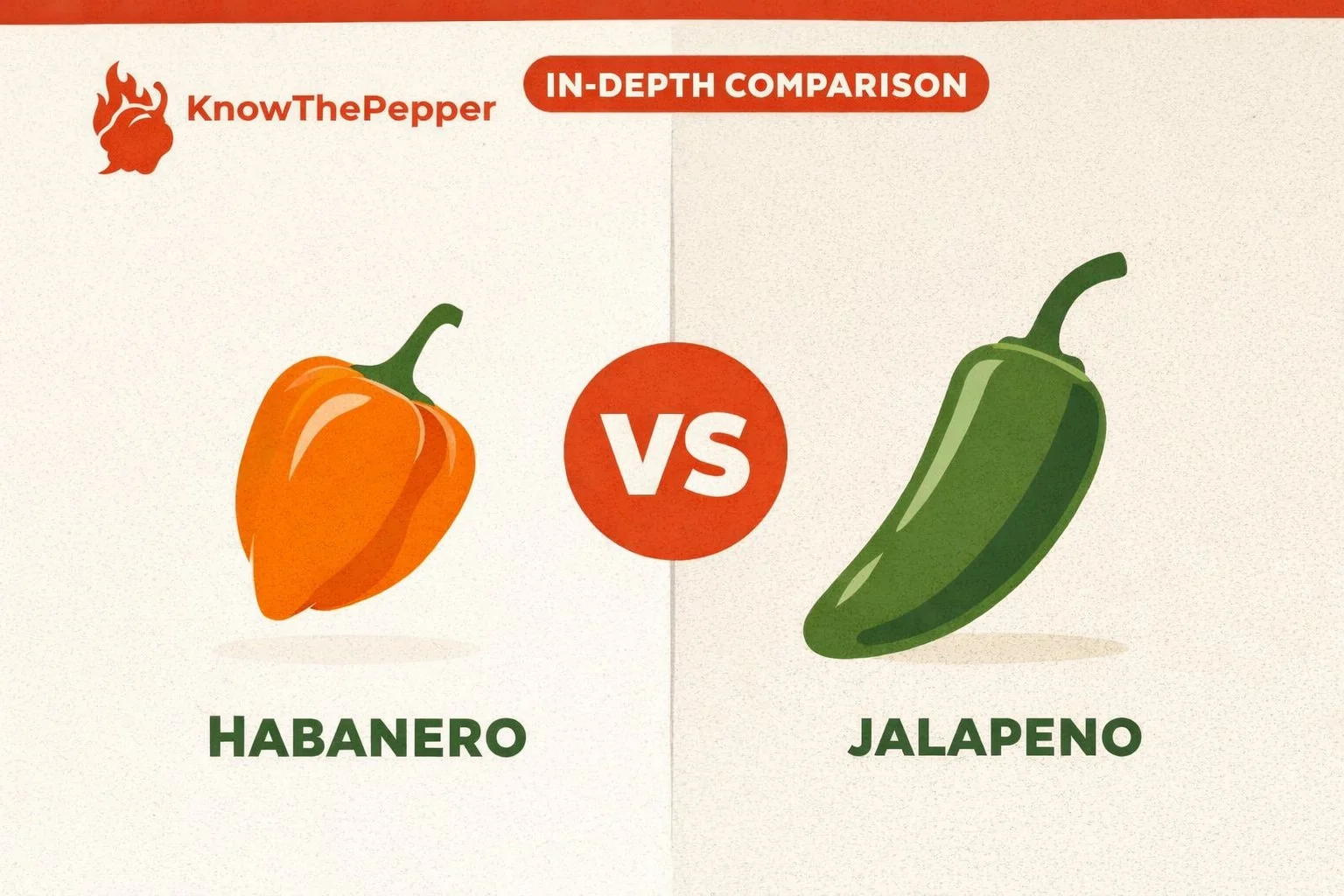
Anaheim is the better choice for roasting, peeling, long strips, and entree-size stuffed peppers. Jalapeño gives more heat and crunch in a smaller amount, which suits salsa, pickles, rings, and poppers.

Anaheim Pepper
MediumJalapeño
MediumQuick Comparison
| Attribute | Anaheim Pepper | Jalapeño |
|---|---|---|
| Scoville evidence | 500-2.5K SHU | 2.5K-8K SHU |
| Heat Tier | Medium | Medium |
| vs Jalapeño | n/a | 1x hotter |
| Flavor | mild, grassy-sweet, lightly earthy when roasted | Grassy, crisp, lightly sweet when red |
| Species | C. annuum | C. annuum |
| Origin | USA | Mexico |
Is Jalapeño Hotter Than Anaheim Pepper?
Choose Anaheim for mild pepper volume and Jalapeño for concentrated fresh heat. The canonical KTP ranges place Anaheim at 500-2,500 SHU and Jalapeño at 2,500-8,000 SHU.
Those ranges touch at 2,500 SHU, so a hot Anaheim can meet a mild Jalapeño.
The Scoville scale describes pungency, but it cannot predict the exact pod in your grocery bag.
New Mexico State University explains that genetics, weather, growing conditions, and fruit age all affect capsaicinoid content. That variation is why a fixed pod-for-pod conversion gives false precision.
Most of the capsaicin sits in glands on the pale placenta, not inside the seeds.
Removing the ribs lowers the dose in either pepper, although it does not turn a Jalapeño into Anaheim.
Size changes the serving as much as heat does. A long Anaheim contributes strips, flesh, and moisture, while a smaller Jalapeño concentrates more heat in less volume.
How Do Anaheim and Jalapeño Differ in Size and Flavor?
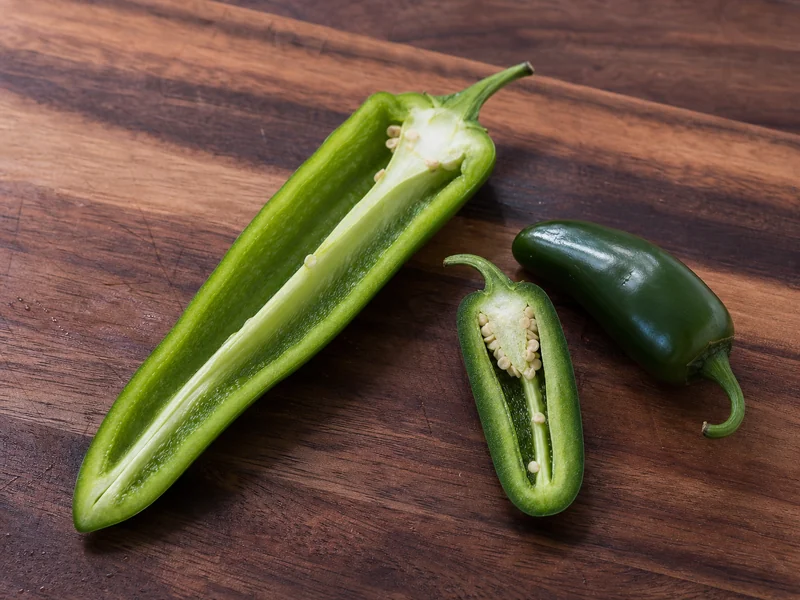
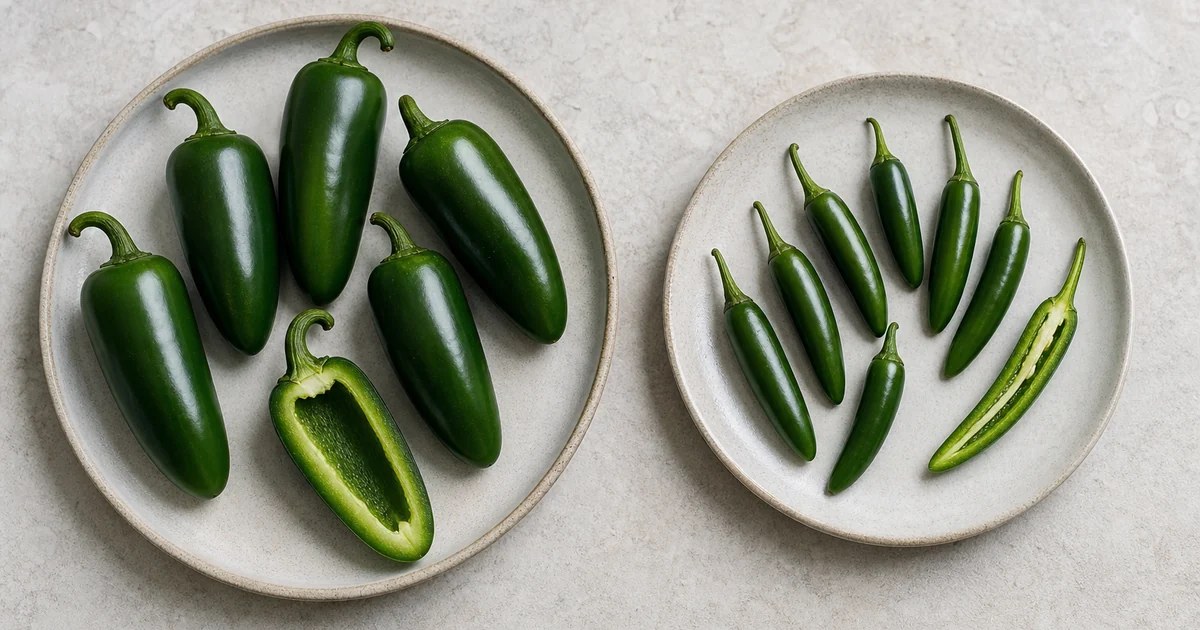
Pod structure creates the clearest difference before either pepper reaches the pan. NMSU describes New Mexican types such as Anaheim at 4-10 inches long and 1-2 inches wide, while Jalapeño fruit averages about 3 inches long with thick flesh.
An Anaheim pepper starts grassy and mild, then becomes softer and sweeter after its skin blisters.
Its long walls collapse into broad strips that carry roasted chile flavor through a sauce or filling.
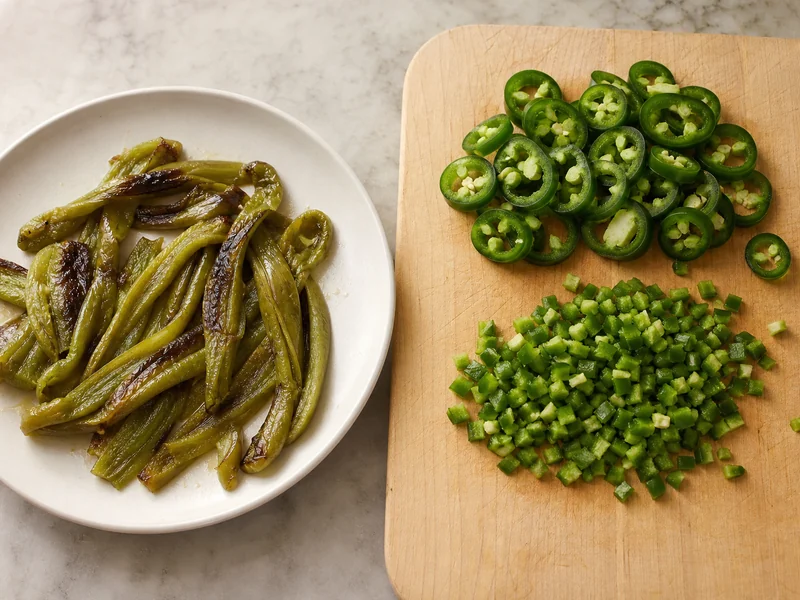
A green Jalapeño stays crisp enough for dice or rings and brings a sharper grassy bite. The thick wall holds its shape in salsa, on tacos, and around a small stuffing.
Ripeness changes both peppers.
Red pods become sweeter and lose some of the raw green character, but the difference in size and wall structure remains.
When Should You Cook With Anaheim or Jalapeño?
Use Anaheim when the pepper supplies part of the dish's bulk. Roasted strips work in green chile sauce, enchiladas, breakfast burritos, eggs, casseroles, and burgers without making every bite equally hot.
The long cavity also suits chile rellenos.
NMSU specifically identifies longer New Mexican pods for that stuffed, battered preparation.
Use Jalapeño when a smaller amount should deliver both crunch and heat. Raw dice belong in pico de gallo and guacamole, while rings distribute a repeatable bite across tacos, nachos, tortas, or sandwiches.
Thick walls explain why Jalapeño poppers keep a compact shell around cheese or meat.
An Anaheim can hold more filling, but it produces a larger, softer stuffed pepper instead of the same appetizer.
Vinegar changes the choice again. Pickled Jalapeño rings supply acid, salt, and heat, while pickled Anaheim strips stay milder and behave more like a vegetable garnish.
Which Pepper Should You Buy, Anaheim or Jalapeño?
Buy Anaheim if the recipe says roast, peel, stuff, or cut into long strips. Buy Jalapeño if it says mince, slice into rings, pickle, or add a small dose of fresh heat.
For a family-size green chile sauce, Anaheim gives enough flesh without forcing the whole batch into Jalapeño's usual heat range.
For salsa or guacamole, Jalapeño adds heat without flooding the bowl with pepper flesh.
Neither pepper wins every use because heat and physical form solve different problems. The practical decision is whether the pepper acts as a main ingredient or a seasoning-sized accent.
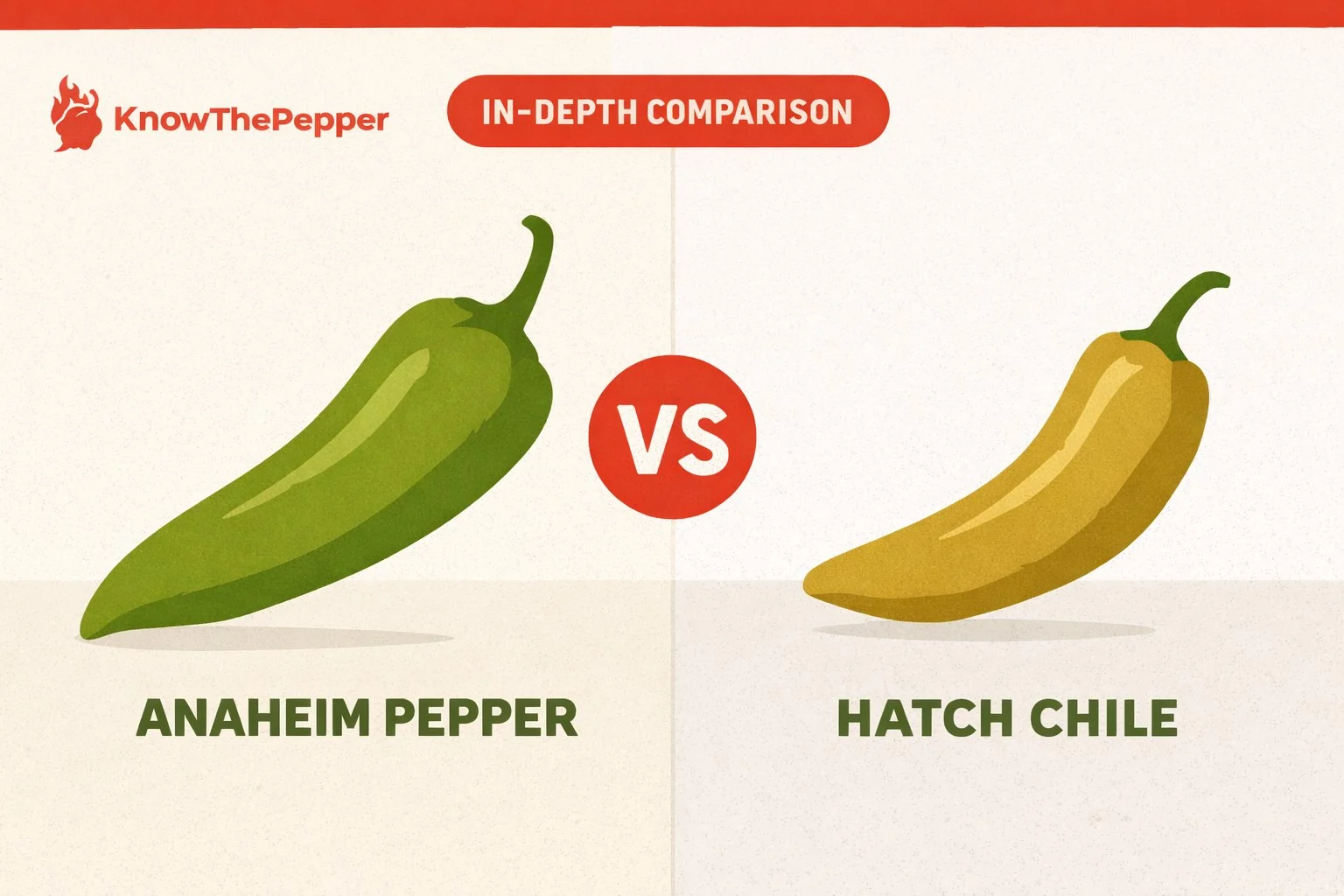
If the package is labeled Hatch rather than Anaheim, treat that as a separate sourcing question. Hatch chile names peppers grown in New Mexico's Hatch Valley, while Anaheim is a cultivar within the broader New Mexican pod type.
How Do You Roast and Peel Anaheim Peppers?
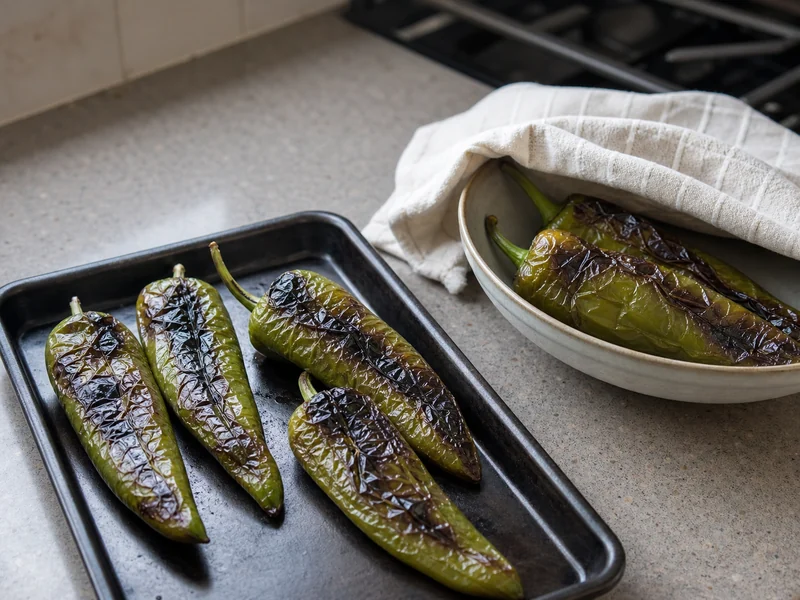
Anaheim earns its advantage after high heat blisters the skin. UC Agriculture and Natural Resources directs cooks to use a gas flame, grill, or broiler, then cover the peppers for 5-10 minutes so the skins slip off.
The full roast peppers process makes sense for several long Anaheims because each pod yields broad pieces of flesh.
Spread them in one layer so each side can blister instead of steaming.
A Jalapeño can be charred by the same methods, but peeling many small pods takes more work for less flesh. Leave the charred skin on when a chopped salsa or queso benefits from dark flecks and a roasted edge.
Freeze roasted Anaheim only after peeling, stemming, and removing trapped air from the package.
UC ANR recommends freezing peppers for cooked dishes because thawing removes their fresh crunch.
How Can You Tell Anaheim and Jalapeño Apart?
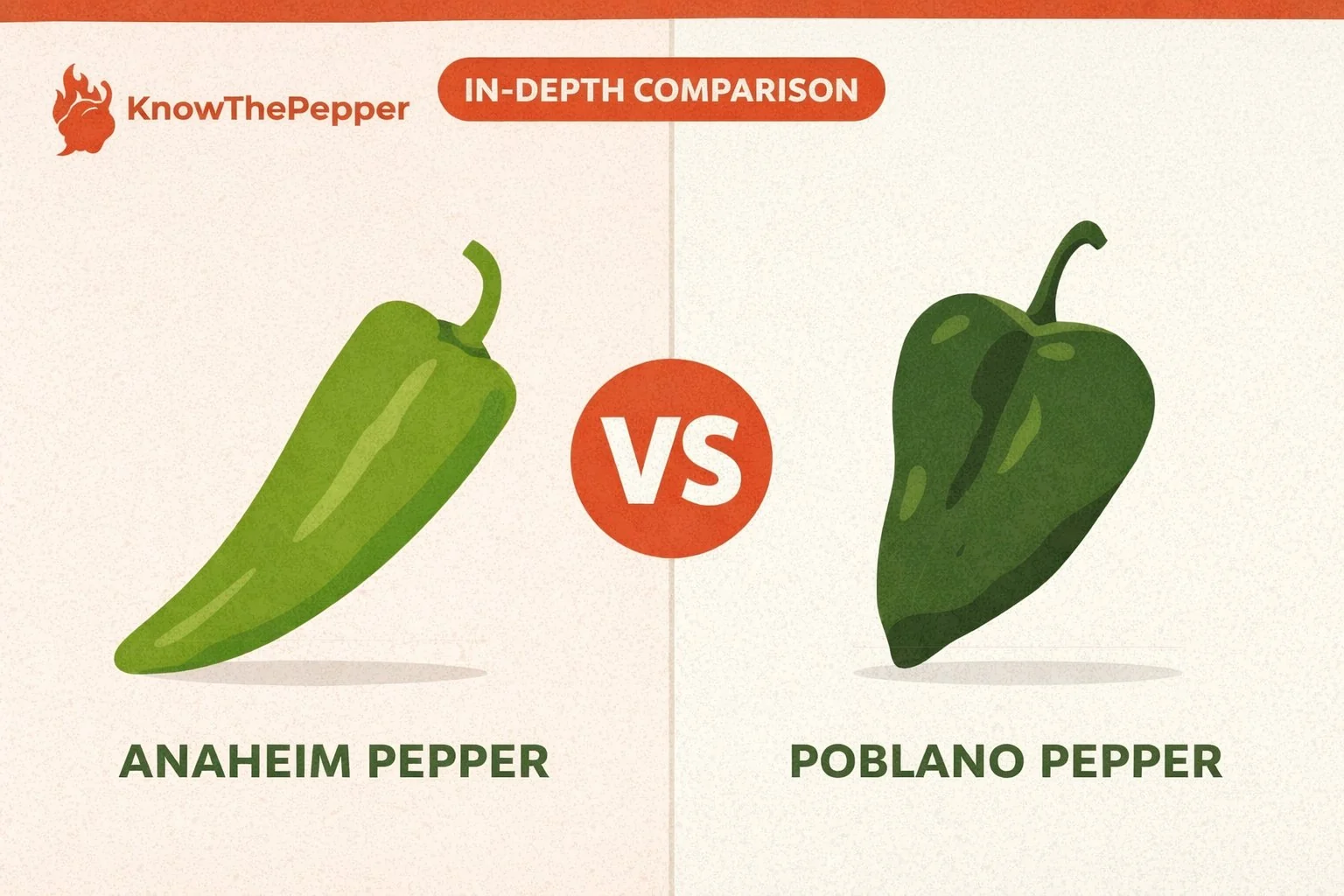
Identify the peppers by shape before trusting a loose produce sign. Anaheim is usually long, narrow, and medium green, while Jalapeño is shorter, darker, thick-walled, and blunt at the tip.
Choose straight Anaheims when you need an intact cavity for stuffing.
Curved pods work just as well for roasting and chopping because their shape disappears after peeling.
Choose firm Jalapeños with tight skin for raw rings or dice. Tan corking lines are surface stretch marks, not a dependable heat meter, because NMSU ties pungency to several genetic and environmental factors.
Do not buy by pod count for a substitution.
One Anaheim may contribute several times the usable flesh of one Jalapeño, so chopped cups or weighed grams give a more useful comparison.
Portion Swap Matrix
A volume-based swap keeps the texture visible instead of pretending two differently sized pods are equal. Start with the row that matches the dish, then adjust heat after the pepper has cooked into the food.
| Dish job | Starting move | Expected change |
|---|---|---|
| Green chile sauce | Replace 1 cup Anaheim with 1/4 cup seeded Jalapeño plus 3/4 cup mild green pepper | Similar bulk with a hotter, sharper finish |
| Raw salsa | Replace Jalapeño with equal chopped volume Anaheim | More pepper flesh and much less heat |
| Roasted strips | Keep Anaheim rather than swapping by count | Jalapeño yields shorter pieces and needs more peeling |
| Stuffed pepper | Choose by cavity size, not a numeric ratio | Anaheim makes an entree-size portion, while Jalapeño makes a small appetizer |
The first row is an editorial starting point, not a laboratory conversion.
Taste the cooked mixture before adding more Jalapeño, since the two published heat ranges overlap only at one boundary.
Substitution
Replace Anaheim with Jalapeño only after separating heat from volume.
For sauces and casseroles, start with one-quarter as much seeded Jalapeño by volume. Restore the missing pepper bulk with a mild green pepper.
Replace Jalapeño with Anaheim at 1:1 chopped volume when less heat is acceptable.
The dish gains more soft pepper flesh and loses the crisp, concentrated bite. Use the dedicated Anaheim substitute decision when the larger pod's physical form matters.
Use the Jalapeño substitute decision when the recipe depends on raw rings or a compact stuffing cavity.
A raw ring, roasted strip, and stuffed pod cannot share one reliable ratio.
Anaheim Pepper vs Jalapeño FAQ
- NMSU Extension - Growing Chile Peppers in New Mexico Gardens
- NMSU - The Chile Cultivars of New Mexico State University Released from 1913 to 2016
- UC Agriculture and Natural Resources - Peppers: Safe Methods to Store, Preserve, and Enjoy