

KnowThePepper
Hatch Chile: A Valley, Not a Variety, and a Two-Month Season
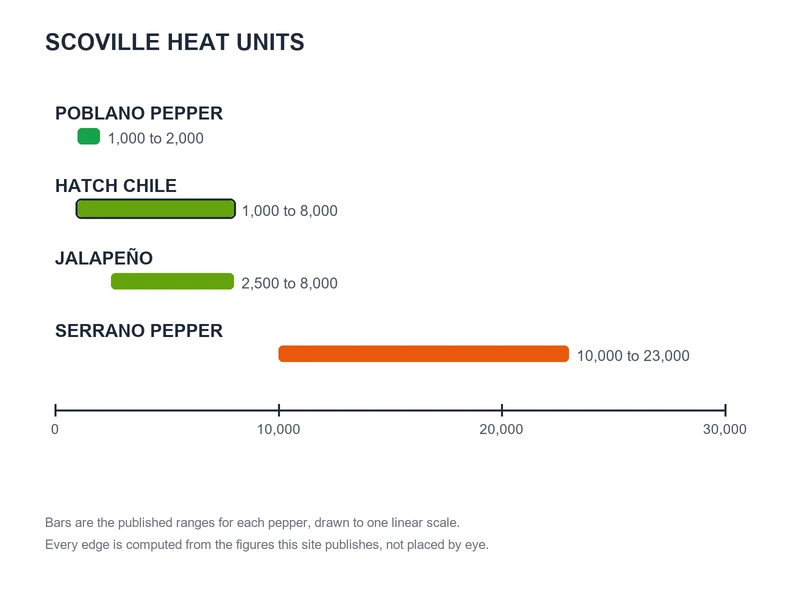
The Hatch Chile is New Mexico's most celebrated pepper, grown exclusively in the Hatch Valley and ranging from 1,000 to 8,000 SHU. Its earthy, sweet flavor with a roasted depth sets it apart from any generic green chile.
Available fresh only during a narrow late-summer harvest window, it commands serious attention from cooks who plan ahead and stock their freezers.
- Species: C. annuum
- Heat tier: Medium (1K-10K SHU)
- Comparison: the same heat range as a jalapeño because their published ranges overlap
What Is Hatch Chile?
The Hatch Chile is defined by where it grows. Grown in the Hatch Valley of southern New Mexico, these elongated C. annuum peppers owe their distinctive character to the region's high desert conditions, intense sun, alkaline soil, and cool nights that concentrate sugars and earthy compounds in ways that flat-land growing simply cannot replicate.
The heat range spans 1,000 to 8,000 SHU, which puts it squarely in the medium heat classification zone - comparable to a moderate smoky-sweet dried pepper with similar SHU on the lower end, but capable of real kick at its upper range. Flavor is the main event here: roasted Hatch chiles develop a complex sweetness layered over an earthy, almost mineral backbone that no other pepper quite matches.
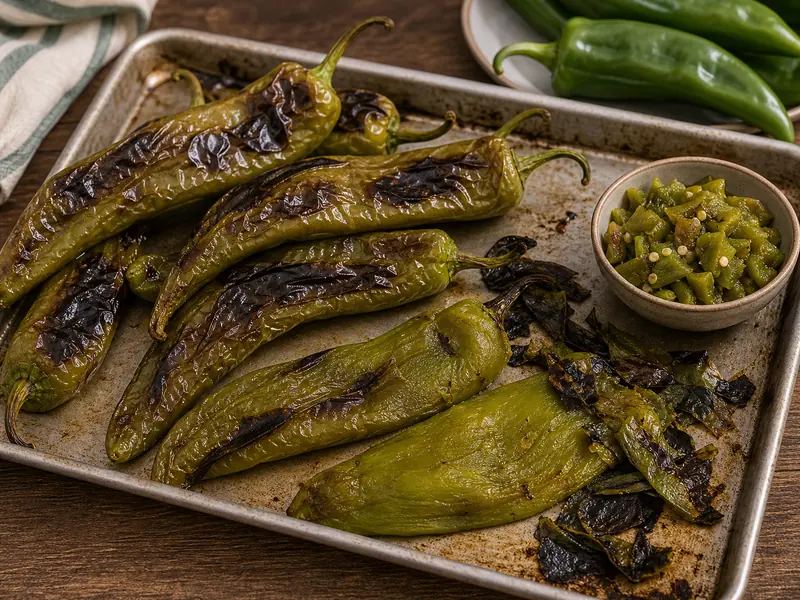
Fresh pods are elongated and tapered, similar in shape to an Anaheim, but the New Mexico green chile is technically the same variety grown outside the valley, and most Hatch devotees insist the terroir makes a real difference. The pods shift from green to red as they mature, with red Hatch chiles offering a deeper sweetness and slightly more heat.
The American pepper growing tradition has no better ambassador. Hatch chile season runs roughly August through September, and the annual Hatch Chile Festival draws tens of thousands of visitors to a town of fewer than 2,000 people.
What Is the History of Hatch Chile?
The Hatch Valley's chile-growing history stretches back centuries, with Indigenous Pueblo peoples cultivating chiles throughout the Rio Grande corridor long before Spanish colonizers arrived in the 16th century. Spanish settlers formalized large-scale cultivation, and by the late 1800s, New Mexico had established itself as a chile-producing region.
New Mexico State University's Chile Pepper Institute played a defining role in the modern Hatch Chile story. Fabian Garcia, a horticulturist at NMSU, spent decades in the early 1900s breeding and standardizing New Mexico chile varieties for consistent flavor and yield.
His work gave growers a foundation that eventually became the distinct cultivars, including NuMex Big Jim, Sandia, and Heritage 6-4 - that define today's Hatch harvest.
The name 'Hatch Chile' became a protected regional brand in the 2000s, though the designation remains informal rather than legally protected like a European PDO. The botanical lineage within C. annuum connects Hatch to thousands of other varieties, but the valley's specific growing conditions remain the defining factor.
What Does Hatch Chile Taste Like, and How Hot Is It?
The Hatch Chile delivers 1K–8K Scoville Heat Units, placing it in the Medium tier (1K-10K SHU). That makes it roughly the same heat range as a jalapeño because their published ranges overlap.
Flavor notes: earthy and sweet.
What Nutrients Does Hatch Chile Provide?
A 100g serving of raw Hatch chile delivers roughly 27 calories, 1.4g protein, 6g carbohydrates, and 1g fat. Vitamin C content is substantial, green chiles provide over 100mg per 100g, exceeding the daily recommended intake in a single serving.
Roasting reduces vitamin C somewhat but concentrates other compounds.
Capsaicin, the compound responsible for heat, triggers the body's TRPV1 receptors, which research associates with anti-inflammatory effects and metabolic benefits. Iron, potassium, and vitamin B6 are also present in meaningful amounts.
Red Hatch chiles contain higher levels of beta-carotene than their green counterparts due to lycopene development during ripening.
How Do You Cook With Hatch Chile?
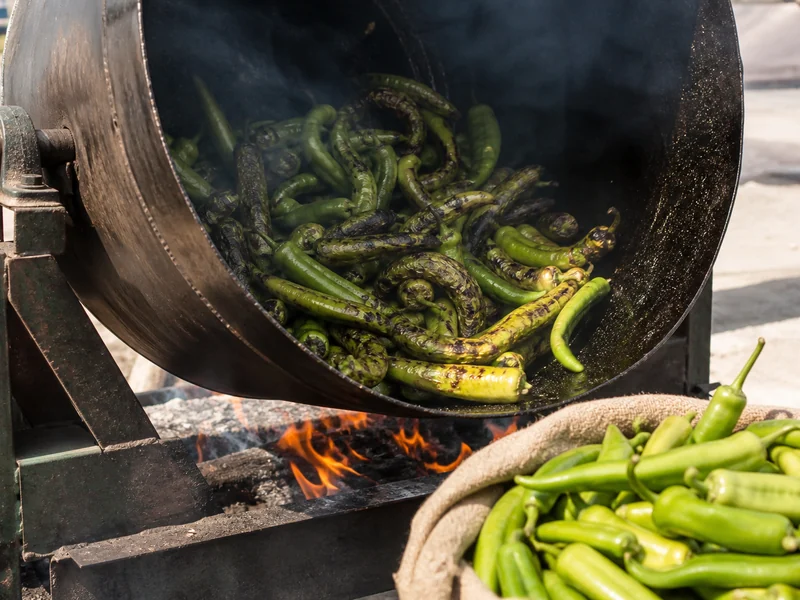
Roasting is non-negotiable. Raw Hatch chiles have decent flavor, but fire, whether over a gas burner, under a broiler, or in a commercial roaster, unlocks the earthy sweetness that makes them worth the fuss.
Char the skin until it blisters, then steam in a sealed bag for 10 minutes before peeling. Roasted Hatch chiles covers every method in detail.
Once roasted and peeled, the applications are broad. Green Hatch chile stew (sometimes called chile verde) is the classic, pork shoulder braised with roasted chiles, garlic, and broth until everything collapses into something deeply savory.
Smothered burritos, enchiladas, and green chile cheeseburgers all rely on the same roasted base.
For heat calibration, Hatch chiles sit at roughly the same level as a jalapeño's familiar fresh-pepper bite - sometimes milder, sometimes matching that upper range depending on the specific cultivar and growing season. The flavor profile differs sharply though: where a red chile brings grassy brightness, Hatch brings earth and sweetness.
Red Hatch chiles, harvested later in the season, work beautifully in dried ristras or ground into powder. The dried red version is the backbone of traditional New Mexico red chile sauce, distinct from the green preparations most people associate with the Hatch name.
Comparing Hatch vs Poblano reveals meaningful differences worth understanding before substituting one for the other.
How Do You Keep Hatch Chile Fresh?
August through September is the entire season, and the shortness of it is not marketing. During peak season, look for firm pods with taut skin and no soft spots.
Larger pods tend toward milder heat. Smaller, thinner ones often run hotter.
Outside the valley, Whole Foods, Central Market, and specialty grocers in the Southwest typically carry fresh Hatch during season. Many stores host roasting events with commercial drum roasters.
For year-round access, buy in bulk during season and freeze. Roast, peel, and freeze in 4-oz portions - they keep well for 12 months.
Canned Hatch chile (Hatch brand and others) is a reasonable pantry substitute. Substitute options when Hatch is unavailable are worth bookmarking before the season ends.
| Stage | What it tastes like | Where it goes |
|---|---|---|
| Green, picked unripe | Earthy and bright, the classic roasted flavour | Green chile stew, enchiladas, anything the roast defines |
| Red, left to ripen | Sweeter and deeper, less grassy | Red chile sauce, ristras, dried and ground |
| Roasted and frozen | Green flavour held through the year | Everything, once the season closes |
Working the short season
- Buy fresh only in August and September, since that window is the whole supply
- Choose firm pods with taut skin, and expect the smaller thinner ones to run hotter
- Roast until the skin blisters, then steam ten minutes in a sealed bag
- Freeze with the skins still on, because they protect the flesh and slip off after thawing
- Portion before freezing, so a year of cooking does not need one large block thawed at once
What Is a Good Substitute for Hatch Chile?
Compare substitutes for Hatch Chile by form, flavor, and heat before choosing a ratio. Measured adjustments must account for the dish and the concentration of the replacement.
Direct comparisons show where flavor, form, and preparation differ in the Anaheim vs Hatch Chile and Hatch vs New Mexico Chile matchups.
How Do You Grow Hatch Chile at Home?
Growing Hatch chiles outside New Mexico is possible, but manage expectations, the valley's specific terroir is genuinely difficult to replicate. That said, the cultivars themselves grow well across USDA zones 5-10 with proper care.
Start seeds indoors 8-10 weeks before last frost. Hatch varieties need soil temperatures above 65°F to germinate reliably, bottom heat helps significantly.
Growing Hatch chiles walks through transplanting timing and soil prep in detail, which matters more for this variety than most.
These plants prefer well-drained, slightly alkaline soil with pH around 6.5-7.5 - closer to the Hatch Valley's natural conditions. Full sun is mandatory.
Sun is the limiting factor: anything less than six hours daily stunts both yield and flavour development. Space transplants 18-24 inches apart.
Water is the other one, since these plants need consistent moisture and hate wet feet. Drip irrigation beats overhead watering for disease prevention.
The plants grow 24-36 inches tall and benefit from staking once pods develop, since the elongated fruits can pull branches down.
For anyone curious how cultivation compares to other annuums, purple-podded varieties offers an interesting contrast in plant habit. Harvest green Hatch chiles when pods reach full size but before they begin to color, typically 75-80 days from transplant.
Leave some pods on the plant to ripen red for a completely different flavor profile.
Hatch Chile FAQ


- Capsicum annuum L. - USDA GRIN Taxonomy
- USDA FoodData Central, Peppers, hot chile, green, raw
Species classification: C. annuum - based on published botanical taxonomy.