
Hatch Chile vs Poblano: Roasting Heat or Stuffing Structure
Hatch chile is the better choice for roasted green chile flavor and flexible heat. Poblano is the better choice for stuffing, mild roasted flesh, and dried ancho-style sauce depth.

Hatch Chile
MediumPoblano Pepper
MediumQuick Comparison
| Attribute | Hatch Chile | Poblano Pepper |
|---|---|---|
| Scoville evidence | 1K-8K SHU | 1K-2K SHU |
| Heat Tier | Medium | Medium |
| vs Jalapeño | 1x hotter | n/a |
| Flavor | earthy and sweet | earthy and rich |
| Species | C. annuum | C. annuum |
| Origin | USA | Mexico |
Which Should You Choose, Hatch Chile or Poblano?
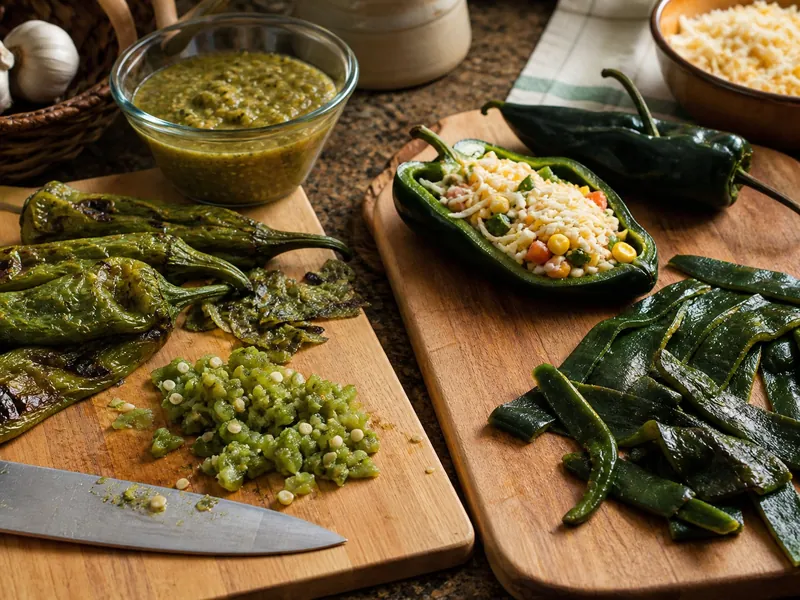
Ask what the pepper has to do after roasting. Hatch chile is usually chosen for chopped roasted green chile flavor.
Poblano is usually chosen for a mild roasted wall that can hold filling.
So the default is simple: Hatch for green chile sauce, stew, queso, eggs, burgers, and enchiladas, poblano for chile rellenos, rajas, stuffed peppers, and roasted strips where structure matters.
Both peppers can technically be prepared either way, but working against the grain costs you something: chopped roasted poblano tastes flatter than Hatch in a sauce, and a stuffed Hatch pod holds less filling per bite than a poblano built for the job.
Is Hatch Chile Hotter Than Poblano?
Hatch chile measures 1,000-8,000 SHU, an eight-fold spread that is why the same bin can hold a mild bag next to a genuinely hot one. Poblano measures a narrower 1,000-2,000 SHU, so it stays gentle and predictable across nearly every pod.
That gap is the real label risk. A recipe written for "mild Hatch" can turn out sharp if the batch leans toward the top of the range, while poblano rarely surprises anyone at the table.
Most Hatch farm stands sell pods labeled by heat tier, mild, medium, or hot, based on the specific cultivar and growing conditions of that harvest, so two bags from the same stand in different weeks can genuinely differ. Poblano growers rarely bother with a heat-tier label at all, since the pepper's narrow range makes that distinction commercially unnecessary.
Season And Regional Identity
Hatch is seasonal and regional. Fresh roasting events peak in late summer, and many cooks freeze roasted bags because the New Mexico green chile aroma is hard to replace later in the year.
Poblano is steadier at supermarkets. Its identity is less about a harvest event and more about Mexican dishes that use the pod's size, mild heat, and roastable skin.
The dried form points to a different role: ripe dried poblano becomes ancho. If the recipe needs deep red sauce, you are no longer choosing Hatch versus fresh poblano, you are choosing a dried chile path.
Hatch Valley's growing season runs roughly late July through October, and the New Mexico Chile Association certifies authentic Hatch-grown pods to prevent other regions from marketing chiles under the Hatch name. Poblano grows and ships year-round from Mexican farms, which is why it never developed the same harvest-festival identity that draws visitors to New Mexico every fall.
Can You Substitute Hatch Chile for Poblano?
For chopped roasted pepper in eggs, queso, burgers, or enchiladas, mild Hatch can replace poblano and will taste brighter. Poblano can replace Hatch only when the recipe does not depend on New Mexico chile aroma.
For stuffed peppers, poblano is the better default because the wall, shoulder, and cavity are built for filling. Hatch can work only if the pods are large and mild enough.
For green sauce, Hatch is the better default because it brings the roasted green chile identity people expect. Poblano can make a good green sauce, but it will taste softer and less regional.
For the broader mild-pepper role, bell pepper versus poblano answers that broader mild-pepper question better than this page.
For chile rellenos specifically, poblano remains the traditional choice because the recipe was built around its wall thickness and cavity shape. A large, mild Hatch pod can work in a pinch, but the batter-to-filling ratio usually needs adjusting since Hatch flesh is thinner and cooks down faster under the same coating.
| Recipe job | Hatch advantage | Poblano advantage |
|---|---|---|
| Chopped green chile sauce | Regional roasted chile flavor | Milder backup when that identity is optional |
| Stuffed whole pepper | Use only a large mild pod | Broad shoulder and deep cavity |
| Rajas or roasted strips | Brighter variable heat | Wide mild strips |
| Freezer portions | Roast, peel, chop, and flatten | Freeze only when texture is no longer needed |
Buying Freezing And Storage
Buy Hatch by heat label and roast status. Fresh pods should feel firm with smooth green skin.
Roasted bags should smell clean and smoky, with no sour liquid or gray flesh.
Buy poblanos by shape. Broad shoulders help stuffing, while smaller curved pods are fine for strips and sauces.
Freeze roasted Hatch in flat portion bags, and refrigerate poblanos only short term because their value is texture as much as flavor.
Frozen roasted Hatch keeps well for about a year if the bag is sealed tight and the air pressed out before freezing. Vacuum-sealing extends that further and prevents the freezer-burn graininess that ruins texture in a loosely bagged batch.
Fresh poblanos are best used within a week of purchase, since their value is largely about crisp wall texture for stuffing, and that texture degrades faster than Hatch's once the pod starts to soften.
How Should You Roast Hatch Chile and Poblano?
Roasting method matters as much as the pepper itself. Hatch chiles are traditionally roasted whole over an open flame or in a rotating drum roaster, a method common at New Mexico farm stands every August and September that blisters the skin evenly in minutes.
The charred skin peels away easily after a short steam rest in a covered bowl or bag, leaving flesh that carries a smoky top note even before any other seasoning is added.
Poblano roasting usually happens over a stovetop burner, under a broiler, or on a hot comal, since the pepper is typically prepared in smaller home-kitchen batches rather than large open-flame drums.
The goal is the same, blackened skin that peels away clean, but poblano skin is slightly thicker and can take a minute or two longer per side to blister fully.
Is Hatch a Single Chile Variety?
Hatch describes New Mexico chile associated with the Hatch growing region and market, not one single cultivar. New Mexico State University's Chile Pepper Institute documents named New Mexico cultivars, so buyers should read the variety and heat label rather than treating every Hatch bag as identical.
Poblano names a distinct fresh pepper form used in Mexican cooking, while its ripe dried form is called ancho. The useful comparison is therefore a regional New Mexico chile category against a broad-shouldered fresh poblano, not two fixed cultivars with one universal history.
The stored sources do not establish all former dates, certification claims, pre-Columbian timelines, or festival details. Cultivar label, growing origin, pod shape, intended dish, and actual batch heat are the evidence that changes a purchase.
Is Hatch Chile or Poblano More Nutritious?
No cultivar-specific nutrient analysis in the stored sources establishes a meaningful Hatch-versus-poblano advantage. Generic 100 gram values cannot represent every Hatch cultivar, roasting method, serving size, or stuffed poblano preparation.
Roasted form and recipe job are the useful measures. Hatch is commonly peeled and chopped so its roasted green chile flavor spreads through sauce, stew, queso, eggs, or enchiladas, while poblano is often kept as a wall or wide strip.
Taste a small piece from every roasted batch before mixing it into a shared dish. Hatch heat varies by cultivar and lot, and removing skin after roasting changes texture but does not guarantee a mild result.
Hatch Chile vs Poblano Pepper FAQ
- NMSU Cultivars - Chile Pepper Institute
- Capsicum annuum L. - USDA GRIN Taxonomy
- Bosland and Votava - Peppers: Vegetable and Spice Capsicums