
Jalapeño vs Poblano: More Heat in Less Volume or Roasted Flesh to Stuff
Jalapeño is hotter and works best when a small sliced or minced chile should season the dish. Poblano is milder, broader, and better when the pepper must be roasted, peeled, cut into strips, or filled.
The useful rule is choose by physical job before heat. A chopped swap can be adjusted, but a whole-pod stuffing recipe cannot.

- Heat range: 2,500 to 8,000 SHU vs 1,000 to 2,000 SHU
- Useful form: Small, firm pod for rings or dice vs Broad pod for roasting or stuffing
- Best first move: Slice, mince, pickle, or blister vs Char, rest, peel, then fill or slice
- Dried identity: Chipotle when smoke-dried ripe vs Ancho when ripened and dried
- Choose it for: Heat and a crisp green accent vs Mild roasted flesh and structure
Jalapeño
MediumPoblano Pepper
MediumQuick Comparison
| Attribute | Jalapeño | Poblano Pepper |
|---|---|---|
| Heat range | 2,500 to 8,000 SHU | 1,000 to 2,000 SHU |
| Useful form | Small, firm pod for rings or dice | Broad pod for roasting or stuffing |
| Best first move | Slice, mince, pickle, or blister | Char, rest, peel, then fill or slice |
| Dried identity | Chipotle when smoke-dried ripe | Ancho when ripened and dried |
| Choose it for | Heat and a crisp green accent | Mild roasted flesh and structure |
Which Is Hotter, Jalapeño or Poblano?
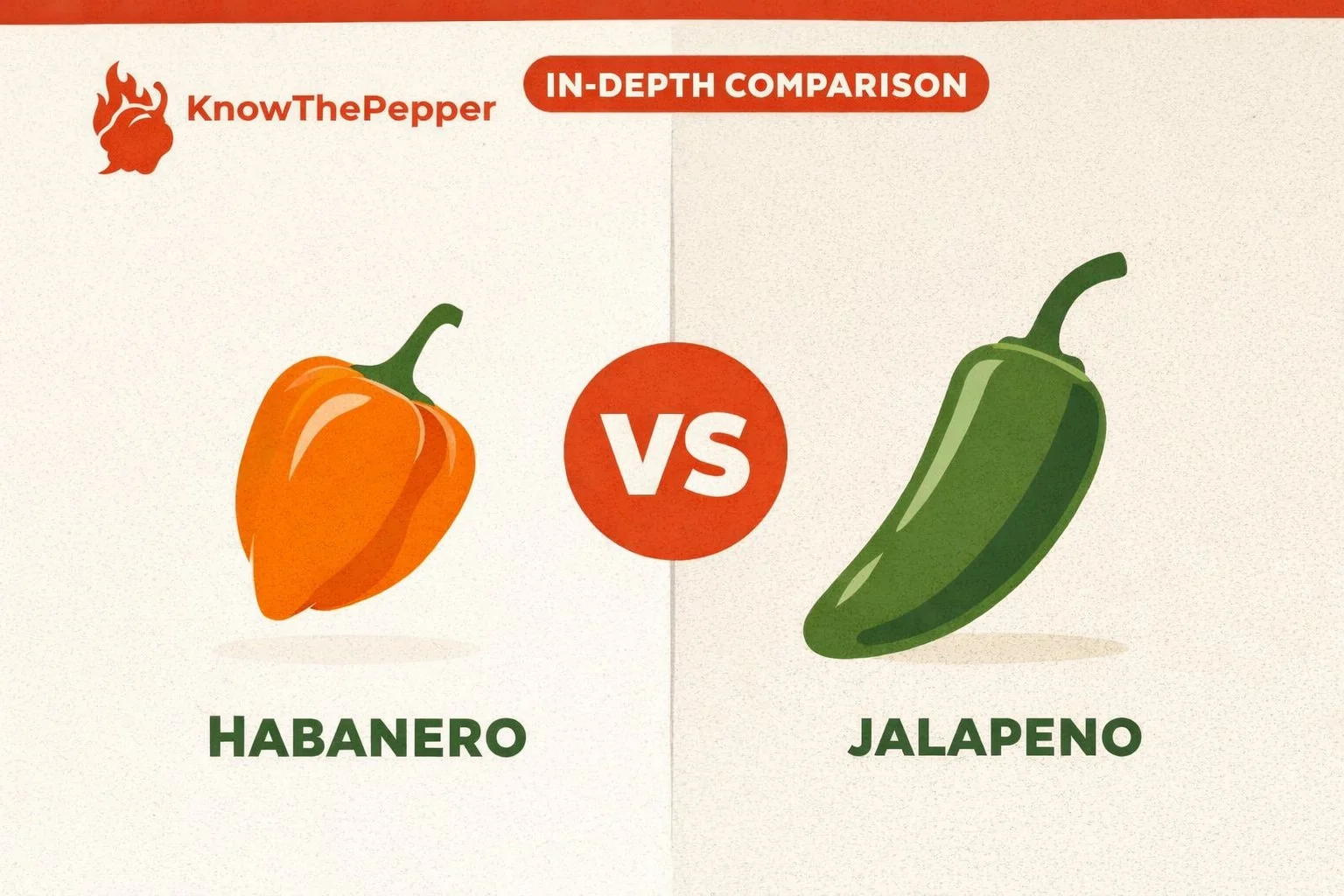
Jalapeño is the hotter choice. KnowThePepper's cited reference ranges place green jalapeños at 2,500 to 8,000 SHU and poblanos at 1,000 to 2,000 SHU, so even the mild end of the jalapeño band begins above the top of the poblano band.
The upper limits produce a simple 4 to 1 heat ratio, but that ratio is a comparison of ceilings rather than a promise about two peppers from the same shopping trip. New Mexico State University's Chile Pepper Institute documents wide cultivar-level variation within jalapeños, including named NuMex releases that sit above the familiar market range.
For the cook, the important split is dose. A few jalapeño rings can season an entire serving, while a poblano is mild enough to supply a much larger share of the food on the plate.
Scoville numbers describe pungency, not how much pepper flesh a recipe receives. Matching the poblano's volume with jalapeño alone can overshoot the intended heat before the pan has enough vegetable body.
Cultivar identity can override the market shorthand. NMSU reports NuMex Primavera at 8,500 to 9,000 SHU, NuMex Vaquero at 25,000 to 30,000 SHU, and NuMex Piñata at 45,000 to 50,000 SHU, so a seed packet with a named cultivar deserves more trust than a generic jalapeño label.
The two peppers still belong to Capsicum annuum. USDA's National Agricultural Library identifies that species, while NMSU treats jalapeño and poblano as different pod types within it, which explains why shared botany does not make their kitchen roles interchangeable.
Read the range without overpromising
| Decision | Jalapeño | Poblano |
|---|---|---|
| Heat ceiling | 8,000 SHU | 2,000 SHU |
| Upper-range gap | 4 times hotter | Baseline |
| Practical dose | Small amount seasons a dish | Larger amount supplies pepper flesh |
How Do Jalapeño and Poblano Taste Different?
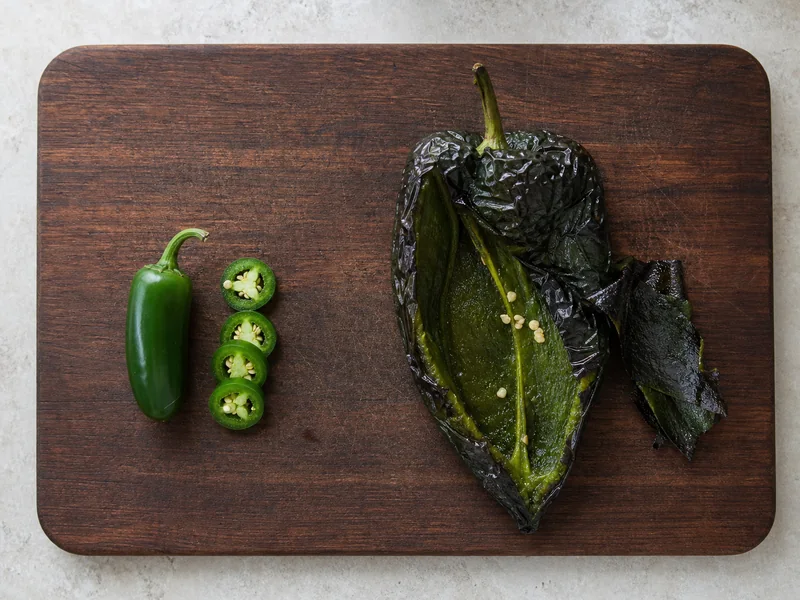
Fresh jalapeño contributes a crisp green bite that remains noticeable when the pepper is diced small. The poblano gives less heat and more pepper flesh, so roasting changes its value more dramatically than it changes a jalapeño's.
Serious Eats' poblano reference describes the roasted chile as earthy and gently sweet, which suits sauces and fillings that need body instead of a sharp raw accent. Jalapeño is the clearer choice when lime, tomato, onion, or vinegar needs a compact green-chile counterpoint.
Preparation creates a second contrast. University of Minnesota Extension notes that the tough skin on long green chiles can be loosened with heat, which is why a poblano is commonly charred and peeled before it becomes rajas or a stuffed pepper.
Charring is a surface treatment, not the same process as smoking or drying. The goal with a fresh poblano is to blister the skin while keeping the broad wall intact enough to steam, peel, slice, or fill.
Jalapeño does not require that sequence for its most common jobs. Keeping the skin and firm wall intact preserves the snap that makes a raw dice, pickled ring, or blistered whole pod useful.
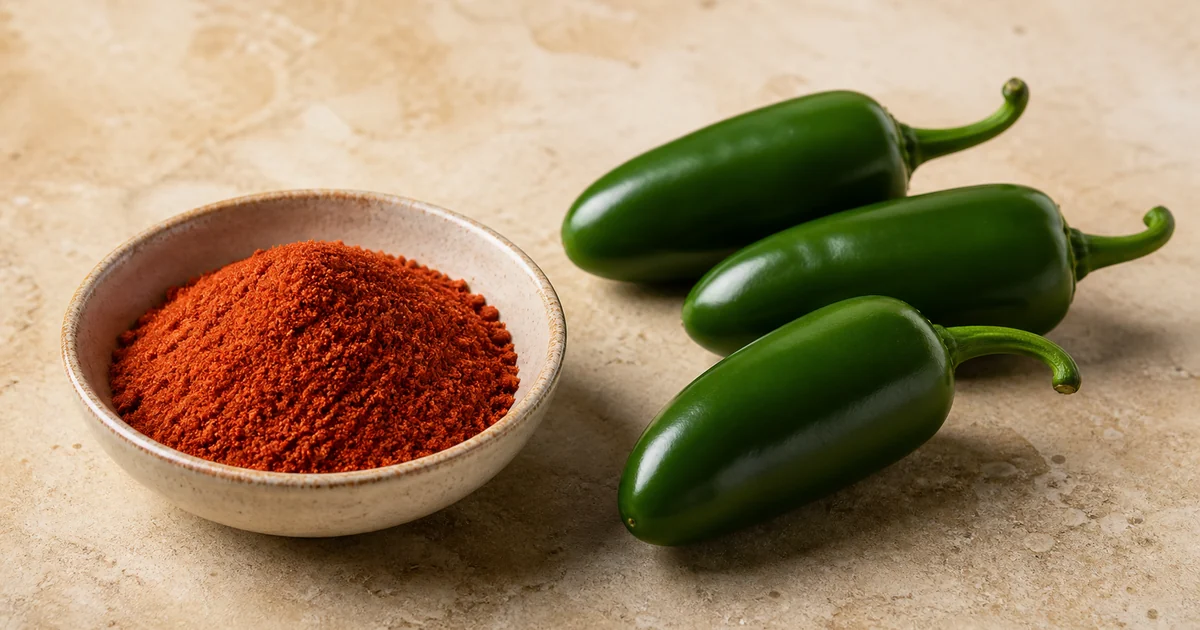
Drying creates two different pantry ingredients. NMSU identifies a smoke-dried red jalapeño as chipotle, while its Chile Pepper Institute identifies the dried ripe poblano as ancho with sweet, smoky, dried-fruit notes.
Fresh name, dried name
Green jalapeño becomes chipotle only after the ripe red pod is smoked and dried. Fresh poblano becomes ancho after the ripe pod is dried, according to NMSU's Chile Pepper Institute.
That naming change matters at the store. A can of chipotles in adobo and a bag of dried anchos are preserved forms with concentrated flavors, not direct stand-ins for two fresh green peppers.
When Should You Use Poblano Instead of Jalapeño?
Choose jalapeño when the chile should act as a seasoning. Thin rings on tacos, chopped pepper in pico de gallo, pickled slices, and jalapeño poppers all use its compact shape and higher heat without asking one pod to provide much vegetable volume.
Choose poblano when the pepper itself supplies the structure. A broad roasted pod can hold cheese or picadillo for chiles rellenos, and sliced roasted flesh can carry a cream sauce in rajas without turning every bite hot.
That distinction changes portioning. Jalapeño is usually distributed through a dish as rings, dice, or minced chile, while poblano can remain one recognizable piece on each plate.
It also changes the supporting ingredients. Jalapeño often needs acid, salt, or a creamy filling to balance its concentrated bite, while poblano can carry cheese, corn, mushrooms, rice, or meat without making the filling secondary to the heat.
The dried form changes the answer again. The Chile Pepper Institute lists ancho in sauces, stews, and marinades, so a recipe that names ancho is asking for the ripe dried poblano's concentrated flavor rather than the moisture and green character of a fresh poblano.
Pickling favors jalapeño because rings expose a useful balance of skin, flesh, and brine in each bite. Roasting favors poblano when the goal is a wide sheet of tender chile flesh that can be peeled, folded, filled, or cut into strips.
Method therefore outranks color. Two green peppers can look substitutable in the produce bin, but a topping, a pickle, a roasted strip, and a stuffing vessel ask the ingredient to perform four different physical jobs.
Match the prep verb
- Slice or mince: jalapeño keeps the heat focused in small pieces.
- Pickle: jalapeño rings keep a recognizable bite and shape.
- Roast and peel: poblano supplies a wide sheet of tender chile flesh.
- Stuff: poblano provides the cavity and wall area the dish requires.
- Dry for sauce: ripe poblano becomes ancho, a separate pantry form.
Which Should You Choose, Jalapeño or Poblano?
Pick jalapeño for more heat in less volume, especially in salsa, tacos, pickles, nachos, and small stuffed snacks. Pick poblano for more roasted flesh with less heat, especially in chiles rellenos, rajas, roasted sauces, and dishes that treat the pepper as a vegetable.
If the recipe names a preparation rather than a heat level, follow that clue. Rings, mince, and pickles point toward jalapeño, while roasting, peeling, strips, and whole-pod stuffing point toward poblano.
If the recipe only says green chile, inspect the next verb and the intended texture. A pepper that disappears into a blended sauce allows more flexibility than one that must remain crisp, hold a filling, or form visible roasted strips.
A substitution can work in chopped sauces, soups, and fillings where the pepper disappears into other ingredients. It fails when the pepper's dimensions create the dish, because extra jalapeños do not become one broad poblano and one poblano does not become several crisp jalapeño rings.
Choose by the job first, then adjust the heat. That order prevents the common mistake of matching two peppers by green color while ignoring how much flesh, surface area, and capsaicin the recipe needs.
Buy for the method
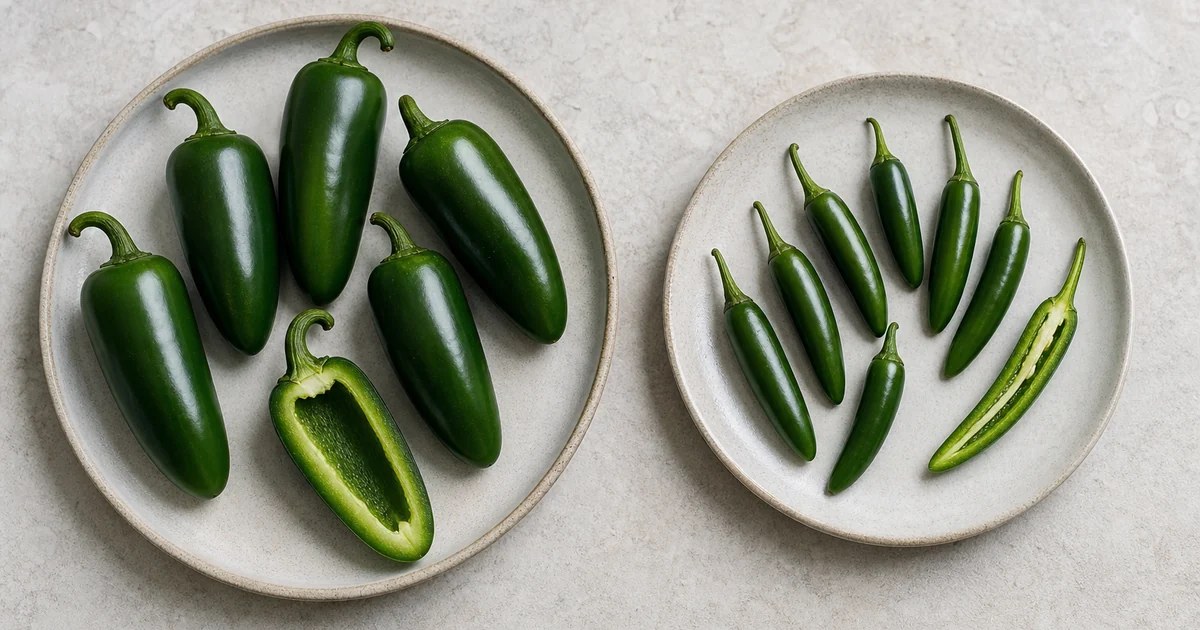
For rings or poppers, choose firm jalapeños with smooth skin and an even cylindrical shape. Pale corking can occur on mature jalapeños, but wet spots and collapsing flesh are reasons to leave a pod behind.
For roasting or stuffing, choose broad poblanos that lie reasonably flat and have intact walls. A twisted or deeply folded pod can still flavor a sauce, but an even cavity is easier to char, peel, open, and fill.
Shop by the finished form rather than by count. Four small jalapeños may provide more heat than one poblano, but they still cannot provide one continuous wall for stuffing or broad strips for rajas.
Substitution
A useful swap separates heat from pepper volume. For a chopped dish that calls for poblano, use mild green pepper for the missing bulk and add jalapeño gradually for heat.
When a chopped dish calls for jalapeño, poblano can supply green-chile flesh but will not reproduce the same heat. Add a measured amount of another hot chile only if the recipe needs that sharper capsaicin dose.
Whole-pod recipes have no direct conversion. A jalapeño is too small to replace a poblano in chiles rellenos, while a poblano is too broad and mild to behave like a jalapeño popper or a tray of pickled rings.
For salsa, decide whether the missing quality is heat or roasted body. Raw jalapeño restores the first, while roasted poblano restores the second, and combining small amounts of both can be more faithful than forcing either pepper to do both jobs.
For soup, stew, or a cooked filling, add poblano early enough for its flesh to soften into the base. Add jalapeño later when the finished dish needs a fresher green note and a more noticeable heat edge.
For a pickle, keep jalapeño as the default because the ring is part of the expected texture. Poblano can be acidified for flavor, but its larger, softer pieces do not reproduce the same bite or serving pattern.
Taste after the pepper has entered its final form. Roasting softens and sweetens poblano flesh, while acid and salt change how a pickled jalapeño reads in the finished dish.
Prep and storage safeguards
University of Minnesota Extension advises wearing gloves when handling hot peppers and washing your hands before touching your eyes. This matters most with jalapeño, but any pungent poblano can transfer capsaicin from its inner tissue.
The same extension service recommends keeping peppers cool and notes that refrigeration is suitable for only a few days because prolonged cold can pit the skin. Store them dry, inspect them before use, and roast poblanos only when you are ready to peel or cook them.
Cut away wet or collapsed tissue rather than trying to hide deterioration with roasting. Firm skin and sound walls matter because jalapeño needs to keep its bite, while poblano needs enough integrity to survive charring and peeling.
Jalapeño vs Poblano Pepper FAQ
- Chile Terminology - New Mexico State University Chile Pepper Institute
- Ancho, Dried Poblano - New Mexico State University Chile Pepper Institute
- Chile Cultivars of New Mexico State University
- Growing Peppers in Home Gardens - University of Minnesota Extension
- Harvesting and Storing Home Garden Vegetables - University of Minnesota Extension
- Capsicum annuum - USDA National Agricultural Library