Banana Pepper vs Jalapeño: Which One Should You Use?
Choose sweet banana pepper for mild tang and long stuffed pods, and choose jalapeño for thick flesh and a clear medium burn. The practical comparison is usually 0-500 SHU against 2,500-8,000 SHU, but check the label because hotter banana-shaped wax peppers are sold beside sweet banana types.

Sweet banana pepper is the mild, long, tang-friendly choice, while jalapeño is the shorter, thicker-walled choice with 2,500-8,000 SHU of green chile heat. They can trade places for pepper volume only when you adjust heat, texture, and pickled acidity deliberately.
- Typical heat: 0-500 SHU vs 2,500-8,000 SHU
- Fresh shape: Long, slim, tapered vs Shorter, broad, blunt
- Flesh: Thinner and flexible vs Thicker and firm
- Fresh flavor: Mild, lightly sweet vs Grassy, green, hot
- Best mild job: Stuffing and sandwich rings vs Use a heatless jalapeño cultivar
- Best hot job: Check hot banana cultivar vs Salsa, poppers, roasting
Banana Pepper
MildJalapeño
MediumQuick Comparison
| Attribute | Banana Pepper | Jalapeño |
|---|---|---|
| Typical heat | 0-500 SHU | 2,500-8,000 SHU |
| Fresh shape | Long, slim, tapered | Shorter, broad, blunt |
| Flesh | Thinner and flexible | Thicker and firm |
| Fresh flavor | Mild, lightly sweet | Grassy, green, hot |
| Best mild job | Stuffing and sandwich rings | Use a heatless jalapeño cultivar |
| Best hot job | Check hot banana cultivar | Salsa, poppers, roasting |
How Much Hotter Is a Jalapeño Than a Banana Pepper?
A sweet banana pepper normally sits in the 0-500 SHU range, while a standard jalapeño is commonly listed at 2,500-8,000 SHU. That makes jalapeño the reliable choice when a dish needs noticeable chile heat rather than pepper flavor alone.
The gap is large, but calling jalapeño infinitely hotter is mathematically useless because the banana range begins at zero. A more useful kitchen reading is that even the mild end of the jalapeño range stands well above the upper end commonly assigned to sweet banana peppers.
Scoville values describe a range, not a guarantee for every pod. New Mexico State University explains that genetics sets a cultivar's potential and that weather, water, fruit age, and growing conditions can move individual results within that potential.
A single jalapeño range spans more SHU than the full sweet banana range, so two jalapeños from the same bag may not taste identical. Darker color, red ripeness, or surface corking can help describe maturity, but none of those cues supplies an exact SHU reading.
The range changes how you season a dish. Several ounces of sweet banana pepper can add moisture, pepper aroma, and bulk with little burn, while the same prepared weight of jalapeño can make heat the first thing a sensitive diner notices.
Acid, salt, dairy, and fat can change how strongly you perceive the burn in a finished dish, but they do not turn a hot jalapeño into a sweet banana pepper. Choose the pod for the flavor and texture job first, then balance the full recipe for the diners at the table.
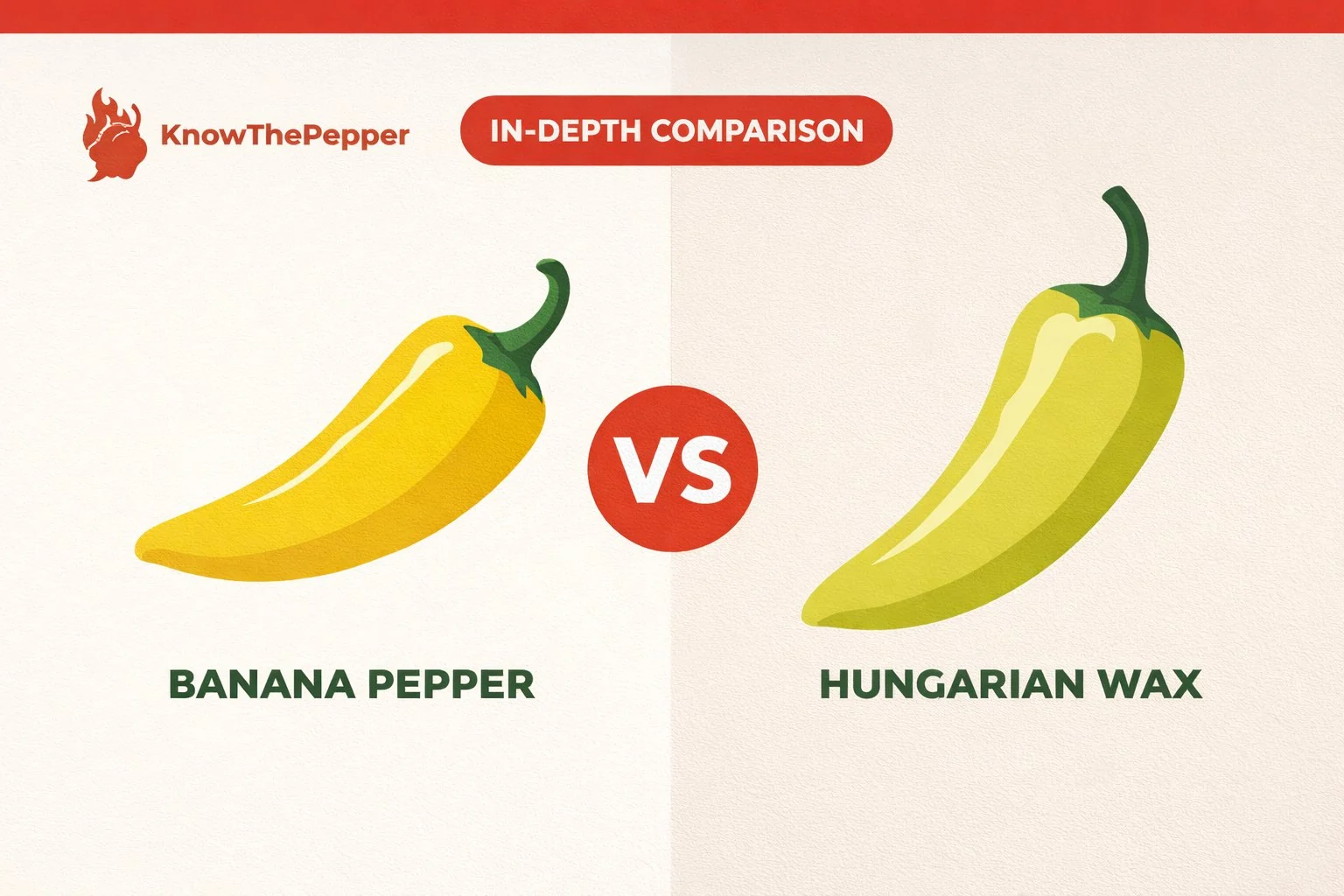
The word banana can hide different heat levels. Hot banana cultivars and Hungarian wax peppers can share the same long yellow shape, so read the cultivar label instead of judging heat from color alone.
If the pepper is unlabeled, cut a tiny piece from the wall and taste it before adding the pale inner tissue. That check tells you more about the pod in front of you than a produce-bin name that may cover several cultivars.
The produce label matters
- Sweet banana pepper usually means a 0-500 SHU mild cultivar.
- Hot banana and Hungarian wax types can look similar but carry more heat.
- Color alone cannot confirm the cultivar or its exact SHU.
How Do Banana Pepper and Jalapeño Taste Different?
Sweet banana pepper tastes mild, lightly sweet, and vegetal when fresh. Pickled versions gain most of their sharpness from vinegar and salt, which is why many people remember tang before they remember the pepper's fresh flavor.
Jalapeño brings a darker green, grassy flavor with a firmer bite. Ripening toward red can make the fruit taste rounder and slightly sweeter, but it still carries the capsaicin-driven heat that separates it from a typical sweet banana pepper.
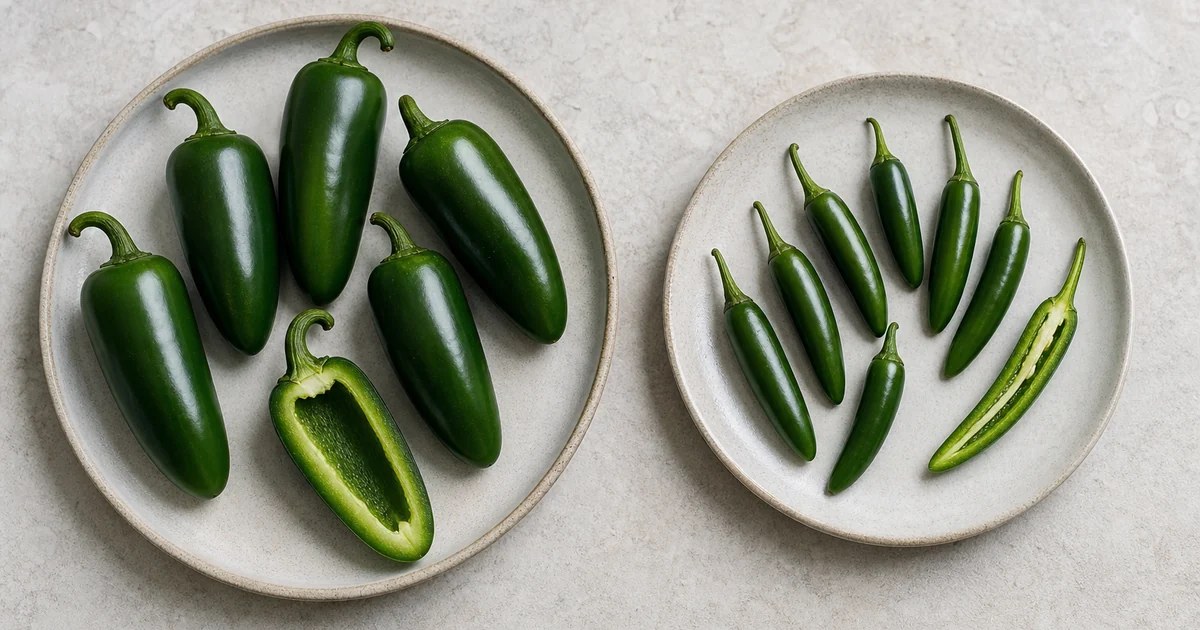
Appearance offers the fastest store check. Banana peppers are usually longer, slimmer, and tapered, with pale yellow-green skin that can mature through orange to red, while jalapeños are shorter, broader, and commonly sold dark green with a blunt shoulder and rounded point.
That size difference makes pod count a poor substitution unit. One long banana pepper may yield much more chopped flesh than one compact jalapeño, even though the jalapeño contributes far more heat.
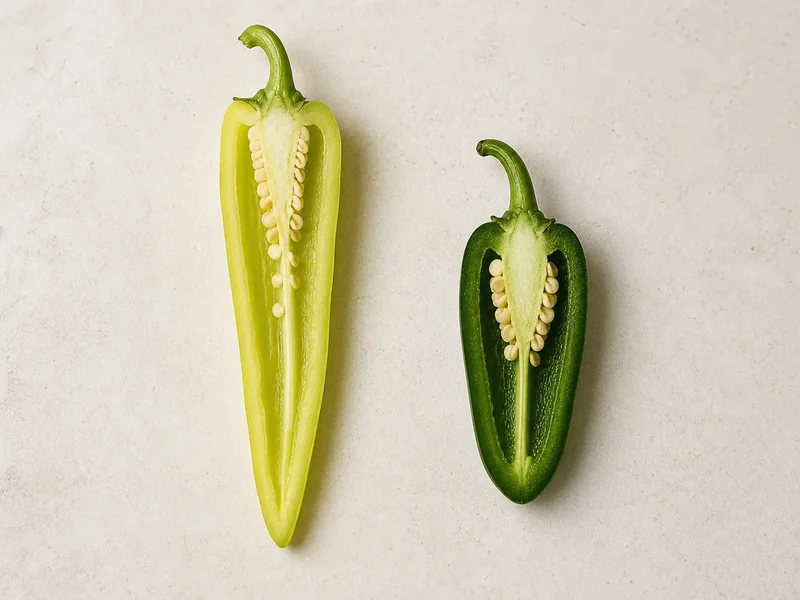
The cut surface explains why they handle differently. A jalapeño usually gives you a thicker wall and a compact cavity, so rings stay substantial and halved pods can hold a dense filling.
A banana pepper gives you a longer cavity and thinner, more flexible walls. That shape is useful for long stuffed peppers and broad sandwich rings, but it does not imitate the thick bite of a jalapeño popper.
Most capsaicinoids are produced in glands on the pale placenta inside a hot pepper, not inside the seeds themselves. Seeds can pick up capsaicinoids through contact, so removing both the placenta and attached seeds reduces heat more effectively than shaking out loose seeds while leaving the pale tissue behind.
Cutting out the placenta also removes some pepper flesh and aroma, so it is a reduction method rather than a precision control. When exact heat matters, choose a known mild cultivar or measure a separate hot ingredient instead of relying on deseeding alone.
Can You Substitute Banana Pepper for Jalapeño?
Yes, you can substitute banana pepper for jalapeño when the recipe needs fresh pepper volume, but the result will be much milder and a little sweeter. Match the peppers by prepared weight or chopped volume, then decide whether the missing heat should be restored at all.
Remove stems and unwanted inner tissue from the pepper named in the recipe, then weigh or measure that prepared amount before replacing it. This prevents one long banana pod from silently doubling the vegetable volume when the recipe originally used one short jalapeño.
For salsa, replace jalapeño with fresh sweet banana pepper at the same chopped volume when the diners want no more than a faint tingle. If the salsa still needs heat, add a measured amount of a known hot pepper rather than adding more banana pepper, which mainly increases water and bulk.
Add the replacement pepper before the final salt and acid adjustment. Tomato, lime, vinegar, and salt all change how the pepper reads, so tasting in the finished mixture gives a better decision than tasting the chopped pepper alone.
Replacing banana pepper with jalapeño requires the opposite correction. Start with a smaller amount of jalapeño for heat, then use bell pepper or another mild pepper if the recipe still needs the original vegetable volume.
In a cooked sauce or filling, let the jalapeño disperse before adding more because a concentrated piece can exaggerate the first taste. In a raw salsa, a short rest after mixing helps salt and acid distribute through the chopped pepper.
Pickled peppers need one more distinction. A jarred banana ring and a jarred jalapeño ring both bring acid and salt, so drain them before comparing flavor and adjust the dish only after tasting the brine contribution.
For shelf-stable jars, do not improvise pepper amounts in a home-canning formula. Use a current research-tested recipe and follow its stated limits because fresh peppers are low-acid foods and safe processing depends on the whole formula, jar size, and method.
Freezing, refrigerator pickles, and a cooked sauce give you more room to tune heat for taste. Shelf-stable canning is the exception where a casual one-for-one substitution can change more than flavor.
Swap by the job, not by pod count
| Swap direction | Start with | Correct separately |
|---|---|---|
| Jalapeño to sweet banana | Same prepared weight or chopped volume | Add known heat only if the dish needs it |
| Sweet banana to jalapeño | Less jalapeño for the desired heat | Add mild pepper if the dish needs more bulk |
| Pickled rings | Drain and match by volume | Taste before adding more salt or acid |
Which Pepper Fits the Dish You Are Making?
There is no universal winner because each pepper performs a different physical and flavor job. The useful distinction is mild pepper volume versus compact flesh and medium heat.
For long stuffed peppers, choose banana peppers when you want a mild shell around sausage, cheese, rice, or breadcrumbs. Choose jalapeños for poppers when the goal is a thick, crisp-tender wall, a smaller portion, and heat that stands up to a rich filling.
For fresh salsa, pico de gallo, guacamole, or a green sauce, jalapeño is usually the better fit because its grassy heat remains recognizable among tomato, onion, lime, and cilantro. Banana pepper works when the crowd wants crunch and pepper flavor without turning heat into the main event.
For roasting, jalapeño blisters into a compact, meaty chile with concentrated green flavor. A banana pepper softens into a longer, milder strip that works well beside sausage, onions, or cheese but will not create the same hot roasted bite.
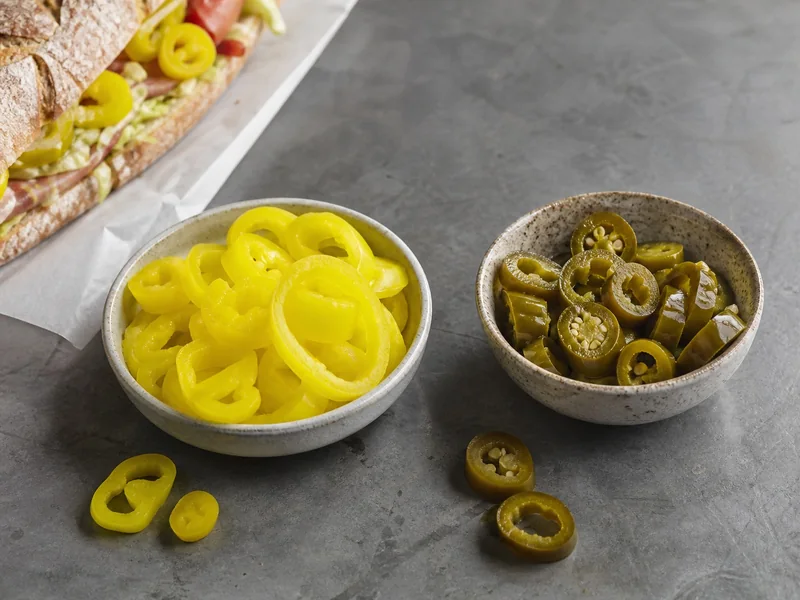
For sandwiches, pizza, salads, and antipasto, pickled banana rings are the easy mild choice. Pickled jalapeños belong where the garnish should add both briny acidity and a distinct burn.
The shortest useful rule is simple. Choose banana pepper when you need space, tang, or mild crunch, and choose jalapeño when you need thicker flesh, green chile flavor, or heat.
Fast dish match
- Long stuffed pepper or mild sandwich ring: sweet banana pepper.
- Poppers, fresh salsa, or a hot roasted garnish: jalapeño.
- Shelf-stable pickles: whichever pepper the tested recipe allows, with its stated processing method.
What Changes When the Peppers Are Pickled?
Pickling narrows part of the flavor gap because both peppers absorb vinegar, salt, and any spices in the brine. It does not erase the heat gap, so a pickled jalapeño ring still carries a burn that a sweet banana ring usually does not.
Texture depends on pod structure and processing. Banana rings are often broad, thin, and flexible, while jalapeño rings tend to be smaller and meatier, especially when the peppers were firm and thick-walled before processing.
A jar's ingredient list can explain differences that the pepper name cannot. Sugar, garlic, spices, and brine strength can make one brand of banana rings taste sweeter or sharper than another, so compare drained peppers when the decision is about the pod rather than the liquid.
The National Center for Home Food Preservation includes bell, Hungarian, banana, and jalapeño peppers in its marinated-pepper guidance. It also shows that blending hot jalapeños with sweet or mild peppers is a deliberate way to control finished heat within that tested recipe.
- Use banana rings when a sandwich, pizza, or salad needs bright acid without a strong burn.
- Use jalapeño rings when the garnish should remain spicy after cheese, meat, or beans soften the impact.
- Use a measured blend when different diners need a middle ground, but keep the proportions and processing inside a tested preservation recipe.
Drain the rings before adding them to a dish if you want texture and pepper flavor without extra brine. Add a spoonful of brine separately only when the dish also needs more salt and acid.
For a quick refrigerator pickle, you can choose the ratio for taste and keep the jar cold. For shelf-stable jars, follow the tested acid strength, headspace, jar size, and processing time instead of treating a refrigerator-pickle formula as a canning recipe.