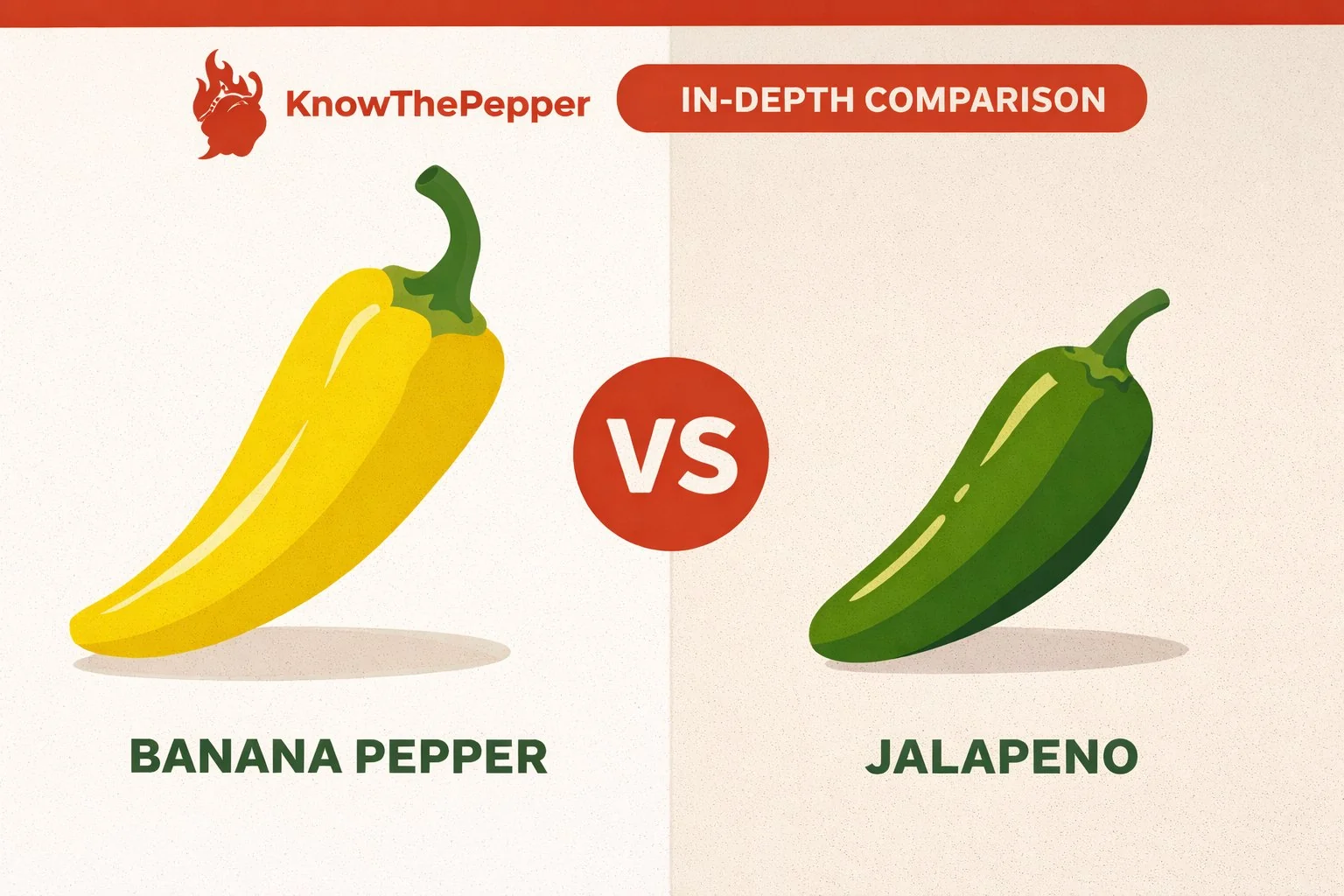
Jalapeno vs Serrano: Which Fresh Chile Fits the Dish?
Jalapeno provides 2,000 to 8,000 SHU and a larger pod for stuffing, rings, and moderate fresh heat. Serrano reaches 10,000 to 25,000 SHU and gives salsa a hotter bite with less pepper volume.

Jalapeno offers 2,000 to 8,000 SHU, a larger cavity, and more flesh for stuffing, rings, and mixed-tolerance dishes. Serrano reaches 10,000 to 25,000 SHU and fits fresh salsa when compact, sharper heat matters.
- UF/IFAS heat range: 2,000 to 8,000 SHU vs 10,000 to 25,000 SHU
- Typical length: About 2 to 3 inches vs About 2 inches
- Pod job: Body, cavity, and rings vs Compact heat and fine dice
- Fresh flavor direction: Rounder and grassy vs Bright and biting
- Best structure use: Stuffing or pickled rings vs Minced fresh salsa
- Smoked form: Ripe jalapeno becomes chipotle vs No chipotle relationship
Jalapeño
MediumSerrano Pepper
HotQuick Comparison
| Attribute | Jalapeño | Serrano Pepper |
|---|---|---|
| UF/IFAS heat range | 2,000 to 8,000 SHU | 10,000 to 25,000 SHU |
| Typical length | About 2 to 3 inches | About 2 inches |
| Pod job | Body, cavity, and rings | Compact heat and fine dice |
| Fresh flavor direction | Rounder and grassy | Bright and biting |
| Best structure use | Stuffing or pickled rings | Minced fresh salsa |
| Smoked form | Ripe jalapeno becomes chipotle | No chipotle relationship |
Which Is Hotter, Jalapeno or Serrano?
Serrano is the hotter choice by a clear published margin. UF/IFAS lists jalapeno at 2,000 to 8,000 SHU and serrano at 10,000 to 25,000 SHU, so the stated bands do not overlap.
That gap matters more than a single multiplier because each range is wide.
Comparing the mildest jalapeno with the hottest serrano produces a very different ratio from comparing two pods near the middle of their bands.
A recipe that accepts one whole jalapeno may become substantially hotter with one whole serrano even though the serrano is smaller. Start with less serrano and preserve the dish, then add more only after the chile is dispersed through the complete salsa, sauce, or filling.
Cultivar, weather, growing conditions, and maturity can move an individual pod within its expected range. New Mexico State University's heat guidance explains why the name supplies a planning band rather than a laboratory value for the pepper in your hand.
Heat is concentrated most strongly in the pale inner placental tissue where capsaicinoids are produced.
Seeds can carry capsaicin from contact, but removing seeds without removing the inner tissue does not create a predictable percentage reduction.
For a mixed group, jalapeno gives more adjustment room because its ceiling sits below serrano's published floor. For a chile-forward salsa, serrano reaches a brighter hot result with less pepper volume.
The published bands do not overlap
Because the two published heat bands do not overlap, begin with less serrano and adjust after the batch is mixed. Pod size and natural variation still make a universal three-to-one count unreliable.
How Do Jalapeno and Serrano Taste Different?
Both peppers are fresh Capsicum annuum chiles with a green, vegetal flavor direction. UF/IFAS describes serrano as bright and biting, while jalapeno is widely used when a milder fresh chile presence should remain recognizable.
Jalapeno tends to read rounder and grassier because a larger bite includes more moist pepper flesh relative to its heat.
That makes it useful when crunch, green flavor, and moderate warmth should arrive together.
Serrano gives a sharper impression in a smaller piece. The higher heat and compact pod can make finely chopped serrano feel more concentrated in pico de gallo, salsa, ceviche, or guacamole.
These are cooking directions, not guarantees for every cultivar. A red-ripe pod, a greenhouse-grown mild selection, or a pepper held too long after harvest may not match a generic flavor description.
Roasting changes both by softening the fresh green edge and creating browned aromas.
Jalapeno contributes more flesh to blister, while serrano supplies less bulk and keeps heat prominent in a blended sauce.
Neither fresh pepper is smoky by identity. A chipotle is a ripe jalapeno that has been wood-smoked, according to UF/IFAS, so chipotle smoke cannot be assigned to an ordinary fresh jalapeno or serrano.
When Should You Use Serrano Instead of Jalapeno?
Choose serrano for pico de gallo and fresh salsa when a small amount of chile must provide a clear hot bite. UF/IFAS specifically names both uses for serrano and describes its flavor as bright and biting.
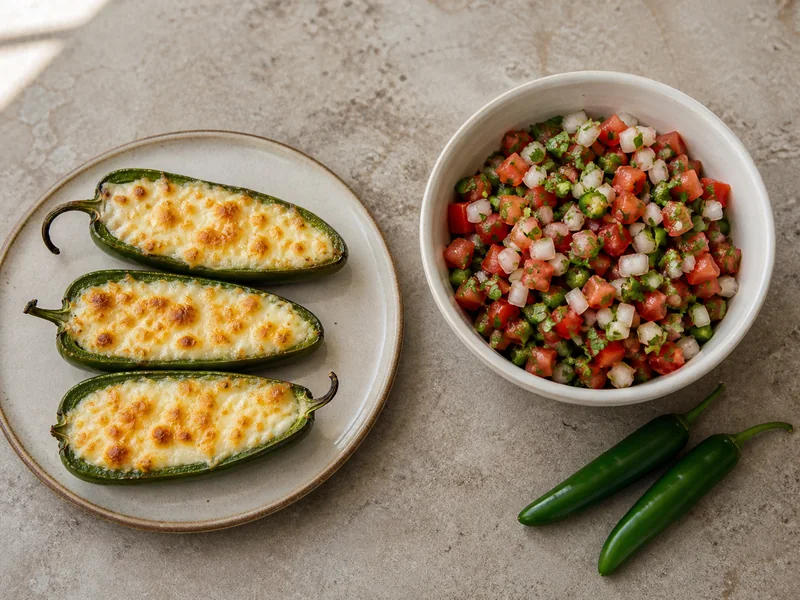
Choose jalapeno when the dish needs visible slices, a larger cavity, or more pepper flesh. Rings for nachos, grilled halves, pickled slices, and stuffed jalapenos depend on a pod large enough to hold structure.
Either works in guacamole, tomato salsa, eggs, beans, marinades, and cooked green sauce once the dose matches the diners.
The decision turns on whether the recipe needs pepper volume and moderate heat or compact heat with less bulk.
For pico de gallo, mince serrano finely and distribute it before adding more. A few concentrated pieces can make individual bites much hotter than the bowl's average.
For pickles, jalapeno rings offer a larger bite and more flesh to carry brine.
Whole or sliced serranos also pickle, but they create a smaller, hotter garnish rather than imitating the texture of a jalapeno ring.
For stuffing, the substitution is structural rather than numerical. Serrano is usually too small to replace a jalapeno popper shell, so a larger pepper is the useful alternative even if its heat needs separate adjustment.
For salsa verde, follow the named recipe rather than assuming one chile is always traditional. Regional formulas and household preferences vary, and the chile can be raw, boiled, roasted, or fried before blending.
| The dish needs | Better first choice | Why |
|---|---|---|
| A stuffable pepper shell | Jalapeno | Its larger cavity and flesh are part of the recipe. |
| Compact heat in pico de gallo | Serrano | UF/IFAS documents serrano for raw salsa use. |
| Large pickled rings | Jalapeno | The wider pod produces more substantial slices. |
| A finely minced hot garnish | Serrano | Less pepper volume delivers a hotter bite. |
Which Should You Choose, Jalapeno or Serrano?
Choose jalapeno for moderate heat with useful pepper body. It is the practical pick for stuffing, grilling, pickled rings, nachos, burgers, and dishes serving people with different heat tolerances.
Choose serrano for a hotter fresh salsa, pico de gallo, guacamole, ceviche, or a finely chopped garnish. It supplies a stronger bite without adding as much moist pepper flesh.
Keep both when you regularly make both stuffed or pickled dishes and fresh chile-forward salsas.
Their shared green-pepper character creates overlap, but pod structure and the non-overlapping heat bands give each one a clear job.
If a recipe simply says hot green chile, choose from the outcome backward. Jalapeno protects texture and broad accessibility, while serrano protects compact heat and a sharper fresh finish.
Pod Shape And Structure
Jalapeno is generally the larger, broader pod.
UF/IFAS describes it at about 2 to 3 inches long, and its roomy interior is the physical reason it works for stuffing, thick rings, and whole-pepper grilling.
Serrano is usually narrower and around 2 inches long in the UF/IFAS production guide. Its smaller diameter makes it easy to mince or slice into thin rounds but limits how much filling it can hold.
Wall thickness varies by cultivar and growing conditions, so an exact millimeter rule is too rigid for a produce bin. Compare the actual pods when structure matters and buy several similar specimens for even cooking.
Size does not predict heat.
A small serrano can be hotter than a larger jalapeno because cultivar genetics and capsaicinoid concentration are different decisions from fruit volume.
For blended salsa, size mostly affects usable weight and water. For poppers or visible rings, the pod's cavity and flesh are part of the recipe and cannot be corrected with a heat ratio.
Ripeness And Form
Green jalapeno and green serrano are immature fruit, although both are commonly harvested and eaten at that stage.
As the pods mature, color and flavor can change, but red color does not turn one cultivar into the other.
UF/IFAS states that jalapenos turn red at maturity and that chipotle chiles are ripe jalapenos that have been wood-smoked. Fresh jalapeno, red jalapeno, and chipotle are three different ingredient forms, even when they come from the same pod type.
A red serrano remains serrano.
It may taste riper and look different in a salsa, but it does not become chipotle because chipotle includes a specific smoking and drying process.
Match fresh with fresh when substituting these two peppers. A dried or smoked ingredient changes water, texture, aroma, and cooking behavior before heat even enters the decision.
Buying And Storage
Choose firm pods with intact skin, sound stems, and no wet or sunken spots.
A fresh cut surface and strong structure matter more for stuffing and raw salsa than minor cosmetic variation.
Buy jalapenos of similar width when they need to cook evenly as poppers or rings. Buy serranos of similar size when you want predictable usable weight across a salsa batch.
Keep the peppers dry and refrigerated in a breathable produce setup rather than sealing visible moisture against the skin. Texas A&M advises refrigeration and prompt use after harvest for jalapenos, which is safer than promising one universal number of weeks.
Label homegrown cultivars and harvested colors if several green chiles share the same refrigerator drawer. Appearance alone becomes a weak identifier once loose pods are mixed.
Freezing preserves the peppers for cooked dishes but softens their structure after thawing.
Use thawed peppers in sauce, soup, stew, or puree rather than expecting fresh crunch or a firm stuffing shell.
Substitution
Do not use one fixed pod-count conversion for jalapeno and serrano. UF/IFAS gives non-overlapping ranges, but both pod weight and individual heat vary enough that two peppers of the same name are not identical units.
When serrano replaces jalapeno, begin with less than equal prepared weight. Mix it through the complete dish, then add more only if the flavor and heat remain below the intended result.
When jalapeno replaces serrano, extra pepper can add water, flesh, and green flavor before it matches serrano heat. Increase prepared jalapeno in stages and accept a milder result when preserving texture matters more than chasing heat.
For salsa, compare stemmed edible weight and distribute the chile evenly. For stuffing, no heat conversion fixes serrano's smaller cavity, so choose a larger shell and adjust heat separately.
A jalapeno substitute should keep the fresh green form when the recipe needs crunch or a visible pepper. A serrano substitute should keep a sharper fresh-chile role when the recipe needs compact heat.
Remove some placental tissue when the prepared batch must be gentler, but do not promise a fixed percentage reduction. The safer control is still a smaller weighed addition followed by tasting after full mixing.
Match structure before heat
A smaller serrano cannot become a jalapeno popper shell. Choose a pepper that performs the physical job, then adjust heat as a separate decision.