

KnowThePepper
Serrano Pepper: Why Cooks Use Half Where They'd Use a Whole Jalapeño
The serrano pepper delivers 10,000-23,000 SHU of clean, grassy heat, roughly three times a jalapeño at the midpoint of each range. Grown across Mexico's mountain pepper tradition, this bullet-shaped Capsicum annuum is the go-to for fresh salsas, guacamole, and pico de gallo where you want heat that actually shows up.
- Species: C. annuum
- Heat tier: Hot (10K-100K SHU)
- Comparison: 1-9x hotter than a jalapeño, depending on where the jalapeño falls in its 2,500-8,000 SHU range
What Is Serrano Pepper Known For?
The serrano leads with aroma rather than heat: green, grassy and almost herbal. The flavor follows quickly: bright, crisp, slightly vegetal, with a clean heat that builds fast and lingers without the slow creep you get from dried chiles.
Serranos sit firmly in the hot heat range - hot enough that most people use half a pepper where they'd use a whole jalapeño, but approachable enough for everyday cooking once you calibrate.
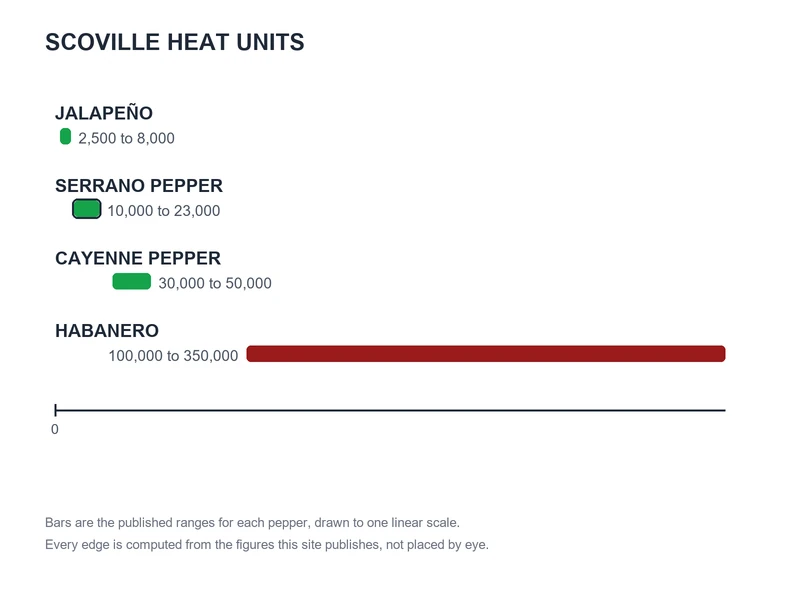
At peak comparison: a 23,000 SHU serrano is roughly 2.9x hotter than a peak jalapeño (8,000 SHU). At the low end, a 10,000 SHU serrano is still 4x hotter than a mild jalapeño (2,500 SHU).
The practical kitchen rule: 1 serrano = 3 jalapeños for equivalent heat in a dish.
The pods are slim, typically 1-2.5 inches long, with thin walls. That thin flesh makes them ideal for raw applications where you want the pepper to blend into the dish rather than announce itself.
They hold their brightness through light cooking and stay crisp longer than thick-walled peppers.
Tampiqueno serrano is the most common commercial variety, longer, slightly milder, and widely grown for the US export market. Hidalgo serranos, grown in the highland state of the same name, tend to be smaller and sharper.
The pepper also comes in colour stages, green, red, and occasionally brown when overripe reflect harvest timing rather than distinct varieties.
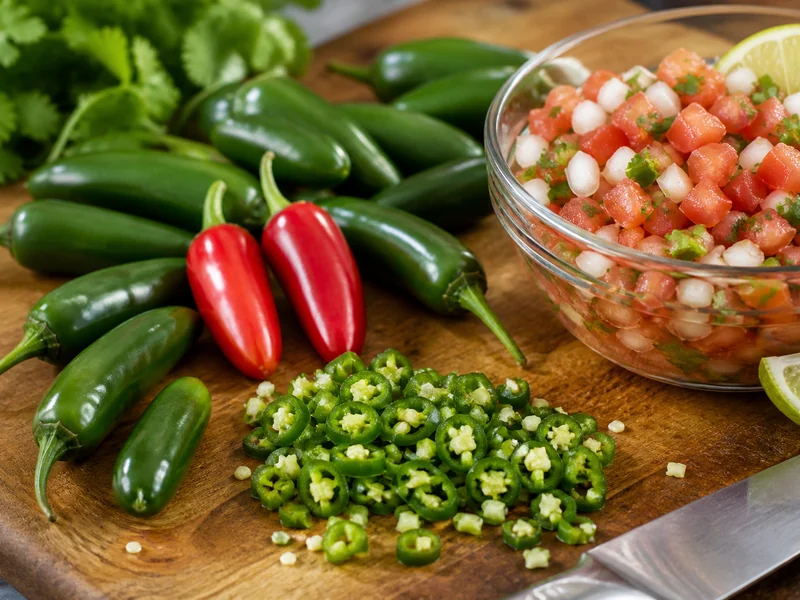
Found in every Mexican market and most US grocery stores, the serrano is the default fresh chile for pico de gallo across most of Mexico, preferred over jalapeños when you want cleaner, sharper heat without the grassy funk.
Where Did Serrano Pepper Originate?
Serranos originate from the mountainous regions of Puebla and Hidalgo, Mexico - 'serrano' literally means 'from the mountains' in Spanish. They've been cultivated in these highlands for centuries, long before Spanish contact, as part of the complex chile culture that shaped Mexican cuisine.
Unlike many Mexican chiles that found global fame through export, serranos remained largely regional until US immigration patterns in the 20th century brought Mexican cooking traditions northward. The pepper traveled with its cooks rather than through commercial channels.
By the 1980s, US demand for authentic Mexican ingredients had created a significant export market.
Today, the United States is the largest export market for Mexican-grown serranos. Compared to the jalapeño's industrial-scale commercial dominance, serranos remain more closely tied to fresh traditional cooking, they rarely appear in canned or pickled form at scale, and the fresh market is where most serranos are consumed.
The pepper's thin walls and bright flavor profile made it resistant to the processing that made jalapeños so commercially adaptable. That thinness is also why serranos dehydrate roughly 40% faster than thick-walled jalapeños, an advantage for home preservation.
What Does Serrano Pepper Taste Like, and How Hot Is It?
The Serrano Pepper delivers 10K–23K Scoville Heat Units, placing it in the Hot tier (10K-100K SHU). That makes it roughly 1-9x hotter than a jalapeño, depending on where the jalapeño falls in its 2,500-8,000 SHU range.
Flavor notes: bright and crisp.
What Nutrients Does Serrano Pepper Provide?
A 100g serving of raw serrano peppers contains approximately 32 calories, 6g carbohydrates, and 1.7g protein. USDA puts vitamin C at 44.9 mg per 100 g, a useful share of a day's intake rather than the whole of it, along with meaningful amounts of vitamin B6, potassium, and vitamin A.
Compared to jalapeños, serranos provide similar vitamin C content per serving but at a higher heat-per-gram ratio, meaning you get capsaicin's documented metabolic effects at smaller serving sizes.
The science behind capsaicin's TRPV1 receptor interaction explains why serranos' sharper, faster heat build differs from the slower burn of C. chinense peppers like habaneros. C. annuum peppers like serranos trigger TRPV1 receptors with a faster onset and shorter duration.
For heat-source context, see our methodology and data caveats.
How Do You Use Serrano Pepper in the Kitchen?
Start with aroma when cooking serranos raw: that grassy, sharp scent tells you the heat is intact and the pepper hasn't oxidized. It's your cue that you're working with something alive.
Serranos are the default pepper in pico de gallo across most of Mexico, preferred over jalapeños precisely because the heat is sharper and the flavor cleaner. Dice them fine and the heat distributes evenly.
One medium serrano (roughly 1/4 cup finely diced) seasons a standard pico for 6-8 people with noticeable but manageable heat.
The capsaicin in serranos follows the same rule as all peppers: it concentrates in the placenta (the white inner membrane), not the seeds.
In a serrano, that membrane runs the full length of the thin pod, meaning there's proportionally more heat-concentration surface than in a thicker jalapeño. Removing it before dicing drops heat significantly.
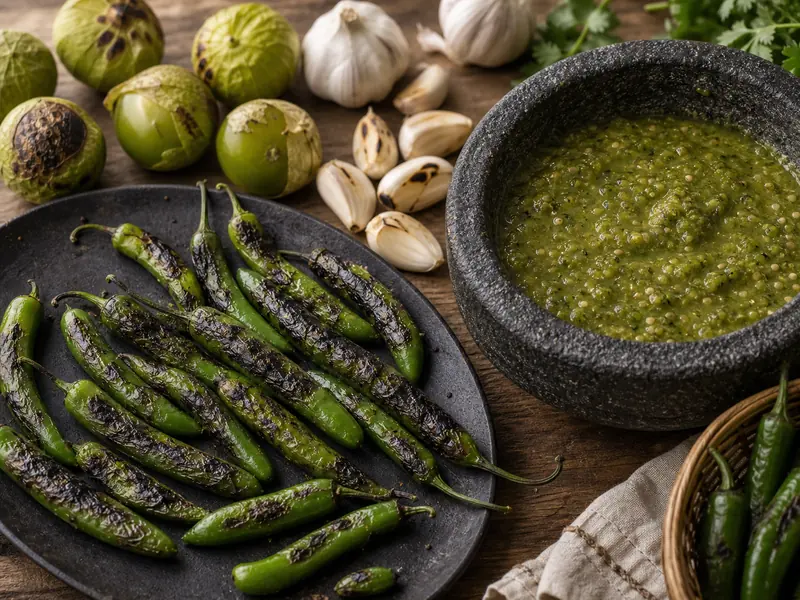
For homemade salsa verde, serranos work with tomatillos in a way that doesn't require roasting, the raw pepper's brightness pairs naturally with the tart tomatillo base. Roasting serranos is possible but less common than with jalapeños.
The thin flesh chars quickly and the flavor profile doesn't gain as much complexity from heat.
The best substitutes for serrano peppers in a recipe are generally jalapeños (use 2-3 jalapeños per 1 serrano) or Thai chilis for a similar heat range. The jalapeño vs serrano shows the heat gap and flavor differences clearly.
Where Can You Buy Serrano Pepper, and How Do You Store It?
Look for serranos with firm, smooth, glossy skin and no soft spots or wrinkles. Green pods are most common.
Red ones are riper, slightly sweeter, and worth grabbing when available, they have a richer, less sharp flavor that works well in cooked applications.
Refrigerate unwashed in a paper bag or loosely wrapped, they keep 1-2 weeks this way. Wash just before use to prevent premature moisture loss.
For longer storage, serranos freeze well whole: spread on a sheet pan to freeze individually, then transfer to a sealed bag. No blanching required, the thin walls mean texture degrades less than with thicker peppers.
Frozen serranos retain full heat and flavor for up to 6 months.
Drying is another strong option, serranos' thin walls make them faster to dehydrate than jalapeños. At 135°F in a food dehydrator, they're typically done in 6-8 hours versus 10-12 hours for jalapeños.
| Stage | How it tastes | Where it works |
|---|---|---|
| Green, the common one | Sharp, grassy, heat that arrives fast | Raw work: pico de gallo, guacamole, fresh salsa |
| Red, further ripened | Rounder and sweeter, less sharp | Cooked dishes where a green edge would fight the other ingredients |
| Frozen whole | Heat intact, texture gone | Straight into a hot pan, one pod at a time |
What Is a Good Substitute for Serrano Pepper?
Compare substitutes for Serrano Pepper by form, flavor, and heat before choosing a ratio. Measured adjustments must account for the dish and the concentration of the replacement.
Direct comparisons show where flavor, form, and preparation differ in the Habanero vs Serrano and Jalapeno vs Serrano matchups.
Compare Serrano Pepper with: Serrano Pepper vs Fresno · Serrano Pepper vs De Arbol · Serrano Pepper vs Cayenne · Serrano Pepper vs Thai Chili · Serrano Pepper vs Sport · Serrano Pepper vs Poblano
What Does Serrano Pepper Need to Grow Well?
Serranos are reliable, high-yield producers that reward patient gardeners. Start seeds indoors 8-10 weeks before last frost - germination takes 10-21 days at soil temperatures around 80-85°F.
Growing serranos takes it from soil preparation through to harvest.
The next threshold is night temperature: transplant outdoors once nights stay above 55°F. Space plants 18-24 inches apart for good airflow.
Like most C. annuum peppers, serranos want full sun and well-drained soil with a pH of 6.0-6.8.
Serranos are notably productive, a healthy plant produces 50-70 pods per season, significantly more than most jalapeño varieties (25-35 per plant). That yield advantage makes them one of the better-value hot peppers for gardeners who want volume.
The thin-walled fruits also dehydrate faster than thick-walled peppers, roughly 40% faster in a dehydrator at 135°F. For home preservation, that speed advantage makes serranos one of the easier hot peppers to dry and store long-term.
Harvest at green stage in about 70-80 days from transplant. Let pods ripen to red for sweeter, slightly hotter fruits, red serranos have a richer flavor that's worth seeking out, even though they're less common at retail.
Both green and red can be frozen whole without blanching and held for up to 6 months with minimal quality loss.
Serrano Pepper FAQ


- USDA FoodData Central, Peppers, serrano, raw (FDC 169395)
- Capsicum annuum L. - USDA GRIN Taxonomy
- University of Minnesota Extension, growing peppers
Species classification: C. annuum - based on published botanical taxonomy.