

KnowThePepper
Goat Horn Pepper: Identify the Hot and Mild Seed Lines
The hot Goat Horn pepper profiled here is a long, curved C. annuum seed line sold at 20,000 to 50,000 SHU. Because other sellers use the same common name for milder lines, verify the supplier and heat claim before cooking, substituting, or saving seed.
- Species: C. annuum
- Heat tier: Hot (10K-100K SHU)
- Comparison: 3-20x hotter than a jalapeño, depending on where the jalapeño falls in its 2,500-8,000 SHU range
What Is Goat Horn Pepper?
The name Goat Horn pepper does not identify one globally standardized cultivar. Seed catalogs use it for several long, curved Capsicum annuum lines, so the supplier and stated heat range matter more than the common name alone.
This profile follows the hot cayenne-type line sold by Pepper Joe's at 20,000 to 50,000 SHU. The company describes red pods about 6 inches long and traces its seed line to Thailand, while Meraki Seeds lists a shorter Taiwanese line in the same heat range.
Other Goat's Horn listings describe materially different peppers.
Tomatofifou lists a Turkish line at 2,000 to 5,000 SHU, and the University of Delaware plant-sale catalog identifies Corno di Capra as C. annuum with Goat Horn Pepper as a common name.
Those records establish a naming collision, not one pepper with an unusually wide heat range. When a recipe or seed packet says only Goat Horn, check the source, pod length, ripe color, and stated heat before deciding how much to use.
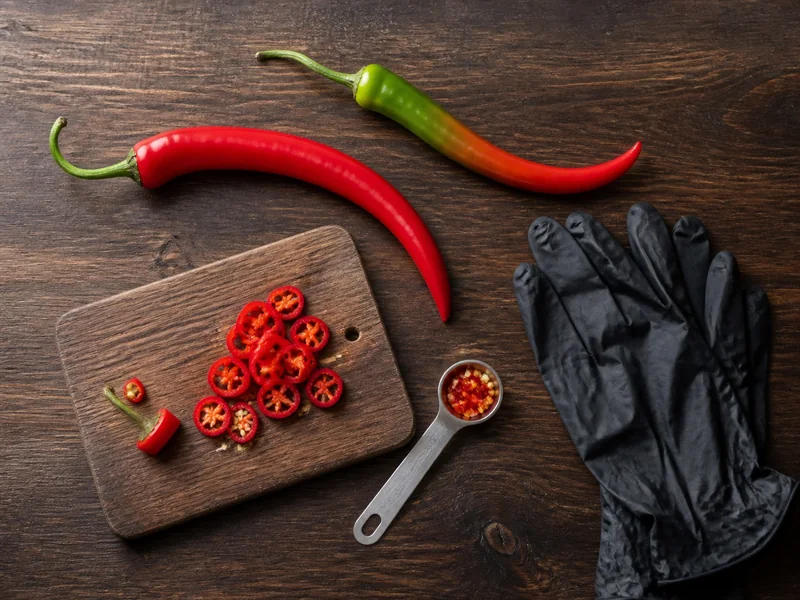
The hot line in this article has a slender body, a pronounced curve, and a pointed tip. Its shape resembles a cayenne pepper, but visual similarity does not prove that two seed lines share the same flavor, wall thickness, or heat.
| Listing | Named line or location | Reported heat |
|---|---|---|
| Pepper Joe's | Hot line, Thailand | 20,000 to 50,000 SHU |
| Meraki Seeds | Hot line, Taiwan | 20,000 to 50,000 SHU |
| Tomatofifou | Turkish Goat's Horn | 2,000 to 5,000 SHU |
| University of Delaware | Corno di Capra common name | No heat value listed |
Where Did Goat Horn Pepper Originate?
No authoritative breeder release or accession history was located for the hot Goat Horn line. Pepper Joe's assigns its seed line to Thailand, while Meraki Seeds assigns a similarly named hot line to Taiwan.
The University of Delaware record shows why a single origin claim would be unsafe. Its Corno di Capra entry uses Goat Horn Pepper as a common name for an Italian-named C. annuum, while a Turkish seller uses Goat's Horn for a much milder line.
The horn name describes the pod silhouette and can travel between languages and seed sellers.
It should be treated as a market name until a packet supplies a cultivar name, breeder, accession number, or traceable seed source.
How Hot Is Goat Horn Pepper? Heat and Flavor
The Goat Horn Pepper delivers 20K–50K Scoville Heat Units, placing it in the Hot tier (10K-100K SHU). That makes it roughly 3-20x hotter than a jalapeño, depending on where the jalapeño falls in its 2,500-8,000 SHU range.
Flavor notes: seller-described sweet, hot line.
Goat Horn Pepper Nutrition Facts
No cultivar-specific nutrient analysis was located for the hot Goat Horn line. Generic pepper nutrition tables cannot prove an exact vitamin or calorie value for this seed line, especially when portions are small and ripe stage varies.
How Do You Cook With Goat Horn Pepper?
For the 20,000 to 50,000 SHU line, begin with a smaller portion than a recipe would use for jalapeño. Pepper Joe's range places its upper end alongside cayenne heat, so a whole 6-inch pod can dominate a small pan.
Start a four-serving stir-fry with one-quarter of a pod, sliced thinly and distributed through the sauce. This is a cautious kitchen starting point rather than a laboratory conversion, and the cook should taste the finished sauce before adding more.
Use red ripe pods when a dish benefits from chile sweetness and fully developed color.
Green pods bring a fresher vegetal note, but the supplier's ripe-stage description still controls because another Goat Horn seed line may mature differently.
Thin-walled pods are suitable for drying because moisture can leave them efficiently. A thick-walled mild horn pepper is better suited to roasting, pickling, or frying, which is another reason to inspect the actual pod instead of choosing a method from the common name.
For a substitute, match both form and heat. Cayenne is a practical dried or hot fresh substitute for the line profiled here, while a milder horn-shaped line needs a lower-heat pepper rather than the same volume of cayenne.
How Do You Keep Goat Horn Pepper Fresh?
Buy Goat Horn seed or fruit only when the seller provides more than the common name. The useful identifiers are the supplier, species, claimed origin, mature pod size, ripe color, heat range, and a photograph of the actual line.
For the hot line covered here, look for long, slender pods that curve toward a pointed tip and ripen red. Reject fruit with leaking flesh, wet dark lesions, mold, or a collapsed stem end, while recognizing that a natural curve is part of the shape.
University of Minnesota Extension says fresh peppers keep for a week or more in the refrigerator, although prolonged cold can pit the skin.
Store intact pods dry and wash them immediately before cutting.
Freeze washed and thoroughly dried rings for cooked dishes, or dry suitable thin-walled pods until they are brittle before sealing them. Label every container with the supplier or seed line, heat claim, form, and date so a mild Goat Horn batch is not confused with a 20,000 to 50,000 SHU batch.
Dried form: A fully dried hot Goat Horn pod can become flakes or powder, but drying does not remove capsaicin. Split fleshy pods before dehydrating, continue until no section bends, then portion the finished chile by the pinch and store it airtight away from light, heat, and steam.
Verify the line before buying
- Supplier and full cultivar name
- Species and claimed origin
- Mature pod length and ripe color
- Seller-attributed heat range
- Current photograph of the supplied line
What Can You Use Instead of Goat Horn Pepper?
No dedicated substitute guidance is published for Goat Horn Pepper yet.
What Does Goat Horn Pepper Need to Grow Well?
Grow the purchased seed according to its packet because Goat Horn plant size and days to maturity vary by line. Pepper Joe's lists its hot line at about 3 feet tall with harvest in 80 to 89 days, while Meraki Seeds reports about 80 centimeters and 75 days for its listing.
University of Minnesota Extension recommends starting pepper seed about 8 weeks before outdoor planting. Sow seed one-quarter inch deep and keep the germination area at 80 to 90°F with a heat mat until seedlings emerge.
Transplant after nighttime temperatures stay above 50°F.
The same extension guidance calls for 18 inches between pepper plants and rows 30 to 36 inches apart.
Give the plants consistent moisture, roughly one inch of rain a week when weather does not supply it. University of Minnesota Extension warns that excess nitrogen can produce abundant leaves while delaying flowers and fruit.
Harvest green pods for their firmer, greener character or wait for the ripe color shown by the seed supplier. Clip fruit with shears to avoid breaking branches, then keep seed only if the grower can control cross-pollination and the original line is well documented.
Goat Horn Pepper FAQ


- University of Delaware, Peppers, Tomatoes and Tomatillos Plant List
- University of Minnesota Extension, Growing Peppers in Home Gardens
- Pepper Joe's, Goat Horn Pepper Seeds
- Meraki Seeds, Goat Horn Chili Pepper
- Tomatofifou, Goat's Horn Pepper
Species classification: C. annuum - based on published botanical taxonomy.