

KnowThePepper
Mirasol Pepper and Guajillo: The Same Mexican Chile, Fresh and Dried
The mirasol pepper is a Mexican fresh chili that becomes the famous guajillo when dried. Sitting at 2,500 to 5,000 SHU, it delivers bright, fruity heat that works beautifully in salsas, moles, and adobos.
Its elongated pods grow pointing skyward - "mirasol" means "looking at the sun" - and the flavor is more complex than its moderate heat suggests.
- Species: C. annuum
- Heat tier: Medium (1K-10K SHU)
- Comparison: the same heat range as a jalapeño because their published ranges overlap
What Makes Mirasol Pepper Different?
Fresh off the plant, the mirasol is a slender, 3 to 4 inch elongated pod that ripens from green through a deep red. It belongs to the sprawling the C. annuum pepper line, which also includes everything from bell peppers to cayennes.
At 2,500 to 5,000 SHU, the heat sits squarely in the medium heat zone - enough to register clearly without overwhelming a dish. The flavor is where this pepper earns its reputation: bright, slightly acidic, with a fruity sweetness that persists even as the warmth builds.
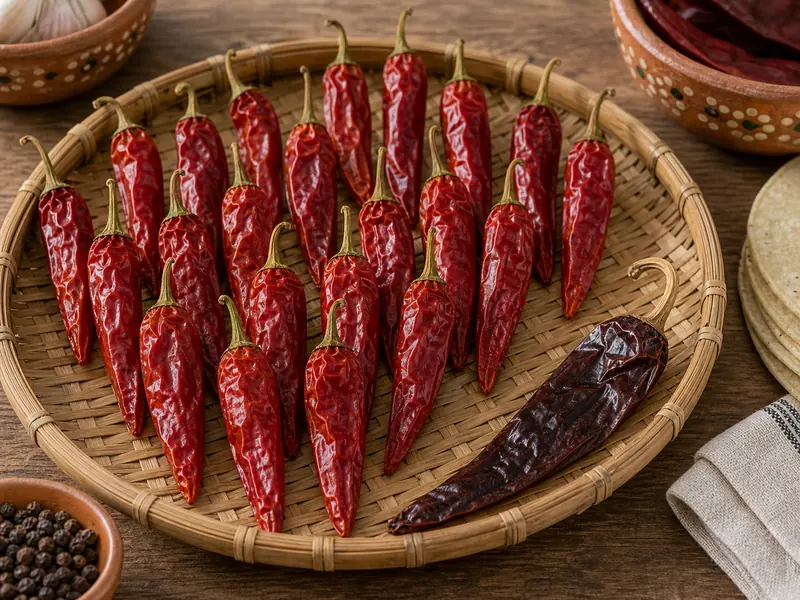
Most cooks encounter the mirasol in its dried form. Once dried, the skin takes on a translucent reddish-brown color and the flavor deepens considerably, developing the earthy, tannic notes that make Guajillo Pepper so prized in Mexican cooking.
The fresh pod, though, has a distinct character, more citrus-forward, almost berry-like in the right growing conditions.
This is a pepper with dual identities: fresh for salsas and quick sauces, dried for complex slow-cooked preparations. Understanding both forms gives you access to a much wider range of recipes than either state alone.
The heat lives in the placenta - the white inner membrane, not the seeds. Scraping out the placenta and seeds reduces heat by about 50%, while leaving them in keeps the full 2,500-5,000 SHU intensity.
Where Does Mirasol Pepper Come From?
Mirasol peppers trace back to the Zacatecas and Durango regions of north-central Mexico, where they have been cultivated for centuries. The name describes how the pods grow: pointing upright toward the sky rather than hanging downward like most chiles.
They belong to the broader Mexican pepper tradition that shaped pre-Columbian cooking across Mesoamerica. After Spanish colonization, mirasol cultivation spread through trade routes, and the pepper's dried form, the guajillo, became a cornerstone of Mexican cuisine that persists today.
The mirasol/guajillo connection makes this one of the more commercially significant peppers in Mexico. Guajillo is the second most widely used dried chile in Mexican cooking after the ancho, and virtually all of it starts as fresh mirasol.
That commercial importance has kept cultivation strong in its native Zacatecas highlands.
How Hot Is Mirasol Pepper? Heat and Flavor
The Mirasol Pepper delivers 2.5K–5K Scoville Heat Units, placing it in the Medium tier (1K-10K SHU). That makes it roughly the same heat range as a jalapeño because their published ranges overlap.
Flavor notes: fruity and bright.
How Nutritious Is Mirasol Pepper?
Fresh mirasol peppers are low in calories, roughly 20 calories per 100g - and deliver a solid dose of vitamin C (around 80 to 100mg per 100g in red-ripe pods), which exceeds many citrus fruits by weight. They also provide vitamin A precursors from the carotenoids that give ripe pods their red color.
Capsaicin, the compound responsible for the chemistry behind how pepper heat registers, contributes anti-inflammatory properties that have been studied in clinical contexts. Dried guajillo retains concentrated iron and potassium due to moisture loss, making it a more nutrient-dense form by weight.
The drying process concentrates nutrients dramatically.
Dried Mirasol Pepper provides iron, potassium, and B vitamins in a much smaller volume than fresh peppers. Vitamin C decreases with drying, but vitamin A (from carotenoids) remains high.
The 2,500-5,000 SHU capsaicin range means dried pods retain their heat, capsaicin is heat-stable and does not degrade during the drying process.
For the full science, see how capsaicin activates heat receptors.
Which Dishes Suit Mirasol Pepper?
The mirasol's fruity brightness makes it a strong candidate for fresh salsas where you want heat without muddiness. Roast the pods directly over a flame until the skin blisters, then blend with tomatillos, garlic, and lime, the result is a salsa verde with more complexity than one made with serranos alone.
Dried guajillo (the same pepper) is indispensable in red mole, birria, and adobo marinades. Toast dried pods briefly in a dry skillet until fragrant, soak in hot water for 20 minutes, then blend into sauces.
The soaking liquid carries flavor too, use it as a base for braising.
For heat comparisons in the kitchen: mirasol runs about the same intensity as a serrano's sharp, grassy bite, though the flavor profiles differ significantly. Where serrano is grassy and direct, mirasol is rounder and fruitier.
The dried form pairs particularly well with beef, pork, and dark chocolate. Fresh pods work in ceviches, quick pickles, and anywhere you want moderate heat with fruity character.
Seed and devein to reduce heat by roughly a third without losing much flavor.
Where Can You Buy Mirasol Pepper, and How Do You Store It?
Fresh mirasol peppers appear at Mexican markets and specialty grocers, particularly in summer and fall. Look for firm, glossy pods without soft spots.
In the US, the dried guajillo version is far easier to source, most Latin grocery stores stock them year-round.
What Can You Use Instead of Mirasol Pepper?
No dedicated substitute guidance is published for Mirasol Pepper yet.
How Do You Grow Mirasol Peppers?
Mirasol is a solid performer for home growers across USDA zones 8 to 11, and it does well as an annual in cooler climates with a long enough season. Start seeds indoors 8 to 10 weeks before the last frost date, soil temperature should hit 75 to 85°F for reliable germination.
The upright pod habit means you can spot ripeness easily.
Pods pointing skyward shift from green to deep red over 70 to 85 days from transplant. The plant itself reaches 24 to 36 inches tall and benefits from staking once it loads up with fruit.
For growers interested in practical guidance on pepper species and how annuums behave differently from chinenses, mirasol is a good starting reference, it germinates readily, tolerates moderate drought once established, and doesn't demand the intense heat that superhots require.
If you want to dry your own guajillos, harvest when fully red and hang in a warm, dry spot with good airflow.
The pods take 2 to 4 weeks to dry completely. Compared to Medusa Pepper, mirasol needs more vertical space but rewards you with a genuinely useful dual-purpose harvest.
Mirasol Pepper FAQ


- Rainbow Gardens - Peppers Scoville Unit List
- Chile Pepper Institute, New Mexico State University
Species classification: C. annuum - based on published botanical taxonomy.