KnowThePepper
Aurora Pepper
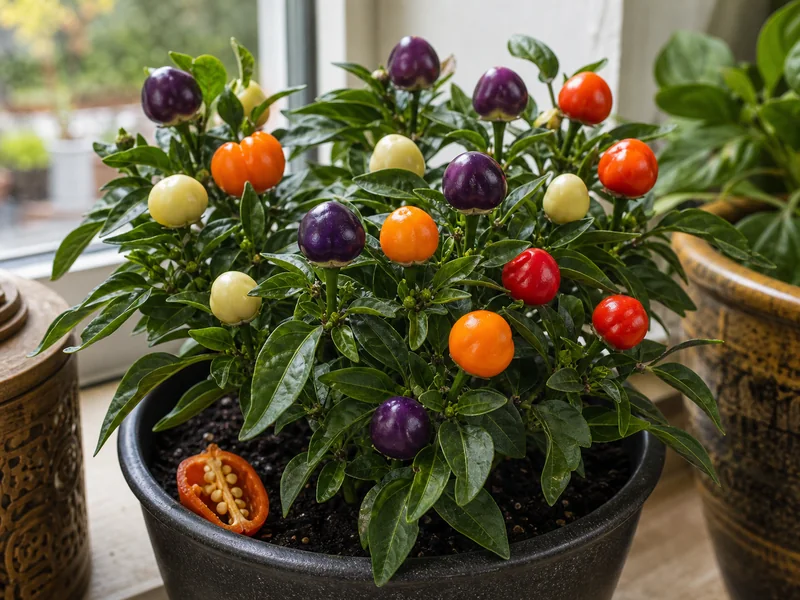
The Aurora pepper is a compact ornamental-turned-culinary C. annuum from Mexico, ranging 30,000–50,000 SHU. Its pods ripen through a vivid color sequence - purple, yellow, orange, and red - making it as striking in the garden as it is sharp on the palate. The flavor is crisp and clean, roughly comparable to Thai chili's sharp mid-range burn without the smoky undertones.
- Species: C. annuum
- Heat tier: Hot (10K-100K SHU)
- Comparison: 4-20x hotter than a jalapeño, depending on where the jalapeño falls in its 2,500-8,000 SHU range
What is Aurora Pepper?
Aurora peppers sit firmly in the hot pepper SHU bracket, punching around 10 times hotter than a jalapeño and matching the intensity of a Thai bird's eye at peak ripeness. The pods are small and round, typically 1–2 inches in diameter, and they ripen through a theatrical progression: deep purple to cream-yellow, then orange, and finally red. At any stage, you'll find multiple colors on the same plant.
Belonging to the C. annuum botanical lineage, Aurora was bred primarily as an ornamental variety but carries genuine culinary heat that shouldn't be dismissed. The flavor profile stays crisp and clean throughout all ripening stages - no earthy depth, no fruitiness, just a direct, forward heat that builds quickly and dissipates at a moderate pace.
Compared to cayenne's well-known 30K–50K burn, Aurora delivers heat in a similar SHU window but with less of the lingering throat bite. Its compact size and multi-colored pods make it a favorite for container gardening and edible landscaping, and the peppers are small enough to use whole in infused oils or pickled as garnishes.
For anyone tracking how capsaicin chemistry produces that characteristic burn, Aurora offers a clean case study - high capsaicin relative to pod size, with a straightforward heat signature that doesn't muddy the flavor.
History & Origin of Aurora Pepper
Aurora is commonly listed by seed sellers and pepper references as a Mexican-origin ornamental pepper as part of a wave of ornamental pepper breeding that gained traction in the late 20th century. Breeders working within Mexican and global ornamental pepper cultivation traditions recognized that compact, colorful C. annuum varieties could serve dual roles: decorative container plants and genuine heat sources in the kitchen.
The multi-stage color ripening - a trait shared with some traditional varieties from the facing heaven pepper's rich cultural background in Chinese cuisine - was selected deliberately to maximize visual appeal. Unlike purely ornamental peppers bred to reduce pungency, Aurora retained its 30,000–50,000 SHU heat throughout development.
By the early 2000s, Aurora had become a fixture in seed catalogs targeting home gardeners who wanted a plant that pulled double duty. Its compact growth habit and extended harvest window made it practical for small-space growing, which drove broader adoption across the USA.
How Hot is Aurora Pepper? Heat Level & Flavor
The Aurora Pepper delivers 30K–50K Scoville Heat Units, placing it in the Hot tier (10K-100K SHU). That makes it roughly 4-20x hotter than a jalapeño, depending on where the jalapeño falls in its 2,500-8,000 SHU range.
Flavor notes: crisp and clean.
Aurora Pepper Nutrition Facts & Serving Context
Like other C. annuum varieties, Aurora peppers are low in calories - roughly 20 calories per 100g - while delivering meaningful amounts of vitamin C, vitamin A precursors, and potassium. The capsaicin content at 30,000–50,000 SHU is sufficient to trigger thermogenic effects, and research from the Chile Pepper Institute at NMSU confirms that capsaicin at these concentrations supports metabolic activity.
The small pod size means you're typically consuming far less than 100g per serving, but even a few pods contribute antioxidant compounds including flavonoids and carotenoids - particularly as the pods ripen from purple to red.
For Aurora Pepper, a 100g serving of fresh pods provides approximately 20-40 calories, notable vitamin C (often 80-150% of daily value), and small amounts of vitamin B6, potassium, and folate. The hot 30,000-50,000 SHU capsaicin level means a 100g serving provides meaningful heat. Capsaicin concentrates in the placenta (the white inner membrane), not the seeds - removing it drops heat by roughly 50%. These peppers fall in the hot category on the Scoville scale. For the full mechanism of capsaicin and heat perception, see how capsaicin activates TRPV1 receptors.
Best Ways to Cook with Aurora Peppers
Aurora's crisp, clean flavor opens it to more uses in applications where you want heat without complexity clouding the dish. The small round pods work particularly well pickled whole - their firm walls hold up in brine, and the heat mellows to a bright, snappy warmth after a few weeks in the jar.
Fresh, they can be minced into salsas or relishes where the sensory profile of Turkish-style dried pepper pastes would be too earthy. Aurora keeps things sharp and forward. Drying the pods concentrates the heat considerably; ground Aurora powder delivers consistent 30K–50K SHU heat in spice blends.
For heat-seekers who enjoy the culinary range of fruity Peruvian yellow peppers, Aurora offers a different direction - less fruity, more direct. It pairs well with citrus-forward marinades, where its clean heat complements acid without competing.
Infused oils are another strong application. Drop a handful of dried pods into olive oil and let it steep for two weeks; the result is a finishing oil with genuine heat that doesn't taste muddy. The pods are also small enough to use as whole garnishes on charcuterie boards at their colorful peak.
Where to Buy Aurora Pepper & How to Store
Aurora peaks in availability from late summer through early fall at farmers markets and specialty nurseries, where you're more likely to find the plants than cut pods. Seed packets are widely available year-round from major online retailers and heirloom seed companies like Baker Creek.
Fresh pods keep 1–2 weeks refrigerated in a paper bag. For longer storage, drying is the best option - a dehydrator at 125°F for 8–10 hours produces pods ready for grinding or whole storage. Dried Aurora peppers in an airtight container hold potency for 12–18 months.
Fresh Aurora Pepper keep 1-2 weeks refrigerated, stored unwashed in a paper bag inside the crisper drawer. Washing before storage traps moisture and accelerates mold. For longer storage, freeze whole pods without blanching - they retain full heat and flavor for up to 6 months and thaw ready for cooked dishes. Use nitrile gloves when handling cut pods in quantity.
For Aurora Pepper, dried or powdered forms last 1-2 years in an airtight container away from light and heat. Whole dried pods last longer than pre-ground powder.
Best Aurora Pepper Substitutes & Alternatives
If you need to replace aurora pepper, start with peppers that keep the same job in the dish. Goat Horn Pepper is the closest match in this set at 20K–50K SHU and the same C. annuum species.
Our top pick: Goat Horn Pepper (20K–50K SHU). Same species (C. annuum) and nearly the same heat, so it swaps in at a 1:1 ratio without changing the character of the dish. The flavor leans sweet and mild, which is close enough that most people won’t notice the difference in a cooked recipe.
How to Grow Aurora Peppers
Aurora thrives in full sun with well-draining soil, preferring pH 6.0–6.8. Start seeds indoors 8–10 weeks before the last frost date. Germination runs 10–21 days at soil temperatures around 80°F. For anyone new to starting peppers from seed indoors, Aurora is a forgiving entry point - germination rates are reliable and seedlings are sturdy.
Transplant outdoors once nighttime temps stay above 55°F. Mature plants reach 12–18 inches tall, making them ideal for containers 8 inches or larger in diameter. They produce prolifically in containers, which also lets you bring them indoors before frost to extend the season.
Watering should be consistent but not waterlogged - Aurora is susceptible to root rot in poorly drained soil. Watch for yellowing leaves as a signal of nutrient deficiency or overwatering; it's one of the more common issues with container-grown peppers.
Fertilize with a balanced formula through vegetative growth, then switch to a lower-nitrogen blend once flowering begins to encourage pod set. Compared to the cultivation demands of high-heat Indian varieties, Aurora is considerably less fussy about soil fertility and humidity. Days to maturity run approximately 70–80 days from transplant.
Aurora Pepper FAQ
- PepperScale - Aurora Pepper Guide
- Pepper Joe - Aurora Pepper Seeds
- Snake River Seed Cooperative - Pepper, Aurora
Species classification: C. annuum - based on published botanical taxonomy.