

KnowThePepper
Cabe Rawit: The Sharp Little Chili Indonesian Cooks Measure by the Handful
Cabe rawit is Indonesia's everyday fire pepper, a small, tapered C. frutescens chile measuring 50,000-100,000 SHU that anchors the flavor of countless Southeast Asian dishes. Sharp, bright, and intensely hot, it sits comfortably in the extra-hot heat category alongside Thai chilies and bird's eye varieties.
At roughly 20x hotter than a jalapeño, this little chile demands respect.
- Species: C. frutescens
- Heat tier: Hot (10K-100K SHU)
- Comparison: 6-40x hotter than a jalapeño, depending on where the jalapeño falls in its 2,500-8,000 SHU range
What Kind of Pepper Is Cabe Rawit?
In Indonesian kitchens, cabe rawit is not a specialty ingredient, it is a staple. Markets sell it by the kilogram.
Home cooks measure it by the handful.
The name translates loosely to 'small chili,' but the heat it delivers is anything but minor.
Ranging from 50,000 to 100,000 SHU, cabe rawit belongs to C. frutescens peppers - the same species as Tabasco peppers, which explains its characteristic sharp, almost acidic brightness. The heat arrives fast and concentrates at the front of the mouth before spreading.
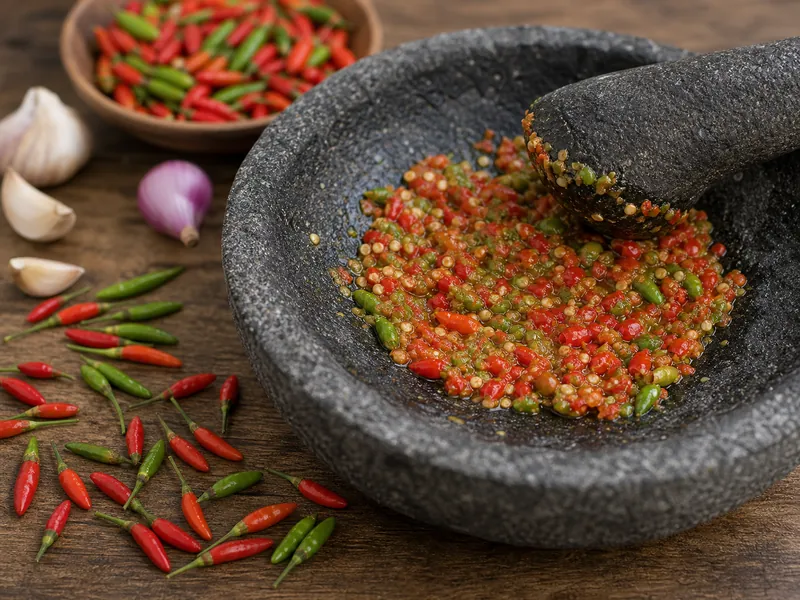
The pods are small and tapered, typically 1-3 cm long, ripening from green through yellow and orange to red. Each color stage carries a slightly different flavor intensity, with red pods delivering the fullest heat.
Green cabe rawit appears frequently in sambal and stir-fries where a fresher, grassier note is preferred.
For context, cabe rawit runs hotter than the thick-walled, intensely hot rocoto at its lower range, and matches the upper ceiling of many Southeast Asian chiles. The Indonesian pepper tradition built around this variety reflects centuries of cultivation across Java, Bali, and Sumatra, where it became inseparable from the national palate.
Where Does Cabe Rawit Come From?
Indonesia's chili history begins with Portuguese traders who introduced Capsicum to the archipelago in the 16th century. Within generations, local cultivation had adapted these New World plants to tropical growing conditions, selecting for smaller, hotter pods suited to the humid climate.
Cabe rawit emerged as the dominant small-format chile across the Indonesian islands. Its C. frutescens botanical family thrives in tropical heat and humidity, producing prolific harvests year-round, a practical advantage in a region where chiles appear in nearly every meal.
By the 19th century, cabe rawit had become so embedded in Indonesian cuisine that Dutch colonial records noted its widespread cultivation. Today it remains the backbone of sambal production, with Indonesia consuming an estimated 3 million tons of fresh chilies annually, cabe rawit accounting for a significant share.
What Does Cabe Rawit Taste Like, and How Hot Is It?
The Cabe Rawit delivers 50K–100K Scoville Heat Units, placing it in the Hot tier (10K-100K SHU). That makes it roughly 6-40x hotter than a jalapeño, depending on where the jalapeño falls in its 2,500-8,000 SHU range.
Flavor notes: sharp and bright.
What Nutrients Does Cabe Rawit Provide?
Like most hot chilies, cabe rawit delivers meaningful nutrition in small quantities. A 100g serving provides roughly 40 calories, significant vitamin C (often exceeding 100mg, well above daily requirements), and useful amounts of vitamin A and vitamin B6.
Capsaicin, the compound responsible for the heat, has been studied for anti-inflammatory and metabolic effects. The TRPV1 receptor response that capsaicin triggers is detailed in capsaicin.
The bright red color indicates high beta-carotene content. Green pods contain less carotenoid but similar capsaicin levels.
What Is Cabe Rawit Best Used For?
Sambal is the obvious starting point. Cabe rawit forms the heat base for dozens of sambal varieties, sambal matah, sambal terasi, sambal ijo, each built around the pepper's sharp brightness rather than deep, smoky complexity.
The raw preparation in sambal matah showcases its clean, almost citrusy edge.
Beyond sambal, cabe rawit appears whole in soups and braised dishes like soto and opor ayam, where it slowly releases heat into the broth without fully breaking down. Cooks who want controlled heat leave the pods whole.
Those who want maximum fire crush or slice them first.
For applications outside Indonesian cooking, cabe rawit substitutes well anywhere you'd use bird's eye chilies. The Thai Dragon translates directly, cabe rawit handles those same applications with comparable intensity.
Dried cabe rawit adds concentrated heat to spice blends and long-cooked sauces. The drying process mellows the sharpness slightly while intensifying the underlying heat.
For guidance on incorporating high-heat Southeast Asian chilies into other traditions, peppers mexican cooking offers useful technique crossovers around heat management and acid balancing.
How Do You Buy and Store Cabe Rawit?
Fresh cabe rawit appears in Asian grocery stores and international markets, usually labeled as 'bird's eye chili' or simply 'Thai chili' in Western markets, functionally interchangeable for most recipes. Look for firm, glossy pods without soft spots or wrinkling.
Refrigerate fresh pods in a paper bag inside a plastic bag, this setup lasts 1-2 weeks. For longer storage, freeze whole pods without blanching.
They retain heat and flavor well for 6 months.
Dried cabe rawit stores in an airtight container away from light for up to 1 year. When buying dried, check that pods are pliable rather than brittle, over-dried pods lose volatile aromatics.
For comparison shopping, the Sugar Rush Peach at the same heat level offers an interesting alternative when fresh cabe rawit is unavailable.
What Is a Good Substitute for Cabe Rawit?
No dedicated substitute guidance is published for Cabe Rawit yet.
How Do You Grow Cabe Rawit Peppers?
Cabe rawit grows as a perennial in tropical climates and an annual in temperate zones. Starting seeds indoors 8-10 weeks before last frost gives the long growing season these plants need, germination takes 10-21 days at soil temperatures above 27°C (80°F).
The plants are compact, reaching 60-90 cm tall, and genuinely productive. A single established plant can yield hundreds of pods across a season.
They prefer well-drained soil with consistent moisture and struggle in waterlogged conditions.
Compared to the Bird's Eye Chili, cabe rawit is relatively fast to first harvest, roughly 75-90 days from transplant. Full sun is non-negotiable.
Less than 6 hours daily noticeably reduces pod set.
In containers, a 5-gallon pot works adequately, though larger containers produce better yields. Feed with a low-nitrogen fertilizer once flowering begins, too much nitrogen pushes leaf growth at the expense of pods.
The plants respond well to light pruning to encourage branching and heavier fruit set.
Cabe Rawit FAQ


- Birds Eye Chili Heat Reference
- USDA Agricultural Research Service - Capsicum frutescens
- FAO - Indonesia Vegetable Production Statistics
Species classification: C. frutescens - based on published botanical taxonomy.