

KnowThePepper
Lumbre Pepper: Hatch Roasting Flavor Pushed to 9,000–10,000 SHU
The Lumbre pepper is the hottest variety bred under the legendary Hatch chile program at New Mexico State University. Developed for growers who want serious fire alongside that signature roasted Hatch flavor, Lumbre thrives in hot, dry climates and rewards attentive gardeners with heavy harvests of long, tapered pods.
It sits at the top of the Hatch heat ladder while remaining deeply rooted in New Mexican chile tradition.
- Species: Capsicum annuum
- Heat tier: Hot (10K-100K SHU)
- Comparison: 1-4x hotter than a jalapeño, depending on where the jalapeño falls in its 2,500-8,000 SHU range
What Is Lumbre Pepper Known For?
Lumbre means "fire" in Spanish, and this pepper earns that name. Bred by NMSU's Chile Pepper Institute as part of the storied NuMex breeding program, Lumbre delivers the roasted, earthy depth that defines Hatch-style chiles, but with a heat level that sets it apart from milder Hatch varieties like the NuMex Joe E. Parker.
The pods grow long and tapered, ripening from green to a deep red, with thick walls that make them ideal for roasting and peeling. That wall thickness is part of what makes Lumbre so satisfying to grow, the pods feel substantial in hand, and the skin blisters beautifully over an open flame.
Flavor-wise, Lumbre carries the characteristic sweetness and earthiness of Hatch chiles, but the heat lingers on the palate longer than most New Mexican varieties. It falls within the mild-to-medium range of the Scoville spectrum, though it registers at the upper boundary of what Hatch breeders typically target.
For gardeners in the Southwest or anywhere with long, hot summers, Lumbre performs exceptionally well. It matures reliably and produces generous yields when given proper care.
Cooks prize it for green chile sauce, stuffed preparations, and anything where roasted Hatch character is the goal, but with a noticeable kick that heat-free cooking alternatives simply cannot replicate.
What Is the Origin of Lumbre Pepper?
Lumbre was developed through the New Mexico State University agricultural breeding program, which has produced dozens of NuMex chile varieties since the mid-20th century. The program's goal has always been to create peppers optimized for New Mexico's distinct growing conditions, intense sun, alkaline soils, and a short but scorching growing season.
Hatch, New Mexico became synonymous with chile culture through this program, and Lumbre represents the program's push to offer growers a hotter option within the traditional long green chile format. The name itself reflects New Mexican cultural identity, fire as both literal heat and regional pride.
Unlike some heirloom chiles with centuries of undocumented history, Lumbre has a clear institutional lineage. It belongs to the same regional pepper tradition that produced NuMex Big Jim, NuMex Sandia, and other Hatch staples, making it a modern cultivar with deep cultural roots.
What Does Lumbre Pepper Taste Like, and How Hot Is It?
The Lumbre Pepper delivers 9K–10K Scoville Heat Units, placing it in the Hot tier (10K-100K SHU). That makes it roughly 1-4x hotter than a jalapeño, depending on where the jalapeño falls in its 2,500-8,000 SHU range.
What's in Lumbre Pepper? Nutrition Facts
Like most Hatch-type chiles, Lumbre is a solid source of vitamin C - green chile pods can contain more vitamin C per gram than citrus fruit. Red-ripe Lumbre adds significant vitamin A from carotenoid development as the pod matures.
Capsaicin content, while moderate compared to superhots, still contributes anti-inflammatory properties documented in peer-reviewed research. A 100g serving of fresh green chile provides roughly 40 calories, with meaningful amounts of potassium, folate, and vitamin B6.
The thick walls mean higher water content, which keeps calorie density low while delivering micronutrients efficiently.
How Do You Use Lumbre Pepper in the Kitchen?
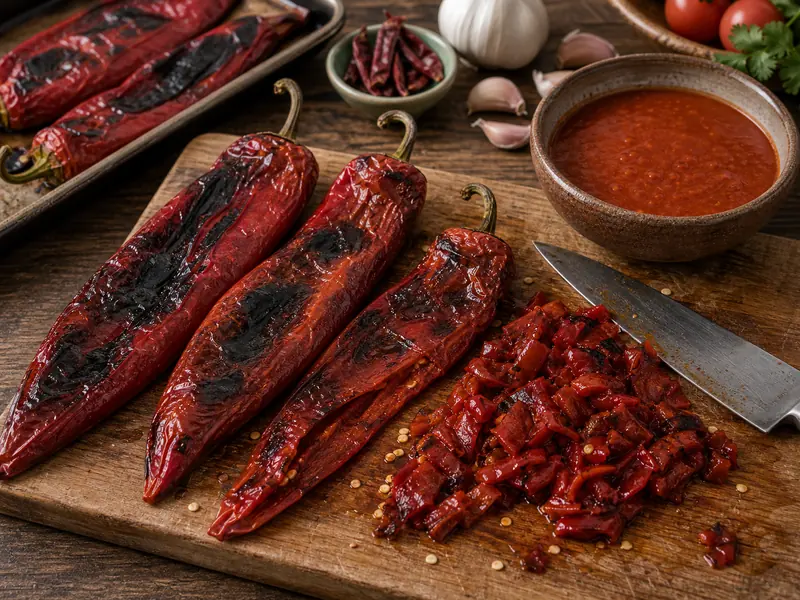
Lumbre's thick walls and long pod shape make it the ideal candidate for traditional Hatch-style roasting. Blister the skin over a gas burner or under a broiler, then seal in a plastic bag for 10 minutes, the steam loosens the skin cleanly.
Once peeled, the flesh has a silky texture and a layered flavor: initial sweetness, then earthiness, then a slow-building heat that sits comfortably above a crisp, heatless sweet pepper but well below a habanero. That middle-ground warmth makes Lumbre practical in the kitchen.
Green chile sauce is the obvious application, Lumbre produces a sauce with more complexity than milder Hatch varieties. It also works beautifully in chile rellenos, where the thick walls hold their shape during frying.
Dried and ground, Lumbre red powder adds genuine fire to enchilada sauces and spice rubs.
For those interested in preserved preparations, Lumbre's flavor and heat translate well into jams and preserves. A good pepper jelly using roasted Lumbre will have far more depth than one made with standard green chiles.
Paired with pork, corn, or squash, the traditional New Mexican flavor companions, Lumbre feels completely at home.
How Should You Buy and Store Lumbre Pepper?
Fresh Lumbre peppers appear at Hatch-region farmers markets and specialty grocers during the August harvest season. Outside New Mexico, frozen roasted Hatch chiles labeled "hot" variety often include Lumbre or similar high-heat NuMex types.
Store fresh pods unwashed in the refrigerator crisper for up to 2 weeks. Roasted and peeled Lumbre freezes exceptionally well, portion into 4-ounce bags and freeze flat for up to 12 months without significant quality loss.
Dried Lumbre powder should be stored in an airtight container away from light, where it holds potency for 1-2 years.
What Is a Good Substitute for Lumbre Pepper?
No dedicated substitute guidance is published for Lumbre Pepper yet.
How Do You Start and Grow Lumbre Peppers?
Lumbre thrives in conditions that mimic its New Mexico origins: full sun, well-drained soil, and consistent heat.
Start seeds indoors 8-10 weeks before last frost. Germination is reliable at soil temperatures between 75-85°F.
Transplant outdoors once nighttime temperatures stay above 55°F consistently.
Lumbre is sensitive to cold snaps early in the season, which can stunt growth and delay fruit set. Raised beds in cooler climates help retain heat around the root zone.
Spacing matters more than most gardeners expect.
Give plants 18-24 inches between them, Lumbre grows into a dense, branching structure and needs airflow to prevent fungal issues in humid summers. Compare this to the Prik Kee Noo - Lumbre needs considerably more room.
Water deeply but infrequently.
Consistent moisture during fruit development prevents blossom end rot, but soggy roots will kill the plant. A drip system set to 1-2 inches per week during peak summer works well.
Fertilize with a balanced NPK at transplant, then switch to a lower-nitrogen formula once flowering begins, too much nitrogen pushes leafy growth at the expense of pods.
Lumbre typically matures in 75-85 days from transplant. For a complete approach to starting from seed through harvest, the pepper-growing covers every stage in detail.
Lumbre Pepper FAQ


- NMSU Sandoval Extension - Freezing, Drying, Freeze Drying, and Canning: Chile
Species classification: Capsicum annuum - based on published botanical taxonomy.