

KnowThePepper
Prik Kee Noo: Thailand's Inch-Long Mouse-Dropping Chili and Its Quick Heat
Prik kee noo - literally 'mouse dropping pepper' in Thai, punches far above its tiny size. A staple of Thai street cooking, this small fresh chile delivers sharp, bright heat that hits fast and fades quickly.
It shows up in nearly every Thai sauce, stir-fry, and condiment worth eating, and its flavor is as important as its fire.
- Heat tier: Hot (10K-100K SHU)
- Comparison: 6-40x hotter than a jalapeño, depending on where the jalapeño falls in its 2,500-8,000 SHU range
What Is Prik Kee Noo Known For?
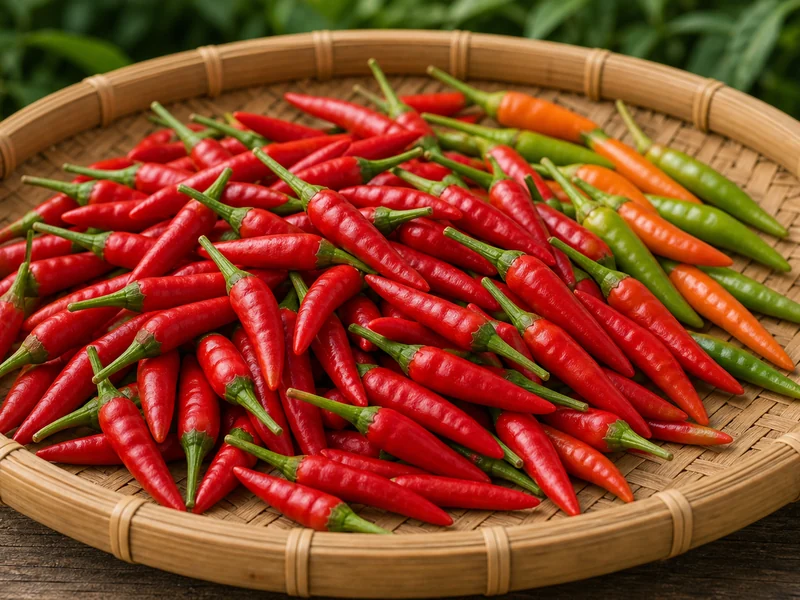
Size is deceptive with prik kee noo. These slender pods rarely stretch beyond an inch, yet they carry the kind of sharp, penetrating heat that defines Thai cooking's character.
The name translates roughly to 'rat dropping chile' - a nod to the pepper's small, tapered shape rather than anything about its flavor.
Fresh prik kee noo are vivid green when young, ripening to bright red. Both stages appear in Thai kitchens, with green pods offering a grassier, sharper bite and red ones leaning slightly sweeter and fruitier.
The heat is front-loaded, it hits the tip of the tongue immediately and disperses within a minute or two, unlike the lingering burn of, say, Thai Chili.
Thailand grows several prik kee noo varieties, with prik kee noo suan (garden mouse dropping) considered the most pungent. Markets across Bangkok and Chiang Mai pile them fresh in small baskets, sold by the handful.
For cooks outside Thailand, dried prik kee noo are widely available and deliver concentrated heat with a slightly smoky edge. The fresh version is increasingly found in Asian grocery stores across North America and Europe.
Either form works, the pepper's essential character survives the drying process better than most.
What Is the History of Prik Kee Noo?
Thailand's chile history mirrors that of most Southeast Asian cuisines, pre-Columbian cooking relied on other pungent ingredients like galangal, white pepper, and long pepper for heat. Portuguese traders introduced Capsicum varieties to the region in the 16th century, and Thai cooks adopted them with remarkable speed.
Prik kee noo became central to Thai cuisine within a century of its introduction, displacing older heat sources in many dishes. The regional pepper tradition that developed around these small chiles is now inseparable from Thai cooking identity.
The pepper's name appears in Thai food records dating back several centuries, and regional variations developed across the country's different cooking traditions, northern Thai food using them differently than the coconut-heavy southern style. Today prik kee noo represents one of the clearest examples of how thoroughly a New World ingredient was absorbed into an Asian food culture.
What Does Prik Kee Noo Taste Like, and How Hot Is It?
The Prik Kee Noo delivers 50K–100K Scoville Heat Units, placing it in the Hot tier (10K-100K SHU). That makes it roughly 6-40x hotter than a jalapeño, depending on where the jalapeño falls in its 2,500-8,000 SHU range.
Prik Kee Noo Nutrition Facts
Like most small hot chiles, prik kee noo delivers meaningful nutrition in a small package. Fresh pods provide vitamin C at levels exceeding many larger peppers by weight, the compound responsible for their heat, capsaicin, coexists with antioxidants including vitamin A precursors and flavonoids.
Calorie count is negligible, roughly 5-8 calories per 10g serving. The practical guidance on capsaicin pain relief points to capsaicin's documented anti-inflammatory properties, which apply to prik kee noo's active compounds.
Dried pods concentrate all nutrients, including heat compounds, making them calorie-for-calorie more nutrient-dense than fresh.
How Do You Use Prik Kee Noo in the Kitchen?
Thai cooking without prik kee noo is like Italian cooking without garlic, technically possible, but missing something structural. These peppers appear at nearly every stage of a Thai meal.
Nam prik (chile dipping sauces) almost always start with fresh or dried prik kee noo pounded in a mortar. The classic nam prik pla combines them with fish sauce, lime juice, and sometimes garlic into a condiment that goes on everything from grilled fish to plain rice.
For pad kra pao (Thai basil stir-fry), a dish that's arguably Thailand's most-eaten street food, prik kee noo are pounded or sliced directly into the wok.
Fresh green pods work best in dishes where you want clean, sharp heat, larb, green papaya salad, and clear soups. Red ripe pods suit longer-cooked preparations where their slight sweetness can develop.
Dried prik kee noo ground into powder is the base for many curry pastes.
For heat calibration, start with 3-4 pods for a dish serving four people if you're new to them. Experienced cooks might use 10-15 in a single stir-fry.
Compared to the Bell Pepper, the difference is stark, these are genuinely hot by most standards.
The completely heatless habanero-shaped variety makes an interesting contrast, similar fruity undertones, none of the fire that makes prik kee noo what it is.
How Should You Buy and Store Prik Kee Noo?
Fresh prik kee noo appear in Asian grocery stores, often labeled simply 'Thai bird chiles' or 'Thai chiles.' Look for firm, glossy pods without soft spots.
Green and red pods are both correct, choose based on your recipe.
Refrigerate fresh pods in a paper bag inside a plastic bag for up to two weeks. For longer storage, freeze whole pods, they maintain heat and flavor well for 6 months, though texture softens.
Dried whole pods keep 12 months in a sealed container away from light. For the hot across chile varieties, prik kee noo sits firmly in the upper range of what most home cooks encounter regularly.
What Is a Good Substitute for Prik Kee Noo?
No dedicated substitute guidance is published for Prik Kee Noo yet.
How Do You Grow Prik Kee Noo at Home?
Prik kee noo grows as a compact, bushy plant, typically 60-90 cm tall - that produces prolifically once established. It performs best in warm conditions similar to its Thai origins: full sun, well-drained soil, and consistent moisture without waterlogging.
Start seeds indoors 8-10 weeks before your last frost date.
Germination is reliable at soil temperatures above 24°C (75°F). Transplanting outdoors should wait until nights stay consistently above 15°C (59°F).
For store peppers, the key is patience, prik kee noo plants take longer to first fruit than many garden varieties but then produce continuously through the season.
Container growing works well. A 5-gallon pot handles one plant comfortably.
Compare it to the Chiltepin - both produce small pods prolifically on bushy plants, though prik kee noo is more forgiving in humid conditions.
Harvest green pods as needed and leave some to ripen red.
The plant produces far more than most households use fresh, making drying or freezing essential. Dried pods keep for 12 months in an airtight container.
Prik Kee Noo FAQ


- TasteAtlas - Prik Kee Noo
- FAOSTAT crop production data - FAO