

KnowThePepper
Togarashi Pepper: Dried Red Chili Blended With Sesame, Citrus Peel and Nori
Togarashi is Japan's most recognized spice blend, built around dried red chili peppers and layered with sesame, citrus peel, nori, and ginger. It sits at the mild - approachable enough for everyday seasoning, complex enough to anchor ramen, grilled meats, and rice dishes.
The blend's balance of heat, umami, and citrus makes it far more than a simple chili powder.
- Species: Capsicum annuum
- Heat tier: Hot (10K-100K SHU)
- Comparison: 2-12x hotter than a jalapeño, depending on where the jalapeño falls in its 2,500-8,000 SHU range
What Is Togarashi Pepper Known For?
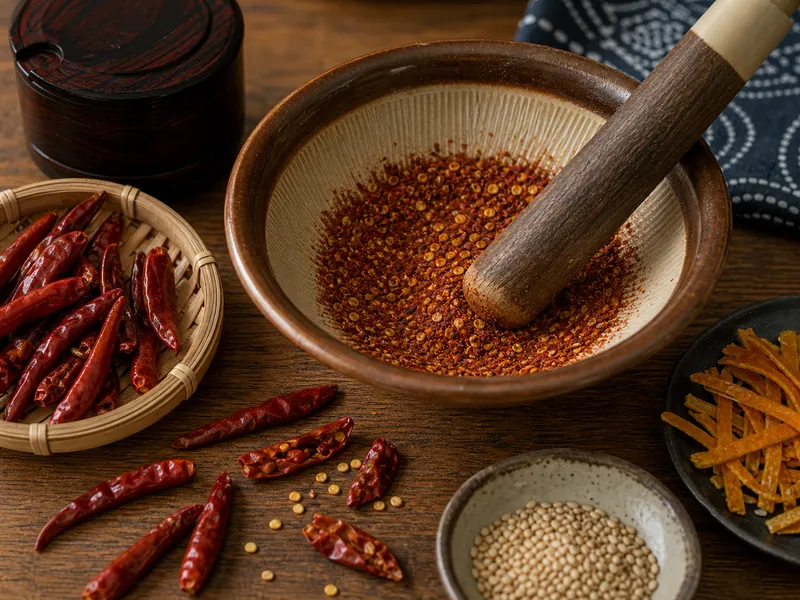
The first time togarashi clicked for me was at a ramen counter in Osaka, watching a cook dust a bowl of tonkotsu with what looked like confetti, orange peel flecks, black sesame, deep red chili. One pinch transformed the entire bowl.
Togarashi (唐辛子) literally means 'Chinese mustard' or 'foreign pepper' in Japanese, a name that traces back to the introduction of chili peppers to Japan via Portuguese traders in the 16th century. Today it is a broad word: it can mean a Capsicum annuum chile, dried red pepper, ichimi powder, or the famous shichimi togarashi blend.
The SHU range here applies to the common dried Japones-style chile used for heat, not every finished seasoning blend.
Shichimi blends typically combine dried red chili with sesame, nori, sansho pepper, ginger, and yuzu or mandarin peel. Each maker, and each region, adjusts ratios, giving Kyoto-style blends a gentler, more aromatic profile and Tokyo-style versions more direct heat.
As a standalone dried chili, togarashi sits firmly in the mild-to-moderate pepper category, making it accessible across cooking contexts. It's not trying to challenge you, it's trying to season your food with precision and depth.
For anyone interested in peppers japanese cooking, togarashi is the logical starting point: historically significant, widely available, and genuinely flexible.
What Is the History of Togarashi Pepper?
Chili peppers arrived in Japan around 1542, carried by Portuguese missionaries and traders via China and Korea. The Japanese word togarashi reflects that foreign origin, it was literally the 'pepper from abroad.'
By the Edo period (1603-1868), street vendors in Tokyo (then Edo) were selling shichimi blends near the Asakusa temple district. The Yagenbori spice shop, established in 1625, still operates today and is considered one of the oldest togarashi producers in Japan.
Unlike Morita Pepper, Japanese togarashi culture developed around restraint, the goal was always balance and seasoning, never heat for its own sake. Regional variations evolved naturally, with mountain communities emphasizing sansho and coastal areas leaning on nori and citrus.
How Hot Is Togarashi Pepper? Heat and Flavor
The Togarashi Pepper delivers 15K–30K Scoville Heat Units, placing it in the Hot tier (10K-100K SHU). That makes it roughly 2-12x hotter than a jalapeño, depending on where the jalapeño falls in its 2,500-8,000 SHU range.
What's in Togarashi Pepper? Nutrition Facts
Dried togarashi chili peppers are nutrient-dense relative to their serving size. A 1-teaspoon serving of shichimi togarashi blend contains roughly 6-8 calories, with trace amounts of fat from sesame seeds.
Dried red chili peppers are an excellent source of vitamin C (though heat and drying reduce levels), vitamin A from beta-carotene, and capsaicin - even at mild concentrations, capsaicin has documented anti-inflammatory properties.
The sesame component adds small amounts of calcium, magnesium, and healthy unsaturated fats. Nori flakes contribute iodine and trace minerals.
Overall, togarashi is a low-calorie flavor amplifier with genuine micronutrient value.
The drying process concentrates nutrients dramatically. Dried Togarashi Pepper provides iron, potassium, and B vitamins in a much smaller volume than fresh peppers.
Vitamin C decreases with drying, but vitamin A (from carotenoids) remains high.
The 15,000-30,000 SHU capsaicin range means dried pods retain their heat, capsaicin is heat-stable and does not degrade during the drying process. For the full science, see how capsaicin activates heat receptors.
How Do You Use Togarashi Pepper in the Kitchen?
Togarashi's strength is its layered complexity. The dried chili provides mild heat and color.
The sesame adds nuttiness.
Yuzu or orange peel cuts through fat with citrus brightness. Sansho pepper (a relative of Sichuan peppercorn) contributes a subtle numbing tingle that's nothing like the Sichuan Pepper.
Classic applications include topping ramen, udon, soba, and yakitori.
It works beautifully on edamame with sea salt, dusted over popcorn, or stirred into butter for grilled corn. Rice and grilled fish are everyday uses in Japanese households.
For Western kitchens, togarashi makes an excellent finishing spice on roasted vegetables, avocado toast, or grilled chicken thighs. It also integrates well into dry rubs alongside smoked paprika.
Shichimi should be added at the end of cooking or at the table - heat degrades the citrus oils and sesame quickly.
Store-bought blends lose potency fast. Freshly ground versions from Japanese grocery stores are noticeably more aromatic.
For those wanting a heat-free pepper with the habanada's fascinating breeding backstory to blend alongside togarashi, the combination creates an interesting fruity-aromatic base.
How Do You Buy and Store Togarashi Pepper?
Look for shichimi togarashi at Japanese grocery stores, Asian supermarkets, or specialty spice shops.
S&B and Yagenbori are the two most recognized commercial brands. Freshness matters significantly, check the production date if visible.
Store in an airtight container away from light and heat.
Whole dried togarashi chilies keep for up to a year. Pre-blended shichimi loses its citrus brightness within 3-4 months of opening.
For the best flavor, buy whole dried chilies and toast and grind them yourself.
The difference between fresh-ground and six-month-old shichimi from a spice rack is substantial. Refrigeration isn't necessary but extends shelf life in humid climates.
What Can You Use Instead of Togarashi Pepper?
No dedicated substitute guidance is published for Togarashi Pepper yet.
How Do You Grow Togarashi Pepper at Home?
Growing the togarashi chili (the base pepper, not the blend) follows the standard Capsicum annuum pattern. Seeds germinate best at 75-85°F (24-29°C) and should be started indoors 8-10 weeks before last frost.
The plants prefer full sun and well-drained soil with a pH of 6.0-6.8. They're compact growers, typically 18-24 inches tall - which makes them suitable for container growing.
Space plants 18 inches apart in garden beds.
Transplant outdoors only after soil temps stabilize above 60°F. Consistent watering matters more than volume.
Irregular moisture causes blossom drop.
A low-nitrogen fertilizer once flowering begins encourages fruit set over leaf growth.
For a grow peppers from seed, the basics that apply to NuMex Joe E. Parker translate well here, both are warm-season annuals that reward patience during germination.
Harvest peppers when fully red for maximum heat and color concentration. Dry in a dehydrator at 125°F or hang-dry in a warm, ventilated space for 2-3 weeks before grinding into your own shichimi blend.
Togarashi Pepper FAQ


- Japan Centre - Shichimi Togarashi
-
Sourcing note: grower and seed-catalogue documentation only No university, government or research body publishes data on this cultivar. The figures on this page come from grower reports and seed-catalogue listings, which are the only documentation that exists for it.
Species classification: Capsicum annuum - based on published botanical taxonomy.