

KnowThePepper
Dundicut Pepper: Sindh's Stemless Button Chilli and Why Aflatoxin Matters
The Dundicut is a small round Pakistani chilli from Sindh, sold dried and reported by Dawn at 30,000 to 35,000 SHU. Sharp and savoury rather than fruity, it anchors Pakistani spice blends, and buying it well means paying attention to aflatoxin as much as to heat.
- Species: C. annuum
- Heat tier: Hot (10K-100K SHU)
- Comparison: 4-14x hotter than a jalapeño, depending on where the jalapeño falls in its 2,500-8,000 SHU range
What Kind of Pepper Is Dundicut Pepper?
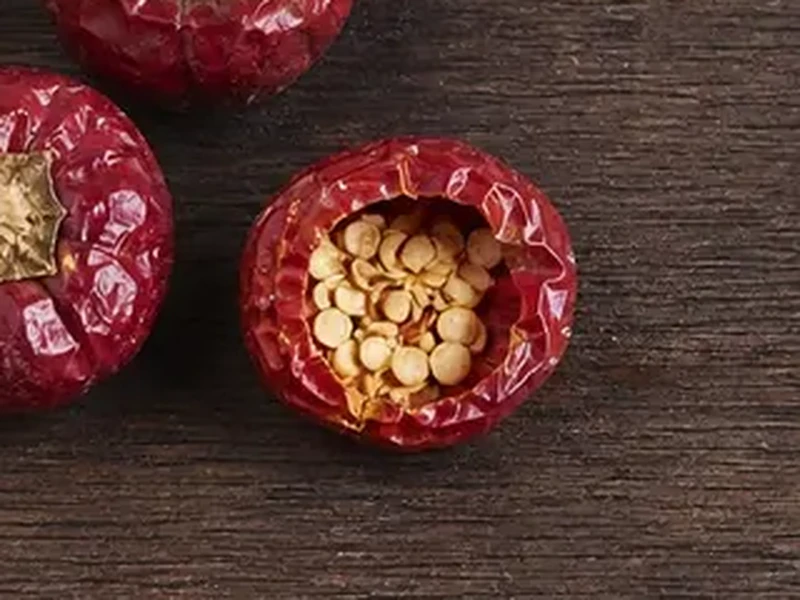
The Dundicut is a small round chilli from Sindh in southern Pakistan, sold almost entirely in dried form. Dawn's reporting from the growing district describes the mature pod as button-shaped.
The name describes how it is picked. It comes off without the stem, and dandi is the stem, which is where dandi-cut comes from.
Dawn puts the pod between 30,000 and 35,000 Scoville heat units, on the strength of what growers and traders in Kunri report. Higher ranges circulate widely online, and the table below sets out what each figure can and cannot establish.
The pepper belongs to the C. annuum botanical group and sits in the hot tier, close to tabasco rather than well above it. Anyone repeating a claim that it is twice the heat of a tabasco is comparing two ranges that overlap almost completely.
Skins are thin, so the pods dry fast and rehydrate cleanly, deepening from bright red toward burgundy as they go.
Flavour sits in a savoury register rather than a fruity one. Growers in Kunri describe it as aromatic and not bitter, and the heat arrives quickly rather than creeping in the way aji amarillo does.
For Pakistani cooking the Dundicut is a staple rather than a specialty item, carrying spice blends, chutneys, and slow-cooked meat dishes.
| Figure | Where it comes from | How to read it |
|---|---|---|
| 30,000 to 35,000 SHU | Dawn, reporting from Kunri | Reported field range for the traditional pod. The figure this profile publishes |
| 55,000 to 65,000 SHU | Commercial pepper websites | Widely repeated online with no measurement behind it. Not used here |
| 15,000 SHU with a 5,000 tolerance | A 2024 whole-chilli trade specification | A contract spec for a graded lot, not a measurement of this cultivar |
| No lab certificate | Any of the above | No published HPLC result exists for Dundicut, so every number here is a report rather than a test |
Where Does Dundicut Pepper Come From?
The Dundicut is grown in the Sindh province of Pakistan, and the trade runs through Kunri, whose Mirch Mandi wholesale market Dawn reports trades over 100,000 tonnes of chillies every year.
Pakistan remains a substantial producer, and a 2024 study in Heliyon places it in the top twenty worldwide at 82 thousand tonnes of chillies for 2022 to 2023.
The variety's position at home has weakened rather than grown. Dawn reports that Dundicut harvests have more than halved as growers move to hybrid seed.
The reason is economic and blunt. Dundicut earns about Rs 100,000 in profit per acre against roughly eight times that for the hybrid Sanam, so the traditional pod is being displaced by a more profitable one.
Pakistan was once the world's fifth largest chilli exporter. A pepper this closely tied to one district can lose its acreage in a decade, which is worth knowing before treating any particular pod as permanently available.
How Hot Is Dundicut Pepper, and What Does It Taste Like?
The Dundicut Pepper delivers 30K–35K Scoville Heat Units, placing it in the Hot tier (10K-100K SHU). That makes it roughly 4-14x hotter than a jalapeño, depending on where the jalapeño falls in its 2,500-8,000 SHU range.
Flavor notes: sharp and pungent.
Dundicut Pepper Nutrition Facts
Dried chillies concentrate what the fresh fruit contains, so Dundicut carries vitamin C, vitamin A as beta-carotene, and iron in a lighter pod.
Portion size is what makes the arithmetic misleading. A pod that hot is used in fractions of a gram, so a nutrient figure per 100 grams describes a quantity nobody eats.
USDA FoodData Central has no entry for Dundicut specifically, so any per-pod figure quoted online has been carried over from another dried chilli.
Capsaicin, the compound behind the heat, has attracted research interest for metabolic and anti-inflammatory effects. The capsaicin covers what that research does and does not establish.
What Is Dundicut Pepper Best Used For?
Dundicut is cooked dried and whole or ground to powder, and almost never fresh outside Sindh.
Toast before grinding. Thirty to sixty seconds in a dry pan over medium heat wakes the oils and deepens the flavour, and the thin skin means it scorches quickly if you look away.
In Pakistani kitchens it carries karahi, nihari, and spice-heavy braises. Ground Dundicut sits earthier and less acidic than cayenne, so the two are not interchangeable by weight even where the heat is close.
Whole pods infused in neutral oil give a savoury chilli oil. Crack them first so the capsaicin and aromatics have a way out.
Start low when substituting powder for powder. A commercial chilli powder is usually a blend carrying salt and other spices, while ground Dundicut is one pepper and nothing else, so the same spoonful lands harder and tastes narrower.
It also works in pepper jelly for a savoury heat in place of the usual jalapeno base.
How Do You Keep Dundicut Pepper Fresh?
Dried Dundicut pods are sold through South Asian grocers and online spice retailers. Look for deep burgundy-red colour, since faded or brownish pods have lost heat and aroma.
Before storage, though, there is a supply problem worth understanding.
Aflatoxin contamination in Pakistani dried chilli is documented rather than theoretical. A survey of 176 red chilli samples from Karachi stores, published in Mycotoxin Research, found 66 percent carried aflatoxin B1.
That number needs its other half. The same survey found levels generally low, with only seven of the 176 samples above 25 micrograms per kilogram.
More recent reporting is less reassuring. Dawn writes that Pakistani chilli products routinely show concentrations exceeding 80 to 90 micrograms per kilogram, eight to nine times the EU total aflatoxin limit, and that some branded packets carry labels saying they are intended only for consumption within Pakistan.
The cause is post-harvest rather than agricultural. A 2024 study in Heliyon identifies fungal contamination and aflatoxin production during drying as a common problem in the chilli supply chain.
None of that makes the pepper unusable, and it does change what to buy. Prefer a supplier who tests, prefer whole pods over powder, since powder hides the damaged fruit that carries the most contamination, and prefer product intended for export markets that enforce a limit.
Store whole pods in an airtight container away from light and heat, and grind only what you need.
Discard any pod showing mould, and do not try to salvage a batch by cutting the affected parts away. Aflatoxin is not confined to the visible growth.
Dried form: Almost every Dundicut sold outside Pakistan is dried, which makes the dried pod the real subject of this profile.
Whole pods keep better than powder for two reasons. Aroma compounds escape from cut surfaces, and a whole pod lets you see the damage that a grinder would hide.
Colour is the fastest quality read. Deep burgundy-red means recent and well dried, while brown, dusty, or patchy pods have sat too long or too damp.
Weight and flex tell you the rest. A good pod is light and leathery rather than brittle enough to shatter or soft enough to bend without cracking.
Rehydrate in hot water for fifteen to twenty minutes when a recipe wants pulp rather than powder. The thin skin softens fast, so a long soak turns the pod to mush and pushes flavour into water you then discard.
Grind in small batches and keep what you grind in an airtight jar away from light. Powder is a convenience that costs aroma from the day it is made.
Four ways a Dundicut purchase goes wrong
- Treating it as a colour chilli. Kashmiri and Byadgi are chosen for colour at low heat, so swapping Dundicut in at the same quantity multiplies the heat many times.
- Buying powder from an unnamed source. Powder hides the damaged fruit where aflatoxin concentrates, so whole pods from a supplier who tests are the safer purchase.
- Trusting a single Scoville figure. No published lab result exists for this cultivar, so every number in circulation is a report rather than a test.
- Assuming the seed matches the name. Dundicut seed sold outside Pakistan is rarely certified, so a home-grown pod may look and taste unlike what Kunri harvests.
Which Peppers Can Replace Dundicut Pepper?
Direct comparisons show where flavor, form, and preparation differ in the Dundicut vs Kashmiri Chili matchups.
How Do You Grow Dundicut Peppers?
Dundicut is adapted to the hot dry conditions of Sindh, which is the climate to imitate rather than the one most gardens offer.
The general pepper practice applies here, since no cultivar-specific trial data is published for it. Full sun, well-drained soil, and warm nights before transplanting outdoors.
Start seeds indoors around 10 to 12 weeks before last frost, the standard timing for growing peppers from seed. Germination is fastest at soil temperatures near 80 to 85°F.
Plants stay compact enough for containers. Consistent moisture matters most during fruit set, though waterlogged roots will stall the plant quickly.
Treat any specific figure for days to maturity or plant height with caution. Seed sold as Dundicut outside Pakistan is rarely certified, and what grows may not match what Kunri harvests.
Dundicut Pepper FAQ


- Dawn - The agent that infiltrated Pakistan's red hot chilli peppers
- Mycotoxin Research - Contamination of red chilli with aflatoxin B1 in Pakistan (Shamsuddin et al.)
- Heliyon - Comparative evaluation of ethylene oxide, electron beam and gamma irradiation treatments on red chilli cultivars of Sindh, Pakistan
Species classification: C. annuum - based on published botanical taxonomy.