

KnowThePepper
Cayenne Pepper: Fresh Pods, Dried Chiles, and Powder
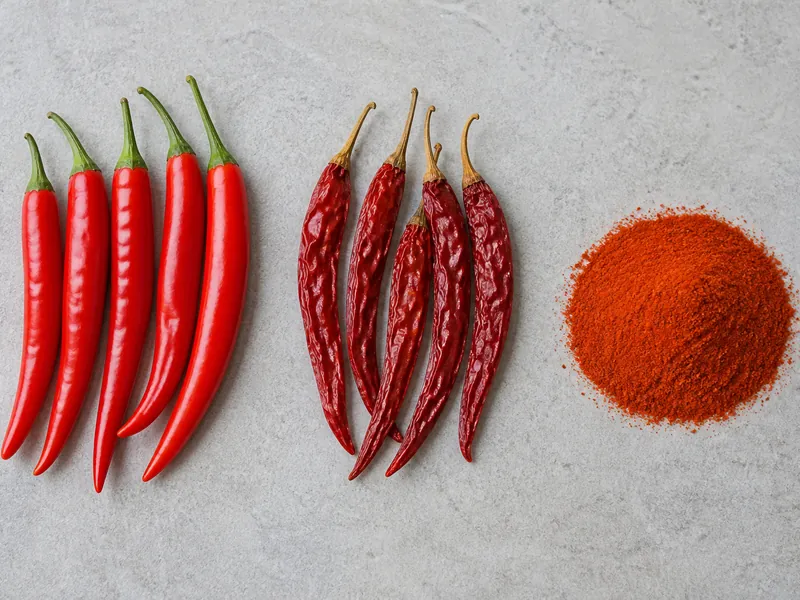
Cayenne pepper is a hot Capsicum annuum group commonly sold as fresh red pods, whole dried chiles, or a fine ground spice. Choose fresh pods for texture, whole dried pods for chile body, and powder when a dish needs evenly distributed heat.
- Species: C. annuum
- Heat tier: Hot (10K-100K SHU)
- Comparison: 4-20x hotter than a jalapeño, depending on where the jalapeño falls in its 2,500-8,000 SHU range
What Is Cayenne Pepper?
Cayenne is a group of long, narrow Capsicum annuum peppers rather than one standardized commercial product. UF/IFAS lists the pepper at 25,000-50,000 Scoville heat units, while this profile uses the site's canonical 30,000-50,000 SHU range.
The package form changes the cooking result. Fresh pods contribute moisture and pieces of pepper, whole dried pods can be toasted or rehydrated into a sauce, and finely ground cayenne disappears into a rub, soup, or batter.
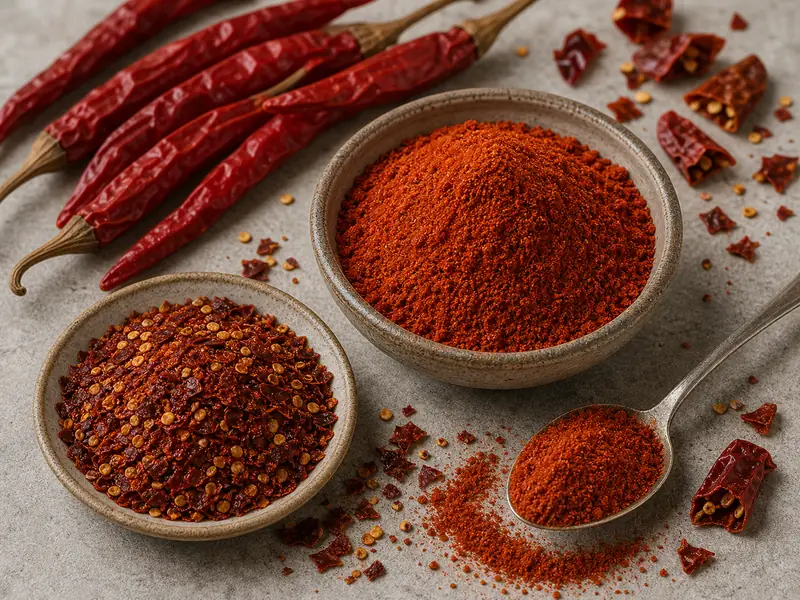
Crushed red pepper is a separate label, usually a coarse blend with visible seeds and flakes rather than pure cayenne powder. Check the ingredient panel when a recipe depends on a particular pepper or predictable heat.
Where Did Cayenne Pepper Originate?
The cayenne name connects the pepper to the city of Cayenne in French Guiana, according to UF/IFAS. That namesake does not establish that the crop was domesticated there, so we do not assign a French Guianan domestication story to the pepper.
Botanically, cayenne belongs to Capsicum annuum, the same species that includes many sweet and hot peppers. NCSU Extension treats cayenne peppers as a broad common-name group with cultivars that vary in fruit shape, color, and pungency.
How Hot Is Cayenne Pepper, and What Does It Taste Like?
The Cayenne Pepper delivers 30K–50K Scoville Heat Units, placing it in the Hot tier (10K-100K SHU). That makes it roughly 4-20x hotter than a jalapeño, depending on where the jalapeño falls in its 2,500-8,000 SHU range.
Flavor notes: direct pepper heat with a mild earthy note; the dried powder is less aromatic than a fresh pod.
Cayenne Pepper Nutrition Facts
USDA FoodData Central entry 171329 describes spices, pepper, red or cayenne, so its nutrient values apply to the dried ground spice rather than a fresh pod. A teaspoon serving is small, and the database should not be used to imply that fresh cayenne has the same concentrated values.
Capsaicin-rich tissue sits mainly around the inner placenta, not only in the seeds. Iowa State Extension advises gloves and ventilation when processing hot peppers because the oils can irritate skin and eyes.
How Do You Cook With Cayenne Pepper?
Use ground cayenne when heat needs to spread evenly through a dry rub, breading, soup, or sauce. Add a measured pinch, stir, and taste after the spice has dispersed instead of relying on a fixed pod-to-powder conversion.
Whole dried pods earn their place when a sauce needs chile solids and body. Toasting briefly can deepen aroma, while soaking the pods in hot water softens them for blending.
Fresh cayenne works differently because the chopped flesh remains visible and adds moisture. It fits relishes, fresh sauces, and garnishes where narrow red pieces are part of the finished texture.
Frank's RedHot lists aged cayenne red peppers in its Original Cayenne Pepper Sauce, which shows how the pepper can anchor a Louisiana-style vinegar sauce. The label supports the ingredient example, not a claim about market share or a universal aging period.
| Form | What it adds | Where it belongs | How to tell it is good |
|---|---|---|---|
| Fresh pods | Moisture and visible pieces of pepper | Relishes, fresh sauces and garnishes where narrow red pieces are part of the texture | Firm, taut skin, no wet or sunken patches |
| Whole dried pods | Chile solids and body, and aroma if toasted first | Sauces that need to be blended, after toasting briefly or soaking in hot water | Brittle and evenly coloured, no condensation, webbing or musty smell |
| Ground | Heat that spreads evenly and disappears into the dish | Dry rubs, breading, soups and sauces, added by the pinch and tasted after it disperses | Clear red-orange colour and a sharp aroma, replaced when the aroma fades |
How Do You Buy and Store Cayenne Pepper?
Fresh cayenne should feel firm, with taut skin and no wet or sunken patches. For whole dried pods, choose brittle, evenly colored chiles without condensation, webbing, or a musty smell.
Ground cayenne should have a clear red-orange color and a sharp aroma. McCormick advises keeping spices tightly closed in a cool, dry place away from heat, moisture, and direct sunlight, then replacing them when aroma and flavor have faded rather than treating an expiry date as a potency guarantee.
NCHFP advises cooling home-dried food completely before packing it in clean, dry, insect-proof containers. Store dried peppers in a cool, dry, dark place and check the container for condensation or returning moisture.
Dried form: Drying changes cayenne from a textured vegetable into a concentrated seasoning. Whole pods retain identifiable chile pieces for toasting and rehydrating, while powder offers the most even distribution and the least texture.
Which Peppers Can Replace Cayenne Pepper?
Compare substitutes for Cayenne Pepper by form, flavor, and heat before choosing a ratio. Measured adjustments must account for the dish and the concentration of the replacement.
Direct comparisons show where flavor, form, and preparation differ in the Cayenne vs Habanero and Cayenne vs Jalapeño matchups.
Compare Cayenne Pepper with: Cayenne Pepper vs Birds Eye Chili · Cayenne Pepper vs Thai Chili · Cayenne Pepper vs De Arbol · Cayenne Pepper vs Tabasco · Cayenne Pepper vs Paprika · Cayenne Pepper vs Serrano · Cayenne Pepper vs Red Pepper Flakes · Cayenne Pepper vs Gochugaru · Cayenne Pepper vs Kashmiri Chili · Cayenne Pepper vs Peri Peri · Cayenne Pepper vs Cowhorn · Cayenne Pepper vs Piri Piri · Cayenne Pepper vs Chili Powder · Cayenne Pepper vs Crushed Red
What Does Cayenne Pepper Need to Grow Well?
Cayenne needs the same warm-season baseline as other garden peppers. Iowa State Extension recommends starting pepper seed indoors 6-8 weeks before planting, moving plants outside after frost danger has passed, and providing at least six hours of direct sun.
NCSU Extension specifies full sun and moist, well-drained soil, while UF/IFAS notes that cayenne can adapt to hot, humid Miami-Dade conditions. Those facts establish the profile boundary.
The detailed guide to growing cayenne covers transplanting, care, and harvest in depth.
Cayenne Pepper FAQ


- UF/IFAS Extension - Asian Vegetable Guide: Pepper
- Iowa State University Extension - Growing Peppers in the Home Garden
- NC State Extension Plant Toolbox - Cayenne Peppers
- National Center for Home Food Preservation - Packaging and Storing Dried Foods
- USDA FoodData Central - Spices Pepper Red or Cayenne (FDC 171329)
- Frank's RedHot Original Cayenne Pepper Sauce
Species classification: C. annuum - based on published botanical taxonomy.