
Cayenne vs Red Pepper Flakes: Powder, Dose, and Timing
Use cayenne powder for smooth, even heat. Use red pepper flakes for visible chile pieces, finishing, or a brief oil infusion. Check the label because flake blends and batch heat vary.

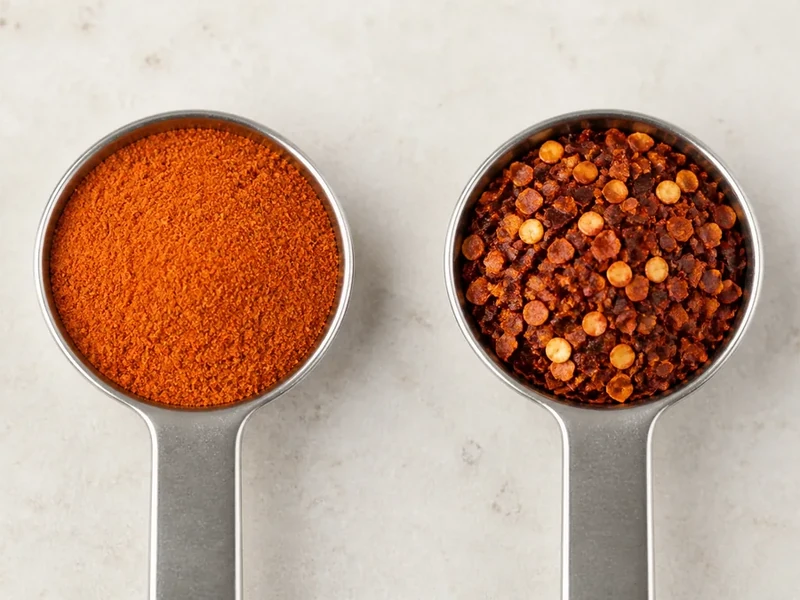
Cayenne is a fine, named ground chile that spreads heat evenly. Red pepper flakes are a coarse crushed product that stays visible and can bloom in oil. The jar may contain cayenne-type chiles or a blend, so form and label matter more than a universal heat ranking.
- Physical form: Fine, uniform powder vs Coarse skin pieces, often with seeds
- Distribution: Even through the dish vs Concentrated around flakes
- Best timing: Stir into liquid or fat vs Finish dry or bloom briefly in oil
- Best fit: Smooth sauces, rubs, breading vs Pizza, pasta, eggs, chile oil
- Label certainty: Named ground cayenne vs Check ingredients. Formulas vary
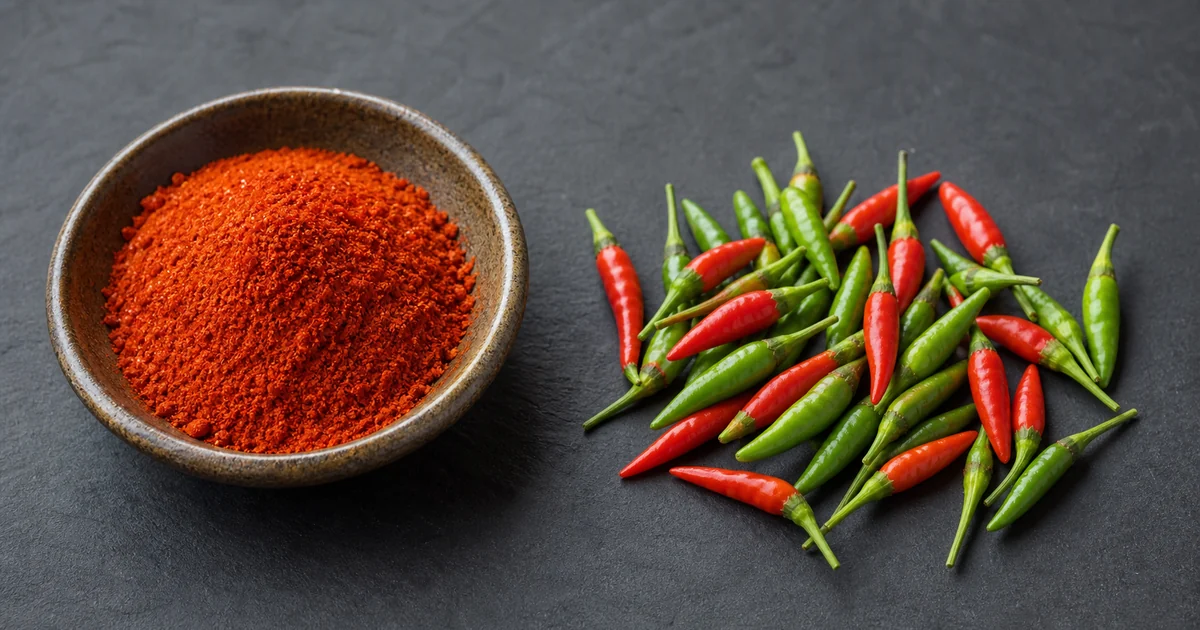
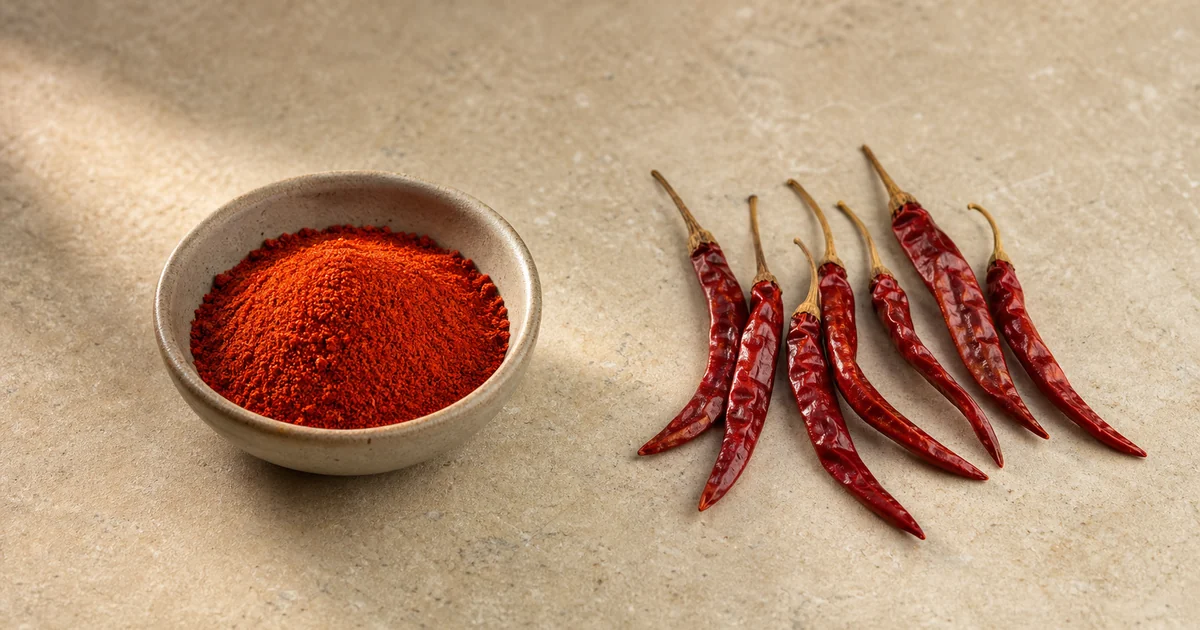
Cayenne Pepper
HotRed Pepper Flakes
HotPowder and Flakes at a Glance
| Attribute | Cayenne Pepper | Red Pepper Flakes |
|---|---|---|
| Physical form | Fine, uniform powder | Coarse skin pieces, often with seeds |
| Distribution | Even through the dish | Concentrated around flakes |
| Best timing | Stir into liquid or fat | Finish dry or bloom briefly in oil |
| Best fit | Smooth sauces, rubs, breading | Pizza, pasta, eggs, chile oil |
| Label certainty | Named ground cayenne | Check ingredients. Formulas vary |
Is Cayenne Hotter Than Red Pepper Flakes?
A label alone cannot prove which jar will taste hotter. Ground cayenne is a named chile product, while crushed red pepper may contain one dried red chile or a blend.
McCormick describes its ground cayenne as whole ripe peppers that are dried and milled, and its crushed product as field-grown red chiles selected for consistent heat.
New Mexico State University explains why published heat figures never settle an individual purchase: genetics, weather, growing conditions, and fruit age can all change capsaicinoid concentration. Processing adds another variable because powder packs more chile into a level spoon and disperses through more of the food than coarse flakes.
Treat cayenne's 30,000-50,000 SHU profile range as evidence for the pepper, not a guarantee for every grocery product. Generic flakes often overlap that broad hot range, yet their ingredients and proportions may differ by brand.
Taste the actual jar before scaling a recipe, especially when changing brands.
Heat perception also depends on placement.
Powder distributed through four servings can feel steady in every bite. Flakes left on a pizza or bowl create isolated bursts, so a diner may experience a sharper bite even when the whole dish contains less chile.
How Do Cayenne and Red Pepper Flakes Taste Different?
Fine cayenne powder gives a direct red-chile heat and a mild earthy note, then disappears visually into a sauce, rub, batter, or dressing. Its small particles distribute color and pungency with little chew.
This makes it useful when the food should stay smooth and evenly seasoned.
Red pepper flakes keep pieces of skin and often visible seeds.
McCormick uses deep red skin and yellow seed flecks as freshness cues for crushed pepper. The coarse form gives visible texture and small concentrated bites, which is part of the expected experience on pizza, pasta, eggs, or roasted vegetables.
Neither form automatically has more aroma. A recently opened powder can smell stronger than old flakes, while fresh flakes can keep more recognizable chile character than a jar that has sat beside a hot stove.
Compare aroma, color, and the ingredient panel instead of assuming coarse always means flavorful or fine always means hotter.
The practical difference is distribution: powder becomes part of the seasoning base, while flakes remain a recognizable finishing ingredient unless they are infused and strained.
When Should You Use Cayenne or Red Pepper Flakes?
Choose cayenne for buffalo sauce, smooth dips, deviled-egg filling, dry rubs, breading, chili, gumbo, and blended soups. McCormick specifically recommends ground cayenne across salsa, tacos, chili, gumbo, wings, pasta, curries, and stir-fries.
In each case, the fine grind can spread without leaving hard chile pieces.
Choose red pepper flakes for pizza, finished pasta, eggs, nachos, roasted vegetables, beans, and chile oil.
McCormick recommends its crushed product over eggs, pizza, pasta, and nachos. These dishes can use a visible flake or a small hot spot instead of demanding perfectly uniform heat.
Timing changes the result. Add cayenne once liquid or fat is present, then whisk or stir before deciding whether the dish needs more.
Dry powder scorched on a bare pan can taste harsh before it has a chance to disperse.
Bloom flakes only briefly.
Capsaicin is lipophilic, so fat can carry pungency beyond the pieces themselves. A Bon Appetit pizza recipe adds garlic and a large pinch of flakes to shimmering oil, then immediately transfers the oil so residual heat finishes the infusion without burning the solids.
For a table condiment, keep flakes dry and add them at serving. For a uniform sauce, add cayenne early enough to distribute, then make the final heat correction near the end.
Which Should You Buy, Cayenne or Red Pepper Flakes?
Buy cayenne powder when the main job is even heat with no visible chile pieces. Buy red pepper flakes when the dish benefits from coarse texture, a finishing sprinkle, or a brief oil infusion.
Keeping both is reasonable because the physical forms solve different cooking problems.
If only one jar fits the pantry, choose by the dishes cooked most often.
Smooth sauces, rubs, breading, soups, and dips favor powder. Pizza, pasta, eggs, roasted vegetables, and chile oil favor flakes.
Do not let a claimed heat ranking decide the purchase. Brand formulas and crop heat vary, and particle size changes how much chile fits in a spoon.
The more reliable decision is where the chile should appear in the finished food: throughout the dish or as visible pieces.
Can You Swap Cayenne and Red Pepper Flakes Spoon for Spoon?
Equal measuring spoons do not create equal results. Fine powder settles densely and reaches nearly every bite, while coarse flakes leave air gaps and concentrate heat around individual pieces.
A level teaspoon-to-teaspoon swap can therefore overshoot with cayenne even when the source chiles overlap in heat.
McCormick advises starting ground cayenne at a dash to 1/8 teaspoon for four servings.
That is a useful conservative baseline, not a universal conversion for every brand or recipe. Stir it through the full dish, wait for the heat to distribute, and add another small pinch only after tasting.
Measure flakes separately when their texture matters. Crush them in a mortar or between clean fingers if the recipe needs faster release, but remember that finer crushed flakes begin to behave more like powder.
Avoid publishing a fixed two-to-one rule because grind, seed proportion, cultivar, and batch strength can all change the outcome.
Freshness And Storage
Fresh cayenne powder should retain a vivid red-orange color and a clear pepper aroma. Fresh flakes should show recognizable red skin pieces, with some pale seeds, and should smell pungent rather than dusty.
Brown color, little aroma, damp clumps, or signs of insects are reasons to replace either product.
Kansas State's cupboard-storage guidance, distributed by Utah State University Extension, lists ground spices at about six months for best quality and whole spices at one to two years. Flakes are not whole spices, so use aroma and color rather than assigning them the whole-spice window.
Store both in airtight containers in a dry, dark cabinet away from sunlight and heat.
Do not shake a jar directly over a steaming pot because moisture can enter the container. Buy an amount that matches actual use, label the opening date, and replace a weak jar instead of compensating with larger and larger doses.
Read the Ingredient Line Before Comparing Heat
The ingredient line tells you more than the front label. A jar labeled ground cayenne should identify cayenne or cayenne red pepper as its chile ingredient, while crushed red pepper may name red pepper, specific chiles, or a blend.
Check for added salt, oil, anti-caking agents, or flavorings before treating either jar as a direct substitute.
For a recipe that depends on a specific pepper, use the named product. For a finishing sprinkle where texture matters most, a clearly labeled crushed blend can work well even when its exact cultivar mix is not listed.
Seed flecks do not provide a dependable heat ranking. Capsaicinoids are concentrated mainly in the placental tissue that holds the seeds, and loose seeds can pick up pungency from that tissue without being the main source themselves.
A flake blend with many visible seeds may still be milder than a fine powder from a hotter batch.
Correct the Heat Without Creating Hot Spots
Correct an under-seasoned dish in small, fully mixed additions. For four servings, McCormick's dash to 1/8-teaspoon starting point for ground cayenne is a cautious first move.
Stir, wait for the powder to disperse, and taste a representative spoonful before adding more.
Flakes need a different check because they do not reach every bite at once. Crush a measured pinch if faster release is wanted, or sample a bite that actually contains a flake before deciding the entire dish is mild.
This prevents a second addition from creating scattered hot spots.
If the dish is already too hot, adding more liquid, starch, fat, or unsalted base changes the concentration more reliably than trying to remove powder or small flakes. Increase the whole recipe base in measured steps so salt, acid, and texture remain balanced.
Can Cayenne Replace Red Pepper Flakes?
One form can provide heat when the other is missing, but there is no dependable spoon-for-spoon conversion across brands. Fine powder packs more densely and spreads faster, while flakes vary in chile blend, seed content, and particle size.
When cayenne replaces flakes, start with a dash or a small pinch, stir it through the full dish, and taste before adding more. McCormick's ground cayenne directions start at a dash to 1/8 teaspoon for four servings, which is safer than assuming that half a teaspoon of flakes always equals a fixed amount of powder.
When flakes replace cayenne, crush them finer and add them where visible pieces are acceptable. A smooth buffalo sauce or dip will still change texture, and a dry pizza finish will not behave like powder mixed through sauce.
Preserve the original dish's texture before trying to match its heat.
Cayenne Pepper vs Red Pepper Flakes FAQ
- New Mexico State University - Measuring Chile Pepper Heat
- K-State/Utah State Extension - Approximate Storage Times: Cupboard
- International Journal of Food Science & Technology - Capsaicin review