
Cayenne vs Jalapeño: Powder Heat or Fresh Pepper Bite?
Cayenne gives concentrated heat that disappears into a dish, while jalapeño adds a fresh green bite you can see and feel. Their generic heat bands do not overlap, so choose by both dose and physical form.

- Typical heat: 30,000 to 50,000 SHU vs 3,000 to 8,000 SHU
- Common form: Fine dried powder vs Fresh fleshy pod
- What it adds: Even heat with little texture vs Green flavor, moisture, and bite
- Best methods: Stir, whisk, dust, or bloom vs Slice, mince, pickle, roast, or stuff
- Dried identity: Cayenne remains cayenne vs Smoked dried jalapeño is chipotle
Cayenne Pepper
HotJalapeño
MediumQuick Comparison
| Attribute | Cayenne Pepper | Jalapeño |
|---|---|---|
| Typical heat | 30,000 to 50,000 SHU | 3,000 to 8,000 SHU |
| Common form | Fine dried powder | Fresh fleshy pod |
| What it adds | Even heat with little texture | Green flavor, moisture, and bite |
| Best methods | Stir, whisk, dust, or bloom | Slice, mince, pickle, roast, or stuff |
| Dried identity | Cayenne remains cayenne | Smoked dried jalapeño is chipotle |
How Much Hotter Is Cayenne Than Jalapeño?
Cayenne occupies a distinctly hotter band. Cornell Cooperative Extension lists cayenne at 30,000 to 50,000 SHU and jalapeño at 3,000 to 8,000 SHU, so the low end of cayenne still sits well above the top of the jalapeño range.
Comparing the ceilings gives a 6.25 to 1 heat ratio. That is a useful way to understand the gap, but it does not mean a teaspoon of cayenne equals 6.25 jalapeños because powder and fresh pods are measured and distributed differently.
The smallest published gap is also meaningful. A 30,000 SHU cayenne is about 3.75 times the 8,000 SHU jalapeño ceiling, which is why a casual shake of powder can overwhelm a dish built for one fresh pepper.
Scoville ranges describe pungency in the pepper material rather than the dose on the plate. A whole jalapeño adds water, walls, and seeds along with capsaicinoids, while fine cayenne can spread through every spoonful of a soup or sauce.
Variety names can move jalapeño outside the familiar market shorthand. New Mexico State University's Chile Pepper Institute reports NuMex Vaquero at 25,000 to 30,000 SHU and NuMex Piñata at 45,000 to 50,000 SHU, so a named seed-grown cultivar should be judged by its own published range.
Ordinary grocery-store jalapeños still belong in the milder role for this comparison. If a package or seed label names an unusually hot cultivar, use that specific information instead of assuming the generic band.
Read the gap by its boundaries
| Comparison point | Cayenne | Jalapeño |
|---|---|---|
| Listed low end | 30,000 SHU | 3,000 SHU |
| Listed high end | 50,000 SHU | 8,000 SHU |
| Ceiling ratio | 6.25 times | Baseline |
| Smallest band gap | 3.75 times hotter | Compared with cayenne's low end |
How Do Fresh Jalapeño and Ground Cayenne Differ in Flavor?
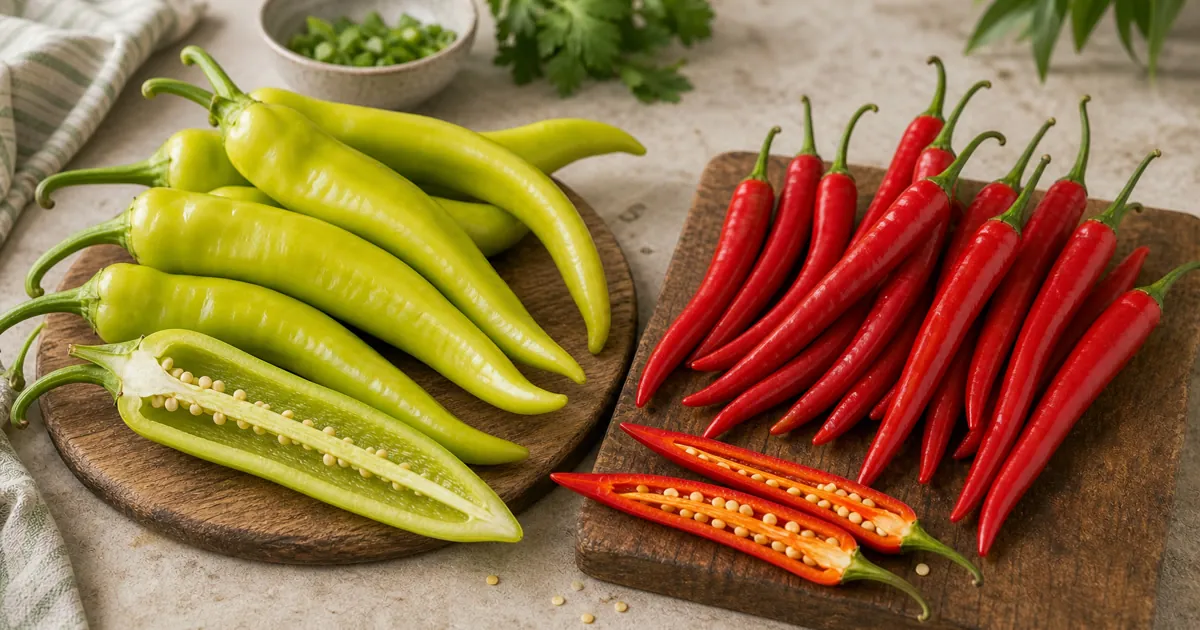
Fresh jalapeño gives a dish crisp pepper flesh, moisture, and a green chile character. Those qualities remain visible in pico de gallo, sliced toppings, pickled rings, and poppers because the pod is part of the bite.
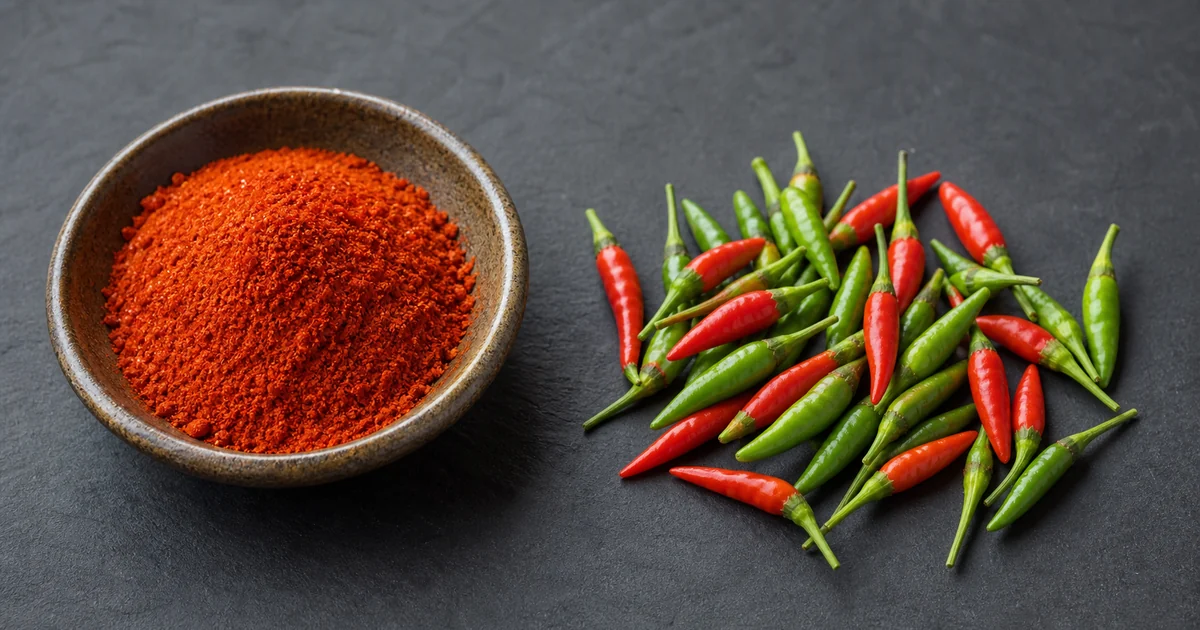
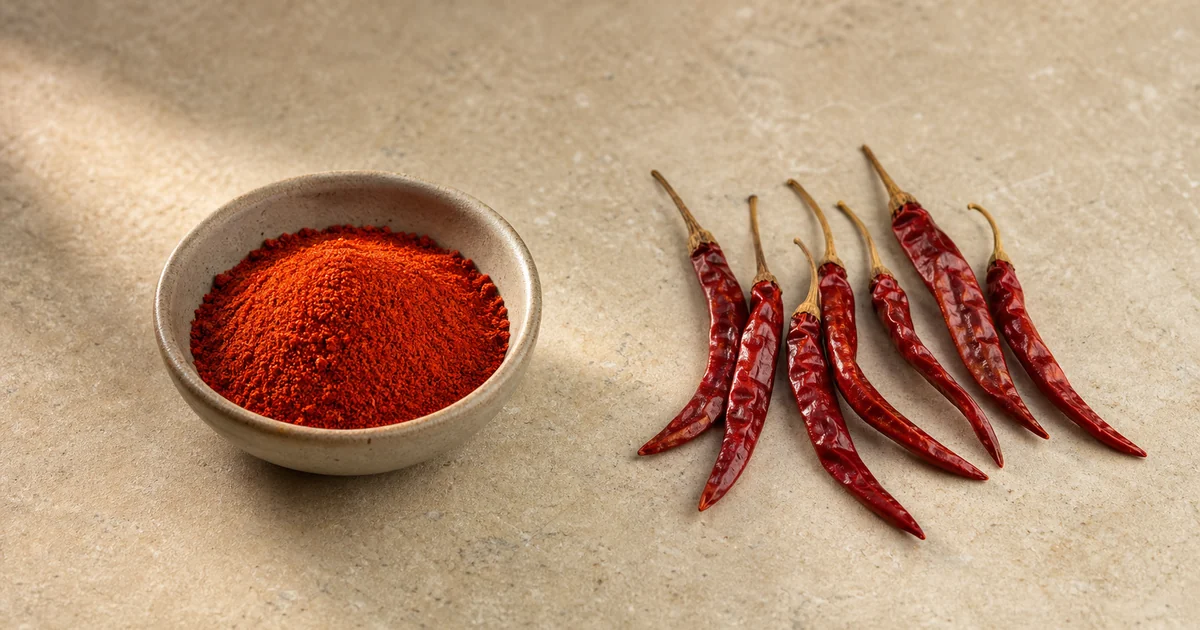
Ground cayenne behaves like a seasoning. USDA Agricultural Research Service describes cayenne as commonly dried and ground, a form that adds red-pepper heat without supplying the crunch or volume of a fresh chile.
That difference matters before flavor vocabulary does. If the recipe needs a ring on a nacho, a minced piece in salsa, or a cavity for filling, no amount of cayenne powder can perform the same physical job.
If the recipe needs heat to disappear into broth, fat, batter, or a spice blend, cayenne is easier to distribute. It can season a large batch without leaving wet vegetable pieces or forcing the cook to change the texture.
Jalapeño can be roasted or blistered when the fresh green edge should soften. It can also be pickled, which adds acid and salt while preserving a recognizable slice.
Drying does not turn jalapeño into cayenne. New Mexico State University's Chile Pepper Institute identifies a ripe jalapeño that has been smoked and dried as chipotle, a preserved form with its own smoky flavor and cooking uses.
Cayenne can also begin as a fresh thin pod. Oregon State University Extension describes cayenne peppers as roughly 1/2 inch wide by 3 inches long and suitable for fresh use, drying, or grinding, but the pantry comparison usually means powder versus a fresh jalapeño.
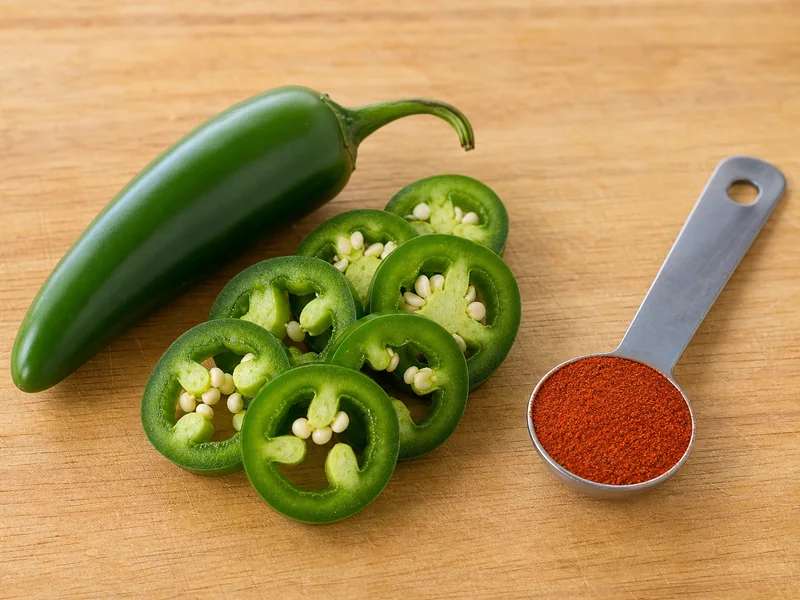
Fresh jalapeño and chipotle are related, not identical
NMSU identifies chipotle as a smoked, dried ripe jalapeño. That preserved form is not cayenne powder, even though both can appear red, dry, and ground.
Use fresh jalapeño for a green, moist bite and chipotle when smoke and dried ripe-chile flavor belong. Use cayenne when the main job is concentrated heat without either fresh flesh or smoke.
Culinary Uses
Choose jalapeño when the pepper should stay visible or retain texture. Raw salsa, guacamole, nachos, pickles, poppers, cornbread, and fresh toppings all benefit from pieces that can be seen and bitten.
Preparation controls the result. A raw dice keeps crispness, a blistered pod softens, a pickled ring adds acid, and a stuffed jalapeño uses its thick wall as part of the dish's structure.
Choose cayenne when the pepper should season the whole batch. Dry rubs, soups, deviled eggs, hot honey, chili, and smooth sauces gain heat without adding fresh chile moisture.
Cayenne is also easier for a late correction. Stir a small measured amount into a completed wet dish, wait for it to disperse, then taste again before adding more.
Jalapeño is less suitable for that precise final adjustment because one pod contributes an uneven mix of flesh and inner tissue. It works best when its quantity and preparation are planned as part of the recipe.
For hot sauce, decide what style you want. Ground cayenne supports a smooth, concentrated sauce, while fresh jalapeño creates a greener, wetter base that needs its own acid, salt, and processing decisions.
A recipe can use both without redundancy. Fresh jalapeño can supply visible green pieces while a restrained pinch of cayenne raises the background heat, provided the final dish is tasted after the powder disperses.
The simplest decision rule is physical. Use jalapeño when the pepper must remain part of the bite, and use cayenne when the heat should spread without adding pepper body.
Let the finished texture decide
- Dry rub or seasoning blend: cayenne distributes without adding moisture.
- Raw salsa or guacamole: jalapeño supplies fresh dice and green flavor.
- Pickled topping: jalapeño keeps the expected ring and bite.
- Smooth soup or sauce: cayenne makes a controlled correction.
- Stuffed snack: jalapeño supplies the wall that holds the filling.
Which Should You Use, Cayenne or Jalapeño?
Choose cayenne for concentrated heat in a compact, dry form. It is the stronger tool for spice blends, smooth liquids, large batches, and corrections where fresh pepper pieces would be distracting.
Choose jalapeño for moderate heat plus fresh structure. It earns its place when the recipe needs rings, dice, pickled pieces, roasted flesh, or a small pod that can hold filling.
Read the ingredient form before treating either name as a direct substitute. Fresh cayenne, whole dried cayenne, cayenne powder, fresh jalapeño, pickled jalapeño, and chipotle all ask for different preparation and dosing.
Do not choose on color alone. A red powder and a green pod differ in moisture, surface area, texture, and serving pattern before the first heat comparison is made.
For most home cooks, the practical split is stable. Cayenne is the dose, while jalapeño is the ingredient you can still see and bite.
Buy for the form you will use
Choose a small cayenne container if you season with it slowly. A tight lid keeps kitchen steam out, and a smaller jar is easier to finish before the aroma fades.
Choose jalapeños that feel firm and have intact skin. Surface corking can occur as jalapeños mature, but wet spots, collapsed flesh, and mold are reasons to discard a pod.
Check the label before buying cayenne. Chili powder may contain cumin, garlic, oregano, salt, and other chiles, so it cannot automatically replace pure cayenne.
Substitution
Cayenne can replace the heat of jalapeño in a wet dish, but it cannot replace fresh pepper body. Begin with a small pinch rather than a pod-count formula, stir thoroughly, and add more only after the powder has dispersed.
The published ranges explain that caution. Cayenne begins at 30,000 SHU, while a generic jalapeño tops out at 8,000 SHU in Cornell's reference, and the amount of edible material in one fresh pod varies.
If chopped jalapeño also supplies volume, add a mild fresh pepper for the missing flesh. Bell pepper can restore crunch, while poblano can add a milder green chile character in cooked dishes.
Jalapeño can replace cayenne when moisture and visible pieces are acceptable. Mince it finely for salsa, beans, stew, or a chunky sauce, but do not force that swap into a dry rub where fresh water changes adhesion and storage.
For a smooth sauce, blend and strain jalapeño if the green flavor belongs in the result. It will still produce a different sauce from ground cayenne because the fresh pod contributes water and vegetable solids.
For poppers, pickled rings, and nacho slices, keep jalapeño. Cayenne can raise the heat of the filling or brine, but it cannot supply the pod wall or recognizable slice.
For soup, chili, or beans, cayenne is the cleaner heat correction. Jalapeño is the better choice when the finished bowl should contain green chile pieces and their texture.
For a smoky dried replacement, choose chipotle only when smoke belongs in the dish. It comes from jalapeño, but its preserved flavor makes it a different answer from both fresh jalapeño and plain cayenne powder.
Store and handle each form correctly
Utah State University Extension says fresh chiles can stay refrigerated for roughly 2 to 3 weeks, though condition at purchase matters. Keep jalapeños dry and inspect cut or softened areas before use.
Store cayenne powder closed at room temperature away from heat and steam. Do not shake the jar over a boiling pot, since rising moisture can enter the container and an accidental pour is hard to reverse.
University of Maine Extension recommends gloves when cutting hot peppers. Wash the knife and board after jalapeño prep, and avoid breathing airborne cayenne when measuring or grinding.
Cayenne Pepper vs Jalapeño FAQ
- Cornell Cooperative Extension - Pepper Secrets
- Oregon State University Extension - Grow Your Own Peppers
- USDA Agricultural Research Service - Cayenne Pepper
- Utah State University Extension - How to Preserve Chiles
- University of Maine Extension - Hot Pepper Handling