

KnowThePepper
Bell Pepper: 0-SHU Sweet Pepper for Everyday Cooking
Bell pepper is a sweet Capsicum annuum pepper with 0 SHU, so it adds no chile heat. Thick walls and a hollow blocky shape support raw slices, roasting, stuffing, sauteing, and sauces.
- Species: C. annuum
- Heat tier: Mild (0-999 SHU)
What Kind of Pepper Is Bell Pepper?
Bell pepper is the familiar sweet, blocky member of the Capsicum annuum. UF/IFAS lists bell pepper at 0 Scoville Heat Units, which places it at the no-heat end of the mild pepper range.
That 0-SHU number is the first thing to know. Bell pepper still belongs to the same species as jalapeno, cayenne, and many paprika peppers, but the common sweet bell type is non-pungent.
In kitchen terms, it gives crunch, sweetness, color, and pepper aroma without capsaicin burn.
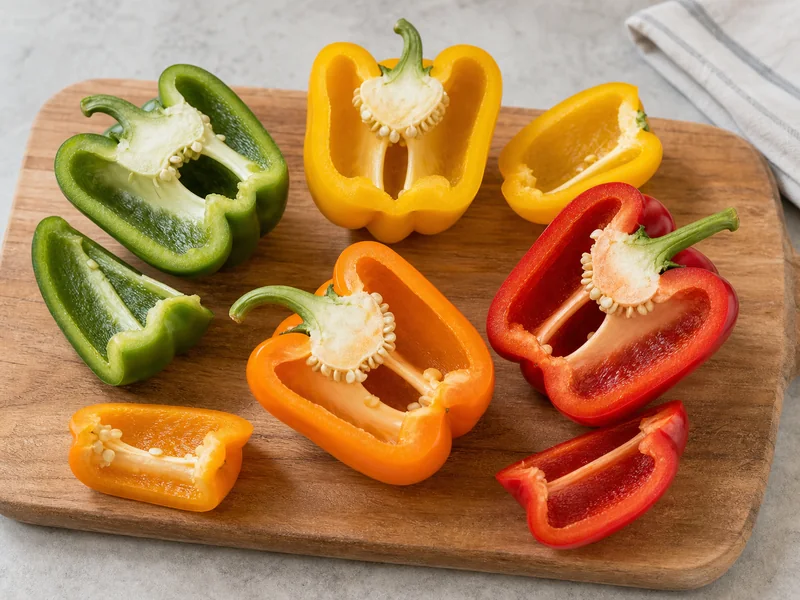
Color changes the eating experience. Green bells are usually picked before full mature color, so they taste firmer, greener, and slightly bitter.
Red, yellow, and orange bells usually taste sweeter because the fruit has stayed on the plant longer, though final color depends on the cultivar.
The thick wall and hollow shape distinguish bell pepper from thinner frying peppers. For full cultivation steps or ranked replacements, use growing bell peppers and the bell pepper substitutes.
| Stage | What it tastes like | What it suits |
|---|---|---|
| Green | Sharper, grassier, least sweet | A sharp dice for tuna salad, egg salad and relish-style toppings |
| Yellow | Sweetening, still firm | Raw slices where colour matters as much as flavour |
| Orange | Sweeter again | Roasting, and raw where sweetness is wanted |
| Red | Fully ripe and sweetest | Sweeter raw slices, roasting, and anywhere the sugar is the point |
Where Did Bell Pepper Originate?
Bell pepper belongs to the broader Capsicum annuum story, not to a single modern breeder record that can be pinned to one town. PNAS research on domesticated C. annuum points to Mexico as a major origin center for the species, while archaeological work on chile pepper starch fossils shows long pre-Columbian use in the Americas.
The modern blocky bell is a selected sweet-pepper form. Growers and seed breeders favored thick walls, large fruit, low pungency, shipping strength, and uniform shape.
That is why today's grocery bell pepper behaves more like a crisp vegetable than a small hot chile.
Color breeding added another layer. Green is common because many varieties are harvested before final mature color, but seed catalogs also sell red, yellow, orange, purple, brown, ivory, and striped sweet bell types.
The grocery shelf hides that diversity because red, yellow, and orange fruit cost more to grow and harvest mature.
How Spicy Is Bell Pepper, and How Does It Taste?
The Bell Pepper delivers 0 Scoville Heat Units, placing it in the Mild tier (0-999 SHU).
Flavor notes: sweet, crisp, grassy when green.
Bell Pepper Nutrition Facts
Bell peppers are useful nutrition-wise, but exact numbers depend on color, serving size, and raw versus cooked form. USDA FoodData Central separates pepper entries by form and database source, so this profile avoids treating one red-pepper value as universal for every bell pepper.
The practical distinction is color and heat. Red bells generally have more carotenoid color compounds than green bells, while green bells have the sharper immature flavor many cooks want in savory dishes.
All sweet bells sit at 0 SHU, so they do not deliver the capsaicin dose discussed in capsaicin heat chemistry articles.
Pickled, stuffed, roasted, and sauced bell peppers get most of their nutrition swing from the preparation. Salt, oil, cheese, grain, and meat change the final dish more than the pepper itself.
Use product labels or FoodData Central when a precise nutrient number matters.
What Is Bell Pepper Best Used For?
Raw bell pepper works when a dish needs crunch without heat. Slice it into salads, slaws, crudite plates, sandwiches, and wraps.
Red and yellow bells make sweeter raw slices. Green bells make a sharper dice for tuna salad, egg salad, and relish-style toppings.
The thick wall is why bell pepper is a strong sweet pepper substitute and why it can hold fillings. Stuffed peppers need a pod that stays upright and softens slowly around rice, meat, beans, grains, or cheese.
Smaller thin-walled peppers collapse faster.
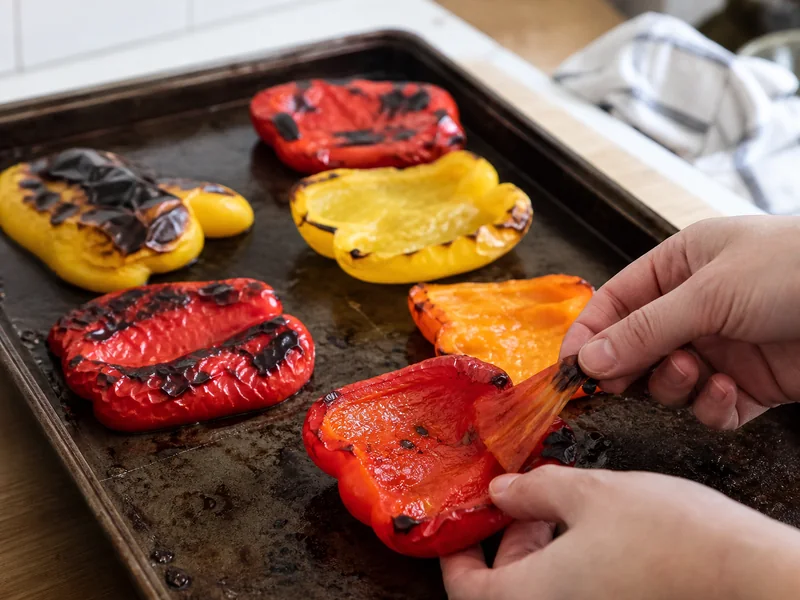
Roasting changes the job. The skin blisters, the flesh softens, and the sweetness concentrates.
Roasted red bell pepper is useful in romesco, muhammara, pasta sauce, blended soups, and sandwich spreads. It also freezes better after roasting than as raw slices.
For swaps, choose by wall thickness and heat. Poblano pepper brings mild heat and a darker roasted flavor.
Cubanelle pepper has thinner walls for sauteing, while pimento pepper stays sweet but is smaller and rounder.
The bell pepper versus poblano and bell pepper versus paprika pepper pages handle side-by-side choices.
How Should You Buy and Store Bell Pepper?
Buy bell peppers that feel heavy for their size with glossy, taut skin and firm shoulders. Avoid soft spots, wrinkled skin, collapsed stems, and wet dark patches.
Shape matters less than firmness unless you need a flat-bottom pepper for stuffing.
Green bells are usually the least sweet and often the least expensive. Red, yellow, and orange bells cost more because they spend more time on the plant before harvest.
Choose green for sharper cooked dishes and mature colors for raw sweetness or roasted sauces.
Store whole bell peppers unwashed in the refrigerator crisper. Use them within about one week for the best crunch, though very fresh peppers may last longer.
Once cut, keep pieces covered and refrigerated, then use them within a few days.
For longer storage, freeze them for cooked dishes. Raw frozen strips lose crunch after thawing, but they work in soups, stir-fries, eggs, fajitas, and sauces.
Roasted frozen bells are better for spreads and blended sauces.
Dried form: Bell peppers are normally used fresh, roasted, frozen, or cooked. They can be dehydrated, but they do not have a standard dried chile name like ancho or chipotle.
What Can Replace Bell Pepper in a Recipe?
Compare substitutes for Bell Pepper by form, flavor, and heat before choosing a ratio. Measured adjustments must account for the dish and the concentration of the replacement.
Direct comparisons show where flavor, form, and preparation differ in the Bell vs Paprika and Bell Pepper vs Poblano matchups.
What Does Bell Pepper Need to Grow Well?
Bell peppers need a longer, warmer season than many smaller-fruited peppers. University of Minnesota Extension recommends starting pepper seed about eight weeks before outdoor planting and transplanting after nighttime lows are above 50 F.
Bell types reward patience because large blocky fruit takes time to size up.
Warm soil, full sun, consistent moisture, and room for airflow support steady growth. The complete bell pepper growing method covers containers, feeding, and harvest in more detail.
Keep plants evenly watered because stress can lead to blossom drop, misshapen fruit, or blossom-end rot symptoms.
Fruit color is a harvest choice. Pick green bells when they are full-sized and firm.
Leave them longer for red, yellow, or orange mature color if the cultivar supports it and the season allows. The bell pepper growth stages is the better choice for plant-stage detail.
If you are timing transplants, use pepper planting timing rather than a calendar date alone. Bell peppers stall in cold soil, even if the daytime air feels warm.
Bell Pepper FAQ


- UF/IFAS Gardening Solutions - Peppers Ranked by Scoville Units
- University of Minnesota Extension - Growing peppers in home gardens
- Kraft et al. - Origin of domesticated chili pepper in Mexico, PNAS
- Perry et al. - Starch fossils and chile pepper domestication, Science
Species classification: C. annuum - based on published botanical taxonomy.