

KnowThePepper
Mariachi Pepper: 500–600 SHU Unless Plant Stress Pushes It Toward 2,000
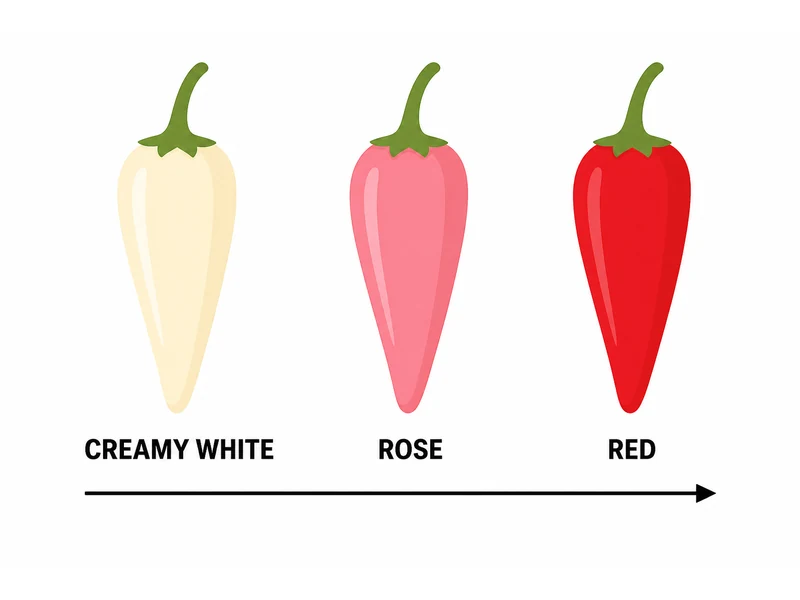
The Mariachi pepper is a compact Capsicum annuum hybrid that All-America Selections named a 2006 winner, grown for looks as much as for eating. AAS puts it at 500 to 600 SHU under unstressed conditions, though stressed plants can reach 1,500 to 2,000, and the fruit ripens creamy white through rose to red.
- Species: Capsicum annuum
- Heat tier: Mild (0-999 SHU)
What Is Mariachi Pepper?
The Mariachi pepper is a bushy upright chile bred to work as both an ornamental and an edible. All-America Selections named it a 2006 winner, and the breeder of record is Seminis Vegetable Seeds.
AAS puts the heat at 500 to 600 SHU for plants grown under non-stressful conditions. That is barely a tingle, close to the Santa Fe Grande at 500 to 700 SHU.
The figure is conditional, and the condition matters.
AAS records that stress can lift readings to 1,500 to 2,000 SHU, which is a different pepper on the plate.
Fruits are thick-walled cones of about 3.25 by 1.75 inches, ripening from creamy white through rose to red. AAS describes the creamy white stage as delicate and complex, with fruity undertones.
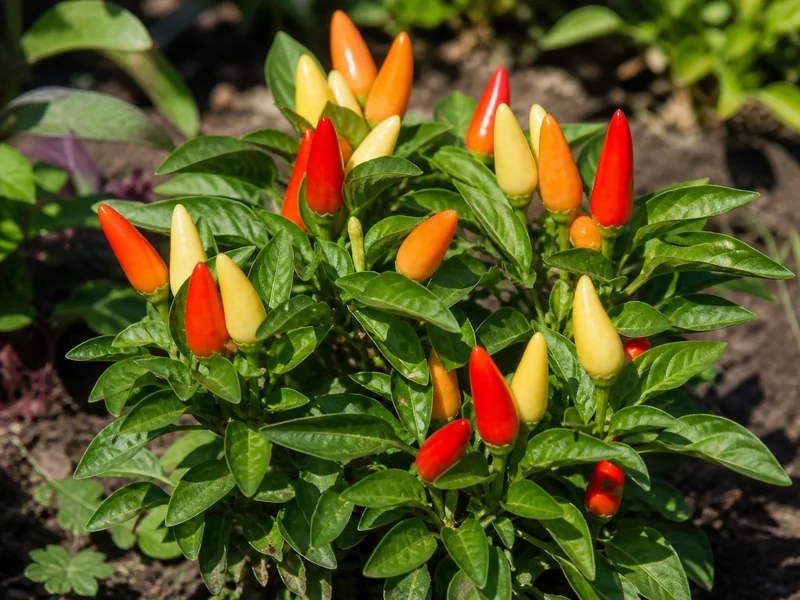
That color run is the reason the plant is grown for looks as much as for eating. Fruit at several stages hangs on the plant at once.
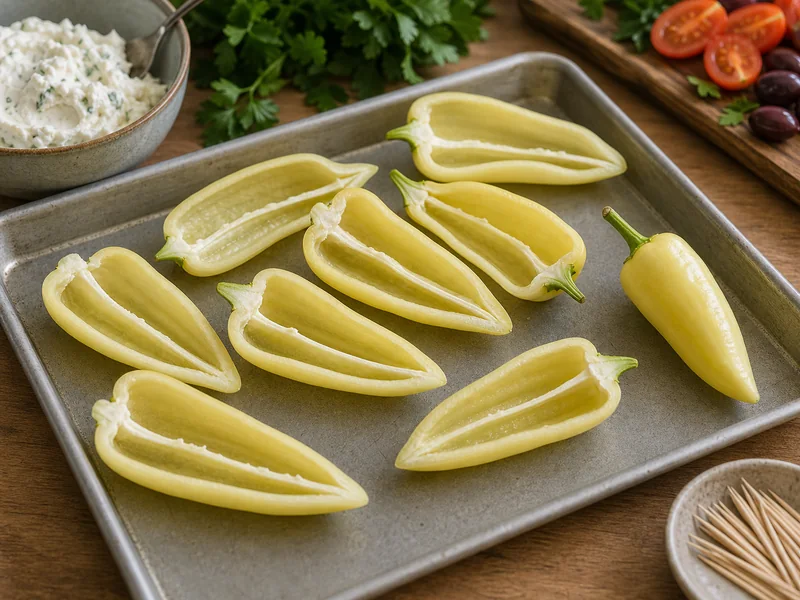
The thick walls are where it earns its place in the kitchen. Stuffing is the obvious use, and the mild SHU range means the filling is never fighting the pepper.
What Is the History of Mariachi Pepper?
Mariachi is a modern hybrid rather than an heirloom. It came out of a commercial breeding program at Seminis Vegetable Seeds and reached home gardeners through the 2006 All-America Selections award.
That award is a trialling result rather than a marketing claim. AAS grows entries across trial gardens in North America and names winners on measured performance, which is why its figures are the ones this page uses.
The variety was purpose-built for ornamental productivity, with the multi-stage color display and the compact habit selected alongside edibility. It lacks the regional depth of a pepper like the Sweet Italian Pepper.
It has held its place among North American gardeners since. What it offers is reliability in a container rather than a story.
How Hot Is Mariachi Pepper, and What Does It Taste Like?
The Mariachi Pepper delivers 500–600 Scoville Heat Units, placing it in the Mild tier (0-999 SHU).
What Nutrients Does Mariachi Pepper Provide?
At an ounce and a half per fruit, a 100g serving is several peppers.
The nearest published reference is raw red sweet pepper, which USDA puts at 26 calories and 128mg of vitamin C per 100g with 1,620µg of beta-carotene. Mariachi has no entry of its own, so that describes the class.
Letting fruit run to red raises the carotenoids, which is what deepens the color. Creamy white and rose are earlier and lighter in both pigment and flavor.
Capsaicin is present but slight, at least on an unstressed plant.
On a stressed plant it climbs enough to notice, and capsaicin explains why a small change in concentration is felt so sharply.
How Do You Cook With Mariachi Pepper?
Thick walls make stuffing the natural use. Cream cheese, herbed ricotta, or sharp cheddar with breadcrumbs all work, and the mild heat leaves the filling in charge.
Roasting brings out a sweetness that holds up in grain bowls, pasta and egg dishes. Because fruit ripens through three distinct stages, harvest timing is a flavor decision, and the table below sets out what each stage gives you.
Pickling is the other strong application. At this heat level the Banana Pepper are the closest comparison, and Mariachi pickles to a similarly bright, tangy result.
Raw and thin-sliced, it adds crunch and color to salads and crudite platters without overwhelming delicate ingredients. The Cherry Pepper rewards the same hollow-fill-and-bake technique.
Mariachi's elongated cone gives a little more filling capacity per fruit than a cherry pepper does. That is the practical reason to reach for it over a rounder stuffing pepper.
| Stage | What AAS describes | Best for |
|---|---|---|
| Creamy white | Delicate and complex, with fruity undertones | Raw slices and pickling, where the subtlety survives |
| Rose | The transition stage, between the two ends | Mixed platters, where the color does real work |
| Red | Fully ripe and sweetest, deepest in carotenoids | Roasting and stuffing, where sweetness is the point |
Where Can You Buy Mariachi Pepper, and How Do You Store It?
Fresh Mariachi turns up at farmers markets and specialty grocers in summer and fall, and rarely in mainstream supermarkets. Growing your own from seed or transplant is the more reliable route for an AAS garden variety.
Choose fruit that feels firm with taut glossy skin, since soft spots or wrinkling mean age. Buy at the stage the dish wants, because creamy white, rose and red are not interchangeable on flavor.
Refrigerate unwashed in the crisper drawer, where fruit holds 1 to 2 weeks. Washing before storage traps moisture and speeds spoilage.
For longer keeping, roast and freeze in portions, or pickle in a standard brine. Unblanched whole pods keep too, ready to drop into a pan from frozen.
Which Peppers Can Replace Mariachi Pepper?
No dedicated substitute guidance is published for Mariachi Pepper yet.
How Do You Grow Mariachi Pepper at Home?
Germination is not the hard part. Getting fruit to set through a heat wave is, because blossoms drop when daytime temperatures hold above 90°F.
That same stress has a second effect worth planning around. AAS records readings climbing to 1,500 to 2,000 SHU on stressed plants, so a hot dry summer changes the pepper rather than just the yield.
Seed wants 8 to 10 weeks indoors at 75 to 85°F before it goes out. Transplant only once frost risk has passed and nights hold above 55°F.
AAS gives 66 days to harvest from transplant, on plants of 18 to 24 inches with a 16 to 20 inch spread. A 3 to 5 gallon pot suits that habit, and a container lets you move the plant out of the worst afternoon heat.
Full sun means 6 to 8 hours and is not negotiable. Consistent moisture matters more than heavy feeding, since irregular watering brings blossom end rot and uneven fruit.
The variety carries resistance to tobacco mosaic virus strain Po. For heat and water management that transfers directly, the practical guidance on growing hatch chiles covers the same problems in a hotter climate.
Mariachi Pepper FAQ


- All-America Selections, Pepper Mariachi Hybrid, 2006 edible vegetable winner
- USDA FoodData Central, SR Legacy 170108, Peppers, sweet, red, raw
Species classification: Capsicum annuum - based on published botanical taxonomy.