

KnowThePepper
Aji Dulce Gives Sofrito Habanero-Like Aroma at Only 0-500 SHU
Aji Dulce is a mild Capsicum chinense seasoning pepper used in Puerto Rican, Dominican, Cuban, and Venezuelan-style cooking, commonly listed at 0 to 500 SHU. Its main job is adding habanero-like aroma without habanero heat to sofrito, recaito, beans, rice, stews, and seasoning pastes.
- Species: C. chinense
- Heat tier: Mild (0-999 SHU)
What Is Aji Dulce Known For?
Aji Dulce is a mild, aromatic Capsicum chinense pepper best known as a seasoning pepper for sofrito and recaito. It often looks like a small bonnet or lantern pepper, but the heat is usually only 0-500 SHU.
PepperScale lists Aji Dulce at 0 to 500 SHU, placing it in the mild heat band, while New Mexico State University explains that SHU expresses measured capsaicinoids. In the kitchen, choose Aji Dulce for aroma first and heat second.
Aji Dulce belongs to Capsicum chinense, so it can smell fruity, floral, and tropical like a hot chinense pepper. Plant Breeding and Biotechnology research on low-pungency C. chinense lines helps explain how pungency can fall while other pepper traits remain.
WorldCrops describes Aji Dulce as a small pepper that may ripen red, orange, or yellow and is found in Puerto Rico, the Dominican Republic, and Cuba under names such as aji dulce, aji gustoso, and aji cachucha. Similar mild seasoning peppers also appear in Venezuelan cooking.
Do not treat it as a smaller bell pepper because Cubanelle can cover mild bulk and Biquinho can cover gentle sweetness, while neither copies the chinense aroma that makes sofrito taste like sofrito.
What Is the History of Aji Dulce?
Aji Dulce sits in Spanish-speaking Caribbean and northern South American seasoning cooking. WorldCrops lists it in Puerto Rico, the Dominican Republic, and Cuba, and also notes Venezuelan forms that are often slightly spicy but far below habanero or Scotch bonnet heat.
The name simply means sweet chile or sweet pepper in Spanish, but that does not mean every market pod is identical. Local names, seed lines, and ripeness stages can change shape, color, and heat.
WorldCrops also warns that some Aji Dulce in the market can be hot. That is why this profile should explain the 0-500 SHU expectation as a typical target, not a guarantee for every bag of imported pods.
The broader story is useful but should stay bounded. Capsicum chinense has deep tropical American roots, while Aji Dulce has a much narrower kitchen role: mild chinense aroma for home seasoning pastes, rice, beans, meats, and stews.
Aji Dulce and Scotch Bonnet share a chinense aroma family but occupy opposite heat jobs. Trinidad Perfume stays mild and aromatic, while Biquinho is sweeter and changes the sofrito profile.
How Hot Is Aji Dulce? Heat and Flavor
The Aji Dulce delivers 0–500 Scoville Heat Units, placing it in the Mild tier (0-999 SHU).
Flavor notes: sweet, fruity, aromatic.
Aji Dulce Nutrition Facts
USDA FoodData Central data for raw hot green chile peppers is a category proxy rather than a cultivar-specific Aji Dulce lab test, so its calorie and vitamin values are not presented here as measured Aji Dulce stats.
Aji Dulce servings are often smaller than 100 grams because the pepper is used as seasoning. The more honest nutrition takeaway is simple: it adds pepper flavor with little heat and few calories, while the exact vitamin value depends on pod size, ripeness, and serving amount.
Capsaicin is minimal at 0-500 SHU, so do not market Aji Dulce as a hot-pepper wellness ingredient. The capsaicin and TRPV1 is the right place for heat mechanism.
This page should stay focused on food use and identification.
How Do You Use Aji Dulce in the Kitchen?
Aji Dulce is most useful as an aromatic base pepper. It brings sweet fruit, floral chinense aroma, and almost no burn, which is why cooks blend it into sofrito, recaito, beans, rice, braises, stews, and meat marinades.
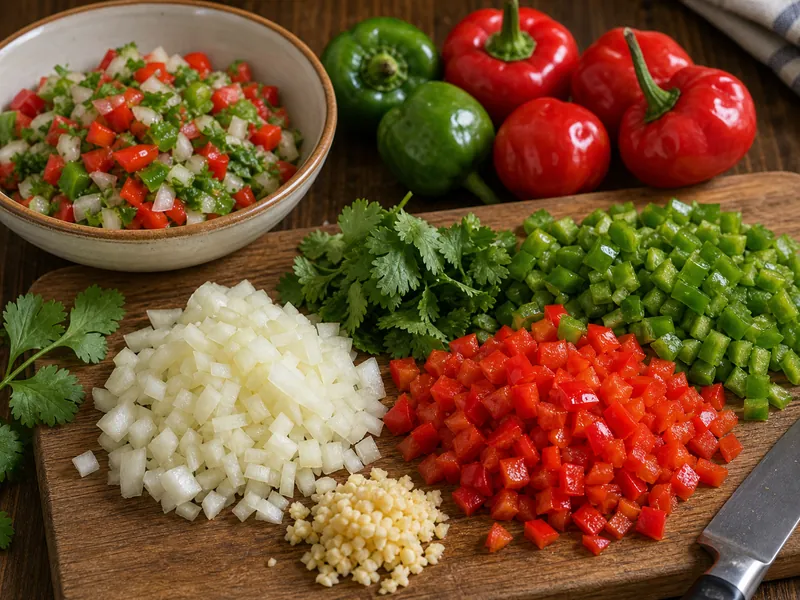
WorldCrops describes sofrito as a blended or finely chopped seasoning mix added to dishes rather than a table sauce. Aji Dulce often works beside garlic, onion, culantro or recao, cilantro, and mild sweet pepper, with ratios varying by household and island.
Use red-ripe pods for the fullest sweetness, while green pods give cooked food a sharper and less rounded flavor than red or orange fruit.
For a mild seasoning paste, remove damaged stems, chop the pods, and pulse with the other aromatics until coarse. Do not over-puree if the paste will be frozen in spoonfuls.
A little texture helps it melt into rice, beans, and stews without turning watery.
When you need to replace Aji Dulce, separate aroma from bulk. Cubanelle adds mild pepper body, Trinidad Perfume keeps a closer chinense aroma, and a tiny amount of Scotch Bonnet changes the dish quickly.
Where Can You Buy Aji Dulce, and How Do You Store It?
Fresh Aji Dulce is easiest to find in Caribbean, Puerto Rican, Dominican, Cuban, or Venezuelan grocery channels. It may also appear in farmers markets where growers serve those communities.
Buy by name, aroma, and heat expectation because the pods should be small, lantern-like, and fragrant, while WorldCrops warns that some market Aji Dulce can be pungent. Ask whether the current batch is sweet or spicy when heat matters.
WorldCrops gives commercial pepper storage conditions of 45 to 50 degrees Fahrenheit and 90 to 95 percent relative humidity. At home, keep pods unwashed and loosely packed in the refrigerator crisper, then wash them immediately before cooking.
Fresh pods usually hold about 1 to 2 weeks when kept cool and dry, after which chopped sofrito portions or whole frozen pods work for cooked dishes where softened texture is acceptable.
Dried form: Usually used fresh or frozen in sofrito. Fresh aroma is the main value.
What Can You Use Instead of Aji Dulce?
Compare substitutes for Aji Dulce by form, flavor, and heat before choosing a ratio. Measured adjustments must account for the dish and the concentration of the replacement.
Direct comparisons show where flavor, form, and preparation differ in the Aji Dulce vs Scotch Bonnet and Aji Dulce vs Trinidad Perfume matchups.
Compare Aji Dulce with: Aji Dulce vs Biquinho
How Do You Grow Aji Dulce at Home?
Grow Aji Dulce as a warm-season Capsicum chinense by starting seed indoors before the frost-free window, keeping the tray warm, and waiting for warm nights and soil before transplanting.
The starting peppers from seed workflow covers the general steps: sterile seed mix, steady warmth, strong light after germination, and gradual hardening off. Aji Dulce usually needs a longer head start than fast C. annuum peppers.
Use full sun, steady moisture, and well-drained soil. University of Minnesota Extension pepper guidance is a good home-garden baseline: transplant after frost risk, avoid cold soil, and water consistently so fruit set does not stall.
WorldCrops notes that mature fruit can be green, red, orange, or yellow depending on line and harvest stage. For the strongest aroma, let pods color fully on the plant before harvest, then save seed only from plants that match the mild flavor you want.
Containers work if the pot is large enough for a branching plant and you water consistently. Use a local pepper growing calendar to time seed starting, transplanting, and the first ripe harvest in shorter seasons.
Aji Dulce FAQ


- Plant Breeding and Biotechnology - low-pungency Capsicum chinense research
- New Mexico State University Circular 706 - Measuring chile pepper heat
- University of Minnesota Extension - Growing peppers in home gardens
- USDA FoodData Central - FDC ID 170497, Peppers, hot chili, green, raw
Species classification: C. chinense - based on published botanical taxonomy.