
Bell Pepper vs Poblano: Sweet Structure or Roasted Mild Heat
Bell pepper is the zero-heat choice for crisp raw pieces and large stuffed cups. Poblano is the mild chile choice for roasting, peeling, and adding earthy green-chile flavor.

Bell Pepper
Poblano Pepper
MediumQuick Comparison
| Attribute | Bell Pepper | Poblano Pepper |
|---|---|---|
| Scoville evidence | 0-0 SHU | 1K-2K SHU |
| Heat Tier | n/a | Medium |
| vs Jalapeño | n/a | n/a |
| Flavor | sweet, crisp, grassy when green | earthy and rich |
| Species | C. annuum | C. annuum |
| Origin | Americas | Mexico |
Choose By Recipe Role
Choose bell pepper for zero heat, crisp raw pieces, or a wide stuffing cavity, and choose poblano for mild chile warmth that develops after roasting.
New Mexico State University's Chile Pepper Institute identifies bell as a nonpungent pod type and poblano as the fresh green form of ancho or mulato. That distinction matters more than their shared Capsicum annuum species.
A bell pepper can stay raw, saute quickly, or bake as a thick-walled cup. A poblano earns its place when blistered skin, a long tapered shape, and a chile note are part of the dish.
Choose by the finished texture and flavor because green color alone does not reveal whether a pepper will act as a sweet vegetable or a mild chile.
Is a Poblano Hotter Than a Bell Pepper?
Bell pepper sets a hard zero-heat boundary. The Chile Pepper Institute states that sweet bell peppers have no heat, so they suit diners who need the pepper flavor without capsaicin pungency.
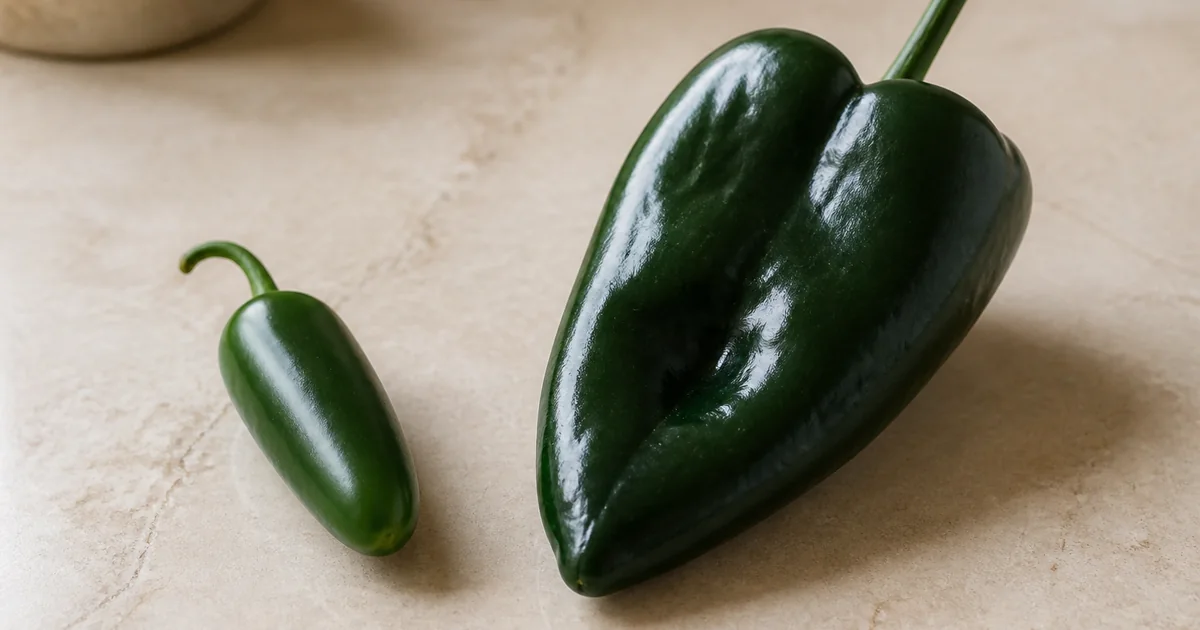
The University of Wisconsin Extension lists poblano at 1,000 to 1,500 SHU, while many market references use an upper value of 2,000 SHU. That range is mild beside jalapeno, but it is not equivalent to zero.
Scoville numbers describe pungency rather than recipe capacity, so a full poblano changes both the chile dose and the vegetable volume when it replaces a bell.
Removing the seed cluster does not guarantee a heat-free poblano. The Chile Pepper Institute explains that pungency comes from capsaicinoids, and the pepper anatomy around the inner ribs and placenta can retain them.
For a mixed table, keep the bell portions identifiable rather than assuming every diner will accept poblano. This is a practical serving decision, especially when children or heat-sensitive guests are included.
Which Is Better for Stuffing, Bell Pepper or Poblano?
Stuffing exposes the biggest physical difference because bell halves form broad upright cups, while poblanos work better as roasted pods opened through one lengthwise slit.
The Wisconsin Extension size table describes poblano pods as roughly 2 to 3 inches wide and 3 to 6 inches long. Bell cultivars vary, but their blocky lobes create a wider base and a larger opening for rice, meat, beans, or lentils.
A heavy filling needs support from the pepper wall and the baking dish. Bell cups can hold a generous scoop, while softened poblanos benefit from a lighter filling and close spacing so the slit does not spread.
A poblano is commonly charred and peeled before filling, whereas a bell can be filled raw and soften during baking.
The visible cross-section gives the useful test at the cutting board. Pick the bell when capacity and upright presentation matter.
Pick the poblano when the pepper itself should season the filling.
Raw Pan Or Broiler
Raw use favors bell pepper because its crispness and sweetness remain pleasant without heat. The American Heart Association describes bell peppers as crunchy and sweet, while it classifies poblano as slightly hot.
UC Davis uses firmness, color, and freedom from defects as bell-pepper quality markers, while green bells taste grassier than fully colored fruit.
Poblano becomes more useful after high heat. The 2026 UC Agriculture and Natural Resources pepper handout describes its flavor as earthy, smoky, and fruity, and identifies ancho as the dried form of poblano.
Blistering the skin adds char while softening the pod for peeling. In our editorial judgment, roasting peppers is worthwhile for poblano sauces and rajas, while bell strips often need only a quick saute to keep some bite.
Cover a hot poblano briefly so steam loosens its blackened skin, then peel without rinsing away the roasted surface flavor.
Dish By Dish Choice
Use the matrix below when both peppers are available and the recipe only says green pepper or mild chile.
Raw salad or snack: bell pepper keeps crunch and adds no heat.
Rajas, roasted salsa, or chile relleno: poblano supplies the chile character.
Deep baked filling: bell gives more capacity, while poblano gives more flavor per bite.
For fajitas and skillet meals, either can work, but they lead to different results. Bell adds sweet bulk and bright color.
Poblano adds mild heat and a darker roasted note.
For shakshuka, sausage pans, or tomato sauce, bell supports sweetness while poblano keeps a green chile note visible after simmering.
For stuffed peppers, decide whether the filling or the chile is the main feature. Bell frames a large filling, while poblano makes a smaller filling taste more chile-forward.
Can You Substitute Poblano for Bell Pepper?
Start a cooked swap at 1:1 by chopped volume, then correct for moisture, heat, and flavor. That ratio is editorial guidance for skillet dishes, not a claim that the peppers taste the same.
Keep some bell in eggs, beans, fajitas, roasted vegetables, or cheese sauces when volume and sweetness matter more than the poblano's mild heat.
Replacing poblano with bell removes the heat and much of the roasted chile character. A spoonful of mild chile powder can add dried flavor, but it cannot reproduce the fresh poblano's skin, shape, or green aroma.
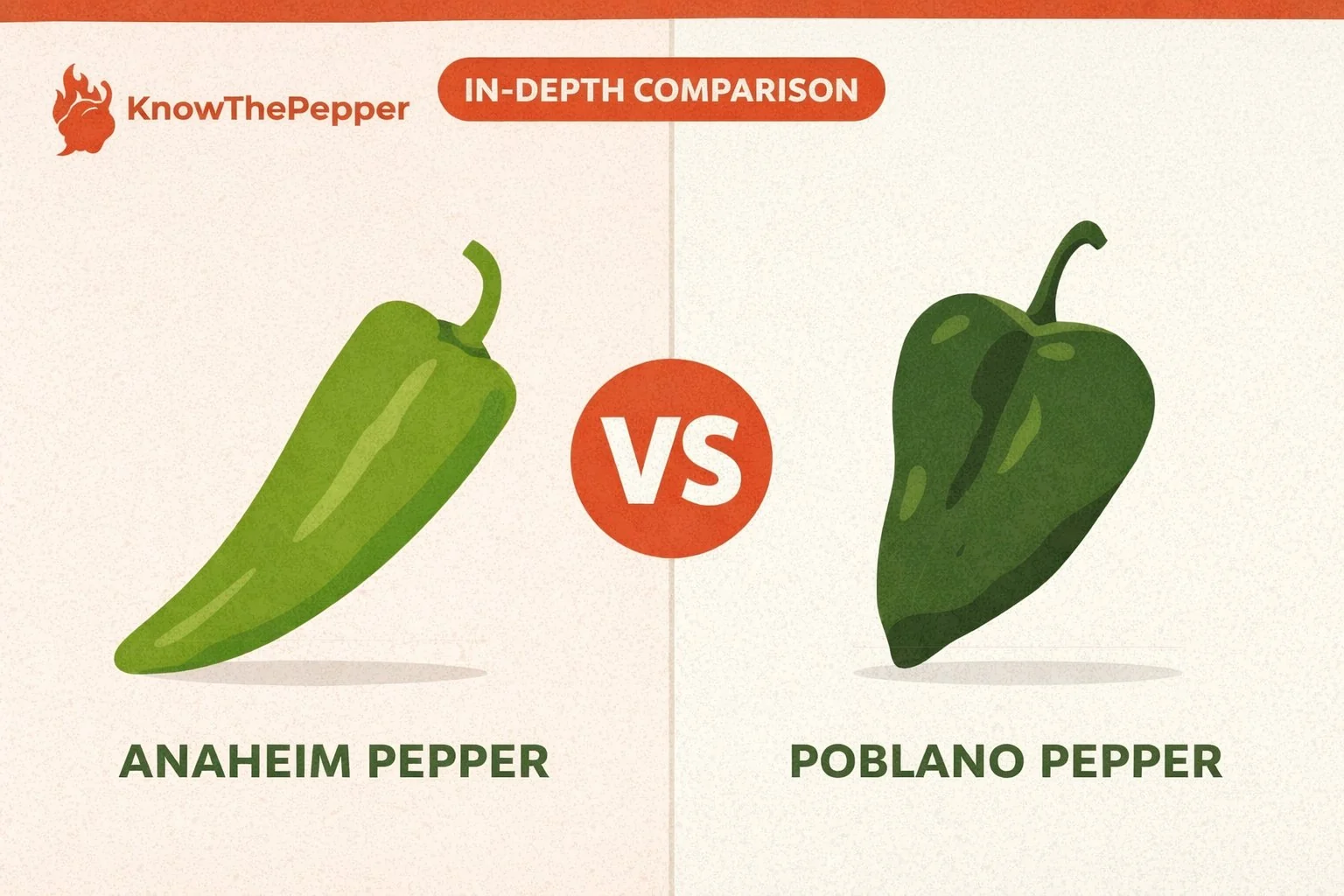
A poblano substitute such as Anaheim is often closer for roasting because the form and chile role remain similar. A bell pepper substitute such as cubanelle is often closer for frying or sweet pepper dishes because it preserves low heat and a lighter wall.
Raw swaps need more caution because poblano tastes more assertive before roasting, while green bell supplies a cleaner snap for slaws and snack plates.
Do not use either pepper as a direct answer to a recipe that needs noticeable jalapeno heat. Bell contributes none, and poblano usually stays below the heat level that defines a hot salsa.
Use this short check before committing the whole batch:
- Keep bell when the dish must stay at 0 SHU.
- Keep poblano when charred chile flavor is central.
- Match chopped volume for skillets, not whole-pod count.
- Match cavity shape for stuffing, not just ingredient weight.
These checks separate heat, flavor, and structure before the pan is full and make it easier to split one recipe into zero-heat and mild portions.
Shop Prep And Store
Buy bell peppers for weight, firmness, and intact shoulders. UC Davis lists uniform shape, size, color, firmness, and freedom from cracks or decay among its quality markers.
Choose poblanos with taut dark skin, a sound stem, and enough flat surface to blister evenly. For stuffing, a broad pod with no soft spots will survive roasting and peeling more reliably than a narrow, limp one.
Prep for the planned dish by removing the bell's core for even strips or cups, while charring the poblano whole before peeling and slitting it.
UC Davis recommends 7.5 C (45 F) for maximum bell-pepper storage life of 3 to 5 weeks under commercial conditions. A home refrigerator is usually colder, so keep both peppers dry, unwashed, and protected from crushing, then use any softening pod first.
Moisture on cut surfaces shortens useful life. Refrigerate cut pepper in a closed container and plan to cook it soon rather than relying on the multiweek whole-pepper figure.
When Neither Is The Best Fit
Anaheim offers a longer roasting chile with more heat variation, while cubanelle offers a thinner sweet wall for frying.
Use Anaheim when the recipe needs strips of roasted green chile but poblano is unavailable. Use cubanelle when a pan needs a sweet pepper that softens faster than a blocky bell.
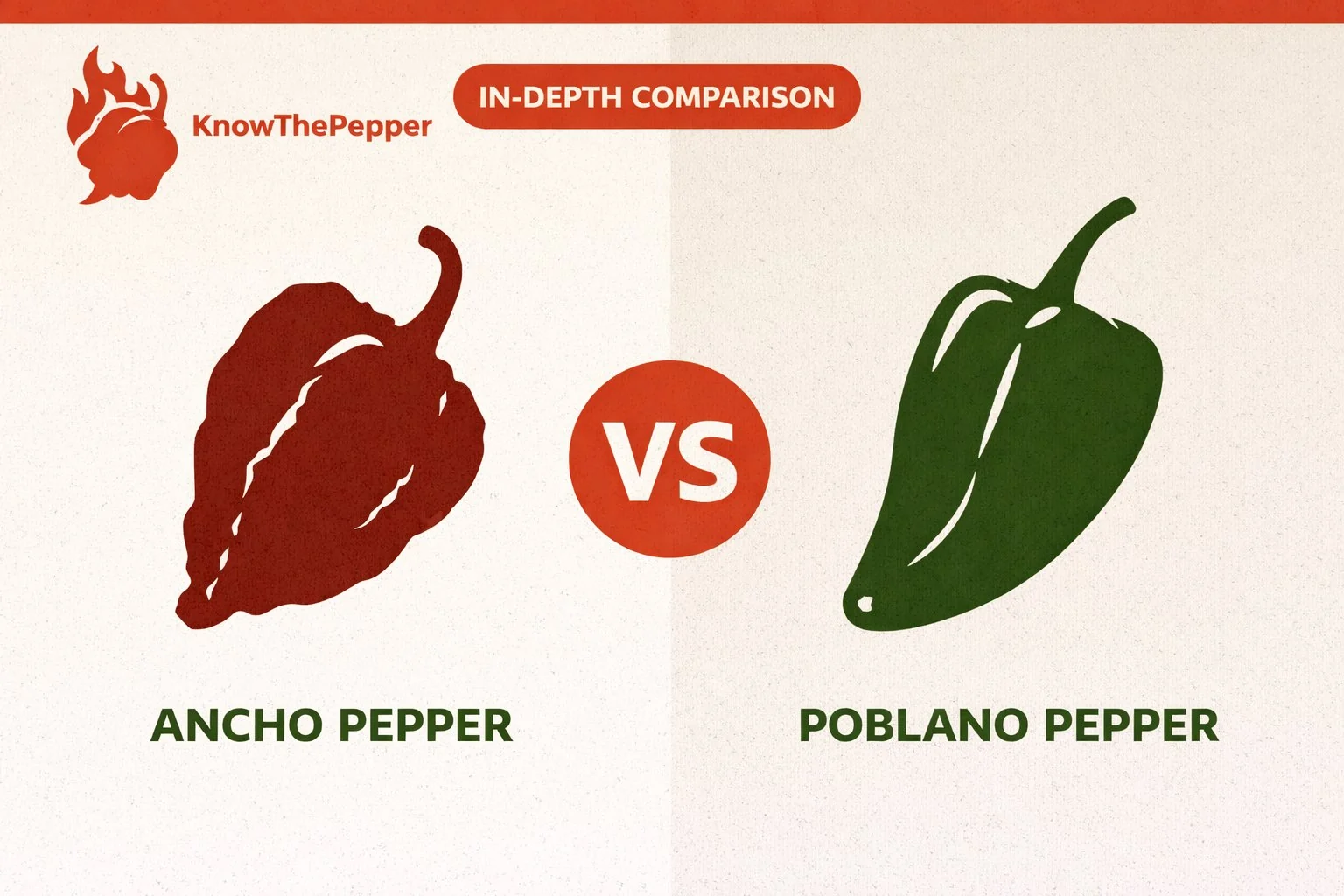
Dried recipes need another decision because ancho is dried poblano, not dried bell pepper. The Chile Pepper Institute's terminology guide makes that identity explicit, so ancho belongs in sauces and powders that need dried-fruit depth.
Fresh bell can supply sweetness and bulk, but it cannot replace the concentrated flavor or even dispersion of ground paprika.
The final choice stays concrete: bell for zero heat and structure, poblano for mild roasted chile flavor, Anaheim for a longer roasting chile, and cubanelle for a thin sweet frying pepper.
Is an Ancho the Same Pepper as a Poblano?
Fresh poblanos and dried anchos are two forms of the same pod type. New Mexico State University's Chile Pepper Institute defines poblano as the green fresh form sold in U.S. produce markets and ancho as the dried mature form.
Because drying concentrates flavor and removes the fresh pod structure, ancho belongs in sauces, stews, marinades, and powders rather than stuffed-poblano dishes.
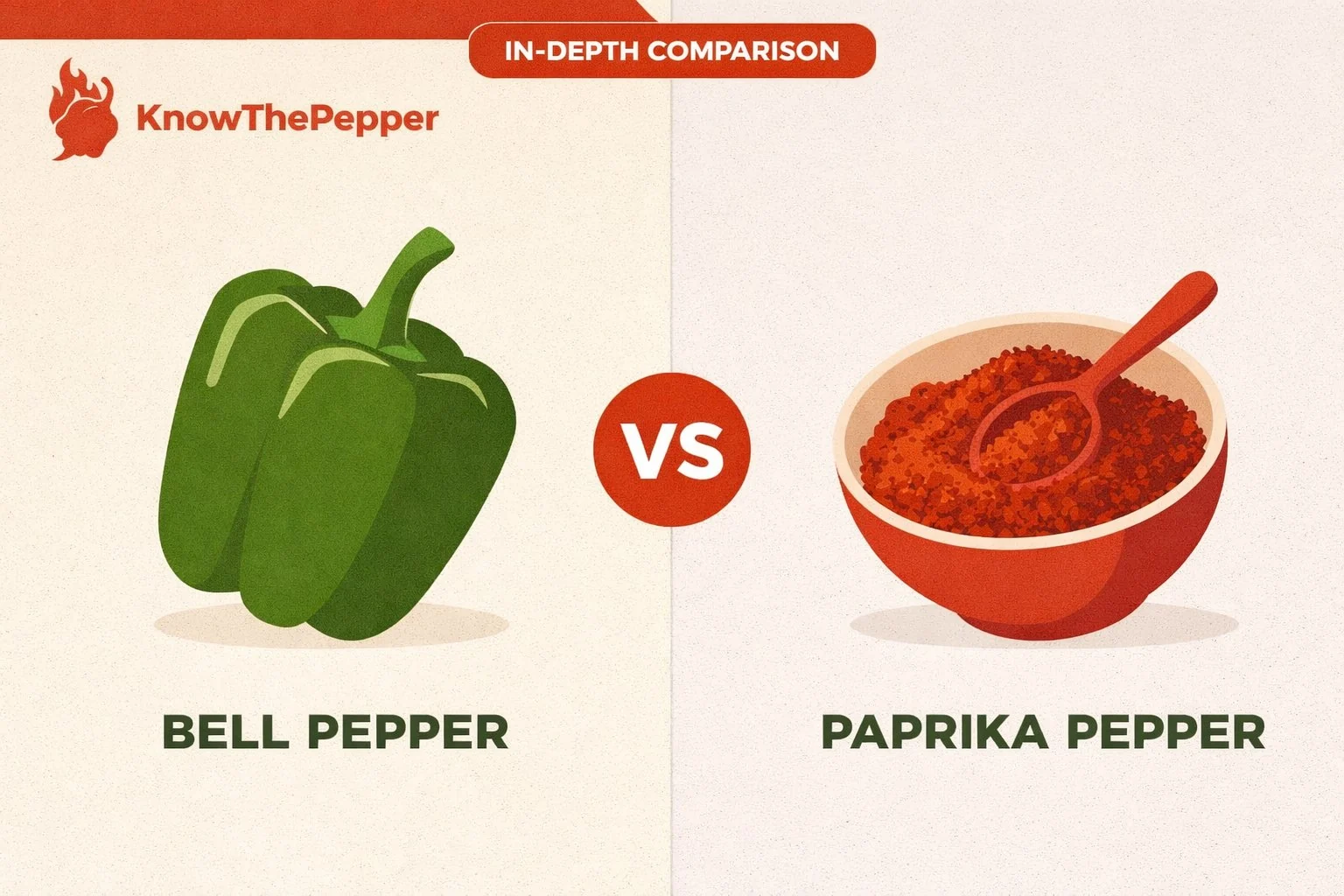
Bell pepper follows a different naming path. The Chile Pepper Institute uses paprika for nonpungent red chile dried for spice or color, but a jar of paprika may come from selected paprika cultivars rather than the fresh bell in a produce bin.
Fresh-to-dried substitution therefore needs more than matching heat. Ancho brings concentrated dried flavor, while fresh poblano brings water, skin, and a cavity that can be roasted or filled.
Fresh bell supplies vegetable mass and moisture, while paprika distributes color and flavor across the whole dish without replacing that mass.
Choose the form named by the cooking method. Use fresh pods for slicing, roasting, and stuffing, then use dried chiles or ground spice when the recipe needs concentration rather than structure.
Bell Pepper vs Poblano Pepper FAQ
- New Mexico State University Chile Pepper Institute - Chile Terminology
- New Mexico State University Chile Pepper Institute - Chile Peppers 101
- University of Wisconsin Extension - Peppers (B3570)
- UC Agriculture and Natural Resources - Peppers 2026 Handout
- UC Davis Postharvest Research and Extension Center - Bell Pepper
- American Heart Association - Cooking With Peppers