
Habanero vs Ghost Pepper: What Changes When Heat Crosses 1,000,000 SHU
The habanero sits between 100,000 and 350,000 SHU, making it one of the most recognizable hot peppers in kitchens worldwide. The ghost pepper (Bhut jolokia) crosses the 1,000,000 SHU threshold, historically the first pepper to break that barrier. That gap is not subtle: the ghost pepper delivers roughly 3 to 10 times more heat depending on where each sample falls in its range.

Habanero
Extra-HotGhost Pepper
Super-HotQuick Comparison
| Attribute | Habanero | Ghost Pepper |
|---|---|---|
| Scoville evidence | 100K-350K SHU | 855K-1M SHU |
| Heat Tier | Extra-Hot | Super-Hot |
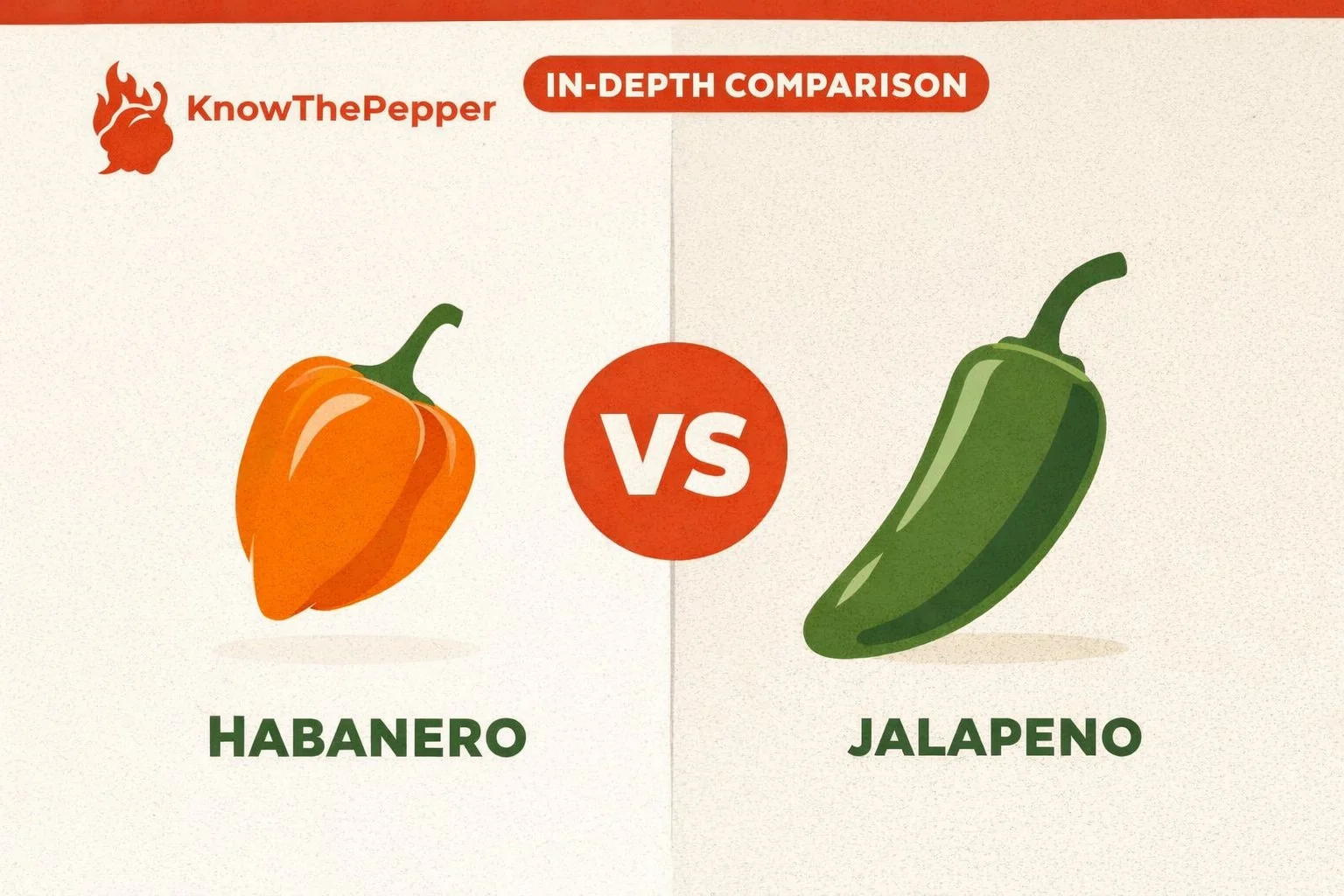
| vs Jalapeño | 44x hotter | 130x hotter |
| Flavor | fruity and citrusy | smoky and sweet |
| Species | C. chinense | C. chinense |
| Origin | Mexico | India |
How Much Hotter Is a Ghost Pepper Than a Habanero?
The habanero registers 100,000-350,000 SHU on the Scoville scale, placing it firmly in the extra-hot pepper bracket alongside its close relatives. An Anaheim pepper typically measures around 500-2,500 SHU, which means a habanero can hit 40 to 140 times that heat level, a useful frame for understanding just how aggressive these peppers are before even introducing the ghost pepper.
The ghost pepper, or Bhut jolokia, was measured at approximately 1,041,427 SHU in a 2007 study by New Mexico State University's Chile Pepper Institute, making it the first pepper ever certified to break the one-million mark. Current samples can range from 800,000 to over 1,100,000 SHU depending on growing conditions, soil, and climate.
By that math, a ghost pepper is 3 to 10 times hotter than a habanero, and the gap widens significantly when comparing a lower-end habanero against a high-output ghost pepper crop.
Both peppers belong to C. chinense, so they share similar capsaicin delivery, but the ghost pepper's concentration is dramatically higher. The TRPV1 receptor response triggered by ghost pepper capsaicin tends to produce a slower-building, longer-lasting burn compared to the habanero's sharper initial spike.
Habanero heat hits fast and fades in 10-15 minutes. Ghost pepper heat can persist for 20-30 minutes or longer, spreading from the throat into the chest.
For anyone calibrating their heat tolerance, these are two very different experiences despite sharing a species.
How Do Habanero and Ghost Pepper Taste?
The habanero has a genuinely distinctive flavor that earns it a place beyond pure heat delivery. Its profile is fruity and citrusy, think apricot, peach, and a faint floral note underneath the fire.
That brightness is part of why it dominates Caribbean and Mexican pepper-based sauces: the flavor holds up and contributes something identifiable even after cooking. The citrus edge makes it particularly effective in fruit-forward salsas, mango-based hot sauces, and marinades where acidity plays a role.
The ghost pepper's flavor is less documented in cooking literature, partly because its extreme heat makes objective tasting difficult. What most experienced cooks note is an earthy, slightly smoky undertone with a hint of sweetness that gets buried almost immediately under the capsaicin load.
The fruity quality exists but is muted compared to the habanero, and it doesn't sing the same citrus notes. Think of it less as a flavoring agent and more as a heat delivery mechanism with background complexity.
In practical terms, the habanero is a dual-purpose pepper: heat and flavor in roughly equal measure. The ghost pepper skews heavily toward heat.
This distinction matters enormously in cooking. A habanero can be used at meaningful quantities and still contribute taste.
A ghost pepper, used at levels where flavor might register, often delivers more heat than most dishes can absorb without becoming inedible. If you want the fruity-hot combination that habanero brings, the ghost pepper is not a direct swap, it is a different tool entirely.
Culinary Uses
The habanero earns its place as a workhorse hot pepper in kitchens that want both fire and flavor. It's the backbone of many Caribbean jerk seasonings, Yucatecan salsas like xni pec, and commercial hot sauces.
Roasting or quickly charring a habanero before blending deepens its fruity character and softens the raw edge. For the datil pepper vs. habanero flavor contrast, both are C. chinense with similar fruity profiles, but the datil skews sweeter, which is worth knowing when you're building a sauce and deciding which direction to go.
For everyday cooking, half a habanero is a reasonable starting point for a dish serving four. Removing seeds and membrane drops the heat by roughly 30-40%, giving you more control.
It performs well in oil-based preparations, habanero-infused olive oil, compound butters, and chile oils, where the fat carries the flavor compounds effectively.
Ghost pepper use requires a more measured hand. A quarter of one pepper can heat an entire pot of chili for six people.
It works best in applications where it's a background element: long-simmered stews, fermented hot sauces where the heat mellows over weeks, or dry rubs where only trace amounts end up in each serving. Ghost pepper powder, used at 1/8 to 1/4 teaspoon per dish, gives more control than fresh.
Substitution ratios matter here. If a recipe calls for one habanero and you want to use ghost pepper instead, start with one-fifth the amount, and add more only after tasting.
Going the other direction, replacing ghost pepper with habanero requires roughly 3 to 4 habaneros per ghost pepper to approximate the heat, though the flavor profile will shift noticeably toward citrus.
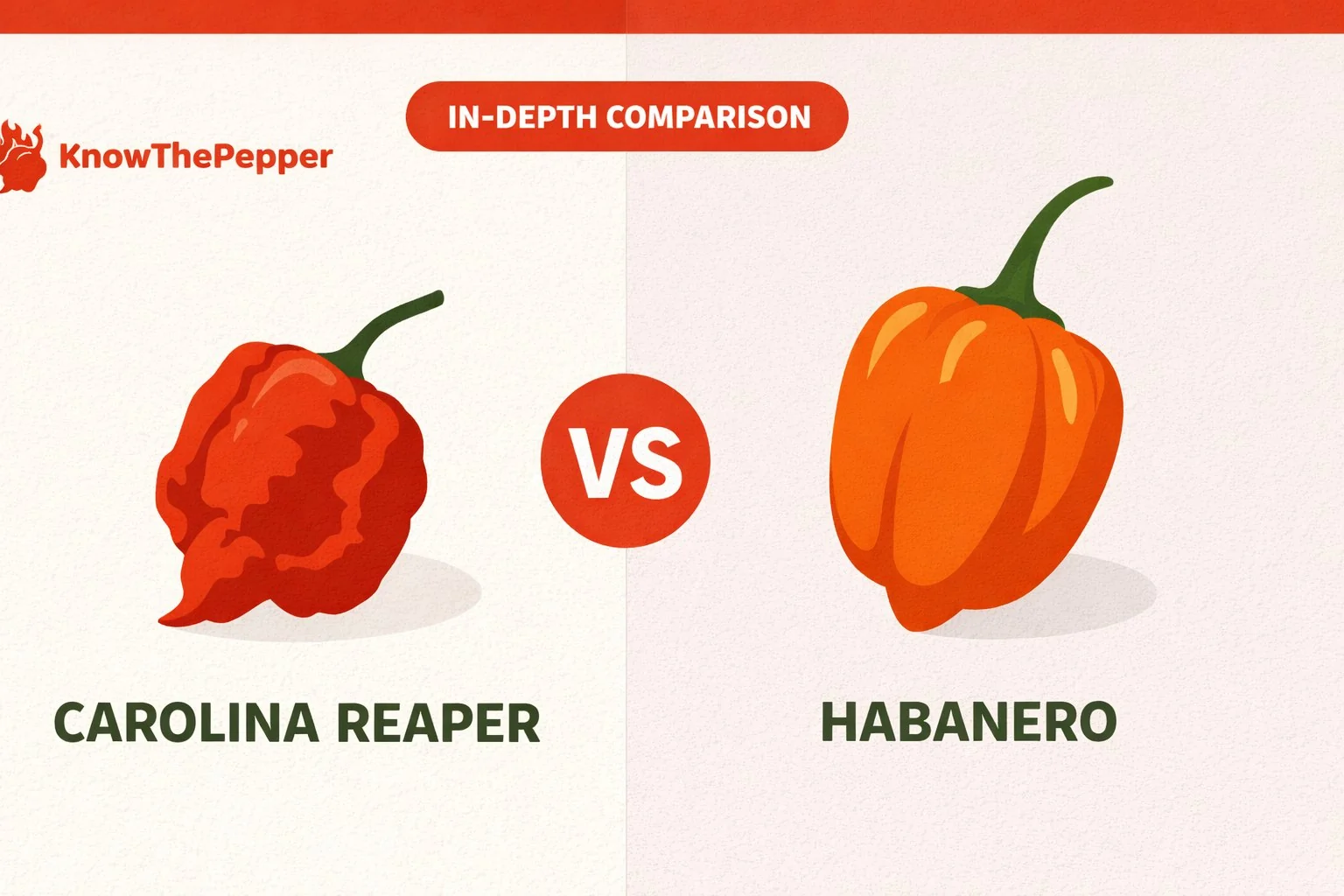
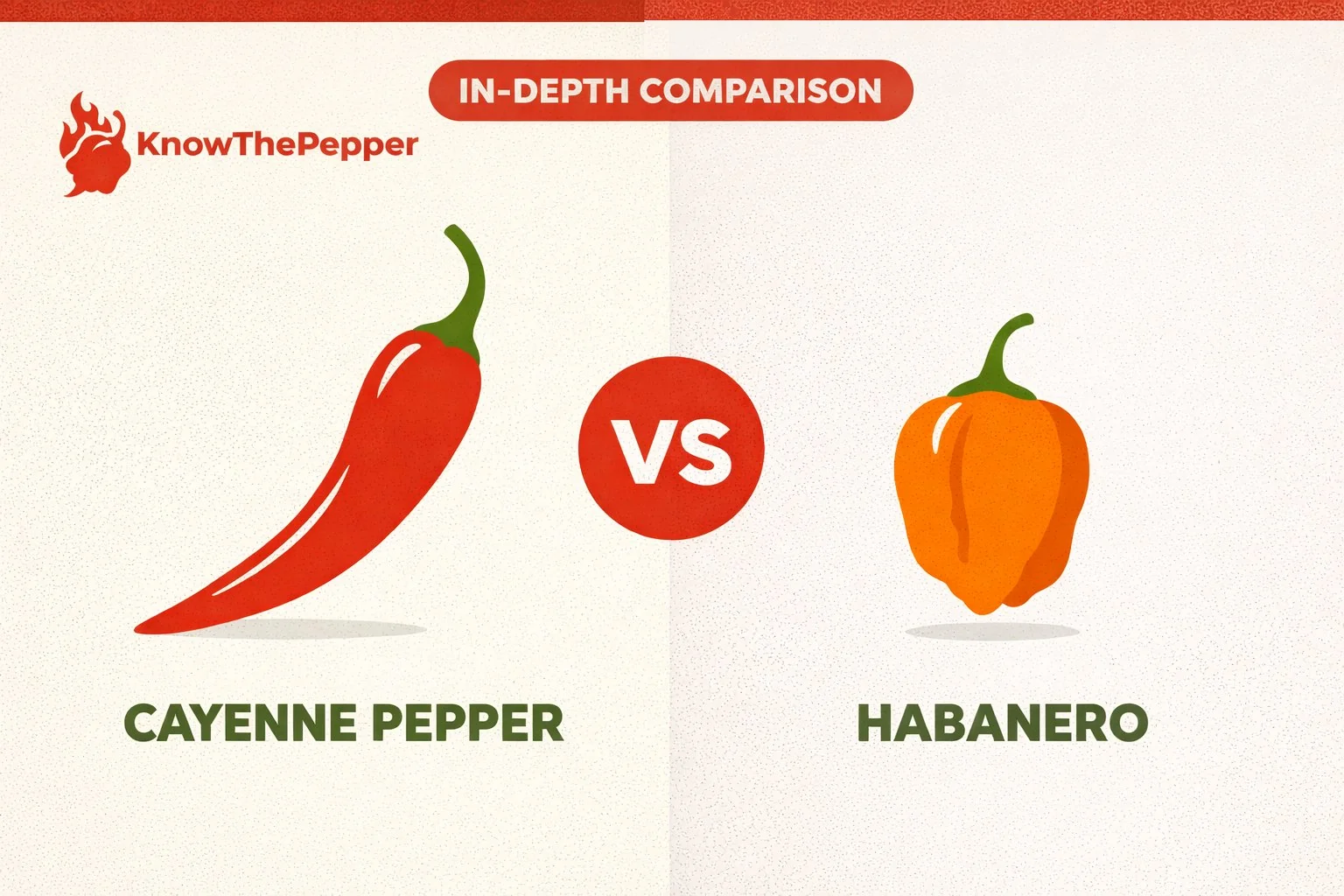
For a closer heat match with less flavor change, the Carolina Reaper's extreme heat vs. habanero breakdown offers a useful frame, since Reapers sit even higher than ghost peppers and the substitution math scales similarly. Compared to a cayenne, the cayenne vs. habanero heat difference shows how much range exists even within the hot pepper world.
Which Should You Choose, Habanero or Ghost Pepper?
Choose the habanero when flavor matters as much as heat, when you want that citrus-fruit brightness in a sauce, marinade, or salsa that people can actually taste and appreciate. It belongs to Capsicum chinense alongside some of the world's most flavorful peppers, and it delivers on both dimensions reliably.
Choose the ghost pepper when heat is the primary goal and flavor is secondary, when you're building a sauce for heat-seekers, fermenting a long-aged hot sauce, or want bragging rights on a dish's Scoville credentials. Its flavor exists but gets overshadowed quickly.
For most home cooks, the habanero is the more versatile and controllable option. The ghost pepper rewards experienced cooks who understand exactly how to handle extreme heat.
Neither is wrong. They just answer different questions in the kitchen.
If you're building tolerance or exploring the upper range, the habanero is the logical starting point before stepping toward ghost pepper territory.
How Do You Substitute Ghost Pepper for Habanero?
Do not substitute habanero and ghost pepper by pod count. The New Mexico State University study measured Bhut Jolokia at 1,001,304 SHU on average, while the stored habanero range is much lower, so even similarly sized pieces can produce very different batches.
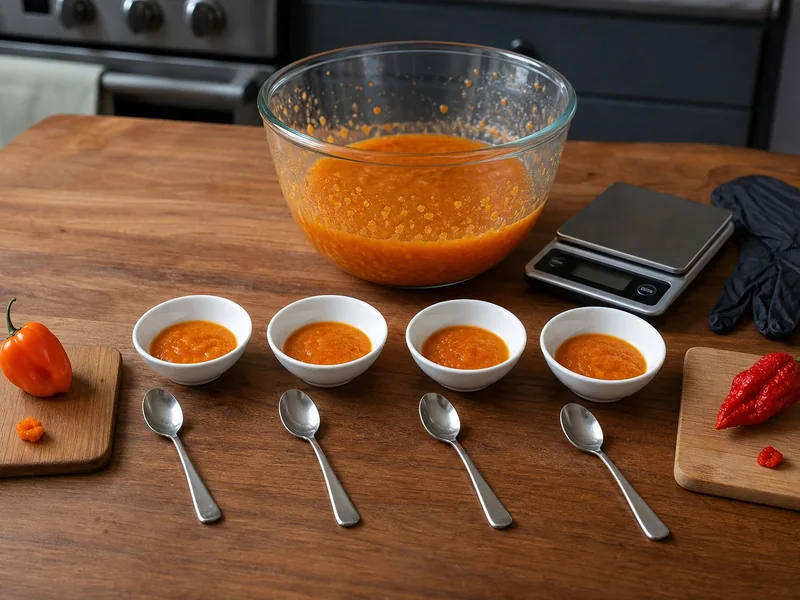
Build the sauce without the superhot pepper, then move a measured portion into a small tasting bowl. Add a weighed fragment to that portion, mix thoroughly, and judge the result before scaling the same concentration to the full batch.
When replacing ghost pepper with habanero, correct heat first and accept that the habanero may contribute more citrus-fruit character. When replacing habanero with ghost pepper, use a substantially smaller tested amount and restore any missing pepper flesh with a mild aromatic pepper rather than adding more ghost pepper.
| Step | Action | Why it matters |
|---|---|---|
| 1 | Finish the pepper-free sauce base | Protects the full batch |
| 2 | Move one measured portion to a tasting bowl | Creates a bounded test |
| 3 | Add a weighed pepper fragment and mix | Records a repeatable concentration |
| 4 | Scale only after the test is acceptable | Avoids an irreversible overshoot |
Is Ghost Pepper the Same Species as Habanero?
The 2007 HortScience paper by New Mexico State University researchers establishes the Bhut Jolokia identity used here and reports the measured million-SHU result. It also describes the pepper as a naturally occurring interspecific hybrid with C. chinense and C. frutescens ancestry, so the old claim that both comparison subjects simply belong to one species has been removed.
The stored sources do not establish the former ancient Amazon date, Havana etymology, exact trade timeline, elephant-deterrent story, pharmacopoeia narrative, or commercial hot-sauce growth claims. Those details do not improve the reader's heat, flavor, or handling decision.
For either pepper, confirm the named cultivar and source rather than relying on red or orange color. Ghost peppers should show the elongated, deeply wrinkled form associated with Bhut Jolokia, while habaneros usually show a shorter lantern-shaped pod.
How Should You Handle Habanero and Ghost Pepper?
A generic 100 gram nutrient comparison is not useful for peppers normally added in tiny, unequal amounts. The stored sources do not prove the former vitamin percentages, capsaicin concentration, or crowd-control claim, so they have been removed.
Wear disposable gloves for both peppers, use a dedicated board, avoid touching the face, and wash the knife, board, containers, and hands after preparation. Keep children, pets, and unbriefed diners away from the work area and clearly mark any superhot batch.
Do not rely on removing seeds as a percentage-based heat reduction. Capsaicinoids concentrate in the inner placental tissue and can spread over cut surfaces, so the safer control is a smaller measured amount, thorough mixing, and batch testing.
Habanero vs Ghost Pepper FAQ
- Bhut Jolokia: The World's Hottest Chile Pepper is a Putative Naturally Occurring Interspecific Hybrid - NMSU Chile Pepper Institute
- Chile Pepper Institute - New Mexico State University