
Fresno Pepper vs Habanero: Sliceable Red Chile or Concentrated Seasoning?
Use Fresno pepper when the dish needs visible red chile pieces, medium heat, pickles, or fresh salsa. Use habanero when a small measured amount should heat the whole batch and add a strong fruity aroma.
The practical difference is dose and texture. Fresno behaves as a sliceable ingredient, while habanero behaves as a concentrated seasoning that must be minced, mixed, and served carefully.

Fresno Pepper
HotHabanero
Extra-HotQuick Comparison
| Attribute | Fresno Pepper | Habanero |
|---|---|---|
| Scoville evidence | 2.5K-10K SHU | 100K-350K SHU |
| Heat Tier | Hot | Extra-Hot |
| vs Jalapeño | 1x hotter | 44x hotter |
| Flavor | fruity and smoky | fruity and citrusy |
| Species | C. annuum | C. chinense |
| Origin | USA | Mexico |
How Do Fresno and Habanero Differ in Species and Heat?
Fresno and habanero are different species with different kitchen roles. Fresno belongs to Capsicum annuum, while habanero belongs to Capsicum chinense.
The Chile Pepper Institute describes ripe Fresno fruit as red, about three inches long, and similar in outline to jalapeno, with thinner walls and a medium heat level.
Its orange habanero reference shows a wrinkled, lantern-shaped pod about two inches long and classifies it as very hot.
Typical published ranges put Fresno near 2,500 to 10,000 SHU and habanero near 100,000 to 350,000 SHU. Even the top of the Fresno range sits far below the bottom of the usual habanero range.
That gap changes portioning before it changes flavor. Fresno can be sliced, pickled, blistered, or chopped as a visible ingredient, while habanero is usually minced or blended in a much smaller dose.
Choose by job rather than color.
A ripe red Fresno builds chile volume and crunch, while an orange habanero supplies concentrated heat and a strong fruity aroma.
Batch Size And Dosing
Start with the amount of food in the bowl or pot. One minced habanero can heat an entire salsa, marinade, or bottle of sauce, while one Fresno usually behaves as an ingredient that diners can see and bite.
Adding enough Fresno to chase habanero heat changes the recipe before the burn catches up.
The extra pods add water, skin, seeds, red color, and fresh pepper flavor.
For a family salsa, Fresno leaves room to adjust with half-pod or whole-pod increments. Habanero needs a finer mince, a smaller first addition, and a full stir before anyone tastes the batch.
Do not convert by pod count because size and pungency vary. Weighing the prepared pepper helps with repeat batches, but tasting remains necessary after blending and resting.
The safer starting point is deliberately mild.
More minced habanero can be added, while an over-heated sauce usually requires a larger batch of every other ingredient to dilute it.
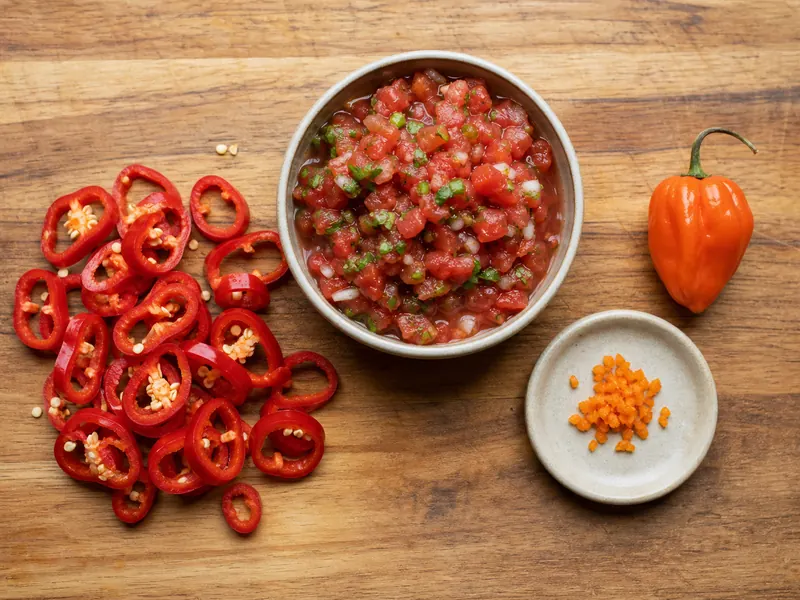
How Do Fresno and Habanero Taste Different?
Ripe Fresno has a clean red-chile flavor with gentle fruit and light smokiness. The Chile Pepper Institute recommends Fresno for salsa, pickling, roasting, stir-fries, and hot sauce, which reflects its ability to remain a recognizable vegetable in the dish.
Habanero has a stronger tropical and floral aroma.
The flavor can suggest citrus or apricot, but that character arrives with enough capsaicin to dominate a mild salsa when the dose is careless.
Cooking changes the balance. Blistering Fresno softens its raw edge and adds roasted sweetness, while simmering habanero spreads its aroma and heat through liquid and fat.
Acid supports both peppers for different reasons. Vinegar sharpens Fresno pickles, while lime, orange, pineapple, or mango can make habanero fruitiness easier to recognize beneath the heat.
Sweetness does not remove capsaicin.
Sugar or fruit can balance perception, but the final sauce still contains the same pepper dose and should be served accordingly.
Which Is Better for Salsa, Fresno or Habanero?
Fresno is the easier choice for chunky tomato salsa because its pieces keep a crisp bite and medium red-chile warmth. It can sit beside onion, cilantro, lime, and tomato without becoming the only flavor in the bowl.
Habanero suits salsa that is smooth, fruit-led, or intentionally very hot.
Mango, pineapple, peach, orange, and strong lime can carry its aroma while the pepper is distributed in a fine mince or puree.
Visible habanero rings create uneven bites. One ring can hold much more capsaicin-rich tissue than the spoonful beside it, so mincing and mixing produce more predictable servings.
Fresno rings are easier to use on tacos, nachos, sandwiches, and grain bowls. Their texture is part of the topping, and a diner can see how much pepper is present.
For a mixed table, prepare the Fresno salsa as the shared bowl and offer habanero sauce separately.
That arrangement protects heat-sensitive diners without flattening the hotter option for everyone else.
Pickling, Roasting, and Toppings
Fresno wins for quick pickles because the red rings stay substantial after hot brine is added. Utah State University Extension advises wearing gloves when handling pungent chiles and gives a vinegar, water, and salt method for preserving pepper pieces.
Habanero can flavor a pickle brine, but sliced pods create concentrated hot spots.
Use a small measured amount in the liquid or keep whole pieces clearly separate from the milder vegetables.
Roasting also favors Fresno when the pepper should remain visible. A blistered whole pod can be peeled, chopped, and folded into eggs, beans, corn, or grilled vegetables.
Habanero can be roasted for sauce, but the fumes and handling risk rise as the pod heats and breaks down. Good ventilation and utensils reserved for the hot pepper reduce accidental contact.
For finishing a plate, Fresno provides color, texture, and a manageable bite.
Habanero works better inside a measured condiment than scattered as an unannounced garnish.
How Do Fresno and Habanero Work in Hot Sauce and Marinades?
Fresno can supply much of the body in a fermented or cooked red sauce. Because more pod flesh is used, the finished sauce can taste clearly of fresh red chile without relying on carrot, fruit, or onion for all its texture.
Habanero supplies heat and aroma at a smaller volume.
A sauce maker often needs another ingredient for body, then uses habanero to set the final intensity.
For a bright table sauce, Fresno pairs naturally with garlic, vinegar, and salt. For a fruit-forward habanero sauce, mango, pineapple, carrot, citrus, or sweet onion can support the pepper without pretending to neutralize it.
Marinades need the same dose discipline. Habanero spreads efficiently through liquid and over meat, so a small addition affects every bite after the food rests.
Blend before final seasoning and taste again after chilling.
Salt, acid, sweetness, and temperature change heat perception, while the capsaicin concentration remains tied to the amount of pepper in the batch.
Can You Substitute Fresno for Habanero?
Fresno can replace habanero when the goal is a deliberately milder dish. Use Fresno for red color and body, then add citrus zest, mango, or another aromatic ingredient when the recipe depended on habanero fruitiness.
Habanero should not replace Fresno one for one.
Begin with a small minced portion, and add red bell pepper or another mild red chile when the recipe needs the volume and visible texture that Fresno supplied.
To make a Fresno sauce hotter, keep Fresno as the body pepper and add a small amount of habanero or cayenne after blending. This preserves the fresh red-chile character while allowing a measured increase in heat.
To make a habanero dish milder, reducing the habanero is more reliable than adding many Fresno pods. Extra Fresno changes water content and texture but does not erase the stronger pepper already in the batch.
For toppings, keep the peppers separate.
Fresno can remain on the plate, while habanero is safer in a thoroughly mixed sauce that gives each serving a controlled dose.
How to Handle Habanero Safely
Treat habanero prep as a contact-risk task even when only one pod is used. Utah State University Extension warns that pungent chile can burn hands and eyes and recommends gloves during handling.
Use a stable cutting board, avoid touching the face, and wash the knife and board with hot soapy water after the pepper is processed.
Disposable gloves should come off before cabinet handles, taps, phones, or refrigerator doors are touched.
Removing seeds does not remove most of the heat because capsaicinoids are concentrated in the pale inner placenta. Trimming that tissue can reduce the dose, but the remaining flesh still requires careful handling.
Taste sauces with a clean spoon and wait before adding more pepper. Heat can seem stronger after the puree is fully dispersed or after the food has rested.
Label separate hot condiments at a shared table.
A visible warning and a dedicated spoon prevent a small amount of habanero sauce from being mistaken for the Fresno option.
Buying And Storage
Choose Fresno pods with smooth, taut skin and a firm body. Ripe red fruit offers the color and mature flavor this comparison assumes, while green Fresno tastes grassier and behaves more like a fresh green chile.
Choose habaneros that feel firm for their size with intact, wrinkled lantern-shaped skin.
Soft patches, leaking stems, or collapsed walls indicate deterioration rather than normal shape.
Store both peppers dry in the refrigerator crisper and use them while the walls remain firm. Moisture trapped in a sealed bag speeds softening, so a breathable produce bag or a dry paper towel helps.
Freeze chopped habanero in measured portions when only a small amount is used at a time. The thawed pieces lose crispness but remain suitable for cooked sauce, marinades, and puree.
Fresno is worth buying fresh when pickles, rings, relish, or roasted pieces need texture.
Habanero is worth buying in smaller quantities unless several sauces or freezer portions are planned.
Final Choice
Choose Fresno for fresh salsa, quick pickles, visible chile rings, relish, stir-fries, and red sauce that needs pepper flesh for body. Its medium heat gives the cook room to adjust without turning every bite into a heat test.
Choose habanero when a small amount should transform a whole batch.
It fits fruit salsa, very hot table sauce, marinades, and recipes that need a distinct floral or tropical chile aroma.
Use both when Fresno should provide texture and habanero should set the heat. Build the dish with Fresno first, then add habanero in small increments after the ingredients are fully mixed.
If serving a group, keep the habanero condiment separate and identify it clearly. Fresno can handle the visible garnish role, while habanero belongs where its dose is evenly distributed.
The shortest rule follows the peppers' physical roles.
Fresno is a sliceable ingredient, habanero is a concentrated seasoning, and treating them that way prevents the most common substitution mistake.
Fresno Pepper vs Habanero FAQ
- Fresno Pepper - New Mexico State University Chile Pepper Institute
- Orange Habanero - New Mexico State University Chile Pepper Institute
- NuMex Suave Red and Orange Mild Capsicum chinense Cultivars - New Mexico State University
- How to Preserve Chiles - Utah State University Extension