54 varieties

Capsicum chinense Varieties

Capsicum chinense includes mild aromatic peppers, habaneros, Scotch bonnets, and superhots. Cultivar evidence, rather than the species name alone, determines aroma, heat, kitchen use, and season length.

54 varieties 6 comparisons 5 heat levels
Mild aromatic, lantern, bonnet, and superhot Capsicum chinense peppers arranged with green leaves

Capsicum chinense spans mild aromatic peppers, habanero and Scotch bonnet types, and extreme-heat cultivars. Browse eight representative profiles by heat and kitchen role, then use all 54 published profiles for cultivar-specific evidence.

The Amazon-to-Caribbean Lineage

Capsicum chinense is an accepted species, and Kew Plants of the World Online places its native range from southern Guyana through southwestern Suriname to northern Brazil. Kew separately lists a much wider introduced range across the Caribbean, Central America, South America, and West Africa, so native range and present cultivation should not be treated as the same map.

Research led by Moses used genetic structure in a diverse germplasm set to examine relationships within the species. Carvalho and colleagues also measured broad morphological and molecular diversity in Brazilian accessions, supporting an Amazonian center of diversity while leaving room for continuing debate about the exact domestication path.

The safest reading is that Amazonian diversity and human movement helped shape the collection now associated with Caribbean, Mexican, South American, Indian, and US peppers. That evidence does not establish one modern country as the sole birthplace of every cultivated chinense line.

Aroma Is a Cultivar Trait

A 2024 peer-reviewed sensory and metabolite study found that chinense accessions did not share one aroma profile. Its panel separated samples into fruity, grassy, and no-special-aroma groups, then connected those impressions with different volatile compounds.

That finding changes how to browse this species. Choose a named cultivar for its documented aroma and flavor instead of assuming that every chinense pepper will taste fruity or floral because habanero and Scotch bonnet are often described that way.

Ripeness, handling, and preparation can also change which aromas reach a finished dish, but those variables do not erase the cultivar differences measured in the study. The profile card is therefore a starting point, not a species-wide flavor promise.

Choose Mild, Habanero, or Superhot

Chinense does not mean superhot. This collection currently contains 54 published profiles, and its recorded range includes the Biquinho pepper at 80 to 500 SHU alongside habanero-class peppers and extreme-heat cultivars.

New Mexico State University provides a clear scientific counterexample to the superhot stereotype. Its breeders released NuMex Trick-or-Treat as a zero-SHU C. chinense with an orange lantern-shaped pod, while the comparison cultivar Orange Habanero averaged about 300,000 SHU in their trials.

Use Aji Dulce or Biquinho when aroma matters more than burn, habanero or Scotch bonnet for a much hotter middle path, and Ghost Pepper or Carolina Reaper only when the recipe is designed for very small doses. This page does not assign Apollo Pepper an official ceiling or record because no reliable measurement owner supports one.

Match the Pepper to the Dish

Start with the form in which the pepper is normally used, then check heat. Aji Dulce and Biquinho fit mild aromatic relishes, pickles, and table condiments, while the New Mexico State University cultivar paper documents the orange lantern-shaped habanero type and its strong association with Mexico's Yucatan Peninsula.

Use Scotch bonnet when a Caribbean pepper profile is the goal, then confirm the exact cultivar before substituting another bonnet-shaped pod. For Peruvian directions, Aji Panca offers a larger, darker profile suited to dried-pepper preparations, while Aji Charapita provides a tiny-fruited Amazonian option for fresh condiments and sauces.

Ghost Pepper and Carolina Reaper belong in a separate decision lane because a small amount can dominate a batch. Gloves, precise dosing, and a recipe built for dilution matter more than chasing the highest number.

Give Slow Cultivars Enough Season

Plan from the cultivar's listed maturity time and your frost window rather than applying one schedule to the whole species. University of Minnesota Extension advises starting peppers indoors about eight weeks before outdoor planting and waiting until nighttime lows remain above 50°F before transplanting.

Some chinense cultivars need substantially more time after transplant than common garden peppers. University of Florida guidance describes Bhut Jolokia as taking up to 160 days, which is an extreme long-season example rather than a minimum for every chinense plant.

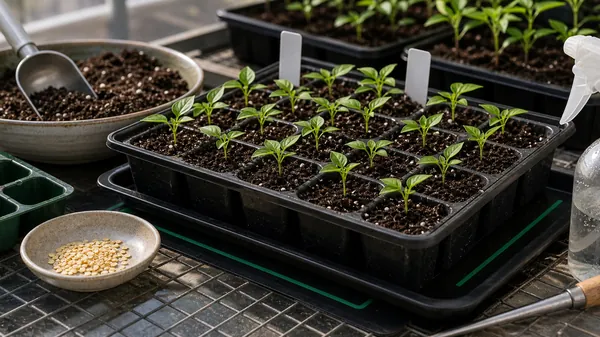
Choose a cultivar whose documented days to maturity fit the warm weeks available in your location. A general guide to growing peppers from seed can help with germination and transplant timing, but the named cultivar and local extension forecast should control the final date.

All Capsicum chinense Profiles

54 varieties

Every variety in this collection, sorted by maximum Scoville heat rating. Click any card for the full profile with flavor notes, anatomy details, growing tips, and substitutes.

Red tapered Apollo Pepper peppers with one sliced pod Super-Hot

Apollo Pepper

USA · 2.5M–3M SHU

reported sweet heat, earthy finish C. chinense
View profile →
Wrinkled mustard-green Pepper X pods with a cut pod showing placenta and seeds on a safety tray Super-Hot

Pepper X

USA · 2.7M–2.7M SHU

fruity earthy C. chinense
View profile →
Red Dragon's Breath peppers with one sliced pod and handling gloves Super-Hot

Dragon's Breath

United Kingdom · 2.5M–2.5M SHU

extremely intense C. chinense
View profile →
Whole red Carolina Reaper peppers showing deeply wrinkled pods and pointed tails Super-Hot

Carolina Reaper

USA · 1.4M–2.2M SHU

fruity sweet C. chinense
View profile →
Red wrinkled Komodo Dragon Pepper peppers with one sliced pod Super-Hot

Komodo Dragon Pepper

England · 1.4M–2.2M SHU

fruity intense C. chinense
View profile →
Red Trinidad Moruga Scorpion peppers with one sliced pod and handling gloves Super-Hot

Trinidad Moruga Scorpion

Trinidad · 1.2M–2M SHU

fruity floral C. chinense
View profile →
Ripe brown wrinkled Chocolate Bhutlah peppers with one cut pod Super-Hot

Chocolate Bhutlah

USA · 1M–2M SHU

Refining Fire Chiles describes Chocolate Bhutlah CS as smoky-fruity; ripe brown color does not prove chocolate flavor. C. chinense
View profile →
Dark brown wrinkled 7 Pot Douglah peppers with a cut pod and black handling gloves Super-Hot

7 Pot Douglah

Trinidad and Tobago · 923K–1.9M SHU

earthy, nutty C. chinense fruit with extreme heat C. chinense
View profile →
Ripe red 7 Pot Primo peppers with wrinkled pods, pointed tails, and one sliced pod on dark slate Super-Hot

7 Pot Primo

Louisiana, USA · 800K–1.8M SHU

fruity, floral C. chinense aroma with extreme heat C. chinense
View profile →
Red Dorset Naga peppers with one sliced pod and handling gloves Super-Hot

Dorset Naga

United Kingdom · 800K–1.6M SHU

fruity intense C. chinense
View profile →
Red bumpy 7 Pot Katie peppers with a cut pod and black handling gloves on a pale tray Super-Hot

7 Pot Katie

United Kingdom · 1.5M–1.6M SHU

fruity bright C. chinense
View profile →
Red Naga Morich peppers with one sliced pod and handling gloves Super-Hot

Naga Morich

Bangladesh / Northeast India · 1M–1.5M SHU

fruity intense C. chinense
View profile →
Red Trinidad Scorpion Butch T peppers with one sliced pod and handling gloves Super-Hot

Trinidad Scorpion Butch T

Trinidad · 800K–1.5M SHU

fruity intense C. chinense
View profile →
Red Naga Viper peppers with one sliced pod and handling gloves Super-Hot

Naga Viper

England · 900K–1.4M SHU

fruity fierce C. chinense
View profile →
Red 7 Pot Brain Strain peppers with brain-like folds, a cut pod, and loose seeds Super-Hot

7 Pot Brain Strain

USA · 1M–1.4M SHU

fruity C. chinense start with extreme delayed heat C. chinense
View profile →
Deep red wrinkled 7 Pot Barrackpore peppers with a split pod and black handling gloves Super-Hot

7 Pot Barrackpore

Trinidad · 1M–1.3M SHU

fruity floral C. chinense
View profile →
Oversized red 7 Pot Red Giant peppers with a split pod and black handling gloves Super-Hot

7 Pot Red Giant

Trinidad · 800K–1.3M SHU

fruity smoky C. chinense
View profile →
Large red 7 Pot Jonah peppers with a sliced pod, seeds, and a coin for scale Super-Hot

7 Pot Jonah

Trinidad · 800K–1.2M SHU

fruity sweet C. chinense
View profile →
Yellow bumpy 7 Pot peppers with a cut pod and black handling gloves on a pale tray Super-Hot

7 Pot Yellow

Trinidad · 800K–1.2M SHU

fruity citrusy C. chinense
View profile →
Red Bedfordshire Super Naga peppers in a harvest basket beside a pepper plant Super-Hot

Bedfordshire Super Naga

United Kingdom · 900K–1.1M SHU

intensely fruity C. chinense
View profile →
Red wrinkled Infinity Chili peppers with one sliced pod Super-Hot

Infinity Chili

England · 1.1M–1.1M SHU

fruity intense C. chinense
View profile →
Red Ghost Pepper peppers with one sliced pod and handling gloves Super-Hot

Ghost Pepper

India · 855K–1M SHU

smoky sweet C. chinense
View profile →
Chocolate wrinkled Bhut Jolokia Chocolate peppers with one sliced pod Super-Hot

Bhut Jolokia Chocolate

India · 800K–1M SHU

smoky fruity C. chinense
View profile →
Yellow wrinkled Bhut Jolokia Yellow peppers with one sliced pod Super-Hot

Bhut Jolokia Yellow

India · 800K–1M SHU

fruity citrusy C. chinense
View profile →
Peach-orange Jay's Peach Ghost Scorpion peppers with a cut pod and black gloves Super-Hot

Jay's Peach Ghost Scorpion

Pennsylvania, USA · 1M–1M SHU

fruity sweet C. chinense
View profile →
Cream-white 7 Pot White peppers with a cut pod, seeds, and black handling gloves Super-Hot

7 Pot White

Trinidad · 800K–1M SHU

fruity floral C. chinense
View profile →
Cream-white Bhut Jolokia peppers with a cut pod and black handling gloves on a pale tray Super-Hot

Bhut Jolokia White

India · 800K–1M SHU

fruity floral C. chinense
View profile →
Red wrinkled Nagabon peppers with one sliced pod Extra-Hot

Nagabon

USA · 750K–800K SHU

fruity hot C. chinense
View profile →
Red Savina habanero peppers with a cut pod and black handling gloves on a pale tray Extra-Hot

Red Savina Habanero

USA · 350K–580K SHU

fruity intense C. chinense
View profile →
Chocolate Chocolate Habanero peppers with one sliced pod and handling gloves Extra-Hot

Chocolate Habanero

Caribbean · 425K–577K SHU

smoky fruity C. chinense
View profile →
Red lantern Caribbean Red Habanero peppers with one sliced pod Extra-Hot

Caribbean Red Habanero

Caribbean · 300K–475K SHU

fruity intense C. chinense
View profile →
Yellow Fatalii peppers with one sliced pod and handling gloves Extra-Hot

Fatalii

Central Africa · 125K–400K SHU

citrusy fruity C. chinense
View profile →
Wrinkled red Hot Paper Lantern peppers with one sliced pod and black handling gloves Extra-Hot

Hot Paper Lantern Pepper

Unknown origin · 150K–400K SHU

View profile →
Orange Habanero peppers with one sliced pod and handling gloves Extra-Hot

Habanero

Mexico · 100K–350K SHU

fruity citrusy C. chinense
View profile →
Yellow Scotch Bonnet peppers with one sliced pod and handling gloves Extra-Hot

Scotch Bonnet

Caribbean · 100K–350K SHU

fruity tropical C. chinense
View profile →
Yellow wrinkled Madame Jeanette peppers with one sliced pod Extra-Hot

Madame Jeanette

Suriname · 100K–350K SHU

fruity tropical C. chinense
View profile →
White lantern White Habanero peppers with one sliced pod Extra-Hot

White Habanero

Mexico · 100K–350K SHU

fruity floral C. chinense
View profile →
Red lantern Aji Chombo peppers with one sliced pod Extra-Hot

Aji Chombo

Panama · 150K–350K SHU

fruity tropical C. chinense
View profile →
Small round red Wiri Wiri peppers with a sliced pod, seeds, and a coin for scale Extra-Hot

Wiri Wiri

Guyana · 100K–350K SHU

bright fruity C. chinense
View profile →
Chocolate lantern Chocolate Scotch Bonnet peppers with one sliced pod Extra-Hot

Chocolate Scotch Bonnet

Caribbean · 100K–350K SHU

View profile →
Yellow lantern Yellow Scotch Bonnet peppers with one sliced pod Extra-Hot

Yellow Scotch Bonnet

Unknown origin · 100K–350K SHU

View profile →
Orange lantern Orange Habanero peppers with one sliced pod Extra-Hot

Orange Habanero

Mexico · 150K–325K SHU

fruity floral C. chinense
View profile →
Orange Datil Pepper peppers with one sliced pod showing tapered shape Extra-Hot

Datil Pepper

USA · 100K–300K SHU

fruity sweet C. chinense
View profile →
Red wrinkled Congo Trinidad peppers with one sliced pod Extra-Hot

Congo Trinidad

Trinidad · 150K–300K SHU

fruity floral C. chinense
View profile →
Pimenta de Neyde peppers with glossy dark purple pods and one sliced pepper on a garden table Extra-Hot

Pimenta de Neyde

Brazil · 100K–250K SHU

View profile →
Chocolate lantern Jamaican Hot Chocolate peppers with one sliced pod Extra-Hot

Jamaican Hot Chocolate

Jamaica · 100K–200K SHU

fruity smoky C. chinense
View profile →
Round yellow Aji Limo peppers showing one form within this diverse Peruvian pepper group Hot

Aji Limo

Peru · 30K–50K SHU

fruity citrusy C. chinense
View profile →
Tiny yellow Aji Charapita peppers with a coin, one halved pod, and seeds Hot

Aji Charapita

Peruvian Amazon · 30K–50K SHU

fruity citrusy C. chinense
View profile →
Dried Aji Panca pods with one broken-open pepper showing seeds Medium

Aji Panca

Peru · 1.5K–8.4K SHU

smoky, berry-like, mildly sweet C. chinense
View profile →
Orange lantern NuMex Suave Orange peppers with one sliced pod Mild

NuMex Suave Orange

USA · 0–800 SHU

fruity mild C. chinense
View profile →
Yellow Trinidad Perfume peppers with diced pepper, onion, cilantro, and a sliced pod Mild

Trinidad Perfume

Trinidad · 0–500 SHU

fruity floral C. chinense
View profile →
Red lantern Aji Dulce peppers with one sliced pod Mild

Aji Dulce

Caribbean and Venezuela · 0–500 SHU

sweet, fruity, aromatic C. chinense
View profile →
Fresh and pickled biquinho peppers in red, salmon, and yellow on a wooden board beside a glass jar Mild

Biquinho Pepper

Brazil · 80–500 SHU

sweet, aromatic, lightly tangy C. chinense
View profile →
Orange lantern Habanada peppers with one sliced pod Mild

Habanada

USA · 0–0 SHU

fruity sweet C. chinense
View profile →

Origins Breakdown

Capsicum chinense varieties are grown worldwide. Explore peppers from specific regions in our origin hub pages.

Heat Level Distribution

How capsicum chinense distribute across the Scoville scale. Click any tier to browse all peppers at that heat level.

Heat Range Comparison

Visual breakdown of where each variety falls on the Scoville scale. Wider bars show a larger documented SHU spread between individual pods.

The causes of pepper heat variation explain why pods from one cultivar do not always measure alike.
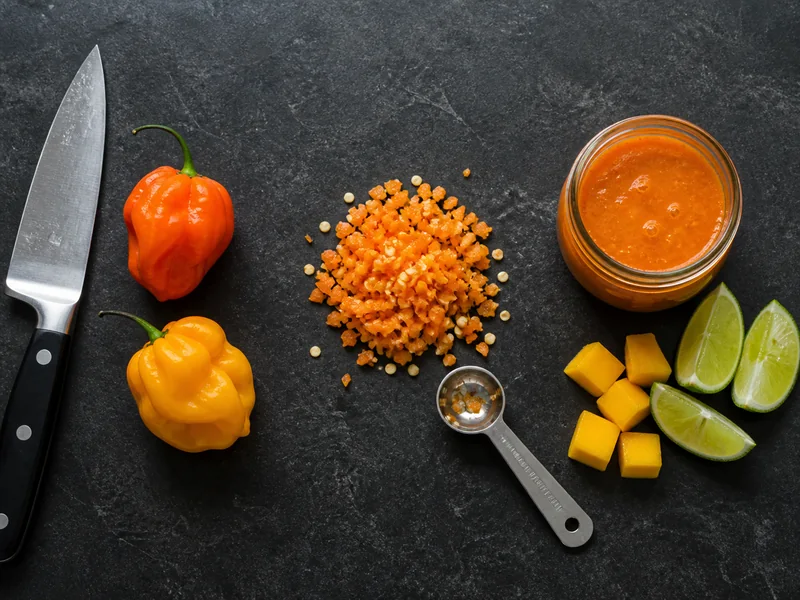
Habanero-type peppers shown whole, minced, and blended into orange sauce with mango and lime

Related Comparisons

All comparisons →

Side-by-side breakdowns of heat, flavor, and culinary uses. Each comparison covers Scoville ratings, pod anatomy, and substitution options.

Browse all comparisons in our comparison hub, or use the pepper tools for calculators and finders.

Related Guides

All guides →

Reference guides and recipes tied to the same pepper family, region, or use-case.

Other Capsicum Species

All chili peppers belong to five domesticated Capsicum species. Each species has unique traits in heat capacity, pod shape, and growing requirements.

Frequently Asked Questions

Kew Plants of the World Online places the native range from southern Guyana through southwestern Suriname to northern Brazil. Genetic and diversity studies support an Amazonian center of diversity and wider human-assisted dispersal, but they do not settle one exact birthplace for every cultivated line.
No. This collection records Biquinho at 80 to 500 SHU, and New Mexico State University released the zero-SHU NuMex Trick-or-Treat cultivar. Habanero-class and superhot cultivars occupy much hotter parts of the same species.
Choose Aji Dulce or Biquinho for mild aromatic use, habanero or Scotch bonnet for hot sauces and regional cooking, Aji Panca or Aji Charapita for Peruvian directions, and Ghost Pepper or Carolina Reaper only for recipes designed around very small doses.

Explore More

Jump into the wider database, heat tiers, comparisons, and substitute references without another card wall.