

KnowThePepper
Datil Pepper: St. Augustine's Sweet, Fruity Chile at Habanero-Level Heat
UF/IFAS identifies datil as a Capsicum chinense pepper from Northeast Florida with sweet, fruity flavor and 100,000 to 300,000 SHU. Its documented regional identity belongs to St. Augustine and nearby counties.
- Species: C. chinense
- Heat tier: Extra-Hot (100K-1M SHU)
- Comparison: 13-120x hotter than a jalapeño, depending on where the jalapeño falls in its 2,500-8,000 SHU range
What Kind of Pepper Is Datil Pepper?
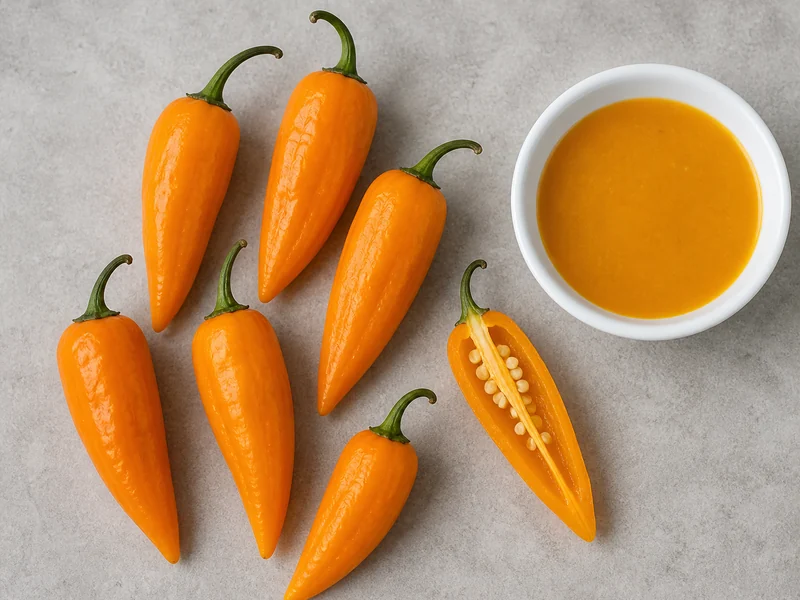
UF/IFAS describes datil fruit as small, green before ripening, and orange at maturity. Reported fruit length ranges from one-half inch to 4 inches, so pod size alone does not identify the variety.
The same source places datil at 100,000 to 300,000 SHU, overlapping habanero and Scotch bonnet. Its distinguishing claim is a sweet, fruity tang paired with that heat.
Datil is grown commercially in Putnam and St. Johns counties as well as in home gardens. Fresh fruit outside Northeast Florida may be difficult to source, while sauces and locally saved seed are more common.
Where Does Datil Pepper Come From?
The datil is strongly associated with St. Augustine, but its arrival story is unsettled. UF/IFAS Extension records several competing accounts and says the exact origin is unknown. The familiar story that Minorcan settlers brought it should therefore be presented as local tradition rather than established fact.
What the extension record does establish is long use in the St. Augustine area. St. Johns County named datil its official plant in 2013, and local families have passed down sauce recipes across generations.
How Hot Is Datil Pepper, and What Does It Taste Like?
The Datil Pepper delivers 100K–300K Scoville Heat Units, placing it in the Extra-Hot tier (100K-1M SHU). That makes it roughly 13-120x hotter than a jalapeño, depending on where the jalapeño falls in its 2,500-8,000 SHU range.
Flavor notes: fruity and sweet.
What Is Datil Pepper Best Used For?
UF/IFAS documents datil in hot sauces, chowders, jams, jellies, relishes, barbecue sauces, and mustards. Its typical local hot-sauce pattern combines datil with brown sugar, ketchup, tomato paste, and other seasonings.
Because the published heat range overlaps habanero, add fresh datil by measured amount and adjust the finished dish. Wear gloves during preparation and keep hands away from the eyes.
How Should You Buy and Store Datil Pepper?
A ripe datil changes from green to orange. Select firm fruit without damaged skin and handle it as a hot pepper.
For freezing, the National Center for Home Food Preservation instructs cooks to wash and stem hot peppers, package them without headspace, seal, and freeze. That method gives a documented preservation option without inventing a datil-specific storage duration.
Which Peppers Can Replace Datil Pepper?
Compare substitutes for Datil Pepper by form, flavor, and heat before choosing a ratio. Measured adjustments must account for the dish and the concentration of the replacement.
Direct comparisons show where flavor, form, and preparation differ in the Datil vs Scotch Bonnet and Datil vs Habanero matchups.
How Do You Grow Datil Peppers?
In Florida, UF/IFAS recommends planting datil after the last frost and reports fruit production beginning in three to five months. The regional harvest normally runs from July through November.
The Florida guidance calls for well-drained soil, regular watering for continued production, and 60 to 70 percent shade. Those conditions are regional guidance rather than a universal prescription for every climate. Aphids and pepper weevils are named pests, and pepper-weevil larvae can cause fruit drop.
Datil Pepper FAQ


- UF/IFAS Gardening Solutions: Datil Peppers
- UF/IFAS Extension Putnam County: Too Hot-Hot-Hot for the Datil Peppers
- National Center for Home Food Preservation: Freezing Hot Peppers
Species classification: C. chinense - based on published botanical taxonomy.