

KnowThePepper
Scotch Bonnet: The Fruity Caribbean Chile Behind Jerk and Pepper Sauce
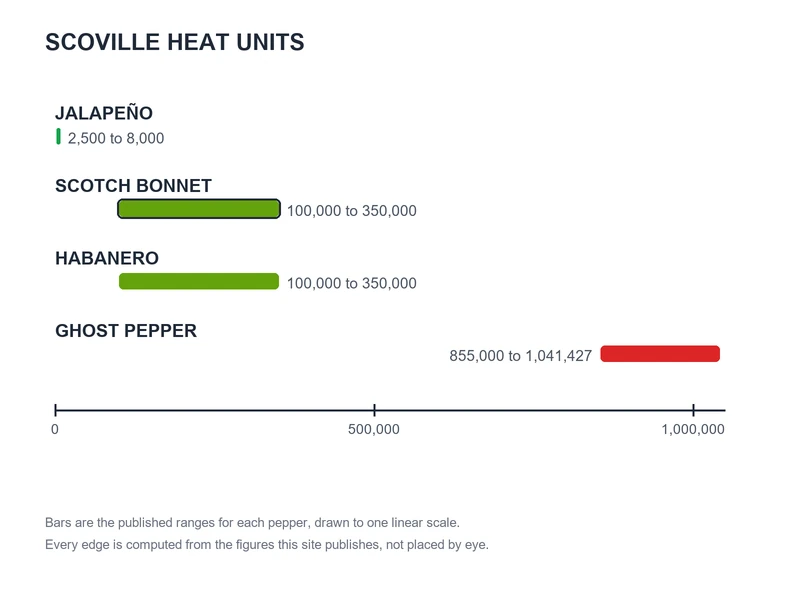
The Scotch bonnet is the defining chile of Caribbean cooking, and its tropical fruit character arrives before the burn does. At 100,000 to 350,000 SHU, this extra-hot Caribbean pepper sits roughly 70x hotter than a jalapeño, but its floral, fruity depth is what makes it irreplaceable in jerk marinades, pepper sauces, and West African stews.
- Species: C. chinense
- Heat tier: Extra-Hot (100K-1M SHU)
- Comparison: 13-140x hotter than a jalapeño, depending on where the jalapeño falls in its 2,500-8,000 SHU range
What Makes Scotch Bonnet Different?
The Scotch bonnet is the defining pepper of Caribbean cooking, the chile behind Jamaican jerk, Trinidad pepper sauce, Bajan hot sauce, and hundreds of island recipes that can't be accurately replicated with any substitute. It matches the habanero's published range exactly, because botanically they are the same species.
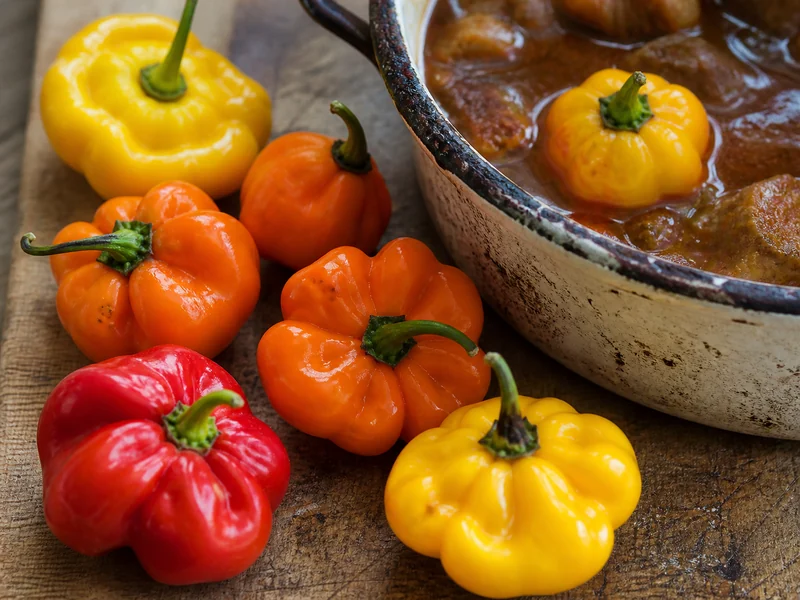
Both are Capsicum chinense varieties with the fruity, citrus-forward aromatics that characterize the species. The primary difference is shape and regional identity: Scotch bonnets have a distinctive flattened, bonnet-like shape (the name comes from the tam o'shanter hat worn in Scotland), while habaneros are more lantern-shaped.
Both carry the same fruity flavor with intense heat.
Several Scotch bonnet cultivars exist with their own flavor nuances. Jamaican Yellow Scotch Bonnet - the most iconic, carries the strongest tropical-fruity character.
Red Scotch Bonnet has deeper, slightly less sweet flavors. Chocolate Scotch Bonnet runs slightly hotter toward the 300,000 SHU range with earthier notes.
All maintain the C. chinense aromatic profile that distinguishes them from the flatter heat of C. annuum varieties.
In Jamaican cooking the fruity character is the reason the pepper is used, and the heat comes along with it. The way it interacts with allspice, thyme, and scotch whiskey-soaked wood smoke in jerk seasoning creates a flavor chemistry that no other chile replicates exactly.
That's why habanero vs Scotch bonnet comparisons consistently find them culinarily interchangeable but not identical.
Where Did Scotch Bonnet Originate?
The Scotch bonnet's origin is the same story as the habanero's: both descended from C. chinense varieties that spread from South America through the Caribbean basin during the pre-Columbian and early colonial periods.
The pepper is documented in Jamaica from at least the 18th century, though Caribbean peoples cultivated C. chinense varieties long before European records captured the specifics. Jerk cooking, the technique of marinating meat in scotch bonnet-allspice seasoning and slow-smoking it, is documented in Maroon cooking traditions dating to escaped enslaved Africans in Jamaica's Blue Mountains in the 17th and 18th centuries.
The Scotch bonnet spread through the Caribbean diaspora as Jamaican, Trinidadian, and Barbadian communities established themselves in the UK, Canada, and the US through the 20th century.
Commercial availability of Scotch bonnets outside the Caribbean tracked closely with these migration patterns, before significant Caribbean immigration, habaneros were more commercially available in the US; UK and Canadian markets see more Scotch bonnets due to larger Caribbean communities.
Trinidad and Tobago maintains its own beloved Scotch bonnet tradition: the Trinidadian pepper sauce is a national condiment made from Scotch bonnets with mustard and vinegar. Differently from Jamaican applications, the Trinidad tradition sometimes uses the pepper in papaya-based preparations that moderate the heat through enzymatic interaction.
How Hot Is Scotch Bonnet, and What Does It Taste Like?
The Scotch Bonnet delivers 100K–350K Scoville Heat Units, placing it in the Extra-Hot tier (100K-1M SHU). That makes it roughly 13-140x hotter than a jalapeño, depending on where the jalapeño falls in its 2,500-8,000 SHU range.
Flavor notes: fruity and tropical.
How Nutritious Is Scotch Bonnet?
Scotch bonnets share the nutritional profile of habaneros: rich in vitamin C (often exceeding 200% of daily value per 100g), vitamin A from beta-carotene, and meaningful potassium and vitamin B6.
At that concentration the capsaicin delivers the TRPV1 receptor effects documented in C. chinense varieties, delayed heat onset (30 to 60 seconds) and longer duration than equivalent-SHU C. annuum peppers. The capsaicin science behind why this happens involves differences in capsaicinoid ratios between species, not just total SHU count.
The fruity yellow pigment (beta-carotene) in yellow Scotch bonnets provides vitamin A precursor activity. Red varieties have additional lycopene content alongside the beta-carotene, similar to other red C. chinense peppers.
For heat-source context and data caveats, see our methodology.
Which Dishes Suit Scotch Bonnet?
The fundamental technique in Caribbean cooking with Scotch bonnet is using the whole pod for flavor without rupturing it.
Floating a whole Scotch bonnet in a pot of rice, stew, or beans releases the fruity aromatics into the dish without the heat, the pod acts as a flavor balloon. Remove it before serving for flavorful food with minimal burn.
Piercing or cutting delivers the heat.
For Jamaican jerk marinade, the Scotch bonnet is blended with allspice, thyme, garlic, green onion, brown sugar, and soy sauce. A baseline ratio: 1 to 2 Scotch bonnets per pound of chicken for medium jerk heat.
Remove seeds and placenta first to reduce heat without losing the fruity flavor.
Scotch bonnet hot sauce, whether Jamaican (Grace brand) or Barbadian (Pepper Sauce, with mustard and turmeric) - has a fruity complexity that habanero-based sauces approach but do not fully replicate. The tropical fruit notes pair particularly well with mango, pineapple, and citrus in Caribbean cooking.
When fresh Scotch bonnets aren't available, habaneros are the most accurate substitute for Scotch bonnet peppers - use them 1:1 in any recipe. The flavor is nearly identical.
Facing heaven chilis and other C. chinense varieties also work. The key is staying within the species.
How Do You Keep Scotch Bonnet Fresh?
Where you live decides this.
Caribbean and West African grocery stores stock Scotch bonnets reliably, and mainstream supermarkets do so only in cities with Caribbean communities. In the UK, they're widely available.
Look for firm, glossy pods with no wrinkling or soft spots, the distinctive bonnet shape should be intact and symmetrical.
Colour is regional rather than a ripeness stage: yellow and orange bonnets are common in Jamaican cooking. Red ones are more common in Trinidad and Barbados.
All are fully ripe at their respective color. Green Scotch bonnets are immature and less commonly used.
Refrigerate unwashed in a paper bag for 1 to 2 weeks. For longer storage, freeze whole pods, they're excellent from frozen in cooked applications.
When handling, use gloves for extended contact, the same precaution the extra-hot tier earns generally. At this SHU level, capsaicin transfer to eyes is a real risk.
| Colour | What it means | Where you meet it |
|---|---|---|
| Yellow | Fully ripe at that colour | Common in Jamaican cooking |
| Orange | Fully ripe at that colour | Common in Jamaican cooking |
| Red | Fully ripe at that colour | More common in Trinidad and Barbados |
| Green | Genuinely immature, and the one exception | Rarely used |
Which Peppers Can Replace Scotch Bonnet?
Compare substitutes for Scotch Bonnet by form, flavor, and heat before choosing a ratio. Measured adjustments must account for the dish and the concentration of the replacement.
Direct comparisons show where flavor, form, and preparation differ in the Ghost vs Scotch Bonnet and Datil vs Scotch Bonnet matchups.
Compare Scotch Bonnet with: Scotch Bonnet vs Fatalii · Scotch Bonnet vs Aji Dulce · Scotch Bonnet vs Wiri Wiri · Scotch Bonnet vs Madame Jeanette · Scotch Bonnet vs Jalapeno
What Does Scotch Bonnet Need to Grow Well?
Growing Scotch bonnets follows the same parameters as habanero because both are C. chinense with similar heat and growing requirements.
Start seeds 10 to 12 weeks before last frost at 80 to 85°F soil temperature. Germination takes 14 to 21 days and benefits strongly from a heat mat.
C. chinense varieties germinate less reliably than C. annuum at room temperature.
Transplant spacing: 18 to 24 inches apart in full sun with 8+ hours daily. They need warm nights, below 55°F stalls growth and causes blossom drop.
Wait until conditions are consistently warm before transplanting outdoors.
Fruits take 90 to 110 days from transplant, similar to the habanero. The bonnet shape makes an immature pod easy to tell from a ripe one: look for the flattened hat-like top and full size before picking.
Colour then finishes the call, running from green through yellow, orange or red depending on the variety in hand.
A healthy plant yields 15 to 25 pods per season at the Caribbean and South American growing conditions where the species thrives. In shorter-season climates, start early and consider a greenhouse or polytunnel extension.
Container growing works well in 5-gallon minimum pots. Move indoors before first frost, Scotch bonnet plants overwinter well and often produce significantly more in their second year.
Scotch Bonnet FAQ


- Biointerphases 11(2), ToF-SIMS imaging of capsaicinoids in Scotch Bonnet peppers (Capsicum chinense)
- Capsicum chinense Jacq. - USDA GRIN Taxonomy
- USDA FoodData Central, SR Legacy 170108, Peppers, hot chile, raw
Species classification: C. chinense - based on published botanical taxonomy.