Aji Dulce vs Scotch Bonnet: Related Fruity Aroma, Far Apart in Heat
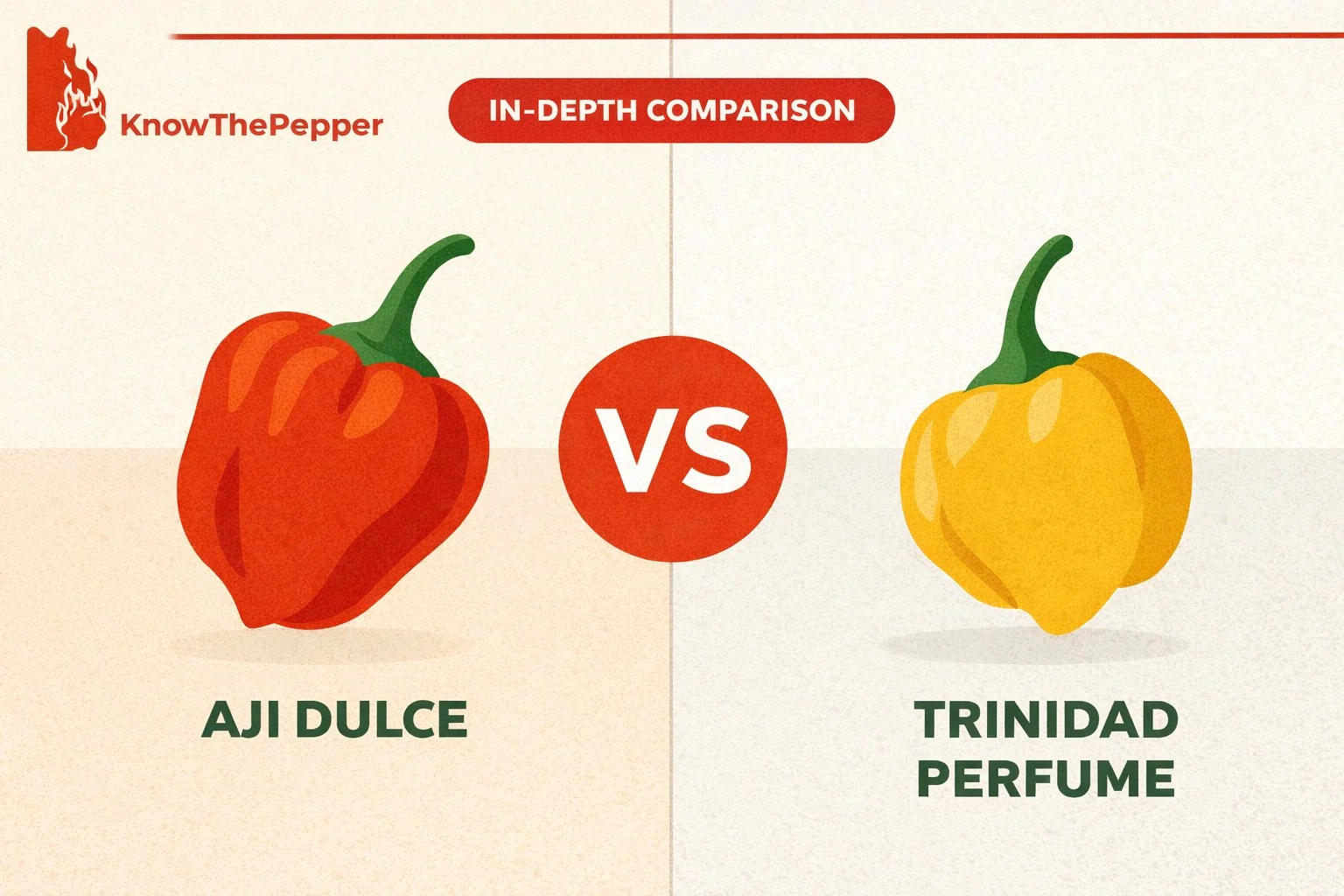
Aji Dulce is the mild choice for aromatic volume, especially in sofrito, rice, beans, and braises. Scotch Bonnet brings a related fruity perfume with 100,000 to 350,000 SHU, so it belongs in jerk, pepper sauce, or a pot where one intact pod can be removed. They are related Capsicum chinense peppers, but they are not a one-for-one swap.

- Species: Capsicum chinense vs Capsicum chinense
- Typical heat: 0 to 500 SHU vs 100,000 to 350,000 SHU
- Kitchen role: Aromatic bulk ingredient vs Concentrated seasoning pepper
- Best-known fit: Sofrito, rice, beans, braises vs Jerk, pepper sauce, escovitch
- Main control: Use enough to build the base vs Control cut area and dose
Aji Dulce
MildScotch Bonnet
Extra-HotQuick Comparison
| Attribute | Aji Dulce | Scotch Bonnet |
|---|---|---|
| Species | Capsicum chinense | Capsicum chinense |
| Typical heat | 0 to 500 SHU | 100,000 to 350,000 SHU |
| Kitchen role | Aromatic bulk ingredient | Concentrated seasoning pepper |
| Best-known fit | Sofrito, rice, beans, braises | Jerk, pepper sauce, escovitch |
| Main control | Use enough to build the base | Control cut area and dose |
How hot is Aji Dulce compared with Scotch Bonnet?
The peppers occupy different heat worlds. Aji Dulce usually falls between 0 and 500 Scoville Heat Units, while Scotch Bonnet commonly spans 100,000 to 350,000 SHU.
Even the top of the mild range is about 200 times below the bottom of the Scotch Bonnet range.
That gap changes how you measure them. Several Aji Dulce pods can build the aromatic body of a seasoning paste, but a small piece of Scotch Bonnet can set the heat level for an entire pot.
Published ranges describe populations, not guarantees for a single fruit. New Mexico State University notes that genetics, maturity, growing conditions, and fruit position can all change capsaicinoid concentration, so taste control still matters within each range.
Log-spaced visual. Bar height compresses the scale so the mild range remains visible. The printed SHU ranges are the values to use.
Do Aji Dulce and Scotch Bonnet taste alike?
The family resemblance is real. Both peppers belong to Capsicum chinense and can carry fruity, floral, tropical aromas that survive among onion, garlic, herbs, and acid.
Aji Dulce lets those aromas remain in the foreground because capsaicin does not dominate the bite. Research on a low-pungency Aji Dulce strain traced its unusual chemistry to a loss-of-function change affecting a key capsaicinoid pathway, which helps explain how a chinense pepper can keep the perfume while losing most of the fire.
Scotch Bonnet presents its sweetness through strong pungency. A cut pod releases enough heat to narrow what many diners can perceive, while salt, vinegar, fruit, thyme, and allspice can keep its tropical character legible in a sauce or marinade.
What dishes use Aji Dulce and Scotch Bonnet?
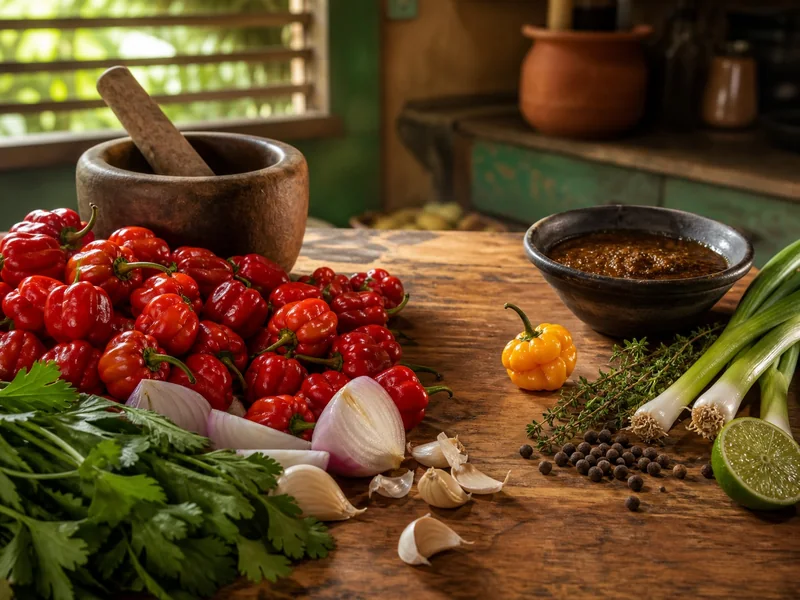
Aji Dulce works as a base ingredient. The University of Massachusetts sofrito formula uses one cup of chopped Aji Dulce in a two-cup batch, a volume that would be impractical with Scotch Bonnet for most tables.
That generous amount supplies moisture, pepper flesh, sweetness, and aroma to recaito, rice, beans, soups, braises, and filling mixtures. You can cook it with onion and herbs from the start without turning the seasoning base into the main source of heat.
Scotch Bonnet works as a seasoning pepper. It suits jerk marinades, pepper sauces, escovitch, hot relishes, and long-simmered dishes where a whole pod perfumes the liquid before removal.
The decision is therefore larger than mild versus hot. Aji Dulce contributes edible volume, while Scotch Bonnet contributes a concentrated heat-and-aroma signal.
| Dish or method | Aji Dulce role | Scotch Bonnet role |
|---|---|---|
| Sofrito or recaito | Supplies mild pepper volume and aroma | Optional tiny heat adjustment, not the base |
| Rice, beans, or braise | Cooks into the aromatic foundation | Seasons the pot as a piece or whole pod |
| Jerk marinade | Adds aroma without the expected burn | Provides the characteristic hot fruit note |
| Pepper sauce | Builds a mild sauce or stretches aroma | Drives heat and pungent flavor |
| Whole-pod simmer | Little reason to keep it whole | Allows removal before the pod breaks |
Which should you use, Aji Dulce or Scotch Bonnet?
Choose Aji Dulce when the dish needs pepper aroma in spoonfuls or cups, especially for sofrito and gentle stews. Choose Scotch Bonnet when deliberate Caribbean heat is part of the finished identity, especially in jerk and pepper sauce.
Use both when a cook needs a broad aromatic base plus a separately controlled heat level. Build the base with Aji Dulce, then add Scotch Bonnet in a measured piece or as one removable whole pod.
Can you tell them apart before cutting?
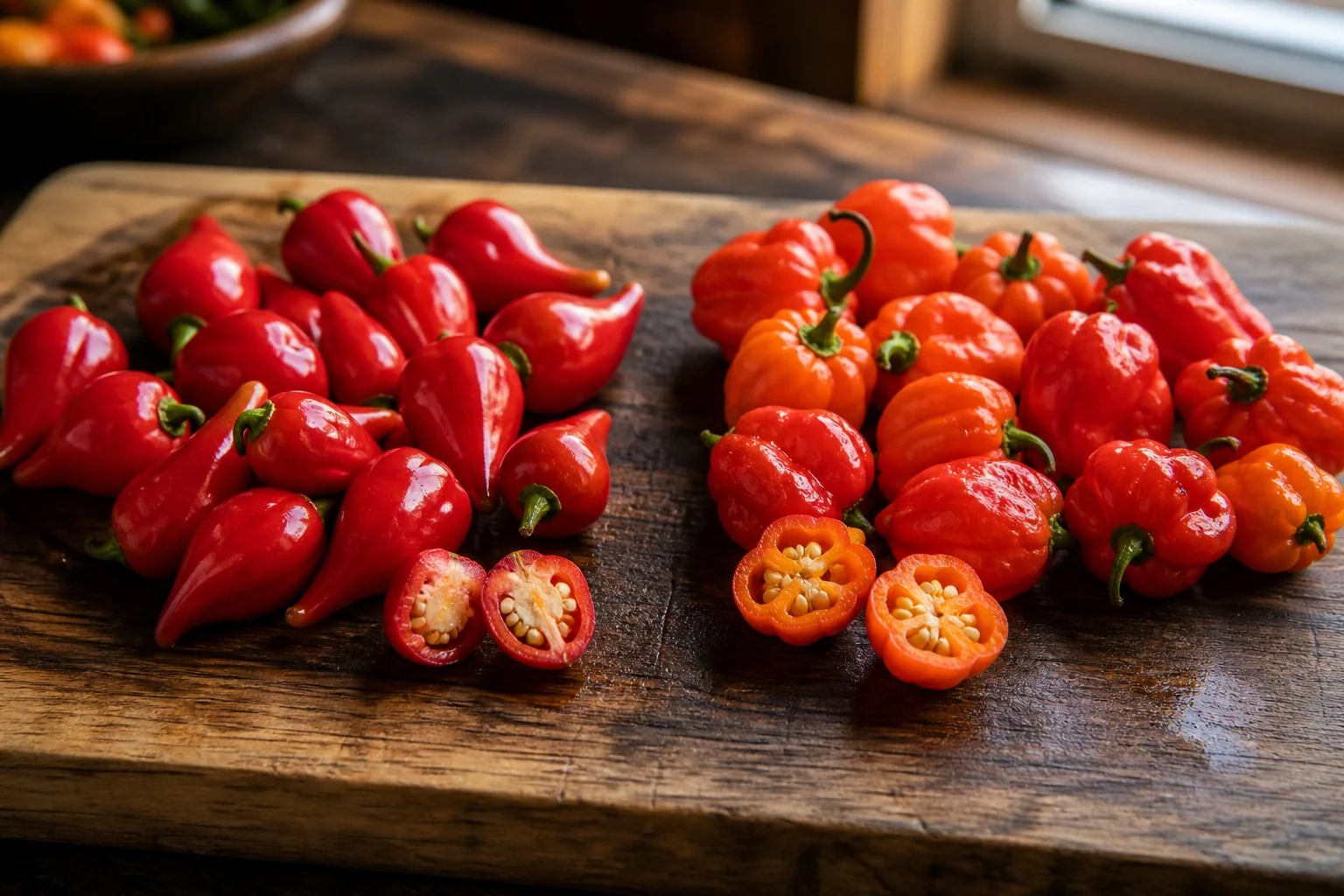
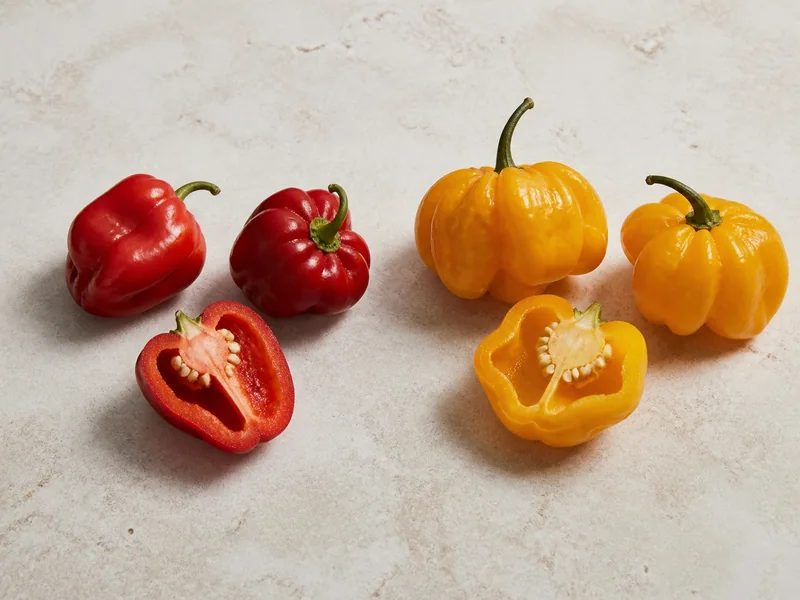
Aji Dulce and Scotch Bonnet can overlap in color, species, and lantern-like shape, so appearance alone is not a safe heat test. Aji Dulce often has a squat, lobed fruit with softer shoulders, while many Scotch Bonnets show a wider cap or skirt near the stem, but cultivar variation can blur both cues.
A cut fruit reveals pale ribs and central placental tissue in either pepper. It still does not prove the heat level, because the compounds that burn are invisible and can contaminate a knife or board before anyone tastes the flesh.
Keep market labels attached until prep is complete. If loose pods have been mixed and the identity matters for a low-heat meal, treat every uncertain fruit as hot rather than using a bite as the test.
How do you swap without losing the dish?
A useful substitution preserves the pepper's job before it chases a similar aroma. Replacing Aji Dulce requires mild bulk first, while replacing Scotch Bonnet requires deliberate heat plus a compatible fruit note.
Use another mild aromatic chinense pepper when available. A Cubanelle or red bell pepper can supply volume, but neither fully copies the floral chinense character.
Habanero is the practical heat-and-aroma fallback. Its flavor is not identical, yet its range and chinense character make it more useful than asking Aji Dulce to provide heat it does not have.
- Name the role. Decide whether the missing pepper supplied bulk, aroma, heat, or all three.
- Replace bulk before heat. Build the recipe's volume with a mild pepper instead of filling it with a superhot.
- Add heat separately. Use a weighed piece, not a one-pod-for-one-pod conversion.
- Finish the full cooking step. Let the pepper disperse before making one final correction.
How do you use a whole Scotch Bonnet safely?
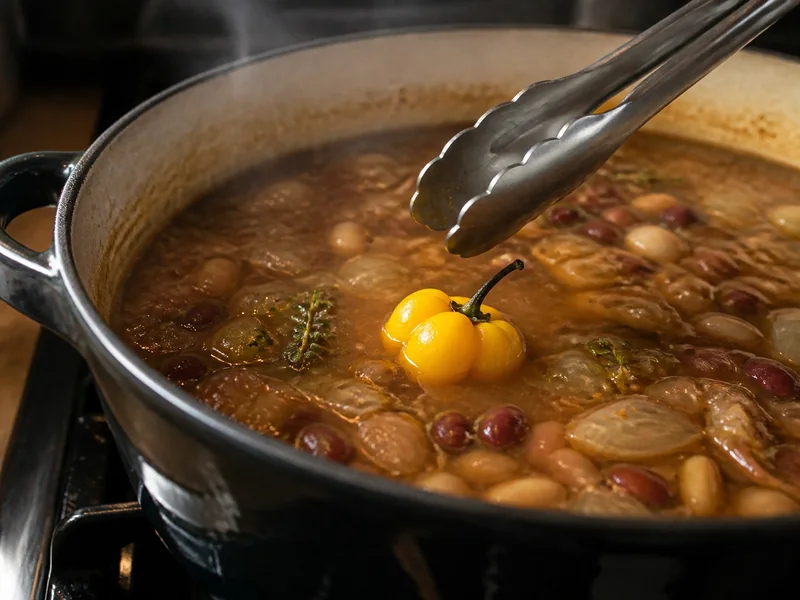
An intact Scotch Bonnet can perfume a simmering pot while limiting how quickly capsaicinoids disperse. Add one washed pod without piercing it, keep it visible, and remove it with tongs before the skin collapses or a spoon breaks it.
This method lowers dispersion, but it does not make the dish reliably mild. A split, bruised, or softened pod can release much more heat, and the outside can carry residue from handling.
- Wear gloves for cut fruit. Capsaicinoid residue transfers easily from fingers to eyes and other food.
- Keep one tool dedicated to removal. Tongs make it less likely that a ladle will rupture the softened wall.
- Wash the work zone. Clean the knife, board, handles, and blender parts before normal kitchen use resumes.
- Ventilate active cooking. Avoid leaning over a blender or hot pan where pepper droplets can reach the eyes or airways.