
Datil or Scotch Bonnet: Which Pepper Fits the Dish?
Choose datil for sweet-tangy Northeast Florida sauces and chowders. Choose Scotch bonnet for Jamaican jerk, Caribbean pepper sauce, and dishes that depend on its tropical aroma because their overlapping heat ranges make cuisine and flavor more reliable than a midpoint SHU ratio.

Datil Pepper
Extra-HotScotch Bonnet
Extra-HotQuick Comparison
| Attribute | Datil Pepper | Scotch Bonnet |
|---|---|---|
| Scoville evidence | 100K-300K SHU | 100K-350K SHU |
| Heat Tier | Extra-Hot | Extra-Hot |
| vs Jalapeño | 38x hotter | 44x hotter |
| Flavor | fruity and sweet | fruity and tropical |
| Species | C. chinense | C. chinense |
| Origin | USA | Caribbean |
Is Scotch Bonnet Hotter Than Datil?
The official ranges overlap almost completely. UF/IFAS places datil at 100,000 to 300,000 SHU, while Jamaica's Agro-Investment Corporation places Scotch bonnet at 100,000 to 350,000 SHU.
That extra 50,000 SHU at the top does not make every Scotch bonnet hotter than every datil. Genetics, ripeness, weather, and the individual pod can move either pepper within its range, so a recipe should treat both as extra-hot ingredients that need a measured first dose.
A 2023 UF/IFAS field report gives useful evidence about datil variability rather than a universal conversion. Laboratory HPLC testing measured green datils at 61,500 SHU and orange datils at 123,000 SHU from the same project, which shows why color and batch matter more than a neat midpoint ratio.
For a raw sauce, begin with less than the final amount because the pepper is not diluted by a pot of food. For a stew, marinade, or large batch of sauce, add a weighed portion, blend or simmer as the recipe requires, then evaluate the finished concentration before increasing it.
Neither range gives permission to handle the pods casually. Capsaicin transfers from cut flesh and placental tissue to fingers, tools, and surfaces, so use gloves for extended prep and keep the cutting board away from foods that will not be cooked or diluted.
One datil batch proved the range can move
UF/IFAS laboratory testing measured green datils at 61,500 SHU and orange datils at 123,000 SHU in one field sample. Use that result as variability evidence, not as a universal color conversion.
How Do Datil and Scotch Bonnet Taste Different?
UF/IFAS describes datil as sweet, fruity, and tangy alongside its intense heat. That tangy impression makes the pepper especially comfortable in vinegar, mustard, tomato, and fruit-based condiments where the sauce should taste bright as well as hot.
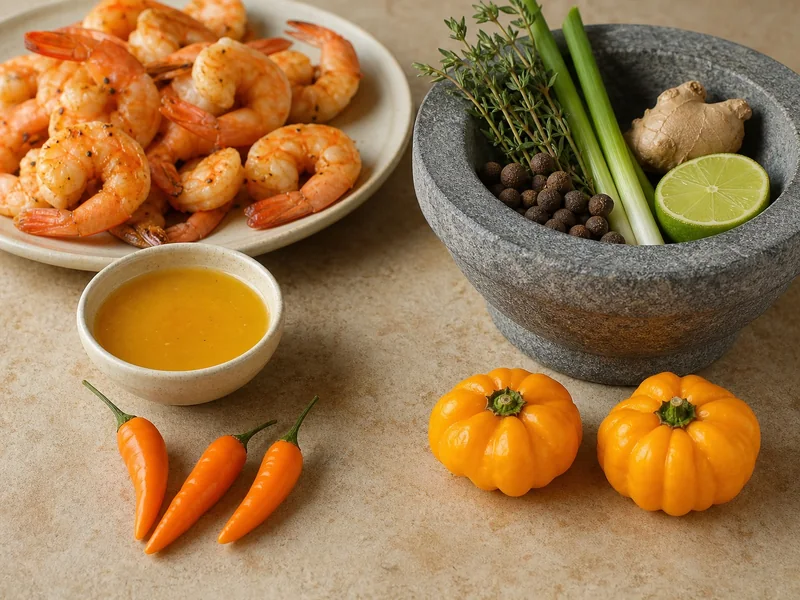
Jamaica's Agro-Investment Corporation describes Scotch bonnet as highly prized for aromatic flavor and high pungency. Its ripe tropical aroma stays recognizable beside allspice, thyme, scallion, ginger, lime, and coconut, which is why heat alone does not explain its role in Jamaican food.
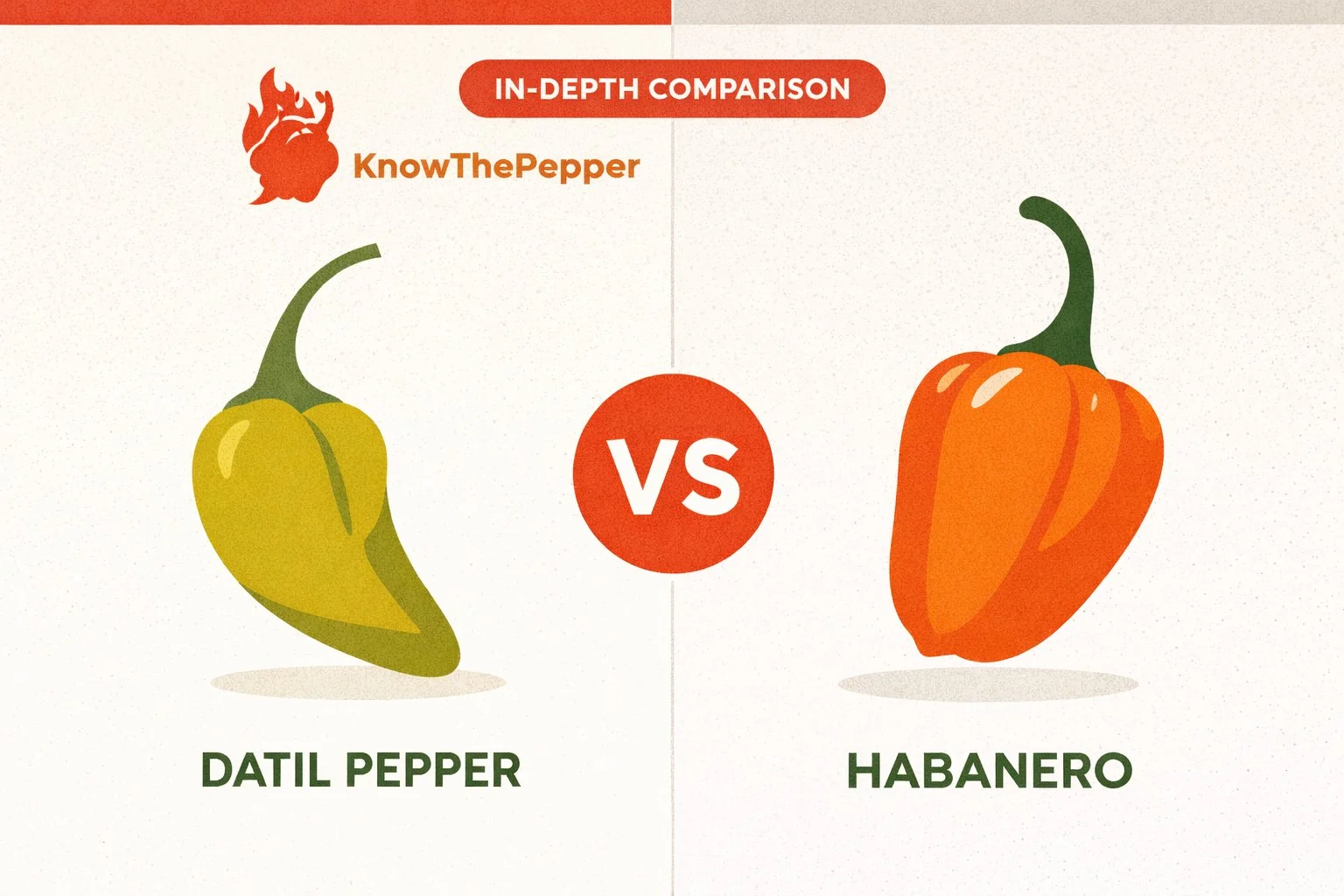
The peppers are close botanical relatives because both are Capsicum chinense, yet shape gives the first useful visual distinction. A ripe datil is usually elongated and tapered from green to yellow-orange, while a true Scotch bonnet is squat, lobed, and flattened around the shoulder like the cap that gave it its name.
Color cannot settle the identity by itself because both peppers can appear yellow or orange when ripe. Use shape, seller, and regional naming together, especially when a market uses habanero and Scotch bonnet labels loosely.
In a simple vinegar sauce, datil's tang and sweetness can remain the center of the condiment. In jerk seasoning or a Caribbean pepper sauce, Scotch bonnet's aroma is part of the expected seasoning structure rather than a replaceable dose of heat.
Culinary Uses
Choose datil for St. Augustine and Northeast Florida food traditions. UF/IFAS documents the pepper in hot sauces, chowders, relishes, barbecue sauces, mustards, jams, jellies, marinades, soups, spicy salsas, and chili powder, so the useful pattern is sweet-tangy heat across seafood, tomato, vinegar, and fruit.
Minorcan-style clam chowder is a particularly specific datil use because the pepper seasons a tomato-based local dish rather than imitating New England cream chowder. A bottled datil sauce can also finish fried fish, shrimp, eggs, or grilled meat when fresh pods are unavailable.
Choose Scotch bonnet for Jamaican jerk, Caribbean pepper sauce, rice and peas, stews, curries, and seasonings in which tropical chile aroma belongs beside herbs and spices. Jamaica's Ministry of Agriculture identifies Scotch bonnet as one of the country's commercially important hot peppers, while Jamaica Information Service names it among the ingredients that define authentic Jamaican jerk.
Preparation follows the dish. Blend a datil into a measured sauce batch when the pepper's fruit and tang should spread evenly, but add Scotch bonnet whole to a pot only when the recipe intends gentle aromatic extraction and the pod can be removed without breaking.
A whole Scotch bonnet is not a heat-free guarantee because a split skin can release capsaicin into the food. Inspect the pod before it enters the pot, avoid vigorous stirring against it, and remove it intact before serving when the recipe uses that technique.
For jerk marinade, the pepper is normally cut or blended because both aroma and heat are part of the seasoning. Start below the final heat level if the marinade will coat a small amount of food, since the same pod dose feels stronger on a few portions than across a large batch.
Drying and powdering make either pepper easier to distribute but remove fresh texture and some volatile aroma. Use powder as a measured seasoning, not as proof that datil and Scotch bonnet now taste the same.
Whole pod and cut pod are different techniques
An intact Scotch bonnet can perfume a pot with less heat than a cut pod, but a tear can release much more capsaicin. Remove a whole seasoning pod intact and tell diners it was used.
Which Should You Choose, Datil or Scotch Bonnet?
Choose datil when the dish belongs to a Florida datil tradition or needs sweet, tangy heat in a mustard, vinegar, tomato, fruit, seafood, or chowder context. The pepper's Northeast Florida identity is part of the answer, especially when the recipe names datil sauce rather than a generic extra-hot chile.
Choose Scotch bonnet when the dish belongs to Jamaican or broader Caribbean cooking and needs the pepper's ripe aromatic character. Jerk, pepper sauce, rice and peas, stew, and curry lose a recognizable part of their flavor when the pepper becomes only an SHU calculation.
For pure heat, the ranges are too close to promise a universal winner. Treat both as extra-hot and dose the actual batch, with particular attention to datil ripeness and to the size and cultivar of the Scotch bonnet.
Availability may settle the practical choice without changing the editorial answer. Fresh datils are a regional specialty, while Jamaica grows Scotch bonnet commercially for fresh and export markets, so many cooks will find Scotch bonnet more readily in Caribbean groceries and datil more readily as Florida sauce, seed, or seasonal produce.
If a recipe has only a few ingredients, keep the named pepper because the flavor difference will stay exposed. A complex sauce can tolerate a careful swap when you preserve its regional seasoning and correct sweetness, acidity, and aroma after matching heat.
Let the named cuisine break the tie
Choose datil for St. Augustine sauce and chowder traditions. Choose Scotch bonnet for Jamaican jerk and Caribbean pepper sauce when its aromatic identity is part of the dish.
Where Can You Buy Datil and Scotch Bonnet Peppers?
Look for datils through Northeast Florida growers, St. Augustine markets, regional sauce makers, and seed suppliers that name the cultivar clearly. A fresh ripe datil should be small, tapered, and yellow to orange rather than squat and bonnet-shaped.
Look for Scotch bonnets at Caribbean and international markets where the seller can distinguish them from lantern-shaped habaneros. The bonnet should be firm, glossy, lobed, and free of soft spots, splits, or leaking tissue.
Buy the form the recipe can use. Bottled datil sauce already includes acid, salt, sweetener, and other seasonings, while a fresh Scotch bonnet is an unseasoned pepper, so those products cannot replace each other measure for measure.
Refrigerate fresh pods unwashed and use them while they remain firm and aromatic. Freeze extra whole pods for cooked dishes, but expect softer texture after thawing and keep the same glove and cross-contact precautions during prep.
Substitution
Datil and Scotch bonnet can substitute for each other when the dish needs extra-hot Capsicum chinense fruitiness more than a specific regional identity. Begin near three-quarters of the named pepper by weight, then adjust after the pepper is dispersed through the actual sauce or food.
When using Scotch bonnet as a datil substitute, preserve the sauce's sweet-tangy balance before adding more pepper. Mustard, vinegar, tomato, or fruit may already supply that balance, so correct the finished sauce by taste rather than automatically adding sugar or acid.
When using datil as a Scotch bonnet substitute, keep the allspice, thyme, scallion, ginger, lime, and other regional seasonings that carry the dish. Datil can provide compatible fruit and heat, but it should not turn jerk or Caribbean pepper sauce into a Florida-style condiment.
Do not swap bottled datil sauce for a fresh Scotch bonnet by pod count. The bottle includes liquid and seasoning, so use it as a finished condiment or recipe component and rebalance salt, acidity, and moisture around its label ingredients.
For tested canning recipes, follow the published pepper weight, acid, jar size, and process exactly. A flavor substitution in ordinary cooking is not authority to change a preservation formula.
Datil Pepper vs Scotch Bonnet FAQ
- Datil Peppers - University of Florida IFAS Extension
- Too Hot-Hot-Hot for the Datil Peppers - UF/IFAS Extension Putnam County
- Datil Peppers and the Fall Festival - UF/IFAS Extension St. Johns County
- Hot Pepper Investment Profile - Jamaica Agro-Investment Corporation
- Pepper Investment Profile - Jamaica Ministry of Agriculture
- Jamaica Fi Real - Government of Jamaica