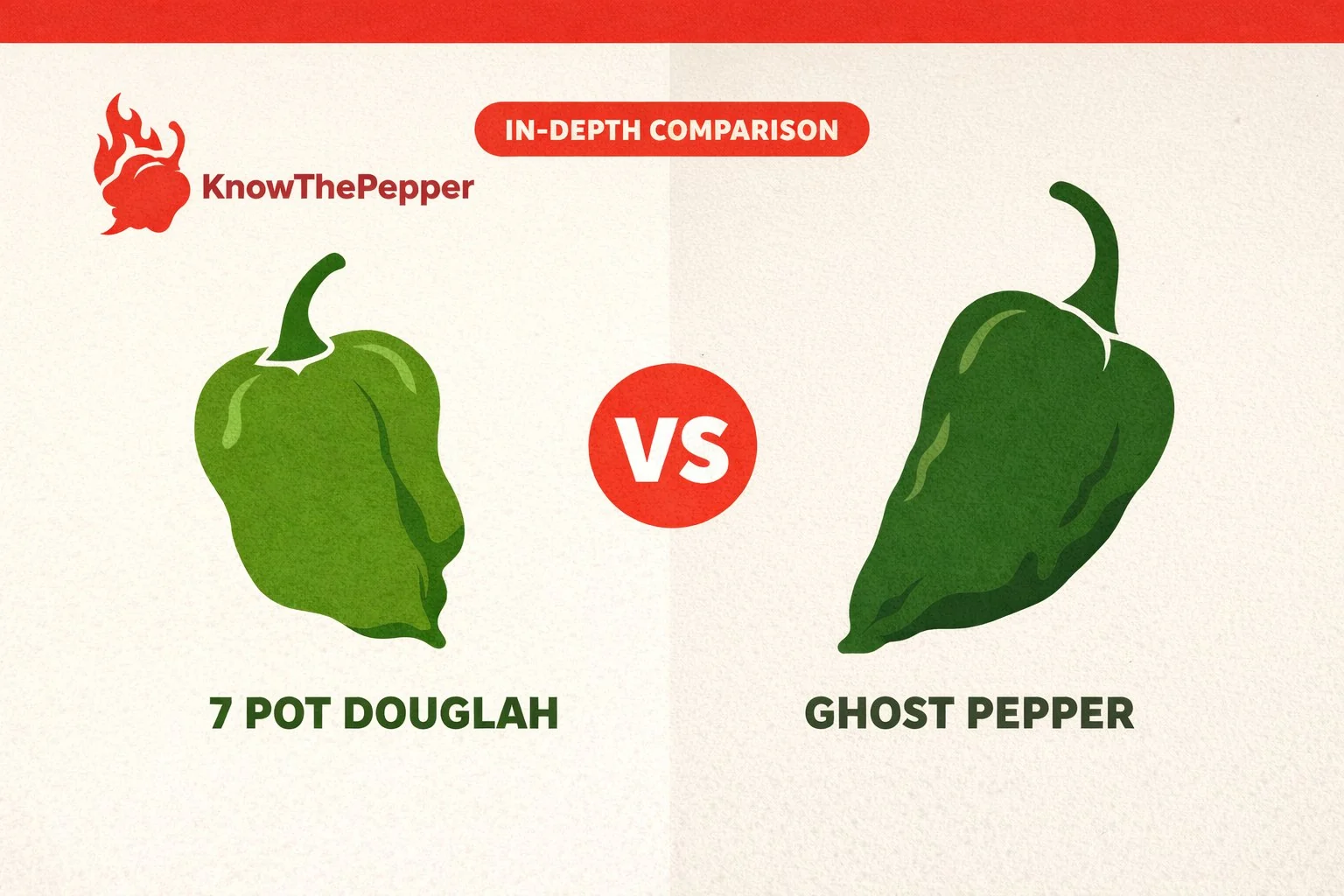
Ghost vs Scotch Bonnet: Heat Limit or Jerk Flavor

Ghost pepper heat is the choice when the recipe is built around superhot intensity. Scotch bonnet flavor is the better choice for jerk, rice and peas, pepper sauce, and stews where tropical aroma matters as much as burn.

Ghost Pepper vs Scotch Bonnet comparison
Quick Comparison

Ghost Pepper measures 855K–1M SHU while Scotch Bonnet registers 100K–350K SHU. That makes Ghost Pepper about 3x hotter by upper SHU range. Ghost Pepper is known for its smoky and sweet flavor (C. chinense), while Scotch Bonnet offers fruity and tropical notes (C. chinense).

Ghost Pepper
855K–1M SHU
Super-Hot · smoky and sweet
Scotch Bonnet
100K–350K SHU
Extra-Hot · fruity and tropical
  • Heat difference: Ghost Pepper is about 3× hotter by upper SHU range
  • Species: Both are C. chinense
  • Best for: Ghost Pepper excels in hot sauces and extreme dishes, Scotch Bonnet in hot sauces and spicy dishes

Ghost Pepper vs Scotch Bonnet Comparison

Attribute Ghost Pepper Scotch Bonnet
Scoville (SHU) 855K–1M 100K–350K
Heat Tier Super-Hot Extra-Hot
vs Jalapeño 130x hotter 44x hotter
Flavor smoky and sweet fruity and tropical
Species C. chinense C. chinense
Origin India Caribbean

Ghost Pepper vs Scotch Bonnet Heat Levels

Position on the Scoville Scale
Ghost
Scotch
0 SHU3.2M SHU

Ghost Pepper is about 3× hotter than Scotch Bonnet. They fall in different heat tiers: Ghost Pepper is classified as super-hot while Scotch Bonnet sits in the extra-hot range.

Ghost Pepper spans 855K–1M SHU, roughly 130× a jalapeño at the upper end. Scotch Bonnet spans 100K–350K SHU, about 44× a jalapeño at the upper end. Use the ranges to decide whether the recipe needs a measured dose, a mild overlap, or a hard substitution limit. Tools: Scoville chart and SHU calculator.

Flavor Profile Comparison

Ghost Pepper
smoky sweet C. chinense

Long before it became a dare on YouTube, the ghost pepper was a staple of Naga cuisine in Assam, Nagaland, and Manipur - used not as a novelty heat challenge but as a daily cooking ingredient in a region where intensely spiced food is the norm.

Botanically a Capsicum chinense variety, the ghost pepper (also called Bhut jolokia) was officially measured in 2007 by scientists at India's Defence Research and Development Organisation at 1,041,427 SHU - earning it the title of world's hottest pepper at the time. It has since been surpassed by the Trinidad Moruga Scorpion, Carolina Reaper, and others, but its heat ceiling remains extraordinary.

Scotch Bonnet
fruity tropical C. chinense

The Scotch bonnet is the defining pepper of Caribbean cooking - the chile behind Jamaican jerk, Trinidad pepper sauce, Bajan hot sauce, and hundreds of island recipes that can't be accurately replicated with any substitute. It measures 100,000–350,000 SHU, matching the habanero's range exactly - because botanically, they're the same species.

Both are Capsicum chinense varieties with the fruity, citrus-forward aromatics that characterize the species. The primary difference is shape and regional identity: Scotch bonnets have a distinctive flattened, bonnet-like shape (the name comes from the tam o'shanter hat worn in Scotland), while habaneros are more lantern-shaped.

Both peppers belong to C. chinense, so they share some underlying flavor chemistry. However, Ghost Pepper’s smoky and sweet notes contrast with Scotch Bonnet’s fruity and tropical character.

Ghost Pepper brings smoky and sweet notes, so it fits recipes where that flavor should remain visible. Scotch Bonnet leans fruity and tropical, which can change the sauce, filling, marinade, or garnish even when the heat range looks close.

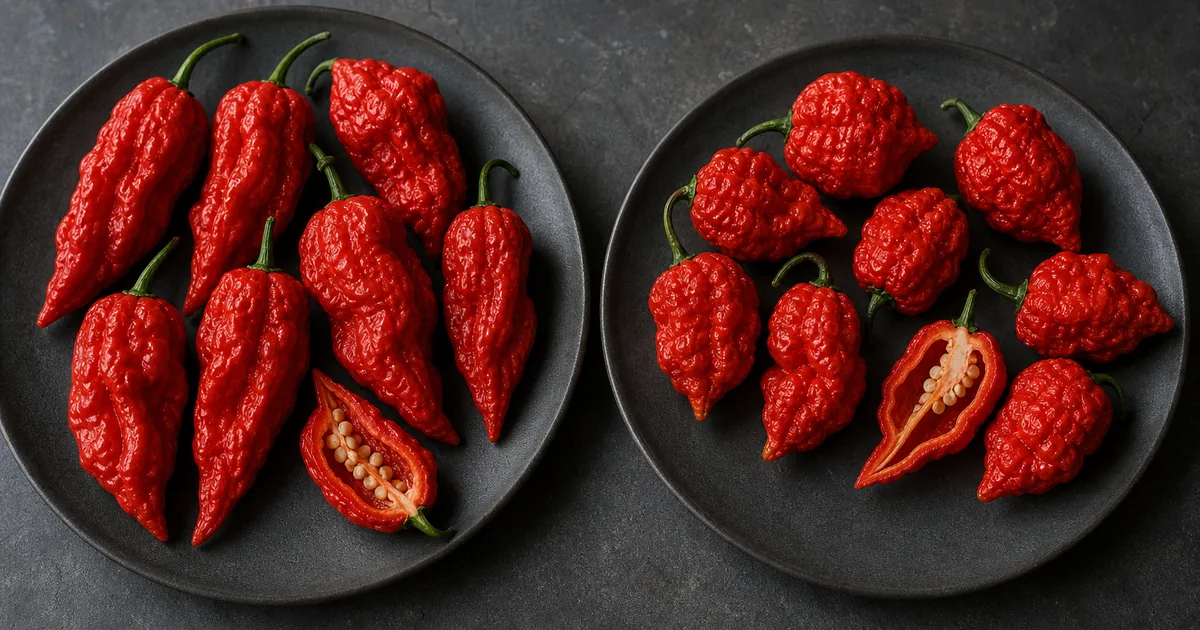
Ghost Pepper and Scotch Bonnet comparison

Culinary Uses for Ghost Pepper and Scotch Bonnet

Ghost Pepper

Working with ghost peppers demands more caution than most cooks expect. The heat doesn't peak immediately - there's a 30–60 second delay before the full burn hits, which catches first-time users off guard.

In Naga cuisine, ghost peppers are used in fermented fish paste (ngari) combinations, incorporated into chutneys, and added to smoked pork stews. The technique is typically to use a very small amount - often a quarter of a pod - to season a dish serving multiple people.

For hot sauce production, ghost pepper works best blended with something sweet and acidic - mango, pineapple, or tamarind all offset the delayed burn and give the sauce drinkability. A starting ratio: 1 ghost pepper per 2 cups of mango puree produces a sauce that's hot but intentional.

Scotch Bonnet

The fundamental technique in Caribbean cooking with Scotch bonnet is using the whole pod for flavor without rupturing it. Floating a whole Scotch bonnet in a pot of rice, stew, or beans releases the fruity aromatics into the dish without the heat - the pod acts as a flavor balloon.

For Jamaican jerk marinade, the Scotch bonnet is blended with allspice, thyme, garlic, green onion, brown sugar, and soy sauce. A baseline ratio: 1–2 Scotch bonnets per pound of chicken for medium jerk heat.

Scotch bonnet hot sauce - whether Jamaican (Grace brand) or Barbadian (Pepper Sauce, with mustard and turmeric) - has a fruity complexity that habanero-based sauces approach but don't fully replicate. The tropical fruit notes pair particularly well with mango, pineapple, and citrus in Caribbean cooking.

Which Should You Choose?

Best fit

Choose Ghost Pepper if…

You want maximum heat
You prefer smoky and sweet flavors
You need a C. chinense variety

Best fit

Choose Scotch Bonnet if…

You want milder, more approachable heat
You prefer fruity and tropical flavors
You need a C. chinense variety

Can You Substitute One for the Other?

Hotter replacement

Replacing Scotch Bonnet with Ghost Pepper

Use approximately 1/3 the amount. Start with less and add gradually.

Milder replacement

Replacing Ghost Pepper with Scotch Bonnet

Use 3× the amount, but you still won’t reach the same heat intensity.

Growing Ghost Pepper vs Scotch Bonnet

Growing notes

Ghost Pepper

The hardest part of growing ghost peppers isn't germination - it's maintaining the long, hot season they need to fully develop. Ghost peppers require 120–150 days from transplant to full maturity, significantly longer than jalapeños (70–85 days) or even habaneros (90–110 days).

Start seeds indoors 12–14 weeks before last frost - germination at 80–85°F takes 14–21 days, and a heat mat is non-negotiable. Without it, germination rates drop significantly and timing becomes unpredictable.

Transplant outdoors only when nighttime temps consistently stay above 60°F - ghost peppers are more cold-sensitive than most other hot peppers and will stall badly if hit by late spring cold. They need 8–10 hours of direct sun daily to develop full heat and yield.

Growing notes

Scotch Bonnet

Growing Scotch bonnets follows the same parameters as habanero because both are C. chinense with similar heat and growing requirements.

Start seeds 10–12 weeks before last frost at 80–85°F soil temperature. Germination takes 14–21 days and benefits strongly from a heat mat.

Transplant spacing: 18–24 inches apart in full sun with 8+ hours daily. They need warm nights - below 55°F stalls growth and causes blossom drop.

Where They Come From

Origin & background

Ghost Pepper

India · C. chinense

Northeastern India's Naga tribes cultivated the ghost pepper for centuries before Western food culture noticed it. Historical records from the Assam region note medicinal and pest-control use - smeared on fence lines and boundary areas, ghost pepper extract has been documented as a deterrent for wild Asian elephants, preventing them from destroying crops.

The Naga people used ghost peppers in combination with smoked pork and fermented bamboo shoots in regional dishes that remain part of local cuisine today. The pepper was culturally significant long before it had an international profile.

Origin & background

Scotch Bonnet

Caribbean · C. chinense

The Scotch bonnet's origin is the same story as the habanero's: both descended from C. chinense varieties that spread from South America through the Caribbean basin during the pre-Columbian and early colonial periods.

The pepper is documented in Jamaica from at least the 18th century, though Caribbean peoples cultivated C. chinense varieties long before European records captured the specifics. Jerk cooking - the technique of marinating meat in scotch bonnet-allspice seasoning and slow-smoking it - is documented in Maroon cooking traditions dating to escaped enslaved Africans in Jamaica's Blue Mountains in the 17th and 18th centuries.

Buying & Storage

Whether you’re shopping for Ghost Pepper or Scotch Bonnet, the same quality indicators apply. Fresh peppers should feel firm and heavy for their size, with taut, glossy skin and no soft or wet spots. Minor stem cracks known as “corking” are perfectly normal and often indicate a mature, flavorful pod.

Selection

What to look for

  • Firm pods with taut skin and consistent color
  • Should feel heavy relative to size
  • Minor stem cracks (“corking”) are normal
  • Avoid anything soft, shriveled, or with dark wet spots

Storage

How to store them

  • Fresh: Paper bag, crisper drawer, 1 to 2 weeks
  • Frozen: Wash, dry, freeze on sheet pan, 6+ months
  • Dried: Airtight and away from light, up to 1 year

Mistakes to avoid

Common misses

Ghost Pepper

  • Skipping gloves. Capsaicin absorbs through skin.
  • Using too much. Start with a quarter pod.
  • Drinking water for the burn. Use dairy instead.

Common misses

Scotch Bonnet

  • Skipping gloves. Capsaicin absorbs through skin.
  • Using too much. Start with a quarter pod.
  • Drinking water for the burn. Use dairy instead.
Final call

Ghost Pepper vs Scotch Bonnet

Ghost Pepper and Scotch Bonnet occupy very different positions on the heat spectrum. Ghost Pepper delivers about 3× more upper-range heat with its distinctive smoky and sweet character. Scotch Bonnet, with its fruity and tropical profile, excels in everyday cooking.

Heat gap about 3× by upper range Ghost Pepper smoky and sweet Scotch Bonnet fruity and tropical

Dose First

The first decision is portion size, not bravery. A ghost pepper can heat a whole pot from a sliver, while a Scotch bonnet can be used as a chopped ingredient or floated whole in Caribbean stews for aroma with controlled heat.

Batch Math

The ghost pepper range in the DB runs from 855,000 to 1,041,427 SHU. Scotch bonnet runs 100,000 to 350,000 SHU, so even the top Scotch bonnet is well below the lower ghost reading.

That gap changes how a sauce is built. A one-quart vinegar sauce might tolerate one Scotch bonnet after tasting, but the same volume with one full ghost pod can become a specialist superhot sauce before the fruit, garlic, or salt can be judged.

Dilution also behaves differently. Too much Scotch bonnet can be stretched with mango, vinegar, or cooked onion and still taste Caribbean; too much ghost often needs a larger neutral base because the heat dominates before flavor balance returns.

The exception is a superhot label. If the goal is a novelty sauce, a powder blend, or a tiny-dose condiment, ghost pepper's delayed burn is the reason to use it.

Jerk Flavor

Jerk seasoning is a Scotch bonnet lane. The pepper's fruit, allspice compatibility, and whole-pod technique belong to that cooking tradition in a way ghost pepper does not.

Ghost pepper can add fire to jerk marinade, but it cannot replace the Scotch bonnet aroma. If a recipe says Jamaican, jerk, rice and peas, escovitch, or Caribbean pepper sauce, the flavor job points toward Scotch bonnet before the extra-hot heat tier number matters.

Swap Direction

Swapping down is easier than swapping up. Scotch bonnet can replace ghost pepper when you want the dish edible for more people, but the finished food becomes fruity-hot rather than superhot.

Swapping ghost into a Scotch bonnet recipe is not a normal 1:1 move. Start with a shaved piece, especially in uncooked salsa or vinegar sauce, because the delayed burn keeps building after the first taste.

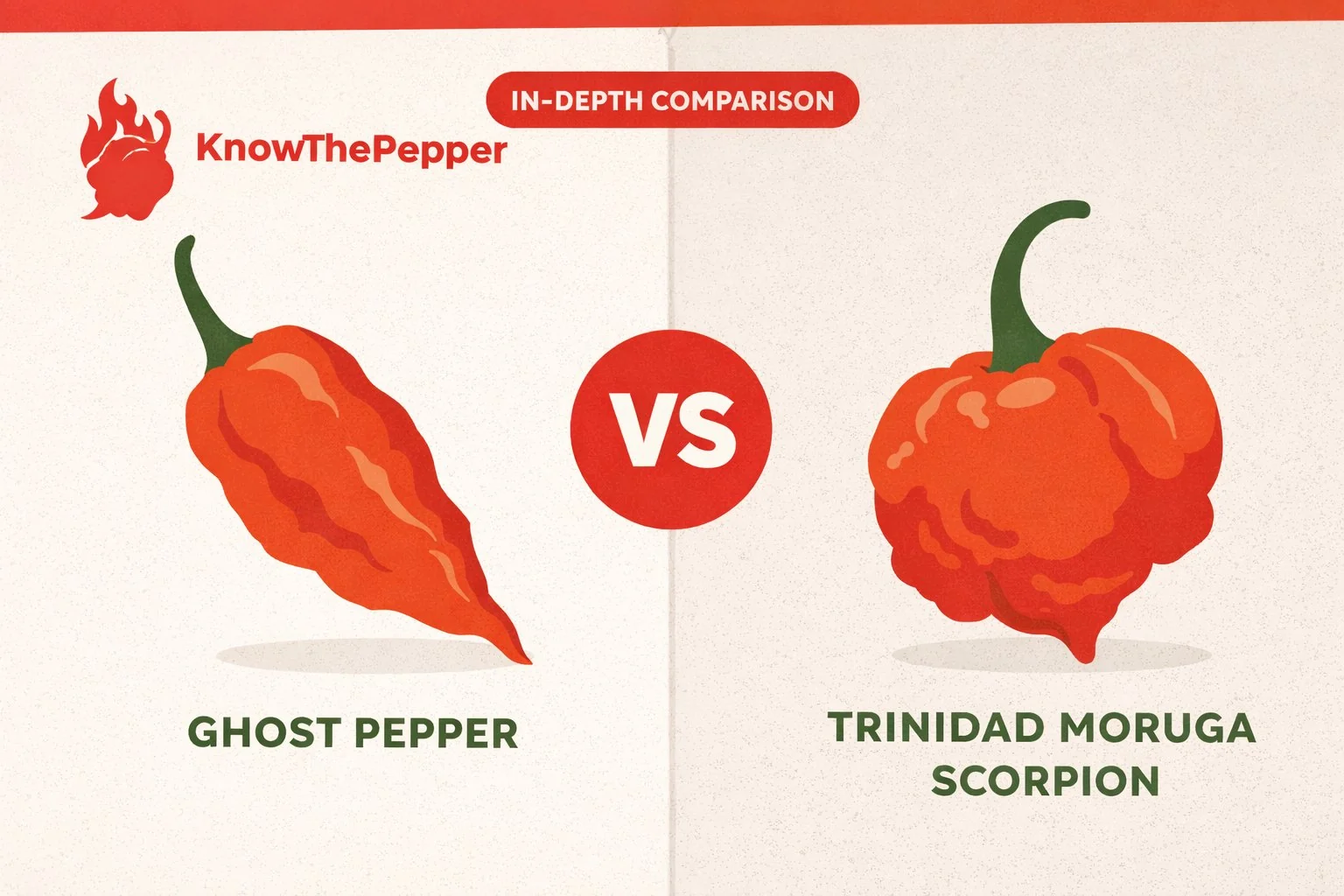
For a close heat comparison against another superhot, ghost pepper versus Moruga Scorpion is a better reference than trying to force Scotch bonnet into the same role.

Handling Boundary

Gloves are optional for some Scotch bonnet prep but sensible when chopping several pods. With ghost pepper, gloves, a separate board, and careful knife cleanup are the baseline because a tiny smear can heat the next food you cut.

Water will not clear capsaicin from skin or a cutting board. Use soap, fat, or alcohol-based cleaning for tools, then keep hands away from eyes until the prep area is clean.

Fact-Checked & Expert Reviewed
Editorial Standards: Head-to-head comparisons include blind tasting when applicable. Heat levels cross-referenced with multiple sources. All substitution ratios tested side-by-side.
Review Process: Written by James Thompson (Lead Comparison Reviewer) , reviewed by Karen Liu (Lead Fact-Checker & Science Editor) . Last updated June 29, 2026.

Ghost Pepper vs Scotch Bonnet FAQ
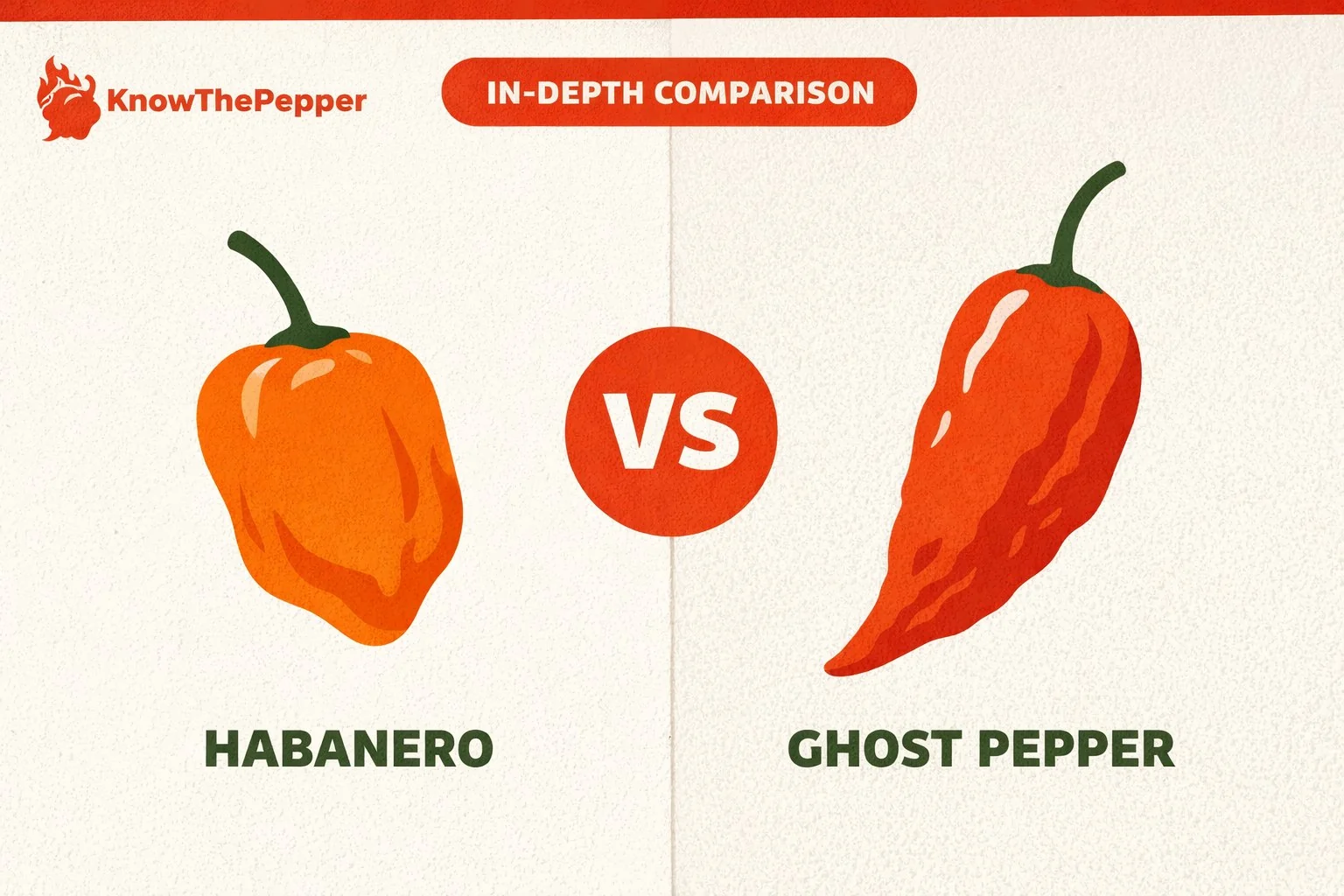
Ghost pepper starts around 855,000 SHU and Scotch bonnet tops out around 350,000 SHU. In practical cooking, ghost is several times hotter and should be dosed by sliver, not by whole pod.

Scotch bonnet tastes better in jerk seasoning because its fruity C. chinense aroma fits allspice, thyme, garlic, and smoke. Ghost pepper can add heat, but it does not replace that Caribbean flavor.

Yes, if you want a friendlier heat level. Use Scotch bonnet for fruit and aroma, then accept that the dish will no longer have true superhot intensity.

Only in tiny amounts. Start with a shaved piece or a pinch of powder, then taste after the burn builds. A full ghost pod can overwhelm a recipe written for Scotch bonnet.

Sources & References
KL
Fact-checked by Karen Liu
Research Contributor
SHU Verified
Sources Cited
Expert Reviewed
All Comparisons Browse Peppers Scoville Scale