
7 Pot Douglah or Ghost Pepper: Which Fits Your Sauce?
The controlled comparison gives Douglah Trinidad Chocolate a higher mean than Bhut Jolokia, but the researchers found no statistically significant heat difference between them. Choose 7 Pot Douglah for its Trinidad identity and brown-fruited form, or Ghost Pepper when Bhut Jolokia provenance and wider product availability matter.

7 Pot Douglah
Super-HotGhost Pepper
Super-HotQuick Comparison
| Attribute | 7 Pot Douglah | Ghost Pepper |
|---|---|---|
| Scoville evidence | 923K-1.9M SHU | 855K-1M SHU |
| Heat Tier | Super-Hot | Super-Hot |
| vs Jalapeño | 232x hotter | 130x hotter |
| Flavor | earthy, nutty C. chinense fruit with extreme heat | smoky and sweet |
| Species | C. chinense | C. chinense |
| Origin | Trinidad and Tobago | India |
Is 7 Pot Douglah Hotter Than Ghost Pepper?
Bosland, Coon, and Reeves supplied the strongest direct answer because their 2012 New Mexico State University trial grew both accessions under the same field design and measured capsaicinoids by high performance liquid chromatography. Douglah Trinidad Chocolate averaged 1,169,058 SHU, while Bhut Jolokia averaged 1,019,687 SHU.
The Douglah mean was about 15 percent higher in that experiment. The authors still found that Douglah Trinidad Chocolate was not significantly hotter than Bhut Jolokia, so the study does not justify a universal claim that every Douglah beats every Ghost Pepper.
Individual plants varied far more than the difference between the two means. Douglah Trinidad Chocolate ranged from 923,889 to 1,853,936 SHU, while Bhut Jolokia ranged from 279,315 to 1,578,548 SHU in the same paper.
The researchers also found significant variation across field blocks and identified environment as an important influence on pungency. A seller range, record number, or highest tested plant therefore cannot predict the exact heat of the pod in your hand.
Those results change the practical verdict. Douglah has the higher measured mean and higher individual maximum in this trial, but both occupy an overlapping superhot band with enough variation to defeat a fixed pod-count conversion.
Retail ranges can still help you recognize that both products require extreme restraint. They work as broad planning context, while a current laboratory certificate tied to a specific lot is the evidence needed for a precise commercial heat claim.
Fresh pods, dried pods, flakes, powders, mash, and finished sauce also concentrate pepper differently. A teaspoon of dry powder cannot be compared directly with a whole fresh fruit because drying removes water and sauces add other ingredients.
Use the controlled means to compare the accessions, not to set a serving. For cooking, weigh the actual form, disperse it through a measured base, and adjust only after the entire test portion is mixed.
Higher mean does not mean every pod is hotter
The NMSU trial measured Douglah at 1,169,058 SHU and Bhut Jolokia at 1,019,687 SHU, yet found no statistically significant difference. Use the actual lot and form for dosing.
Do Douglah and Ghost Pepper Taste Different?
The common script says Douglah tastes dark, earthy, and nutty while Ghost Pepper tastes fruity and smoky. The research used for this comparison measured heat, genetics, and nutrients, but it did not run a trained sensory panel that proves those exact descriptors.
That evidence gap matters because color can make a tasting note sound more certain than it is. A chocolate-brown ripe pod may suit a dark sauce visually, yet brown skin alone does not establish cocoa, coffee, smoke, or nut flavor.
Bosland and colleagues confirmed that Douglah Trinidad Chocolate and Bhut Jolokia are genetically distinct accessions. Distinct genetics can support real differences, but the paper did not translate those markers into a ranked list of aromas for cooks.
A separate peer-reviewed nutrient survey also kept Trinidad Douglah and Bhut Jolokia as separate samples. It gives another reason to respect cultivar identity, while offering no license to invent a universal sensory split.
Product form creates differences a cook can verify directly. Fresh ripe pepper contributes water and raw fruit aroma, dried pepper loses water and develops a concentrated dried-chile character, and fermentation introduces acid and microbial aromas from the process.
Smoke belongs to the product only when the pepper was actually smoked or the ingredient list says smoke was added. Ghost Pepper is not automatically smoky simply because smoked chile products exist.
The same caution applies to sauce. Vinegar, fruit, garlic, salt, sweetener, oil, smoke flavor, and other chiles can dominate a bottle, so the front label cannot tell you what the pure cultivar tastes like.
For a fair comparison, evaluate the same form from traceable lots at the same dilution. Let aroma, color, and the recipe base guide the choice, but present batch observations as batch observations rather than permanent cultivar facts.
Brown color is evidence of color
A brown ripe Douglah can darken a sauce. It does not prove cocoa, coffee, nut, earth, or smoke notes without a sensory source or observation tied to that batch.
How Do You Cook With Douglah and Ghost Pepper?
CARDI's Hot Pepper Production Manual for Trinidad and Tobago names Seven Pod among the landraces suitable for processing into hot pepper sauce. That regional evidence gives the Douglah side a concrete cooking setting without pretending every Seven Pod selection is identical.
Use 7 Pot Douglah when the recipe specifically names Douglah Trinidad Chocolate or a traceable brown Seven Pot accession. Its mature brown color can support a dark sauce, pepper mash, or seasoning whose appearance should stay brown rather than bright red.
The brown color is a visual contribution, not proof of a chocolate flavor. Pair the pepper with roasted onion, black garlic, molasses, cocoa, beans, or dark fruit only when those ingredients already belong in the recipe.
UWI describes Seven Pot as part of Trinidad and Tobago's pepper culture, and CARDI places Seven Pod peppers in sauce processing. A Trinidad-style sauce or mash therefore has a clearer provenance reason to choose Douglah than a generic extreme-heat recipe does.
Use Ghost Pepper when a recipe names Bhut Jolokia or comes from Northeast Indian ingredient traditions. Peer-reviewed work identifies Bhut Jolokia as its own exceptionally pungent pepper, so replacing it merely because another cultivar reaches a similar heat band can erase the stated ingredient identity.
Ghost Pepper is also the practical choice when a traceable fresh pod, pure powder, or clearly formulated sauce is easier to obtain. Availability is useful only when the label still identifies the form, ingredients, processor, and lot.
For hot sauce, decide whether the pepper supplies identity, heat, color, or pepper mass. A tiny superhot dose can supply heat, but a mild red or brown pepper may be needed to provide the body and color that one small Douglah or Ghost portion cannot.
For dry seasoning, pure powder gives repeatable distribution only when it is weighed. Shaking either powder over hot oil can send capsaicinoid particles into the air, so mix it into a cool component or contained spice blend before heating.
For fermentation, follow a tested salt, acidity, temperature, and sanitation process. Extreme pungency does not protect a mash from unsafe fermentation or replace control of spoilage.
For a curry, stew, or braise, add the measured pepper to enough liquid for even distribution. Remember that reducing the liquid later concentrates the same dose across a smaller finished volume.
Give the pepper one clear job
Decide whether the superhot portion supplies provenance, color, aroma, heat, or pepper mass. One tiny dose rarely performs all five jobs well.
Which Should You Choose, 7 Pot Douglah or Ghost Pepper?
Choose 7 Pot Douglah when the ingredient identity is Douglah Trinidad Chocolate, when Trinidad provenance matters, or when a mature brown pepper is useful to the sauce's appearance. The controlled trial gives it a higher mean than Bhut Jolokia, but not a statistically proven universal heat win.
Choose Ghost Pepper when the recipe names Bhut Jolokia, when Northeast Indian provenance matters, or when you can buy a more traceable Ghost product in the required form. Familiarity is not a flavor advantage, but it can make labels, lots, and recipe references easier to verify.
For pure heat, select the fresher and better documented product. The actual lot and form matter more than the famous maximum because the research recorded wide variation within both accessions.
For color, Douglah is the clearer choice when a brown finished sauce is intentional. For a red sauce, Ghost Pepper fits the visual target without requiring the cook to hide a brown pepper under other ingredients.
For substitution, neither pepper deserves an automatic pod-for-pod rule. Match form, weigh the trimmed material, test a small diluted portion, and preserve the recipe's pepper mass with a mild chile when needed.
Do not choose either for a surprise dose, garnish, or eating challenge. Their cooking value comes from controlled flavor, color, provenance, and pungency across a complete dish.
Identity And Provenance
The research name is important. The 2012 study calls the brown Trinidad accession Douglah Trinidad Chocolate, while seed and spice sellers often use 7 Pot Douglah, Chocolate 7 Pot, or Trinidad Douglah.
The same paper treats Douglah Trinidad Chocolate, Trinidad 7-Pot Jonah, and Bhut Jolokia as separate accessions. A product labeled only 7 Pot therefore does not automatically identify Douglah, and a brown superhot is not automatically a Douglah.
CARDI documents Seven Pod among Caribbean landraces and recommends it for sauce processing. The institute also explains that some regional landraces are maintained by farmers rather than stabilized as formal varieties, which makes the seed source and lineage relevant.
UWI places Seven Pot within the pepper heritage of Trinidad and Tobago. Bhut Jolokia comes from a different regional history in Northeast India, even though both peppers are placed with Capsicum chinense material in the NMSU comparison.
Molecular markers in the NMSU study confirmed that the tested accessions were genetically distinct. Color and a seller nickname cannot replace documented provenance when cultivar identity matters.
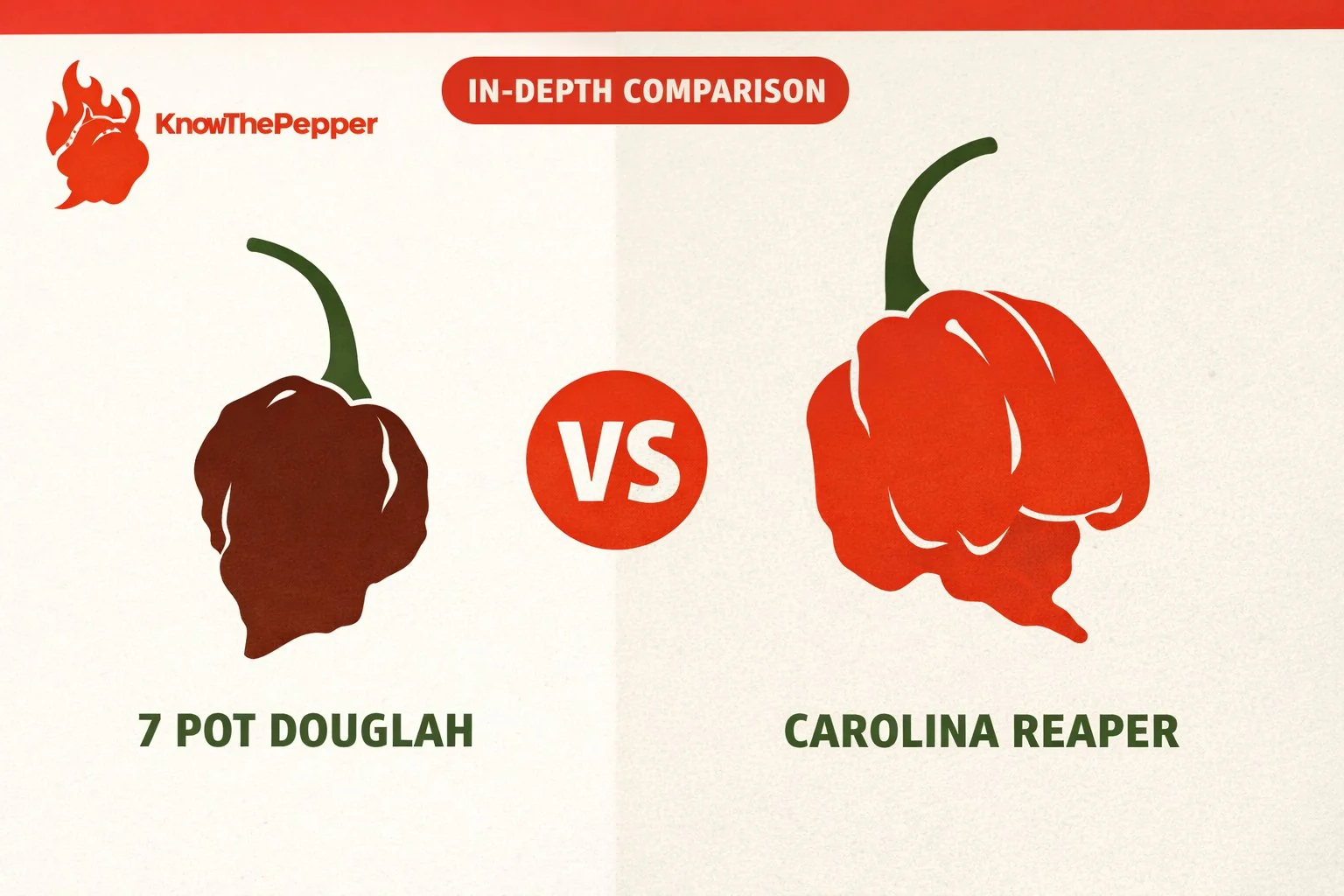
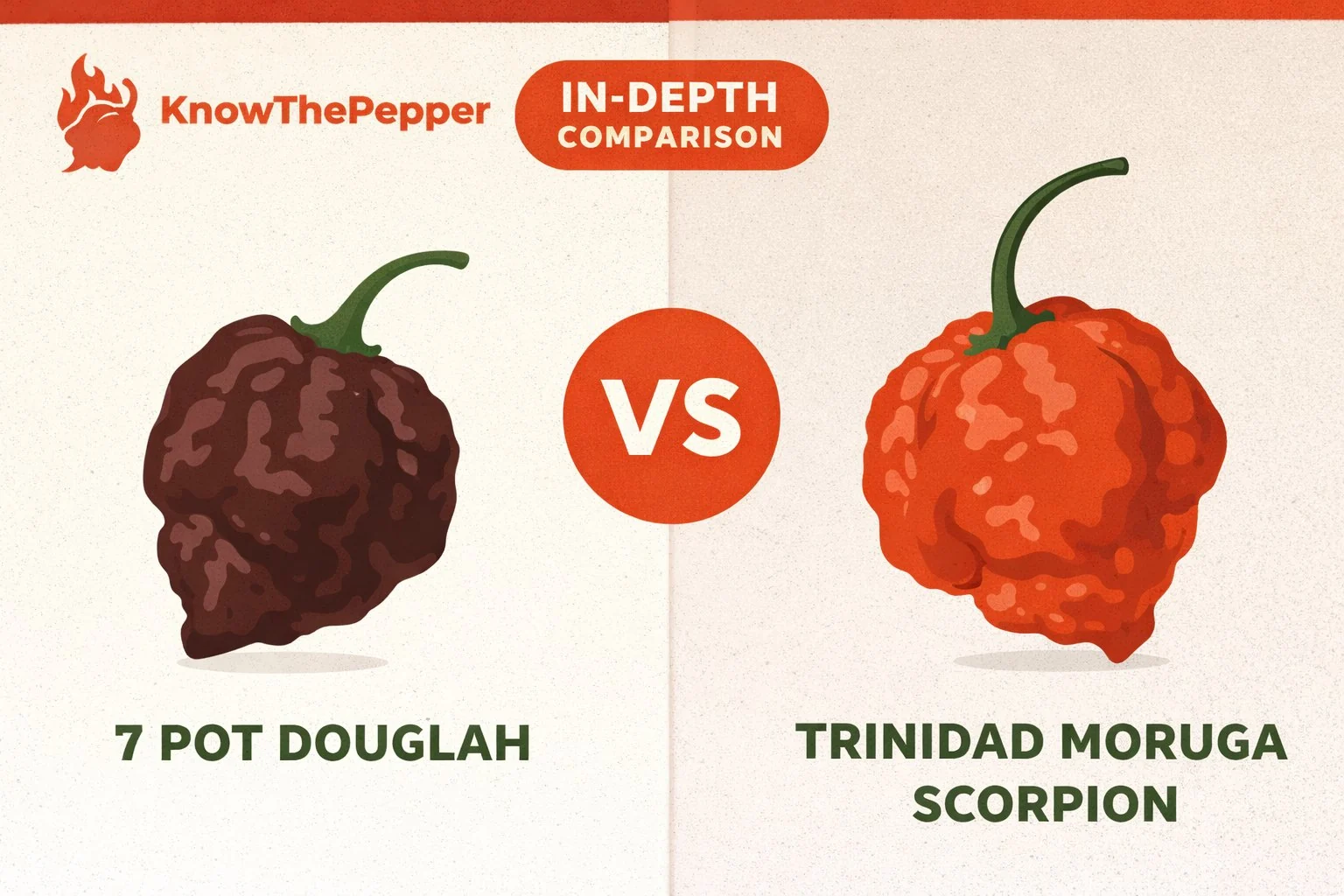
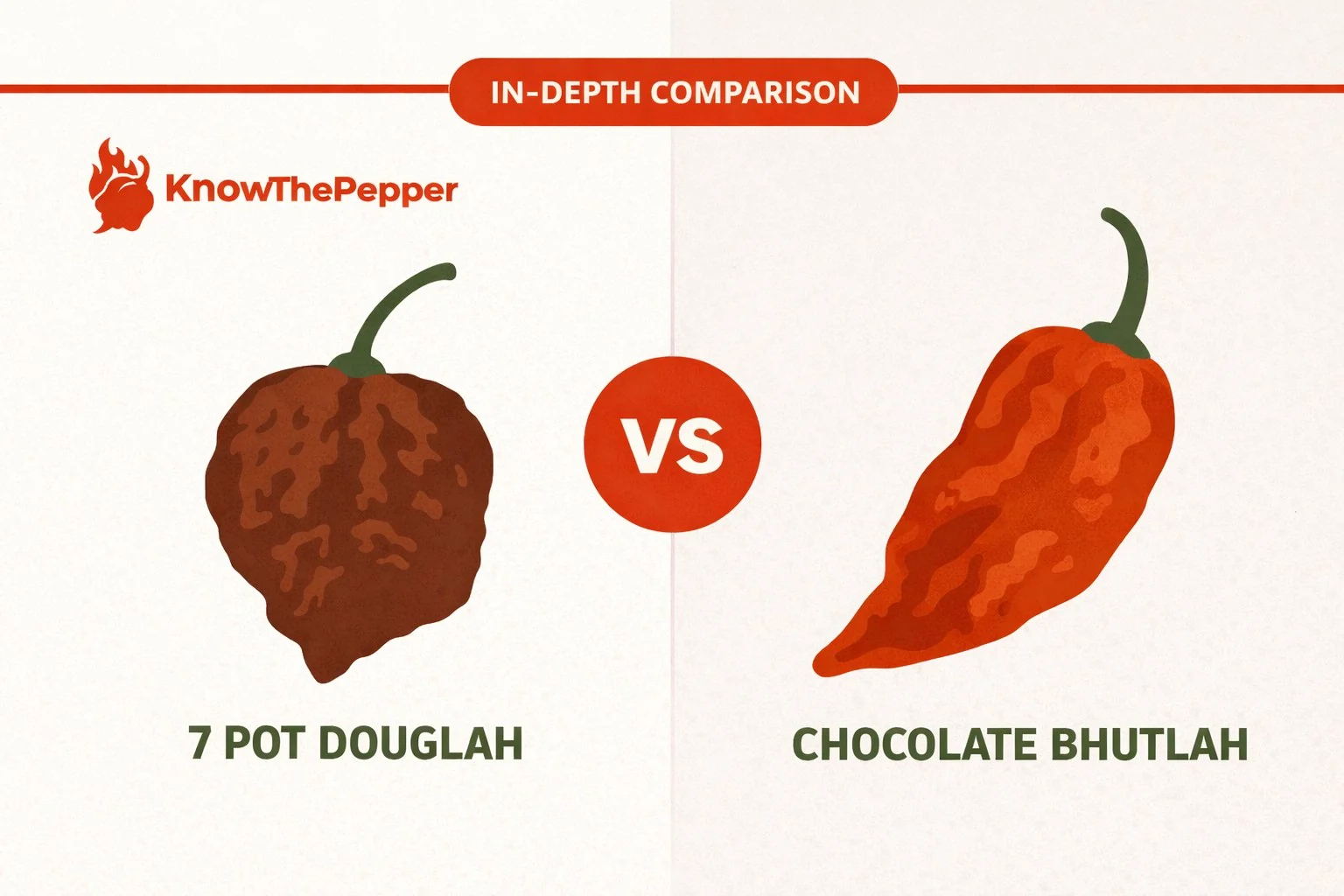
Do not confuse 7 Pot Douglah with Chocolate Bhut Jolokia, Chocolate Habanero, Trinidad 7-Pot Jonah, or a brown Trinidad Scorpion. They may share mature color or trade vocabulary, but the research and seed records treat their names as different genetic claims.
How Do You Handle Douglah and Ghost Pepper Safely?
Start by choosing a batch size that can dilute an error. A full sauce base is safer to adjust than a spoonful of concentrated mash, but reserve some unspiced base so the first measured addition can be diluted further.
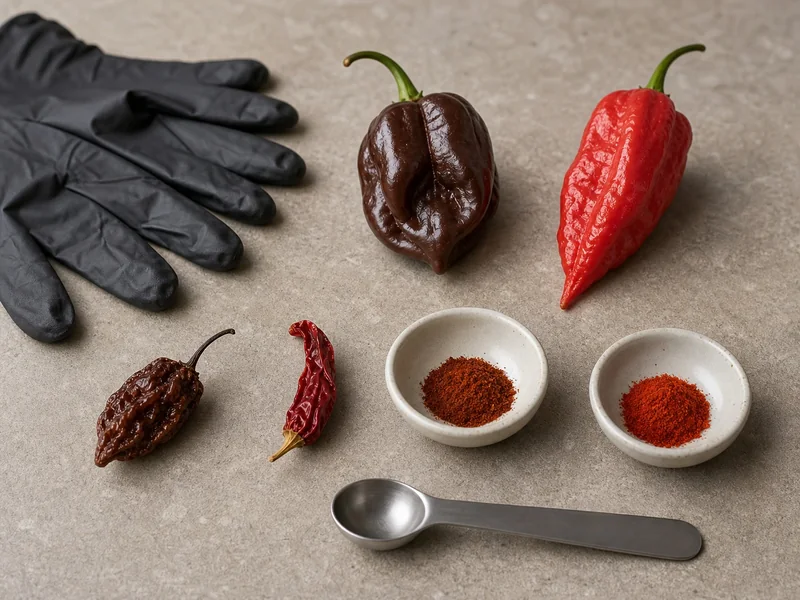
Wear nitrile gloves, protect the work surface, ventilate the room, and keep hands away from the face. Use dedicated or immediately washable tools, and treat blender lids, towels, and sink handles as possible transfer points.
For fresh pepper, remove the stem and weigh the tiny trimmed portion actually entering the recipe. Pod count is unreliable because fruit size and the trial's within-accession heat variation both move independently of a recipe's count.
For powder, use a scale capable of registering the intended amount. A household teaspoon is too coarse for a repeatable first dose of material that can exceed one million SHU.
Mix the measured pepper through a small, known volume of sauce base before combining it with the full batch. Never taste an undiluted raw piece to calibrate the recipe, since the result gives pain and exposure without a useful finished-food measurement.
Wait until the test portion is evenly mixed and at the serving temperature before deciding. Fat, starch, sugar, acid, salt, and temperature can change perception, while none makes an overloaded dose disappear.
If the test is too hot, add more of the complete non-spicy base in measured increments. Adding only sugar, dairy, or citrus can change the dish while leaving too much capsaicin in the same serving volume.
Keep the final product labeled with the pepper name and an explicit extreme-heat warning. Store it away from ordinary condiments so another person cannot mistake a concentrated batch for a mild sauce.
What Should You Check Before Buying Douglah or Ghost Pepper?
For fresh pods, look for the full accession name, grower, country or region, harvest date, and a photograph of the actual lot. Mature Douglah should be sold as a brown-fruited accession, but color alone cannot distinguish it from other chocolate superhots.
For dried pods or powder, check whether the package contains only the named chile. Cayenne, paprika, extract, salt, smoke flavor, or another superhot can change color, heat, and aroma while the front label continues to feature Douglah or Ghost.
For sauce and mash, read the ingredient order and the stated pepper percentage when available. Vinegar, fruit, tomato, or another chile may supply most of the bottle, so sauce heat cannot be converted back into a fresh-pod ratio.
For seed, favor a supplier that identifies the parent stock and isolation method. CARDI's description of farmer-maintained landraces and the NMSU evidence of genetically distinct accessions both make lineage more useful than a dramatic product photo.
A current laboratory certificate can support a lot-specific SHU claim. A copied record number, generic certificate, or single highest plant from an old study cannot certify today's packet.
Reject labels that promise exact cultivar identity from color alone. Buy the evidence chain, not the superhot nickname, especially when the recipe or seed project depends on preserving Douglah or Bhut Jolokia identity.
Substitution
Douglah Trinidad Chocolate and Bhut Jolokia can replace each other when the dish mainly needs an extreme Capsicum chinense heat source and regional identity is secondary. The controlled trial supports overlap, but it does not produce a universal conversion ratio.
For fresh-to-fresh substitution, begin at no more than equal trimmed weight and test that amount in a small portion of the complete base. Use less when the package gives a credible higher lot result or when the original recipe already sits near the diners' limit.
For powder-to-powder substitution, compare pure products by weight and use lot-specific heat data if both labels provide it. Do not convert a teaspoon of one powder into a pod count for the other.
When using Douglah as a Ghost Pepper substitute, expect mature brown material to darken a pale or red sauce. Do not add cocoa, smoke, or molasses automatically because the original recipe may need only compatible heat, not a new dark flavor theme.
When using Ghost Pepper as a 7 Pot Douglah substitute, restore brown color only if appearance is part of the dish. A mild brown chile or an existing dark ingredient can provide mass and color without increasing the superhot dose.
If the recipe title, cultural context, or product identity names Bhut Jolokia or Douglah Trinidad Chocolate, use the named pepper or disclose the change. Similar measured heat does not make the provenance interchangeable.
Match the form before the cultivar
Fresh with fresh and powder with powder are the useful starting comparisons. Weigh the amount, dilute a test portion, and keep unspiced base ready.
7 Pot Douglah vs Ghost Pepper FAQ
- Bosland, Coon, and Reeves - Trinidad Moruga Scorpion and Superhot Chile Trial
- CARDI - Hot Pepper Production Manual for Trinidad and Tobago
- CARDI - R&D in Agriculture Summary of the 2012 Superhot Trial
- UWI Today - Caribbean Hot Pepper Heritage
- PubMed - Vitamin Variation in Capsicum Species
- PubMed - Capsaicinoids in Bhut Jolokia