Pepper tissue
contains a mixture whose composition varies


Capsaicinoids are the related compounds behind hot-pepper pungency. Capsaicin is one member, while total capsaicinoids describes a measured group defined by the laboratory method.
Capsaicinoids are a family of closely related compounds that produce the pungency in hot Capsicum peppers. Capsaicin is usually the best-known and most abundant member, but a pepper extract can contain several capsaicinoids at once.
That distinction changes how you read research and heat claims. A result labeled total capsaicinoids describes a measured mixture, while a capsaicin result describes one compound within it.
The plural term is therefore useful whenever the question concerns a whole pepper, powder, sauce, or laboratory extract. Use the singular capsaicin only when the evidence actually isolates that molecule.
Analytical papers commonly report five naturally occurring capsaicinoids. Capsaicin and dihydrocapsaicin often make up most of the measured total, while the other three occur at lower levels in many samples.
| Capsaicinoid | Typical analytical role | What the name tells you |
|---|---|---|
| Capsaicin | Commonly a major peak | The reference member of the family |
| Dihydrocapsaicin | Commonly the other major peak | A closely related molecule with a different side chain |
| Nordihydrocapsaicin | Recurring smaller peak | Another side-chain variant |
| Homocapsaicin | Often a minor measured component | A longer-chain relative of capsaicin |
| Homodihydrocapsaicin | Often a minor measured component | A longer-chain relative of dihydrocapsaicin |
The ranking is not a recipe that every pepper must follow. Variety, fruit, maturity, tissue sampled, extraction, and analytical method can change which compounds are detected and how much each contributes.
Capsaicinoids share a vanillyl region joined through an amide bond to a hydrophobic side chain. Differences in the length and saturation of that side chain create distinct members of the family.
This is why the names look related without being interchangeable. A laboratory can separate capsaicin from dihydrocapsaicin because their structures and retention behavior are not identical.
Capsiate and related capsinoids resemble capsaicinoids, but they use an ester linkage where capsaicinoids use an amide linkage. Research on capsiate shows that this small structural boundary produces very different oral pungency.
Do not silently add capsinoids to a capsaicinoid total. A method must name the compounds it targets, and a result only covers the analytes that method actually measured.
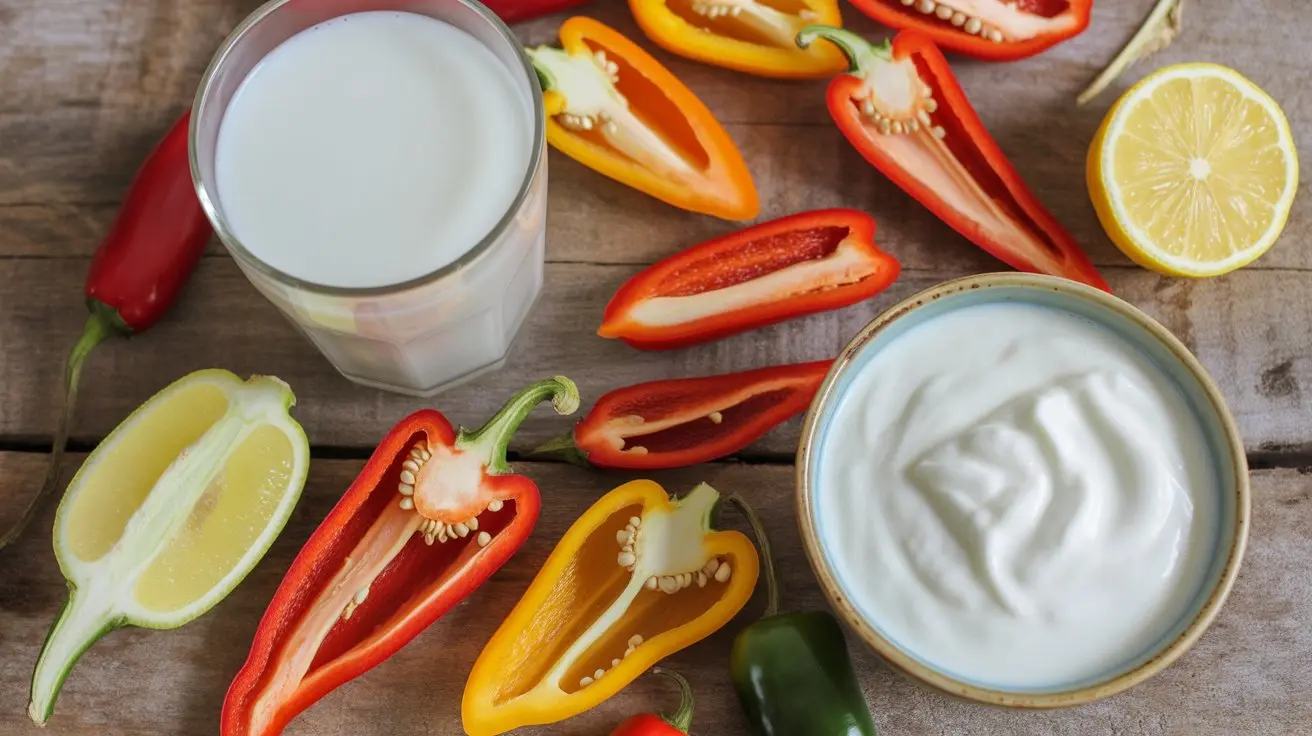
Hot peppers produce capsaicinoids mainly in cells associated with the pale placental tissue inside the fruit. The seeds sit beside that tissue and can carry pungent residue, but they are not the main production site.
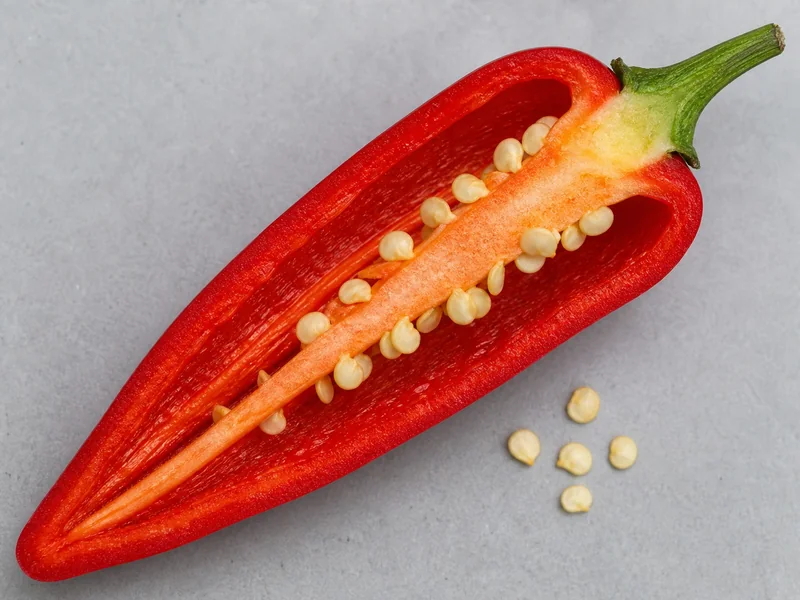
Research on the Pun1-encoded enzyme supports its role in capsaicinoid accumulation. Experiments using pepper placental tissue also demonstrate capsaicin synthesis when the required substrates are available.
Removing seeds alone therefore does not guarantee a mild pepper. Cutting away the placenta can remove a concentrated tissue, yet heat may remain on the walls, tools, hands, and any liquid that contacted it.
A laboratory cannot identify a capsaicinoid mixture by looking at its red color or tasting it. Published methods extract compounds from a weighed sample, separate them by chromatography, and compare the resulting signals with analytical standards.
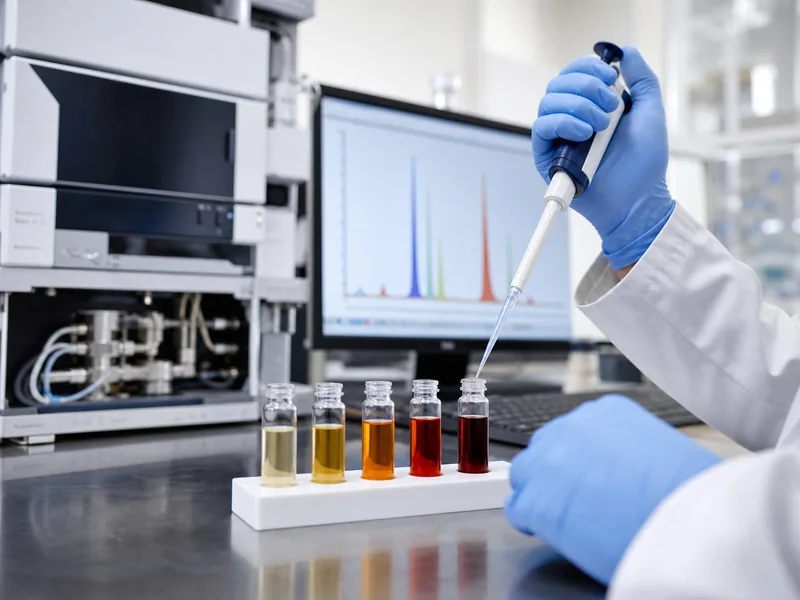
HPLC methods have separated capsaicin, dihydrocapsaicin, and nordihydrocapsaicin in pepper samples. More expansive LC methods can target five or eight named capsaicinoids in peppers and pepper-containing foods.
The analyte list is part of the result. Two reports can both say total capsaicinoids while covering different compound panels, extraction conditions, or reporting units.
A clean set of peaks does not erase biological variation. The number belongs to the fruit, tissue blend, powder lot, or sauce aliquot that entered the test.
Good comparisons use the same preparation and method. Comparing a dry powder result with a fresh-fruit result without checking units and moisture basis can create a large but meaningless gap.
A total capsaicinoid concentration supports a quantitative comparison when sampling and methods align. It does not promise that every pod from a named variety has that exact composition or that every diner will experience the same burn.
| Wording in a report | What it supports | Question to ask |
|---|---|---|
| Capsaicin | Amount of one named compound | Were other capsaicinoids measured separately? |
| Capsaicin plus dihydrocapsaicin | A two-compound subtotal | Were minor compounds omitted? |
| Total capsaicinoids | Sum defined by the method | Which analytes and units are included? |
| Scoville Heat Units | A pungency expression for the tested sample | Was it sensory or instrument-derived, and on what sample basis? |
The Scoville scale gives pepper heat a common language, but the number still inherits its sample and method. Water content, dilution in a finished food, and uneven fruit-to-fruit distribution can all separate a laboratory value from a particular bite.
Use a range when a cultivar has been tested across variable fruit rather than presenting one result as a fixed identity. For a sauce or powder, prefer a lot-specific certificate over a borrowed number from a pepper name.
Knowing that capsaicinoids form a mixture helps you make better kitchen decisions. It tells you to dose the ingredient in front of you, not to assume that two peppers with a similar headline SHU will distribute heat identically through a recipe.
Cooking does not remove a predictable percentage from every capsaicinoid mixture. Judge the finished batch after dilution and preparation rather than applying one universal heat-loss rule.
For receptor action, mouth burn, skin or eye exposure, and the boundary between food and approved topical treatment, use the dedicated capsaicin guidance. The family view belongs here because it prevents a mixture measurement from being mistaken for a single molecule.