Pepper Anatomy: What Do Seeds, Ribs, and Placenta Do?
A pepper has a three-layer fruit wall around locules, seeds, placenta, and septa. Capsaicinoids form in placental tissue, so removing the pale internal network changes heat more than shaking out seeds alone.
What are the main parts of a pepper?
A pepper is a fruit with an edible wall surrounding one or more hollow chambers. Cut it from stem to tip and the main structures become easy to locate because their relationships stay intact.
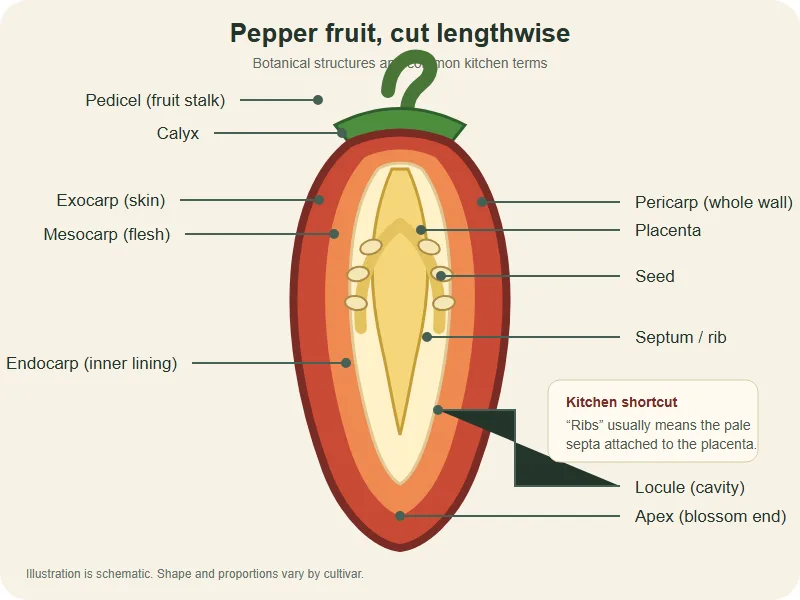
The green stalk is the pedicel. Directly below it, the leaf-like calyx caps the stem end, while the apex marks the opposite blossom end.
The colorful outer wall is the pericarp. Inside it, pale tissue forms the placenta and partitions, seeds attach to that tissue, and the open chambers between the partitions are locules.
Kitchen language is less exact than botanical language. Cooks often use “ribs” for the pale partitions and attached placental tissue, so a recipe that says to remove the ribs usually means scraping out that whole internal network.
What are the three layers of the pepper wall?
The pericarp is the whole fruit wall, not just the flesh. It contains three layers that behave differently when you bite, peel, roast, or dry a pepper.
Botanically, a pepper fruit develops from the flower’s ovary, and the ovary wall becomes the pericarp. The ovules inside develop into seeds after successful pollination and fertilization.
The exocarp is the outer skin. Its waxy surface slows moisture loss and helps protect the fruit, but it can turn papery or blistered under high heat.
The mesocarp is the flesh beneath the skin. It supplies most of the crunch, juice, and edible mass in a thick-walled bell pepper or jalapeño.
The endocarp is the thin inner lining facing the cavity. In a fresh pepper it is much less obvious than the skin and flesh, but it completes the three-layer wall.
Wall thickness changes the best cooking method. Thick mesocarp stays substantial after roasting or stuffing, while a thin-walled cayenne loses moisture quickly and is better suited to drying.
Ripening changes the same wall rather than creating a new layer. Chlorophyll fades, cultivar-specific pigments become visible, and softening makes the mesocarp less crisp even though its anatomical name remains unchanged.
A green jalapeño and a red ripe jalapeño therefore have the same basic map. Their color, sweetness, moisture, and texture can differ because the tissues have matured.
Peeling removes the exocarp but leaves most of the mesocarp behind. Scraping the inside removes placental tissue and septa, which is a different operation with a different effect on texture and heat.
Where does a pepper's heat come from?
Seeds are not the main source of a pepper’s heat. Capsaicinoids are produced in glands associated with the placental tissue inside the fruit.
The placenta is the pale tissue that supports the seeds. It often begins near the stem end and extends into the fruit through the attached partitions.
Capsaicinoids can spread from that tissue onto nearby seeds and the inner wall. A loose seed can therefore taste hot even though the seed embryo did not manufacture the compound.
For the largest practical heat reduction, remove the placenta and the pale septa attached to it. Shaking out seeds alone leaves much of the capsaicinoid-bearing tissue in place.
Removal does not turn every hot cultivar into a mild pepper. Capsaicinoids can remain on the inner surface, and individual fruits vary, so taste a small piece before committing the whole pepper to a dish.
Keeping the internal tissue has the opposite effect. Sauces and infused oils that need the fruit’s full pungency should include the placenta, while a fresh salsa for mixed heat tolerances is easier to control after that tissue is trimmed away.
Seeds, placenta, septa, and locules
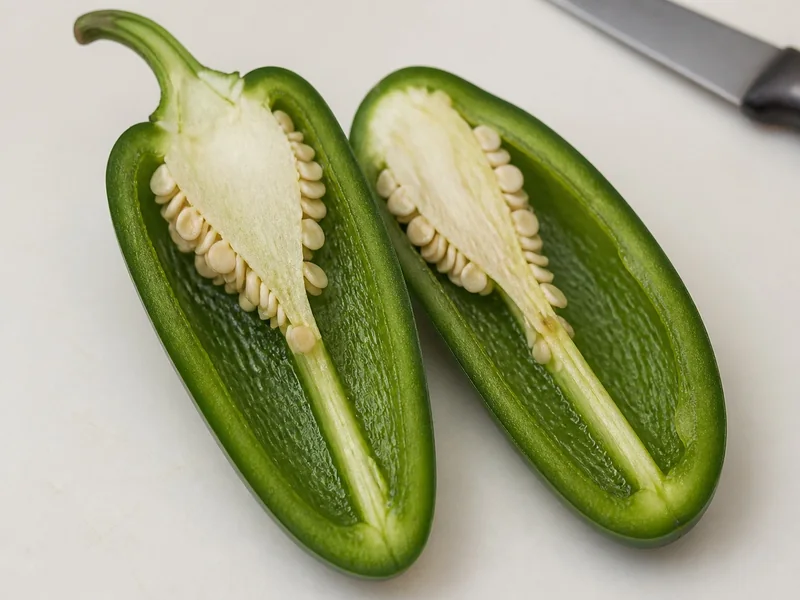
The parts inside a pepper do different jobs, even when a recipe groups them together. This table connects the formal terms to what you can see and what each part means at the cutting board.
| Part | What it looks like | Biological job | Kitchen consequence |
|---|---|---|---|
| Placenta | Pale tissue that holds seeds | Supports developing seeds and carries capsaicinoid-producing glands | Remove it first when lowering heat matters |
| Seed | Flat cream-colored disc in most common peppers | Contains the embryo for a new plant | Can carry surface heat and add a firm or bitter texture |
| Septum | Pale partition extending into the cavity | Divides and supports the interior | Often called a rib and usually removed with the placenta |
| Locule | Open chamber between partitions | Provides space for seeds to develop | Locule number affects the shape of rings and crosswise slices |
| Pericarp | Colored outer wall | Protects seeds and forms the body of the fruit | Wall thickness controls crunch, drying speed, and stuffing capacity |
| Calyx | Green cap beneath the stalk | Remains from the flower and supports the fruit base | Usually trimmed away, though the stalk can serve as a handle during roasting |
The word “core” is also informal. On a jalapeño it usually means the placenta, attached septa, and seed mass removed together, while a blocky pepper may have several partitions that need separate cuts.
Locules are spaces rather than tissues. A three-lobed bell pepper often shows three prominent chambers when sliced crosswise, but chamber count alone does not prove a cultivar or species.
Each mature seed has a protective seed coat around the embryo and stored food. Surface capsaicinoids can make a seed unpleasant to chew, but they do not determine the pungency of the plant grown from that seed.
Seed attachment also explains why scraping can be more effective than shaking. Loose seeds may fall out immediately, while the placenta and septa remain bonded to the wall and require a knife or spoon.
The stem end and blossom end
The pedicel connects the fruit to the plant and carries water and sugars while the pepper develops. At harvest it becomes the stalk that remains attached to many fresh peppers.
The calyx sits between that stalk and the fruit wall. Its shape can differ among pepper types, but its basic job is the same, and it is not part of the heat-bearing internal tissue.
The apex is the blossom end at the tip of the fruit. Some peppers taper to a sharp point, some form a blunt base, and others develop a small tail, yet all of those shapes occupy the same end of the anatomical plan.
Orientation matters during preparation. A lengthwise cut from pedicel to apex exposes the placenta and septa, while a crosswise cut produces rings that pass through the wall and any partitions at that level.
How should you cut a pepper for stuffing, dicing, or less heat?
Start with the result you want, then decide which tissues should remain. The same pepper needs a different cut for stuffed halves, neat dice, dried flakes, and controlled-heat salsa.
- For intact rings, cut crosswise through the pericarp. Push out the central tissue afterward if the rings need less heat.
- For easy heat control, split the pepper lengthwise. Lift or slice away the placenta and septa before cutting the wall into strips or dice.
- For minimal contact, stand a jalapeño on its side and cut panels of pericarp away from the intact core. The placenta and most seeds stay together for disposal.
- For stuffing, remove the top or make a lengthwise opening, then clear enough internal tissue to create space without thinning the wall.
- For drying, open thick-walled fruit so moisture can escape from both surfaces. Thin chiles may dry whole if airflow is reliable and the fruit is unbroken.
Gloves reduce the chance of transferring capsaicin to your eyes or face. A knife and board that contacted the placenta can also carry pungency to the next ingredient, so wash them with dish soap rather than relying on water alone.
Roasting changes the wall more than the internal plan. The exocarp blisters, the mesocarp softens, and moisture leaves the fruit, while any placenta left inside continues to contribute heat.
Seed saving is a separate decision from heat control. Choose fully mature, healthy seed for propagation, then follow appropriate drying and germination practices rather than judging seed quality by how hot the fruit tasted.
Do all peppers have the same anatomy?
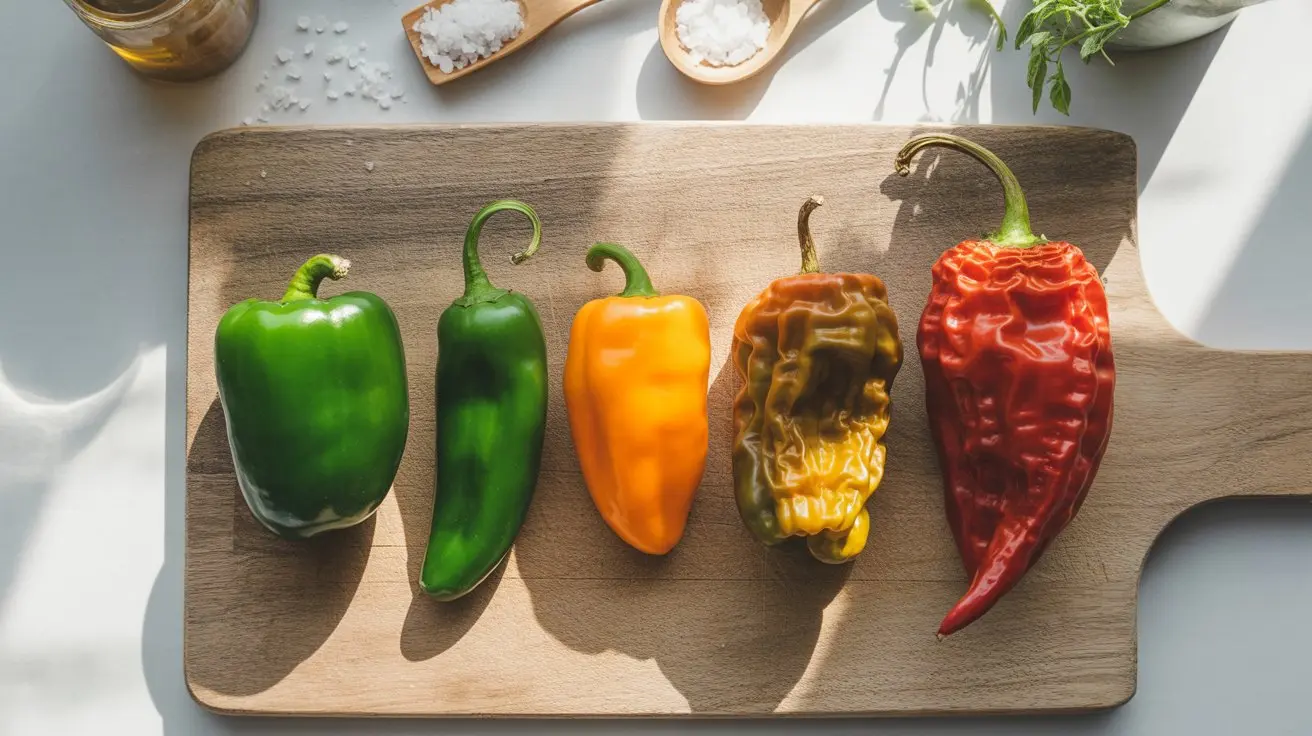
Bell peppers, jalapeños, cayennes, and wrinkled superhot peppers share the same basic structures. What changes is the proportion of wall, cavity, placenta, and seed mass, plus the shape of the calyx and apex.
Those proportions affect preparation, but they do not provide a reliable heat score. A pepper with a large cavity is not automatically mild, and a thick wall does not guarantee low capsaicinoid concentration.
Thick-walled peppers favor volume and moisture
A bell pepper has abundant mesocarp and a large cavity, which makes it suitable for raw slices and stuffing. Its broad shape also makes the locules and partitions easy to see.
Small tapered chiles favor surface area
Cayenne-type fruit has less flesh around a narrow cavity. The thin wall dries faster, and a small amount of placental tissue can occupy a larger share of the edible fruit.
Wrinkled fruit does not change the map
A folded or bumpy surface changes the contours of the pericarp, but the fruit still has skin, flesh, inner lining, locules, seeds, and placental tissue. Deep folds can make trimming less complete, which matters when precise heat reduction is the goal.
Internal tissue can also spread into folds and along the inner wall instead of forming one neat central core. That is why a superhot pepper may remain intensely pungent after an apparently thorough seeding.
Anatomy can narrow an identification, but it should be treated as evidence rather than proof. Fruit color, wall thickness, chamber count, seed appearance, flower traits, and plant growth habit work better together than any single feature.
Pepper Anatomy: What Do Seeds, Ribs, and Placenta Do? FAQ
- Jalapeno Peppers - Colorado State University
- Red Chile and Paprika Production - New Mexico State University Extension
- Heat - Chile Pepper Institute, New Mexico State University
- Peppers - University of California Agriculture and Natural Resources
- Let's Preserve: Peppers - Penn State Extension