Stuffed Peppers: Bell Peppers for Rice and Meat, Poblanos for Mild Heat
Stuffed peppers work best when the pepper vessel matches the filling. Bell peppers give sweet structure for rice and meat, while poblanos bring mild heat and earthiness for Mexican-style fillings.
Why Stuffed Peppers Work So Well
The pepper is doing double duty here, it's the vessel and the flavor. A good stuffed pepper isn't just a bowl made of vegetable.
The pepper wall softens, sweetens, and mingles with whatever's packed inside. Get the pepper right, and the filling almost doesn't matter.
This guide covers the two most common approaches: the American classic with Capsicum annuum Varieties and a rice-meat filling, and the Mexican-style version using poblano's earthy, mildly smoky character with a spiced beef or cheese filling. Both methods share core technique but diverge in ways that matter.
Choosing Your Pepper
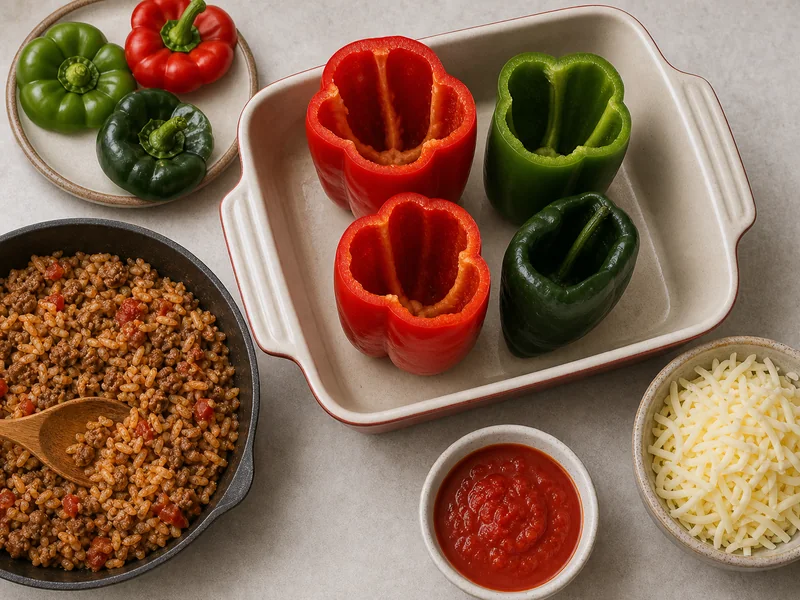
Bell peppers are the default for good reason. Their flat bottoms keep them upright in the pan, the walls are thick enough to hold shape through a 45-minute roast, and their sweetness balances savory fillings.
Red bells are sweeter and softer. Green bells hold their structure better and add a slight bitterness that cuts rich fillings.
Poblanos sit in the mild SHU bracket at roughly 1,000-2,000 Scoville units, enough warmth to notice but nowhere near uncomfortable. Their elongated shape and thinner walls mean faster cooking and a more pronounced pepper flavor in every bite.
For the Mexican variation below, they're the right call.
Other options worth considering: Cubanelle Pepper works beautifully with lighter rice or grain fillings. Anaheim's mild California heat gives you a longer pepper that's excellent for individual servings.
If you want actual heat in the vessel itself, Hatch chile's roasted Southwestern intensity changes the whole character of the dish.
Technique Notes
The single biggest mistake with stuffed peppers is skipping the liquid in the baking dish. Without steam, the pepper walls stay tough and the filling dries out.
At least 1/2 inch of liquid in the base of the pan is non-negotiable for the bell pepper version.
Par-cooking the rice is equally important. Raw rice absorbs liquid aggressively inside the pepper and can leave the filling dry and the rice still crunchy.
Cook it to about 80% done before mixing into the filling.
For bell peppers that won't stand upright, a muffin tin works perfectly, each cup cradles a pepper and keeps it stable throughout the bake. This is especially useful when using smaller or irregularly shaped peppers.
Browning the meat until it gets some color (not just gray) adds depth. Let the pan get hot before adding the beef and resist stirring for the first minute or two so it actually browns rather than steams.
Variations
The filling is the variable here. The pepper, the bake time and the temperature stay as written.
- Vegetarian filling: Replace meat with a mix of cooked quinoa, black beans, diced zucchini, and corn. Add 1 tsp smoked paprika and a squeeze of lime to keep it from tasting flat. Works in both bell and poblano versions.
- Italian sausage version: Swap ground beef for sweet or hot Italian sausage, add fennel seeds and crushed red pepper, and top with marinara instead of tomato sauce. Pairs particularly well with red or yellow bell peppers.
- Greek-style: Use ground lamb with orzo instead of rice, add chopped Kalamata olives, diced tomatoes, and top with crumbled feta. Finish with fresh mint.
- Tex-Mex with more heat: Add one minced serrano for clean, grassy heat to the poblano filling. Serranos bring a sharper bite than jalapeños and integrate well with the beef-cumin base. For a step up, the medium-intensity SHU range of a fresh jalapeño works if you want something more widely available.
- Cheesy rice only (no meat): Mix cooked rice with cream cheese, sharp cheddar, roasted corn, and scallions. Stuff into bell peppers and bake until the filling is bubbly. Good as a side dish alongside grilled meat.
Pepper Selection Guide
Beyond bells and poblanos, the broader family of Mexican pepper varieties offers some interesting stuffing candidates. Pasilla peppers have a similar shape to poblanos with a slightly more complex, dried-fruit-adjacent flavor when fresh.
For anyone curious about how different pepper walls affect texture and heat distribution, the bell pepper vs. poblano side-by-side covers wall thickness, moisture content, and flavor differences in detail.
Cubanelles, which come from the Italian pepper tradition, are underused for stuffing. Their thin walls cook fast, reduce oven time to about 25 minutes total - and their sweetness makes them excellent with seafood or grain-based fillings.
If you're growing your own and want to plan around stuffing size, the germination and cultivation covers variety selection, spacing, and when to harvest for maximum wall thickness.
Storage and Reheating
Stuffed peppers keep well. Refrigerate leftovers in an airtight container for up to 4 days.
The filling actually improves overnight as the flavors meld.
To reheat: microwave individual peppers covered with a damp paper towel for 2-3 minutes, or return to a covered baking dish at 350°F for 20 minutes. Add a splash of broth or water to the dish before covering to prevent drying.
Freezing works, but with caveats. Bell pepper walls get noticeably softer after freezing and thawing, acceptable if you're reheating in a sauce, less ideal for a clean presentation.
Freeze assembled (unbaked) or fully cooked. Either way, wrap individually in plastic then foil.
Thaw overnight in the refrigerator before reheating.
The filling alone freezes better than the assembled pepper. If you make a large batch, consider freezing extra filling separately and stuffing fresh peppers when you want them.
Serving Suggestions
A simple green salad with vinaigrette cuts through the richness of a meat-and-cheese stuffed pepper well. For the poblano version, Mexican crema, sliced avocado, and pickled red onion alongside make it a complete plate.
Crusty bread for soaking up the pan juices is never wrong with the classic version. The tomato-broth liquid at the bottom of the baking dish is genuinely good and shouldn't be left behind.
Ingredients
-
4 large bell pepperstops cut off, seeds removed
-
1 lb ground beef (80/20)
-
1 cup long-grain white riceuncooked
-
1 can (14.5 oz) diced tomatoesdrained, liquid reserved
-
1 cup tomato saucedivided
-
1 medium yellow onionfinely diced
-
3 cloves garlicminced
-
1 tsp dried oregano
-
1 tsp smoked paprika
-
Salt and black pepper to taste
-
1 cup shredded mozzarella or Monterey Jack
-
2 tbsp olive oil
-
2 cups beef or chicken broth
Full Recipe Instructions
Preheat oven to…
Preheat oven to 375°F. Cook rice to about 80% done according to package directions.
Heat olive oil…
Heat olive oil in a large skillet over medium-high. Cook onion 4-5 minutes, then add garlic and cook 1 minute more.
Add ground beef,…
Add ground beef, breaking apart as it browns. Season with oregano, smoked paprika, 1 tsp salt, and black pepper. Cook 6-8 minutes until no pink remains.
Drain excess fat.…
Drain excess fat. Stir in diced tomatoes, 1/2 cup tomato sauce, and par-cooked rice. Remove from heat and season to taste.
Stand peppers upright…
Stand peppers upright in a baking dish. Pour reserved tomato liquid and broth into the base of the dish (at least 1/2 inch deep).
Pack filling tightly…
Pack filling tightly into each pepper, mounding slightly. Spoon remaining tomato sauce over filled peppers. Cover dish tightly with foil.
Bake covered 35…
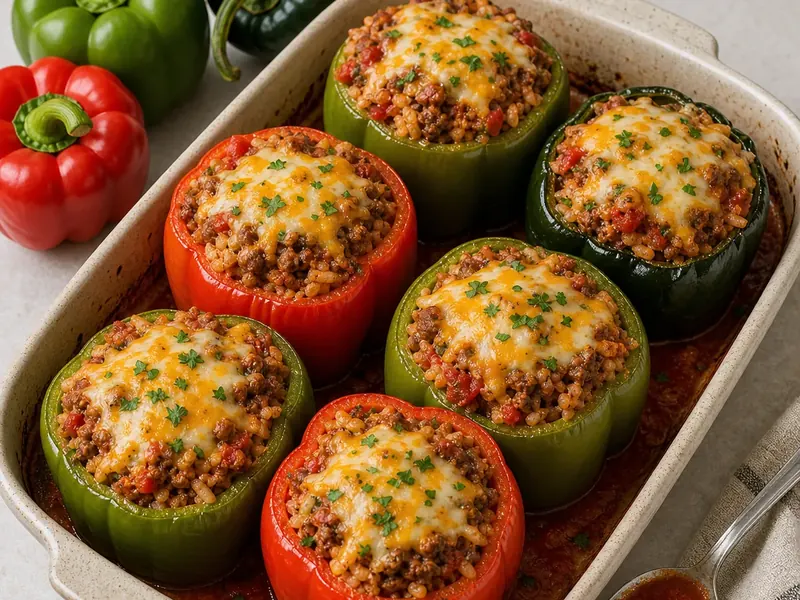
Bake covered 35 minutes. Remove foil, top with shredded cheese, bake uncovered 10-15 minutes more until cheese is bubbling and pepper walls are tender.
Rest 5 minutes…
Rest 5 minutes before serving.
Stuffed Peppers: Bell Peppers for Rice and Meat, Poblanos for Mild Heat FAQ
- USDA FoodData Central - Bell Pepper and Cooking Properties
- Varieties & Plant Breeding - Chile Pepper Institute, NMSU
- Capsicum annuum L. - USDA GRIN Taxonomy