How to Cut Jalapenos Without Burning Your Hands or Spreading Capsaicin
Cutting jalapenos safely comes down to one property: capsaicin is oil-soluble, so water spreads it and oil plus soap removes it. Scrape the pith over a bowl, glove up for batch work, and know before you need it that an eye splash needs 15 to 20 minutes of irrigation, not the few seconds it feels like.
What you need before you start
Cutting jalapenos looks like a two-minute job until you rub your eye an hour later and work out what happened. Almost all of that is preventable at the setup stage.
Four things, and the last one is the one people skip.
- A sharp knife. Chef's or paring, because a blunt blade slides off jalapeno skin instead of cutting it.
- A stable board. Anything that rocks turns a controlled cut into a guess.
- Gloves, once you are past two or three peppers.
- A damp paper towel within reach. For wiping the blade between cuts, close enough that you actually use it rather than across the kitchen.
Jalapenos run 2,500 to 8,000 SHU. That is enough capsaicin to hurt on sensitive skin and in the eyes, and not enough that ordinary contact becomes an emergency.
The medium tier is where that lands them, which is also why they are the pepper most people learn to prep on.
Why jalapeno juice burns your skin
The burn is capsaicin. Knowing exactly where it sits inside the pod is what makes the rest of the prep controllable.
UC Agriculture and Natural Resources places the highest concentration in the white pithy parts around the seeds, and states there is almost none of it in the seeds themselves.
The seeds still burn your fingers, because they are coated by that tissue during cutting rather than because they carry it. Cutting through the pith is what puts capsaicin on your knife, your board, and your hands.
From there it binds to the same nerve receptors that report actual heat, which is why the sensation is indistinguishable from a burn even though nothing is being damaged.
Capsaicin is oil-soluble, so plain water moves it around rather than removing it. That single property explains most of what follows, and it is worth reading alongside how capsaicin works.
How hot is the pepper in your hand?
You cannot tell by looking, and that is the honest answer rather than a dodge.
Penn State Extension states plainly that peppers from the same plant can vary significantly in heat from each other, so size and shape tell you nothing reliable about the pod on your board.
Two things do shift the odds. Penn State gives ripeness as one, noting that a pepper gets hotter closer to being fully ripe, which is why a red jalapeno generally lands above a green one off the same plant.
Growing conditions are the other, with high temperatures and drought named as the most influential stressors.
There is a ceiling on all of it. A stressed jalapeno moves up its own range and never reaches habanero territory, so the 2,500 to 8,000 SHU band still holds.
The whole jalapeno range is that sliver on the left. Growing stress moves a pod inside it and cannot move it out of it, which is why a scorching jalapeno is still a jalapeno.
The practical move is to scrape more pith than you think you need from a red or field-grown pod, then taste a sliver before the rest goes in. Adding heat back is easy and taking it out of a finished dish is not.
The basic jalapeno cutting technique
Rinse the pepper under cold water and dry it before anything else, because a wet pepper slips under the knife.
- Remove the stem. Hold the pepper firmly and slice off the top about a quarter inch below where the stem meets the flesh.
- Halve lengthwise. Stand the pepper on the cut end and slice straight down through the centre for two even halves.
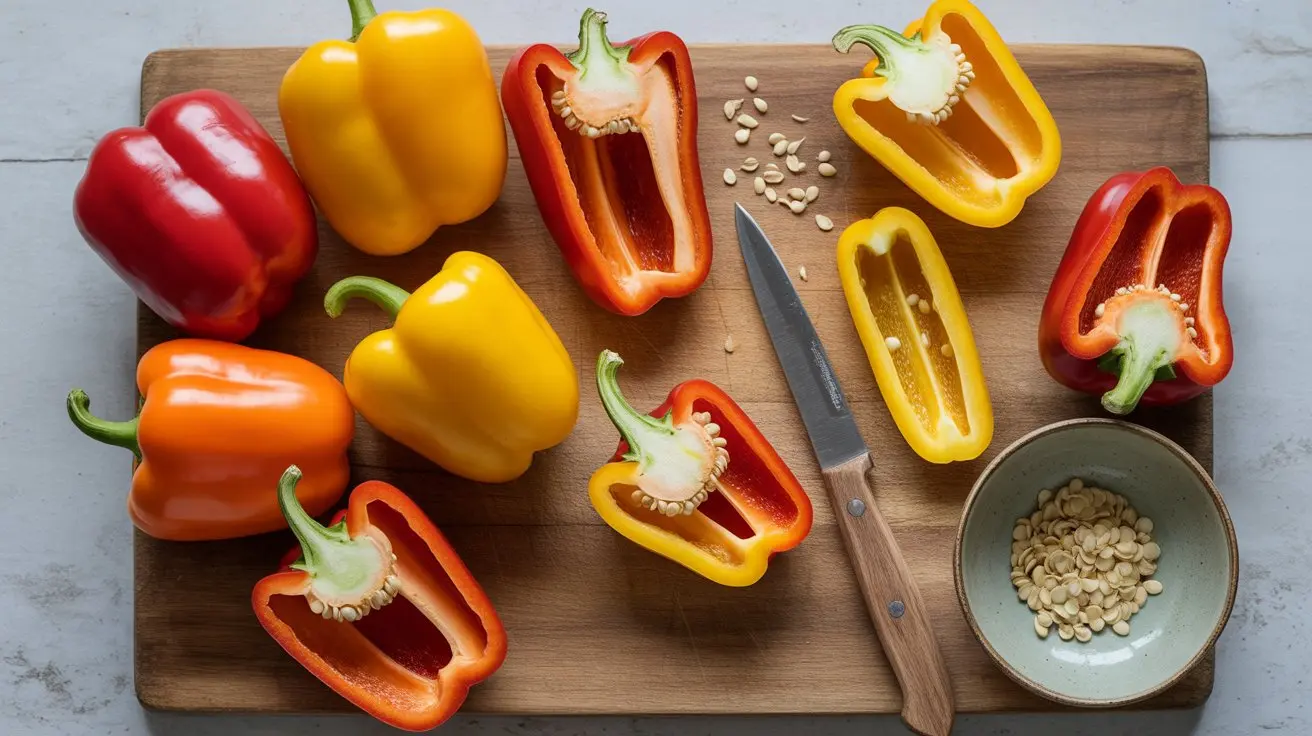
- Scrape the pith. Run a spoon or the knife tip down each half to take out the white membrane and the seeds attached to it. This is the step that controls heat.
- Flatten and slice. Lay each half skin-side down, cut lengthwise into strips, then crosswise for a dice.
Keep your fingers curled into a claw with the fingertips tucked and the knuckles guiding the blade. It is the same grip as any other vegetable and it is what keeps the knife off your fingers.
How much heat you keep tracks how much pith you leave. A thin band of white membrane left behind gives a noticeably hotter result than a clean scrape.
How to cut jalapenos into rings
Rings are what you want for nachos, pizza, sandwiches, and pickling, and they are cut from the whole pepper rather than from halves.
Take the stem end off, lay the pepper horizontally, and slice crosswise at 1/8 to 1/4 inch. Go thinner for pickles and thicker for grilling or roasting.
The seeds drop out as you cut through the cavity. For seedless rings, halve the pepper first, scrape it clean, then press the halves back together and slice across.
Those will not be perfect circles, which matters for a garnish and not at all for a jar of pickled jalapenos.
A mandoline gives uniform rings faster, but use the hand guard. Jalapeno skin is tough enough that the blade catches unpredictably.
Removing seeds without spreading capsaicin
Scraping over the board is where most kitchens lose control of the mess, because seeds and pith scatter and every surface they land on is now carrying capsaicin.
Hold each half over a small bowl instead and scrape downward with a teaspoon, so the pith lands somewhere contained.
Tip the bowl straight into the bin rather than the sink.
If a recipe wants the seeds, set them aside in their own dish rather than leaving them loose on the board. Technique by pepper shape is covered in our deseeding guide.
Do you need gloves to cut jalapenos?
For one or two peppers, bare hands and a thorough wash afterwards are usually fine. For batch work, pickling, or hot sauce, gloves cost ten seconds and save an evening.
The mistake is not skipping gloves. It is touching your face before they come off.
Pinch the outside of one glove near the wrist, peel it inside out, then use the bare hand to peel the second one from the inside. The contaminated surfaces end up sealed inside the turned-out pair.
Change gloves before moving on to a hotter pepper, because capsaicin builds up on the outside of a glove without giving you any signal that it has.
What to do if you get jalapeno hands
It happens to everyone eventually, and the delay is what catches people out. The burn arrives well after the cutting is finished and the peppers are out of sight.
The condition has a name. A 2025 case report describes it as chili burn, or Hunan hand syndrome, a contact dermatitis that appears after handling chili peppers.
In that case the burning stopped after several hours, and when the same person handled chili again about ten days later it returned briefly before fading. Repeated exposure is the named risk factor, which is why the people who get the worst of it are usually working through crates rather than cooking dinner.
Several hours is the honest expectation for a bad episode, so treat the remedies below as ways to shorten it rather than switch it off.
Poison Control gives the skin measures as warm water flushes, vegetable oil, diluted vinegar and water soaks, and an antacid preparation such as Maalox applied to the skin.
Oil is doing the work that water cannot, giving the capsaicin something it dissolves into before soap carries the whole lot away. Follow it with dish soap and warm water rather than relying on either alone.
For eyes, the American Academy of Ophthalmology calls for immediate copious irrigation of the ocular surface for 15 to 20 minutes with water or normal saline.
Contact lenses should be removed before irrigation and discarded. Do not rub.
Fifteen to twenty minutes is far longer than it feels reasonable to stand at a tap, which is exactly why the number is worth knowing before you need it.
Seek an eye examination for severe symptoms, symptoms that persist for several hours, reduced vision, or if you already have dry eye or another ocular surface condition.
Poison Control adds that any trouble breathing or chest discomfort is a 911 call rather than a kitchen problem.
Relief for a mouth burn runs on different chemistry, and our stopping pepper burn guide covers that side.
Cutting jalapenos for specific uses
The cut should follow the dish rather than habit, because size changes how the heat lands as much as seeding does.
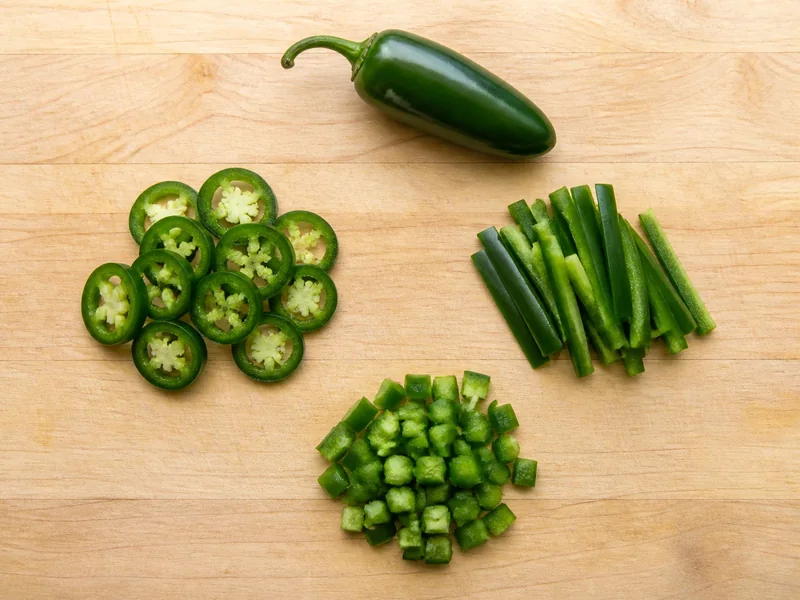
- Salsa and pico de gallo. Fine dice around 1/8 inch. Seed fully for mild, leave a little pith for medium. A smaller cut spreads heat more evenly through the bowl.
- Stuffed poppers. Halve lengthwise, scrape clean, leave the stem for presentation. The hollow is the point, so do not over-trim it.
- Pickling. Rings at 1/4 inch. Even thickness matters here because the brine has to penetrate at the same rate.
- Grilling or roasting whole. No cutting until after. Roasted jalapenos peel easily and the flesh sweetens.
- Hot sauce. A rough chop is enough, since everything is going into a blender.
One popular trick does not survive scrutiny. Soaking cut jalapenos in cold water to draw out heat runs against the oil-solubility that the rest of this page depends on, and the pith you removed is what actually changed the heat.
Knife maintenance and cross-contamination
A dull knife is the more dangerous one, because it needs more pressure and gives less control. Jalapeno skin is tough enough that a blunt blade slides instead of cutting.
Wash the knife in hot soapy water before it touches anything else, and treat foods that will not be cooked as the priority.
Capsaicin moves from blade to food readily, and a salad is the classic place it turns up unannounced.
Boards deserve the same attention. Plastic can go through the dishwasher, while wood wants dish soap, hot water, and time to dry completely.
Keep the workspace ordered when several chile types are in play at once, so pith residue from a hotter pepper does not end up on a milder one you were counting on being mild.
How to Cut Jalapenos Without Burning Your Hands or Spreading Capsaicin FAQ
- Capsaicin: When the chili is too hot - National Capital Poison Center
- Ocular Exposure to Pepper Spray and Tear Gas - American Academy of Ophthalmology
- Hot Peppers - UC Agriculture and Natural Resources
- Chili Burn: A Case Report of Contact Dermatitis Caused by Capsicum Peppers
- Growing Hot Peppers: Can You Make Them Hotter? - Penn State Extension