

KnowThePepper
Anaheim Pepper: Mild 500-2,500 SHU Green Chile to Roast, Peel, and Stuff
Anaheim pepper is a mild New Mexican-type C. annuum chile used for roasting, peeling, and stuffing. Extension references vary by seed line, so this profile uses 500-2,500 SHU as a practical range while treating hotter Anaheim cultivars as exceptions.
- Species: C. annuum
- Heat tier: Medium (1K-10K SHU)
- Comparison: the same heat range as a jalapeño because their published ranges overlap
What Makes Anaheim Pepper Different?
The Anaheim pepper is a long, mild green C. annuum chile suited to roasting, peeling, and stuffing. Its broad flesh gives a cook more chile volume than a jalapeno without the same sharp heat.
Published extension ranges vary by cultivar. Oregon State University lists Anaheim types at 500-3,500 SHU, with most at 500-1,000 SHU, while Iowa State University groups Anaheim with poblanos at 1,000-2,500 SHU.
New Mexico State University Circular 706 places Anaheim within the New Mexican pod type and says seed moved from New Mexico to Anaheim, California. The name therefore identifies a cultivar and market type, not every chile grown in New Mexico or the Hatch Valley.
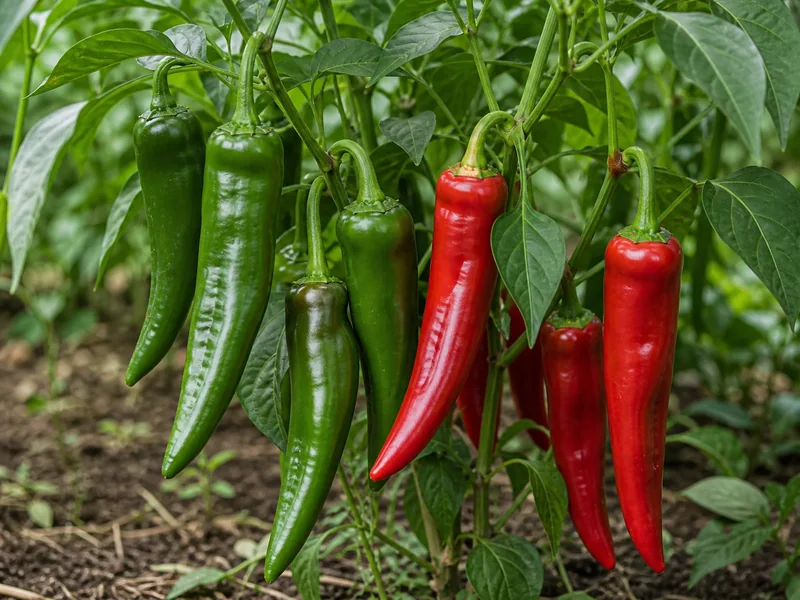
Fresh pods are long, smooth, tapered, and usually sold green. Our editorial description classifies green Anaheim as grassy-sweet and lightly earthy after roasting, while red-ripe pods bring more sweetness and lose some green flavor.
Three nearby peppers solve different cooking problems. Hatch chile is a regional label, poblano has a broader cavity for stuffing, and jalapeno gives a smaller portion with stronger heat.
What Is the History of Anaheim Pepper?
Anaheim's California name sits on a New Mexican breeding foundation. New Mexico State University reports that Fabian Garcia released New Mexico No. 9 in 1913, helping standardize New Mexican-type chiles for processing.
NMSU Circular 706 supplies the cultivar-specific link. It says Anaheim seed originated in New Mexico and was taken to Anaheim, California, where selection under local conditions produced a distinct type.
Ortega Foods provides a separate commercial account. The company says Emilio Ortega returned from New Mexico with green chile seed and developed a California roasted-chile business, which supports brand history rather than a botanical breeding claim.
This record explains Anaheim's dual identity in American markets. The pepper keeps the long New Mexican pod shape while its California name appears on fresh pods and canned diced green chiles.
What Does Anaheim Pepper Taste Like, and How Hot Is It?
The Anaheim Pepper delivers 500–2.5K Scoville Heat Units, placing it in the Medium tier (1K-10K SHU). That makes it roughly the same heat range as a jalapeño because their published ranges overlap.
Flavor notes: mild, grassy-sweet, lightly earthy when roasted.
What's in Anaheim Pepper? Nutrition Facts
Anaheim nutrition belongs in fresh-chile serving context, not a health promise. A dish may use one or two roasted pods or a smaller amount of salted canned green chile.
USDA FoodData Central supports general raw green chile nutrition, but it does not provide a universal Anaheim value across cultivar, pod size, ripeness, and canned products. Treat the rendered 100-gram figures as generic fresh-chile context rather than the composition of every Anaheim pepper.
Capsaicin remains modest because Anaheim cultivars occupy the mild end of hot-pepper references. The compound can still irritate sensitive skin, so Iowa State University Extension advises gloves and avoiding contact with the face and eyes when handling hot peppers.
Which Dishes Suit Anaheim Pepper?
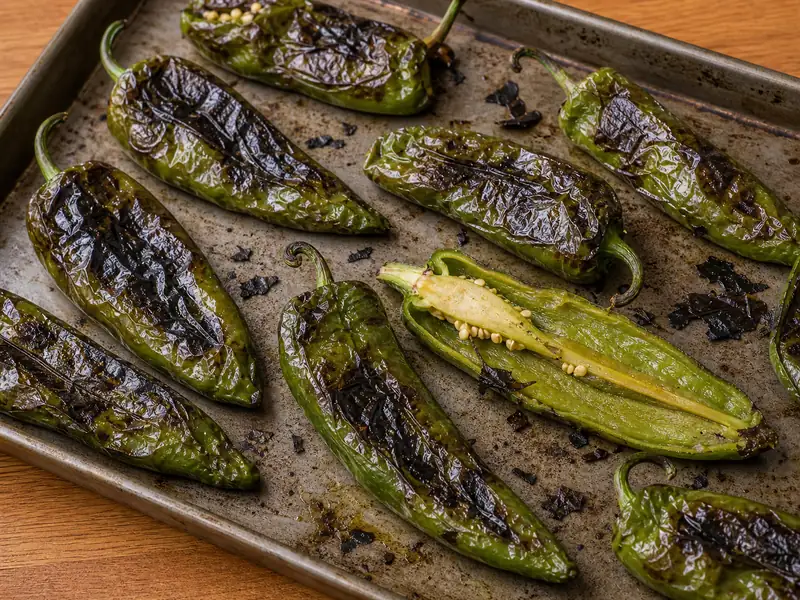
Roasting is the defining Anaheim technique because blistering and peeling remove the papery skin while softening the broad flesh. Colorado State University Extension recommends direct high heat followed by a covered rest that traps steam and loosens the skin.
Roasted Anaheim fits green chile sauce, eggs, breakfast burritos, enchiladas, quesadillas, soups, casseroles, tacos, and salsa. Its mild heat lets a cook use enough flesh to build chile flavor without turning the pepper into a garnish-sized dose.
Anaheim also works among peppers for stuffing because the long cavity holds cheese, rice, beans, chicken, or ground meat. A poblano gives a wider pocket, while Anaheim gives a slimmer portion and a brighter roasted flavor.
For salsa, roast Anaheim before blending when sweetness and body matter. Raw diced Anaheim stays crisp and grassy, so it works better when the salsa needs fresh texture rather than a soft green-chile base.
Choose substitutes for Anaheim by the task. Hatch or another New Mexico chile preserves roasted green-chile character, poblano preserves a stuffing cavity, Cubanelle lowers the heat, and jalapeno raises it.
Roast and peel Anaheim peppers
- Blister every side. Use a broiler, grill, or open flame, turning the pods until their broad surfaces blister evenly.
- Trap the steam. Move the hot pods to a covered bowl so trapped steam loosens the skins.
- Peel for the final texture. Pull off the loose skins once the pods are cool enough to handle, keeping the softened flesh intact.
How Should You Buy and Store Anaheim Pepper?
Colorado State University Extension recommends mature chiles that feel heavy and firm. Skip pods with soft spots, bruises, mold, or decay, and reserve wrinkled Anaheim peppers for immediate cooking rather than stuffing.
Choose long, straight pods when the cavity must hold a filling. Curved or smaller pods still work for chopped sauce, salsa, and roasted strips because shape no longer controls the result.
Keep fresh pods dry and refrigerated while the skins remain tight. After roasting, cool them below 40 F within two hours, then use or freeze them within three days according to Colorado State University Extension.
Canned diced green chiles may contain Anaheim or another New Mexican-type pepper. Check the ingredient label, salt level, heat label, and fire-roasted wording before changing the seasoning in a recipe.
Dried form: Anaheim is used mainly fresh, roasted, or canned while green. Fully ripe red pods can be dried for red chile sauce or powder, but that form tastes different from a fresh green pod.
What Is a Good Substitute for Anaheim Pepper?
Compare substitutes for Anaheim Pepper by form, flavor, and heat before choosing a ratio. Measured adjustments must account for the dish and the concentration of the replacement.
Direct comparisons show where flavor, form, and preparation differ in the Anaheim vs Jalapeno and Anaheim vs Poblano matchups.
Compare Anaheim Pepper with: Anaheim Pepper vs New Mexico Chile · Anaheim Pepper vs Numex Big Jim
How Do You Grow Anaheim Pepper at Home?
UF/IFAS describes heirloom Anaheim fruit as up to 7 inches long and about 1.5 inches wide. The same extension reference gives about 80 days to mature green fruit and more than 120 days for red ripening.
University of Minnesota Extension recommends starting pepper seed about eight weeks before planting outside. Move transplants out only after nighttime lows stay above 50 F, and harden them off gradually for one to two weeks.
Set plants about 18 inches apart in full sun and well-drained soil. UMN recommends soil pH from 6.5 to 7 and consistent moisture because irregular watering weakens flowers and small fruit.
Harvest when pods reach mature size and remain glossy and firm. UMN advises clipping pepper stems with shears, while leaving selected Anaheim pods on the plant allows them to ripen from green to red.
Inspect symptoms before treating a plant. UMN identifies aphids by curling or sticky leaves, blossom-end rot by damaged fruit ends, and sunscald by flat tan areas on exposed pods.
Anaheim Pepper FAQ


- New Mexico State University H-230 - Growing Chiles in New Mexico
- New Mexico State University Circular 706 - Chile Cultivars of NMSU
- Oregon State University - Peppers
- Iowa State University Extension - Growing Peppers in the Home Garden
- Colorado State University Extension - Roasting Chile Peppers
- University of Florida IFAS Extension - Pepper Production
- Ortega Foods - Ortega History
- University of Minnesota Extension - Growing peppers in home gardens
- USDA FoodData Central
Species classification: C. annuum - based on published botanical taxonomy.