What Does Pepper Sunscald Look Like, and How Do You Stop It?
Sunscald is sun damage, not an infectious disease. It shows as pale, papery patches on exposed fruit, and prevention depends on canopy cover, shade during heat spikes, careful pruning, and quick harvest of damaged peppers.
What does sunscald look like on a pepper?
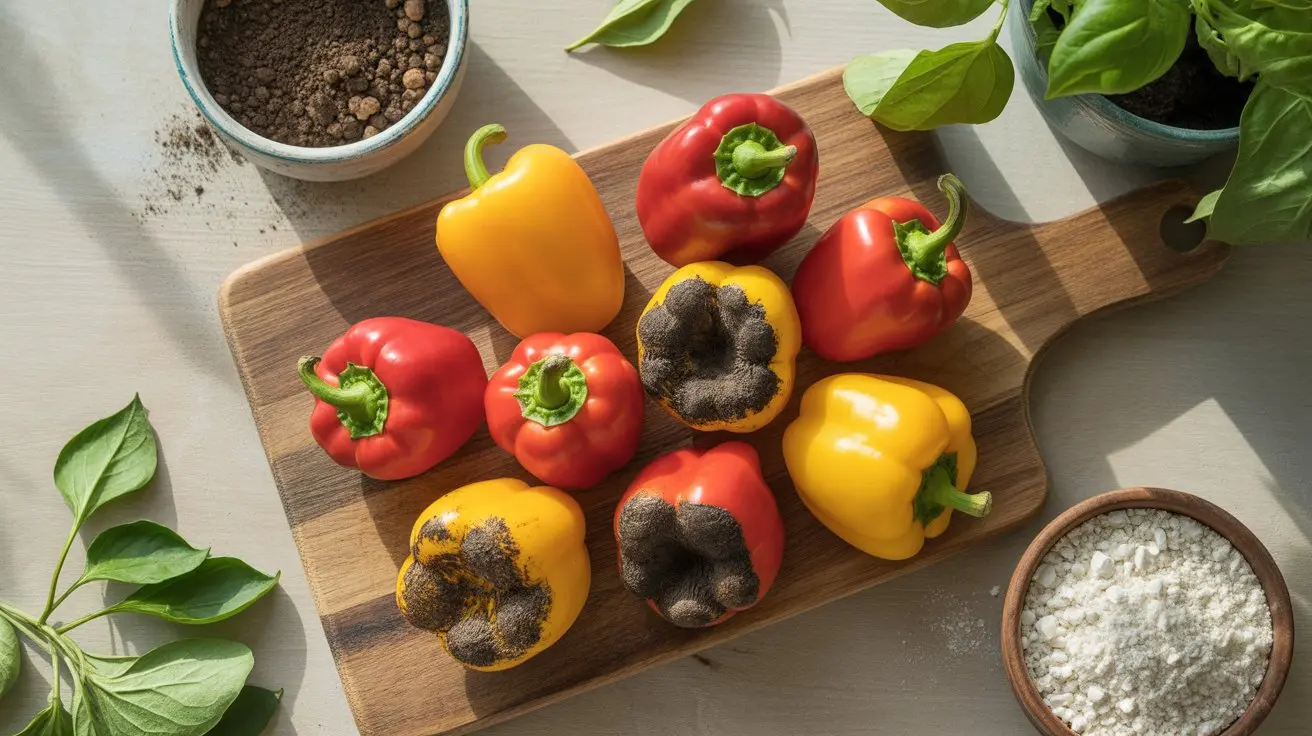
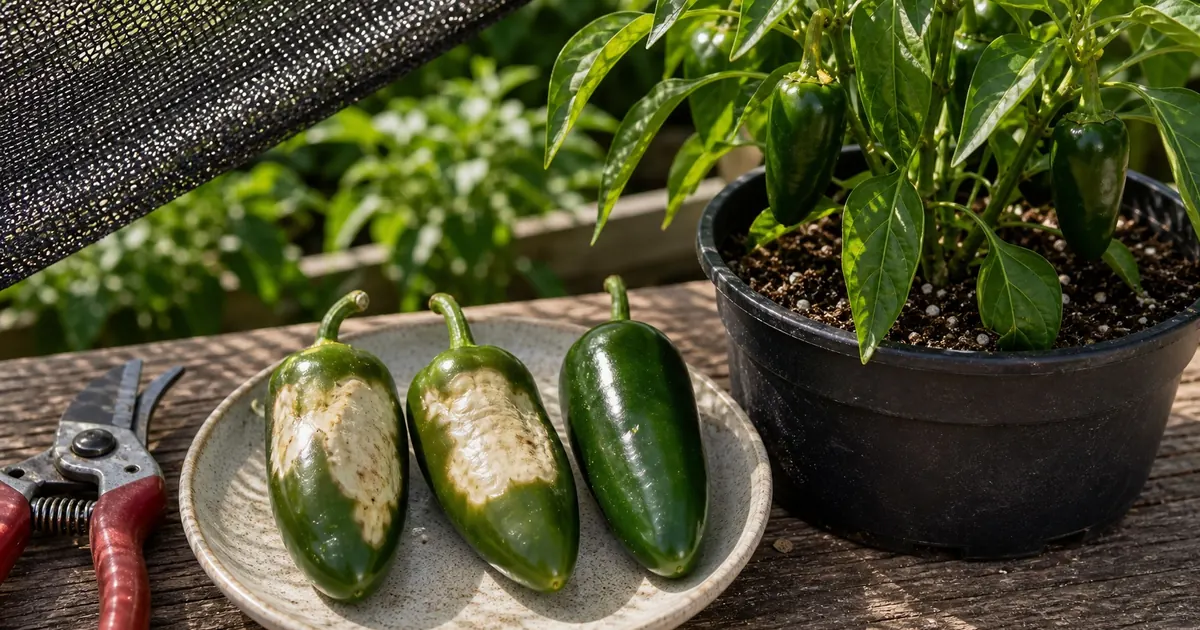
Pepper sunscald is a noninfectious injury that develops where fruit receives prolonged direct sunlight. The strongest clue is a white, cream, or tan patch on the exposed side while the shaded side remains normal.
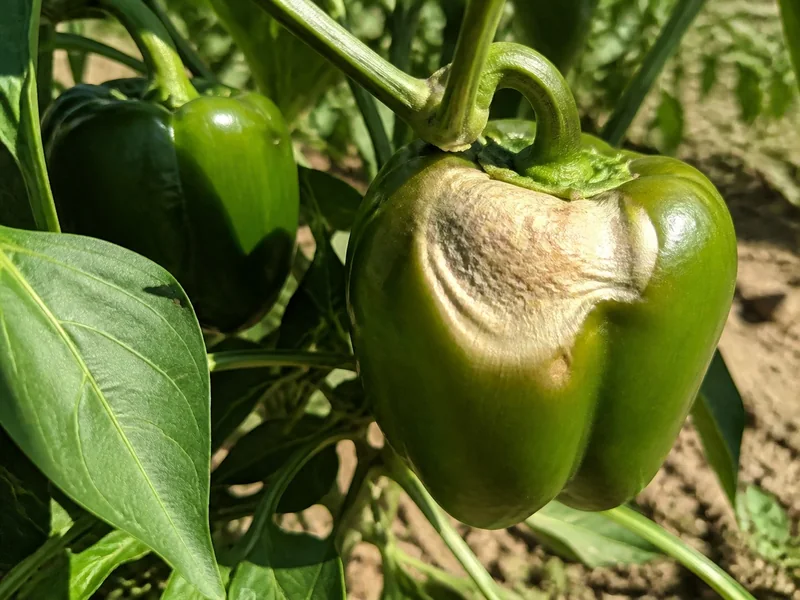
An early injury may look soft, pale, or slightly blistered.
As the damaged cells dry, the surface becomes sunken, wrinkled, and paper-like instead of returning to green.
University of Minnesota Extension also records sunscald on young leaves and stems, but fruit injury has a useful location rule. It occurs on tissue that faced the sun.
Use three clues together. Check whether the patch faces the strongest sun, whether it is pale and drying rather than wet and spreading, and whether a leaf or stem used to shade that spot.
Color alone cannot confirm the problem.
A white or tan area deserves a closer look because several pepper disorders change color as their tissue breaks down.
How can you tell sunscald from rot or disease?
Start with the lesion's position, then compare its surface and the rest of the plant. Sunscald follows exposure, while several common look-alikes follow the blossom end, make round fruit spots, or produce symptoms on leaves and stems.
| Condition | Where it begins | What the surface does | What else to check |
|---|---|---|---|
| Sunscald | Side or shoulder exposed to direct sun | Light patch that dries white and paper-like | Shaded fruit or shaded sides remain normal |
| Blossom-end rot | Blossom end or lower side | Tan and soft, then black, sunken, and leathery | Recent swings between dry soil and heavy watering |
| Anthracnose fruit rot | Often ripe or overripe fruit | Round sunken spots with dark centers | Pink spores may appear when conditions are moist |
| Bacterial spot | Fruit and leaves | Raised, corky brown fruit spots | Brown leaf spots often start on lower foliage |
| Phytophthora blight | Fruit, stems, and roots | Water-soaked fruit spots that may grow white mold | Whole branches or plants can wilt rapidly |
A pale patch on only the southwest-facing side after a hot, clear period fits sunscald.
Repeated round spots, pink spores, water-soaked tissue, leaf lesions, or whole-plant wilt point away from a simple exposure injury.
Do not apply a fungicide or add calcium just because the fruit has a light patch. Identify the pattern first because those treatments do not reverse sunscald.
Why do full-sun pepper plants still get sunscald?
Peppers need strong light to grow and fruit, but an individual fruit can still overheat when its surface sits in direct sun for too long.
The plant's light requirement and the fruit's need for leaf cover are separate conditions.
University of Maryland Extension describes the problem during sunny, hot weather, especially after insects or disease remove foliage. Iowa State University Extension likewise connects the risk to defoliation and recommends keeping enough leafy growth to cover fruit.
Sudden exposure
A fruit that developed under leaves may burn after pruning, a broken branch, or lodging moves the canopy away from it.
Canopy loss
Bacterial leaf spot, insects, wind damage, or declining leaves can uncover several fruit at once.
Vulnerable stage
UC Agriculture and Natural Resources identifies mature green peppers as especially sensitive, before their final color has developed.
Large-podded types such as bell peppers are more susceptible because more fruit surface may sit outside the leaves, although small peppers can burn too. A plant in full sun is therefore not misplanted simply because one exposed fruit develops a lesion.
Can a sunscalded pepper recover?
The damaged patch does not heal. Once that tissue has dried white and paper-like, it will not become firm green skin again.
Healthy tissue elsewhere on the fruit may continue to enlarge or change color if the fruit remains attached. That does not repair the injured wall, and the damaged area can weaken further as the fruit grows.
University of Georgia Extension warns that secondary pathogens can invade sunburned tissue.
A dry patch that turns soft, wet, dark, leaking, or fuzzy is no longer a stable cosmetic injury.
Protect the next tissue, not the old patch. Shade and canopy care can prevent new lesions on the same plant, but no spray can rebuild cells that have already collapsed.
Can you eat a pepper with sunscald?
Extension sources set different boundaries. UC Agriculture and Natural Resources says a pepper with limited damage may be used after the affected portion is removed if quality has not deteriorated, while University of Maryland Extension advises removing affected fruit and describes sunscalded produce as inedible.
The conservative home-kitchen choice is to use only a fruit with a small, dry, clearly bounded patch and firm, normal-smelling flesh everywhere else.
Cut well beyond the damaged tissue, use the sound portion promptly, and do not preserve a compromised pepper.
Use promptly after trimming
The patch is small and dry, the pepper is firm, the inside looks normal, and there is no mold, leakage, or off odor.
Discard the whole pepper
The lesion is extensive, soft, wet, blackening, cracked through the wall, moldy, leaking, or surrounded by tissue that has begun to rot.
When the condition is uncertain, discard the fruit. A garden harvest is not worth guessing around soft rot or mold.
What should you do when sunscald first appears?
Work from the damaged fruit back toward the exposure that caused it.
This keeps a visible symptom from turning into an unnecessary pesticide or fertilizer treatment.
- Inspect every affected fruit. Remove fruit with extensive injury, softening, leakage, mold, or rot so deteriorating tissue does not remain in the canopy.
- Map the exposed side. Note which direction each lesion faces and check the plant during the brightest late-afternoon hour.
- Find what changed. Look for recent pruning, a fallen stake, broken branches, insect feeding, leaf spots, or several leaves dropping together.
- Restore support. Stake or tie a leaning branch without crowding the canopy, then position healthy leaves between the fruit and the strongest sun where possible.
- Add temporary screening if exposure continues. Use an overhead cloth or a western screen with open sides rather than wrapping material against the plant.
- Watch new fruit. Mark the date and check whether fresh lesions appear after the protection is in place.
Sunscald is physical damage, so a fungicide cannot cure the original patch. Disease or insect control matters only when a diagnosed problem is stripping the leaf cover that fruit needs.
How do you prevent more peppers from getting sunscald?
Preserve healthy foliage first because leaves provide shade exactly where the fruit developed. Avoid stripping the center of a pepper plant just to improve visibility or airflow when the fruit will be left exposed.
If a hot western exposure still reaches the pods, block that window instead of darkening the bed all day.
Oregon State University Extension recommends shade cloth or screening against the hottest late-afternoon sun and also allows natural afternoon shade from a tree or building.
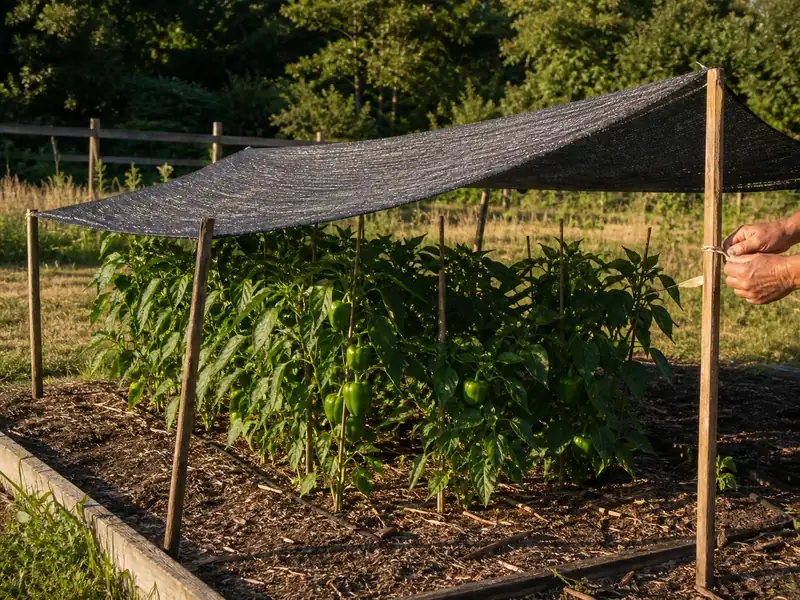
- Locate the damaging direction. Observe the bed when the injured fruit receives direct light, which is often later in the day.
- Set supports outside the root crown. Keep stakes stable and far enough from stems that installation does not cut major roots.
- Raise the cloth above the canopy. Leave space between fabric and leaves so heat and humid air can escape.
- Keep the sides open. An overhead panel or western screen is usually more useful than enclosing the plants.
- Support heavy branches. A branch that falls outward can expose fruit even under a generally leafy plant.
Water management supports the canopy but does not erase an existing burn. Keep root-zone moisture reasonably even, then judge shade by the condition of new fruit rather than the color of the old lesion.
Should you prune or fertilize a sunscalded pepper plant?
Do not remove healthy foliage around exposed fruit.
Pruning can turn a localized problem into several new lesions by uncovering pods that developed in shade.
Fertilizer is not an emergency treatment either. Iowa State recommends light fertilization to support leafy growth, while Oregon State cautions that too much nitrogen may encourage blossom-end rot, so the decision must follow the plant's actual condition and a soil or fertilizer plan.
Check and correct
- Leaf spots or insects causing defoliation
- Broken, leaning, or overloaded branches
- Dry root-zone soil during hot weather
- A known nutrient shortage based on the growing plan
Avoid the reflex response
- Removing healthy leaves around fruit
- Adding a large nitrogen dose to force a canopy
- Spraying an undiagnosed white patch
- Assuming every pale lesion is sunscald
When foliage disappeared quickly, diagnose why.
Repeated leaf loss from bacterial spot, aphids, mites, or wind requires a different correction from a one-time pruning mistake.
Is sunscald on leaves the same as sunscald on fruit?
Both injuries come from sudden or excessive exposure, but the stage and prevention differ. University of Minnesota Extension describes grey irregular bands on young leaves and white injury on the exposed side of young stems, while fruit develops the familiar pale patch on its sun-facing surface.
Leaf and stem injury is most likely when indoor or greenhouse transplants move into strong outdoor light too quickly.
Gradual hardening reduces that transition shock before planting.
Fruit injury happens later and depends more on canopy position, hot direct light, lodging, and defoliation. Preserve leaves, support branches, and screen the damaging exposure rather than repeating a transplant schedule.
Match the prevention to the tissue. Harden young plants before transplanting.
Protect developing fruit with leaf cover and targeted shade.
When should you add shade cloth over peppers?
Add shade when healthy fruit repeatedly receives direct, intense afternoon sun and the canopy cannot cover it, especially when mature green pods already show fresh pale lesions.
A forecast alone is less useful than combining hot clear weather with the exposure pattern you can observe in the bed.
There is no universal shade percentage for every home garden. Utah State explains that cloth changes radiation, fruit temperature, humidity, wind, and soil moisture, while a Colorado pepper trial found benefits with 20 and 30 percent cloth under its own conditions.
Those trial numbers are context, not a rule for every climate, cloth color, frame height, or pepper variety.
Start with light to moderate screening recommended for your region and adjust by plant response.
- Check light. Leaves should remain actively growing rather than stretching into deep shade.
- Check airflow. Warm air should escape from every side, and the cloth should not rest on foliage.
- Check moisture. Shaded soil may dry more slowly, so reassess irrigation instead of repeating the old schedule automatically.
- Check new fruit. Protection is working when newly exposed pods stay firm and evenly colored.
- Check the season. Remove or reduce temporary shade when the intense exposure period has passed.
The best setup solves the measured exposure problem while keeping the plant productive. New fruit, not a fixed cloth number, provides the final test.