Watering Pepper Plants by Stage, Soil, and Weather
Pepper plants usually need about 1 inch of water per week in garden soil, with more frequent watering in sandy soil, containers, heat, or heavy fruiting. The best rule is not a calendar rule: water deeply when the top inch or two begins to dry, then let the root zone breathe.
Watering pepper plants well means keeping the root zone evenly moist without keeping it soggy. In garden beds, the practical baseline is about 1 inch of water per week from rain and irrigation, then adjust for containers, sandy soil, heat, and fruit load.
Peppers dislike both extremes.
Dry soil causes wilt, flower drop, and poor fruit fill. Wet soil cuts oxygen from roots, triggers rot, and can make leaves curl in ways that look like disease.
How often should you water pepper plants?
A calendar schedule works only until the weather changes. A jalapeno in a 5-gallon fabric pot on a hot patio can need water daily, while a mulched bell pepper plant in clay soil may not need irrigation for several days.
Use the finger test first.
Push a finger 1-2 inches into the soil near the root zone. If that layer is dry and the pot feels light or the bed surface is pulling away, water deeply at soil level.
- Seedlings: keep mix lightly moist, not shiny wet.
- New transplants: water deeply at planting, then monitor daily for one week.
- Vegetative plants: soak the root zone when the top layer dries.
- Flowering and fruiting plants: keep moisture steady to reduce blossom drop and blossom-end-rot pressure.
- Containers: judge by weight and drainage, not only surface color.
University of Minnesota Extension advises soaking pepper soil thoroughly at least once a week if the plant does not receive 1 inch of rain. Sandy soil needs more frequent watering because it drains faster.
How much water do peppers need at each stage?
Small seedlings need frequent light attention, especially if they came from a seed-starting tray because their roots are shallow. Large fruiting plants need deeper watering because the root system is broader and the canopy loses more water in heat.
We use a stage-based pattern because it prevents the common mistake of treating a seedling cell, a raised bed, and a patio pot like the same plant.
| Stage | Watering goal | What to watch |
|---|---|---|
| Seedling tray | Even moisture in sterile mix | Algae, damping off, dry cell edges |
| First week outside | Deep transplant soak, then daily checks | Midday wilt that recovers by evening |
| Vegetative growth | Deep soak when top 1-2 inches dry | Leaf curl, pale growth, shallow roots |
| Flowering and fruiting | Consistent moisture, no dry-wet swings | Flower drop, blossom-end rot, small fruit |
The table is a starting point. Your actual interval depends on soil texture, mulch, wind, container material, and whether the plant is a compact Thai chile or a tall habanero growing carrying a heavy canopy.
How should you water pepper seedlings?
Pepper seedlings need moisture, warmth, and oxygen at the same time.
That balance is why bottom watering works well for trays. The mix wicks up water while the surface dries enough to discourage algae and fungus gnats.
For seeds, UMN recommends a sterile soilless germination mix and warm soil. Heating mats dry trays faster, so check cell edges daily instead of assuming the dome keeps everything moist.
Seedling check: lift the tray. If it feels feather-light and the cell edges are pale, bottom water for 10-15 minutes, then drain.
If the surface is glossy or smells sour, hold water and add airflow.
Moisture errors at this stage also connect to stuck seed shells on pepper seedlings. Dry air can harden the seed coat before cotyledons open, while soggy mix invites disease.
Match the schedule to your soil
Soil type moves the watering interval more than any other single factor, and it is the one thing a schedule copied from someone else cannot account for.
| Soil | How it behaves | What to change |
|---|---|---|
| Sandy | Drains fast and holds little | Water more often at a smaller volume, and mulch heavily |
| Loam with organic matter | Holds moisture and still drains | Nothing. This is the target that pepper soil work aims at |
| Clay | Holds water long and waterlogs roots | Water less often and more deeply, and check below the surface before adding any |
A 5-gallon pot in full summer sun can need water daily while the same plant in a raised bed goes 3 to 4 days.
That gap is the environment, not the plant.
Water containers differently from beds
Container peppers dry from every side, not just the top.
Fabric grow bags dry fastest, black plastic pots can heat the root zone, and small nursery pots run out of moisture before a fruiting plant finishes the day.
Water until liquid drains from the bottom, then stop.
Do not leave the pot sitting in a saucer of water because pepper roots still need oxygen.
- Use at least a 5-gallon container for most full-size peppers, then compare pot choice with container peppers guide.
- Mulch the pot surface with clean straw, leaves, or compost to slow evaporation.
- Move small pots out of reflected wall heat during heat waves.
- Check fabric pots twice daily when temperatures stay above 90F.
If a container plant wilts every afternoon but perks up after sunset, it may be losing water faster than the pot can supply. If it stays wilted in wet mix, read it as root stress and compare with pepper plant wilting causes before adding more water.
How can you tell overwatering from underwatering?
Overwatering and underwatering can both cause drooping leaves, which is why soil checks matter.
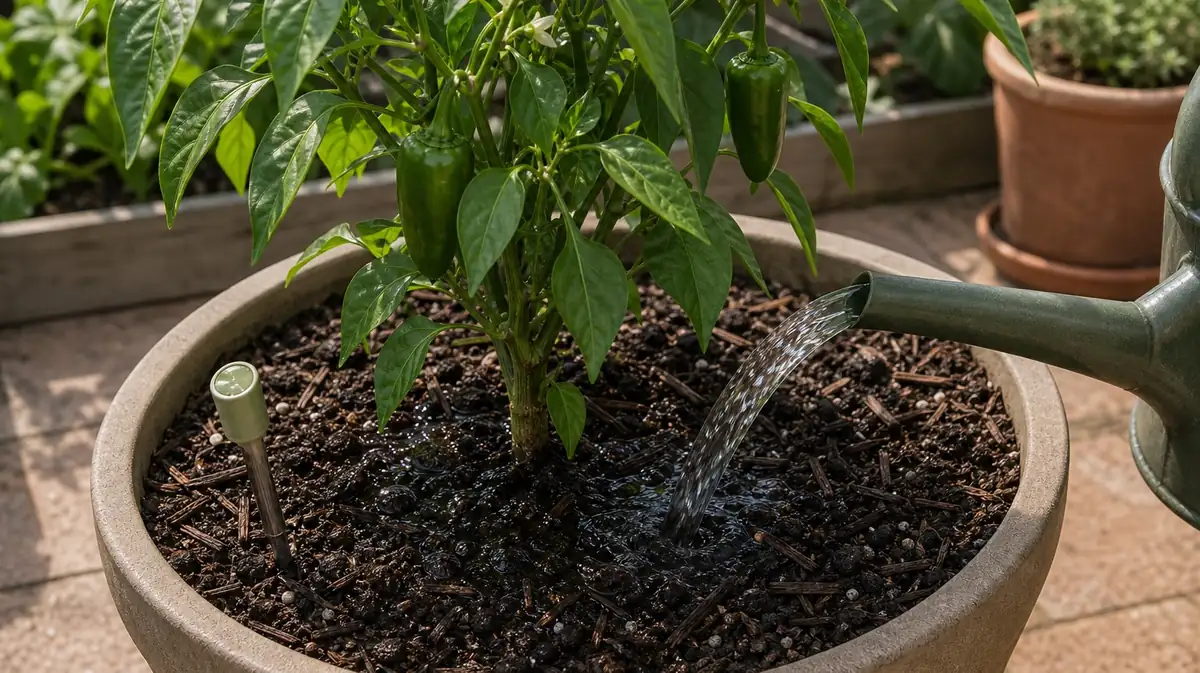
The difference is usually in the root zone and the recovery pattern.
Underwatered peppers often have dry soil, light pots, crisp leaf edges, and wilt that improves after a deep soak. Overwatered peppers sit in damp soil, yellow from the bottom up, and may smell sour near the crown.
- Too dry: light pot, dull leaves, flower drop, dry top 2 inches.
- Too wet: heavy pot, yellow lower leaves, leaf curl, fungus gnats, slow growth.
- Heat wilt: droop in afternoon, recovery at night, soil still moderately moist.
- Disease suspicion: one-sided wilt, black stem lesions, or spots that spread despite good watering.
Do not chase every afternoon droop with water. In hot weather, even well-watered peppers can wilt temporarily because leaves lose water faster than roots can replace it.
Water at soil level and protect the canopy
Soil-level watering keeps leaves drier and reduces splash that can move disease spores. UMN Extension specifically warns that wet leaves are more disease prone and that shallow sprinkling encourages shallow roots.
Drip line, a narrow-spout watering can, or a slow hose trickle all work. The goal is to wet the root zone 6 to 8 inches down, not to polish the leaves.
Mulch helps twice: it slows evaporation by 50 to 70 percent and prevents soil splash.
We use 2-3 inches around mature plants, leaving a small gap around the stem.
This also helps with pest pressure. Dusty, dry leaves are friendlier to spider mites on pepper plants, while constantly wet leaves raise disease risk.
The middle path is boring but effective.
Adjust for heat, wind, and fruit load
Water demand rises when the plant is flowering, setting fruit, or standing in hot wind. A fruiting cayenne or bell pepper can use more water than the same plant needed two weeks earlier.
During heat waves, water early in the morning so roots are ready before the afternoon peak.
Evening water can help containers recover, but avoid wetting foliage right before nightfall.
If fruit ends turn dark and sunken, moisture swings may be part of the problem. Blossom-end rot is tied to calcium movement inside the plant, and irregular water makes that movement worse.
Use a rain gauge before adding irrigation
A rain storm does not always mean the pepper root zone received enough water.
Light rain can wet the mulch and leaf canopy while leaving the soil dry 2 inches down.
Set a simple rain gauge near the pepper bed, then confirm with the finger test the next morning.
If the gauge shows less than 1 inch for the week and the soil is dry below the mulch, irrigate slowly instead of giving a quick surface splash.
Drip irrigation works best when it runs long enough to move water into the root zone. A 10-minute drip cycle may look tidy, but it can leave mature pepper roots dry during fruiting weather.
A practical weekly rhythm
For in-ground peppers, start with one deep watering per week when rain is short. Add a second soak for sandy soil, raised beds that drain hard, or heat over 90F.
For containers, check daily and water whenever the root zone is drying.
That can mean every day in July and every 3-4 days during mild spring weather.
The best watering system is the one you can inspect. A cheap moisture meter, your finger, and pot weight will beat a perfect schedule that no longer matches the plant.
Does less water make peppers hotter?
Everything above treats water as plant health.
There is a second effect worth knowing about, and it points the other way.
Mild drought stress concentrates sugars and capsaicin in the fruit, which is why some commercial growers of hot varieties water less than the plant would prefer.
The trade is real: the same moisture swings that raise heat also cause blossom end rot and cracked skins.
Stress the plant on purpose only after it is established and setting fruit, and only by letting the soil dry a little further between soaks rather than by skipping them.
If you are growing bells or sweet varieties, ignore this entirely and keep moisture even.
Equipment that makes consistency easier
None of this is required, and all of it removes a daily decision.
- Drip or soaker line: a basic kit runs under $20 and puts water at the roots with almost no loss to evaporation.
- Self-watering pots: a built-in reservoir stretches container checks to every 2 to 3 days even in peak summer.
- Moisture meter: push the probe 2 inches down and aim for the moist band rather than the wet one.
Watering Pepper Plants by Stage, Soil, and Weather FAQ
- University of Minnesota Extension - Growing peppers in home gardens
- University of Minnesota Extension - Pepper plant diagnosis
- University of Minnesota Extension - Twospotted spider mites in home gardens