How Long Do Peppers Take to Grow From Seed to Harvest?
Most sweet and hot peppers need about 70 to 85 days after transplanting for a first usable harvest, and starting from seed usually adds about eight weeks indoors. Full color takes longer than a green harvest, while cool soil, extreme temperatures, and excess nitrogen can move the date later.
How long do peppers take from seed to harvest?
Most sweet and hot peppers need 70 to 85 days after transplanting for a first usable harvest, according to University of Maryland Extension. Starting from seed adds the indoor seedling period before that transplant clock begins.
For a typical home-garden schedule, sowing about eight weeks before transplant and then adding 70 to 85 days puts the first harvest roughly 18 to 20 weeks after sowing. That total is a planning estimate for a green or otherwise usable harvest, not a promise that every pepper will be fully colored by then.
Those figures describe different clocks. The indoor interval builds a transplant, the maturity listing estimates outdoor production, and the color interval applies only when you want a ripe-color harvest rather than a mature green pepper.
A green bell can be ready while a red bell on the same schedule is still changing color. A habanero planted on the same day may remain green after both because Maryland Extension places habanero types in a longer 90 to 120 day transplant range.
Use the first date as the beginning of a harvest window.
Weather, transplant stress, plant health, and the cultivar listing decide where the plant lands inside or outside that window.
What does days to maturity mean on a pepper packet?
For peppers started indoors, the maturity number usually begins when a transplant goes into the garden, not when the seed enters the tray. Southern Exposure Seed Exchange states that its pepper maturity days are after transplanting, and Territorial Seed notes that some pepper listings end at edible green fruit.
That second detail changes the answer. A packet marked 75 days may describe the first full-size green pepper even when the cultivar eventually turns red, orange, yellow, brown, or purple.
Read the words beside the number. Look for “from transplant,” “green,” “ripe,” or a named mature color before adding the figure to your calendar.
If a listing does not define its clock, treat the number as an estimate and ask the seller what stage it marks. Two 75-day peppers are not directly comparable when one listing ends at green fruit and the other ends at full color.
A purchased nursery plant shortens the time you personally spend growing from seed, but it does not change the outdoor conditions the plant still needs.
Start the maturity count on the day that plant actually enters its final garden bed or container.
How long do pepper seeds take to germinate?
Iowa State University Extension lists pepper emergence at 7 to 10 days with a germination air temperature of 70 to 75°F.
That is a useful baseline for a warm, evenly moist tray, not a deadline for discarding every unsprouted seed.
Soil temperature adds important context. UW-Madison Extension lists 65°F as the minimum soil temperature for pepper germination and 85°F as the optimum, so a tray in a 70°F room can still run cool at the root zone.
Air and growing medium are not interchangeable measurements. A seed tray beside a cold window or on an uninsulated surface may stay several degrees below the room reading.
If nothing has emerged near the end of the ordinary window, measure the medium before reseeding. Warmth is the first variable to verify because low temperature can slow the same viable seed without producing a visible symptom above the soil.
Keep the medium evenly moist while you wait, but do not turn the tray waterlogged.
Iowa State describes a well-drained growing medium, proper moisture, and adequate light as parts of producing sound transplants, so temperature alone cannot compensate for saturated or dried-out cells.
How long should pepper seedlings stay indoors?
University of Minnesota Extension recommends starting pepper seed about eight weeks before planting outside. Maryland Extension uses 8 to 10 weeks for most peppers and notes that some types and cultivars may need 12 weeks.
Work backward from safe transplant conditions rather than from the average frost date alone. Pepper plants can survive a frost-free night that is still too cold for useful growth.
- Choose the likely transplant window. Minnesota Extension waits until nighttime lows remain above 50°F.
- Count back about eight weeks for sowing. Use the packet when it calls for a longer indoor start.
- Use the final one to two weeks for hardening. Increase outdoor exposure gradually while bringing plants back in when nights fall below 55°F.
Hardening overlaps the end of the indoor period.
Adding two separate weeks after an eight-week seedling schedule can produce an oversized transplant when the intended method was gradual outdoor exposure during weeks seven and eight.
Actual weather controls the final move.
If the planned transplant date arrives with repeated nights in the 40s, keep the plants protected and move the harvest estimate forward from the day they are finally planted.
How long after flowering will a pepper be ready?
New Mexico State University Extension reports that mature green chile fruit can be ready 45 to 55 days after pollination under ideal conditions.
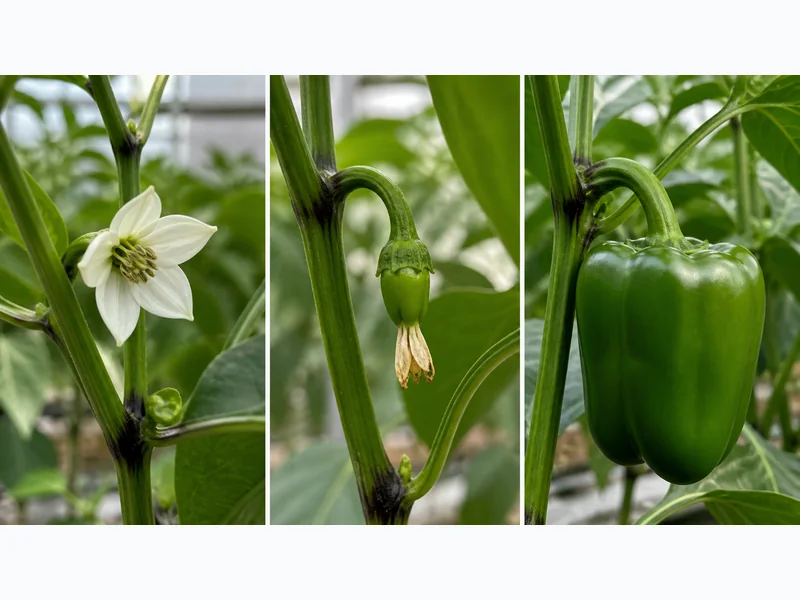
This is the most useful midseason checkpoint once a plant has flowers.
Begin counting after fruit set, not when an unopened bud appears. A successfully set pepper remains behind the fading flower as a tiny swelling, while a blossom that drops with no growing ovary never entered the fruit-development clock.
The NMSU figure describes mature green fruit rather than guaranteed full color.
Pod enlargement occupies much of that interval, and a pepper meant to ripen red may need additional time after it reaches full size.
Temperature decides whether the clock starts at all. NMSU reports poor fruit set below 60°F or above 90°F, so a plant can flower repeatedly without creating peppers during unsuitable weather.
When flowers are dropping, inspect daytime highs and nighttime lows before blaming pollination.
Count the remaining season from the first fruit that stays attached and begins enlarging, not from the first flower the plant produced.
Should you count to green harvest or full color?
A mature green pepper and a fully colored pepper are two valid harvest targets with different dates.
Maryland Extension places green bell peppers at 70 to 80 days after transplanting and adds another 2 to 3 weeks for full ripening.
Choose this endpoint when the variety is commonly used green, the fruit has reached full size, or the remaining warm season is short. The plant can also begin directing resources toward later flowers and fruit after harvest.
Add the seller's stated ripe interval when available. For bell peppers, Maryland Extension's general estimate is 2 to 3 weeks beyond mature green.
Keep that 2 to 3 week figure attached to bell peppers. Wall thickness, cultivar, temperature, and the final color sequence differ across other pepper types, so the bell interval should not become a universal rule.
Maryland Extension also advises that peppers do not continue ripening after harvest.
If full color is the goal, leave sound fruit on the plant until the color change is complete rather than planning to finish it reliably on a counter.
The choice also affects later production.
Minnesota Extension notes that continued harvesting allows plants to keep producing flowers and setting more fruit, so taking mature green peppers can favor more harvest opportunities when the season is limited.
Which peppers take longer to mature?
The cleanest comparison uses ranges from one source and one starting point. University of Maryland Extension reports all of the figures below from transplanting, which avoids mixing seed dates with outdoor maturity dates.
| Pepper group or harvest target | Time after transplant | What the estimate means |
|---|---|---|
| Most sweet and hot types | 70 to 85 days | General first-harvest range |
| Bell pepper at mature green | 70 to 80 days | Full size before ripe color |
| Bell pepper at full color | 70 to 80 days, then 2 to 3 more weeks | Green stage plus on-plant color change |
| Habanero types at ripe color | 90 to 120 days | Longer ripe-harvest range |
This table is deliberately shorter than a 20-cultivar list.
Exact cultivar numbers belong to the current packet or breeder listing because sellers may use different harvest colors, and local temperature can change how closely a plant follows the published estimate.
Use the general row when you have only a plant label. Use the named listing whenever you know the cultivar, then confirm whether its number ends at green or ripe fruit.
Climate fit matters as much as the printed number.
Minnesota Extension recommends checking days to maturity and choosing widely adapted or cold-tolerant peppers for short northern seasons, while smaller-fruited types often handle temperature variation better than large bells.
Why is your pepper timeline running late?
A late pepper usually has a stage-specific bottleneck rather than one general lack of “speed.”
Identify the last stage that progressed normally before changing fertilizer, water, or light.
Seeds have not emerged
Measure the growing medium first. A reading near or below the 65°F minimum from Wisconsin Extension explains slow germination more directly than the calendar alone.
Check moisture at seed depth next. A dry surface can hide adequate moisture below, while a saturated cell may exclude the air a germinating seed also needs.
Seedlings or transplants have stopped growing
Pale, stretched seedlings point toward inadequate overhead light.
Minnesota Extension says insufficient bright light causes stems to elongate and lean, which means the plant is spending time reaching rather than building a compact transplant.
Recently planted peppers that remain small often went outside into cold soil or cool nights. Maryland Extension says plants set out before soil reaches 65°F may simply sit there, while Minnesota Extension waits for nighttime lows above 50°F.
Dry soil can slow growth even when leaves have not fully wilted.
Consistent moisture supports flowers and small fruit, while shallow surface watering encourages shallow roots that are more vulnerable during hot weather.
A large leafy plant has few peppers
Do not add nitrogen just because the plant is behind the expected harvest date. Minnesota Extension links excess nitrogen with bushy, leafy plants that are slow to bear, and Johnny's lists excess nitrogen among the causes of a large plant with few peppers.
Temperature can produce the same fruitless result through a different path. Minnesota Extension flags temperatures above 90°F and unsuitable night temperatures, while NMSU places strong fruit set between the cold and hot thresholds described earlier.
- No sprouts: measure medium temperature and inspect moisture before reseeding.
- Leggy indoor plants: correct overhead light rather than extending the indoor calendar blindly.
- Small outdoor transplants: check soil warmth, night lows, and root-zone moisture.
- Healthy leaves but dropped flowers: compare recent temperatures with the fruit-set range.
- Large leafy plant with few fruit: stop adding nitrogen until soil-test or label guidance supports it.
- Everything looks healthy but the season is ending: compare the cultivar's current listing with the frost-free time that remains.
The corrective priority follows the diagnosis.
Warming a cold seed tray can change germination time, but feeding a heat-stressed flowering plant will not make its pollen set fruit.
How do you calculate a realistic pepper harvest date?
Build the estimate from the actual transplant date because that is when the common packet clock begins. Keep seed starting on the same calendar, but do not add it to a number that already claims to start at sowing.
- Mark the safe transplant window. Use local conditions and the night-temperature guidance, not the frost date by itself.
- Count backward for seed starting. Use about eight weeks unless the current cultivar listing calls for longer.
- Add the maturity days to the real transplant date. Recalculate if cold weather delays planting.
- Add the color interval only when needed. Use the seller's ripe timing, or the bell-specific 2 to 3 week estimate when that is the pepper you are growing.
For example, a pepper transplanted on May 25 with a 75-day listing reaches its estimated first harvest around August 8.
If it is a bell pepper and the listing marks mature green fruit, Maryland Extension's additional color interval moves a full-color estimate to roughly August 22 through August 29.
That arithmetic assumes useful growing weather. A cold spell after transplant, flower drop during extreme heat, or dry soil during fruit set can move the observed date without making the packet dishonest.
The result is a monitoring window, not a guaranteed picking day.
Begin checking size and color near the calculated date, then let the plant's actual stage decide the harvest.
If the full-color window falls after the first expected frost, choose among three concrete options.
Harvest that pepper green, buy a more advanced transplant, or select a cultivar whose current listing fits the warm days available.
How Long Do Peppers Take to Grow From Seed to Harvest? FAQ
- University of Maryland Extension: Growing Peppers in a Home Garden
- University of Minnesota Extension: Growing Peppers in Home Gardens
- Iowa State University Extension: Germination Requirements for Annuals and Vegetables
- UW-Madison Extension: Soil Temperatures for Seed Germination
- New Mexico State University Extension: Growing Chile Peppers in New Mexico Gardens
- Johnny's Selected Seeds: Pepper Growing Information
- Southern Exposure Seed Exchange: Pepper Catalog Maturity Note
- Territorial Seed: Pepper Maturity Definition