

KnowThePepper
How Hot Is a Habanero? 100,000–350,000 SHU With a Citrus-Fruit Flavor
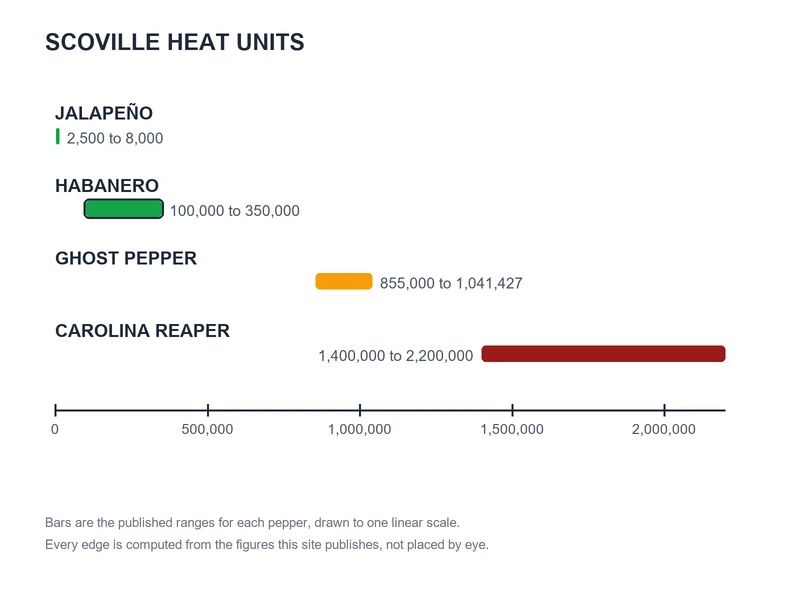
The habanero sits at 100,000-350,000 SHU. That puts it above most bird's eye chili listings, which usually sit around 50,000-100,000 SHU, but the exact gap depends on the pods compared.
It has a bright citrus-fruit flavor that makes it one of the most flexible extra-hot peppers in the garden and kitchen. It grows reliably in containers or beds, rewards patient growers with prolific yields, and brings genuine depth to sauces, marinades, and salsas.
- Species: C. chinense
- Heat tier: Extra-Hot (100K-1M SHU)
- Comparison: 13-140x hotter than a jalapeño, depending on where the jalapeño falls in its 2,500-8,000 SHU range
What Is Habanero?
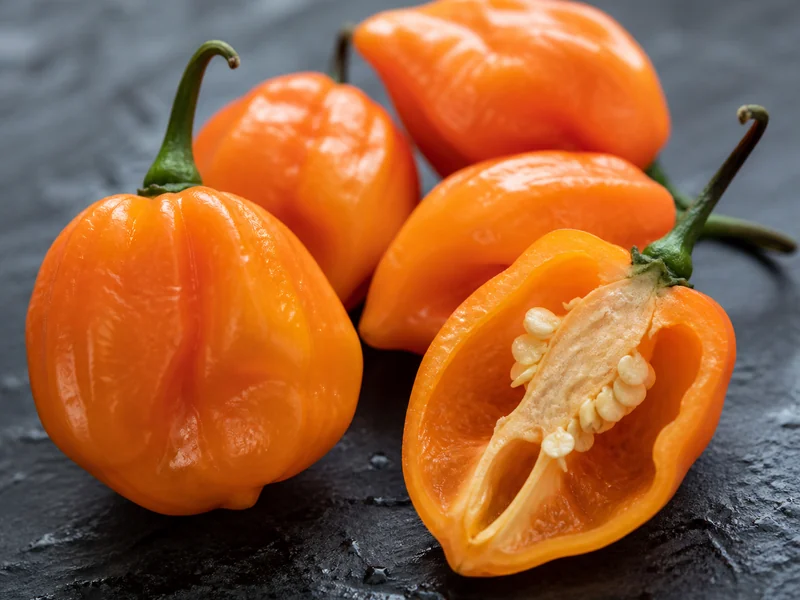
The habanero is a small, wrinkled, lantern-shaped pod that carries its heat alongside genuine fruity, citrusy character, a combination that sets it apart from hotter peppers that sacrifice flavor for fire.
Belonging to Capsicum chinense, the species behind most extreme-heat varieties, the habanero is the most widely available representative of a group that includes ghost peppers, scorpions, and Carolina Reapers. Most of the habaneros you see in grocery stores are orange, the standard commercial harvest color.
Red, chocolate, and white variants exist with their own flavor characteristics.
The fruity, citrus-forward flavor comes from aromatic esters that are characteristic of C. chinense, the same trait that gives Scotch bonnets their tropical note. Jalapeños and cayennes, being C. annuum, don't carry those aromatic compounds.
That's why a habanero hot sauce tastes fundamentally different from a jalapeño-based one, even at the same heat level.
At home in Mexican cooking traditions spanning centuries, the habanero is central to Yucatecan cuisine, appearing in salsas, marinades, and the fiery condiments that accompany cochinita pibil. It's where the pepper's citrus-fruity character gets to work alongside acidic and tropical flavors.
Not all habaneros are the same heat. Red Savina - a cultivar first formally measured in the mid-1990s, was certified by Guinness as the world's hottest pepper in 1994 at approximately 577,000 SHU, holding that record until 2006.
Caribbean Red habaneros push toward 400,000 SHU and carry a slightly deeper red color at full ripeness. Chocolate habaneros (also called Congo Black) measure 300,000 to 425,000 SHU with an earthier, less citrusy flavor.
White/Peach habaneros run closer to the 100,000 SHU floor with a distinctly tropical sweetness.
If you've been working with jalapeños and want to step up significantly in heat, the habanero is the next logical pepper. Understanding the jalapeño vs habanero heat gap before cooking with it fresh for the first time is worth a few minutes.
What Is the Origin of Habanero?
The habanero's origins trace to the Yucatan Peninsula of Mexico, where it has been cultivated for centuries. Archaeological evidence suggests C. chinense peppers were consumed in the Amazon basin as far back as 8,500 years ago, though the habanero as a distinct cultivar is more closely tied to Mesoamerican and Caribbean agricultural traditions.
The name likely derives from La Habana (Havana, Cuba) - not because the pepper originated there, but because Cuba served as a major transit point for produce moving between the Americas and Europe during the colonial trade era. Spanish traders moved the pepper along these routes, and it became associated with the port it passed through.
The pepper's genetic relationship with Caribbean varieties shaped its spread. The habanero vs Scotch bonnet - a nearly identical C. chinense variety, reflects how the same genetic base adapted across the Atlantic basin through generations of agricultural selection.
In Jamaica and Trinidad, what Mexico calls habanero is called Scotch bonnet. The flavor is nearly identical, and food scientists generally treat them as regional variants of the same pepper rather than distinct types.
Commercial cultivation for the US market expanded significantly in the 1990s, driven partly by the hot sauce industry's growth and partly by the cultural cachet of the 'world's hottest pepper' narrative, even as the habanero was surpassed by newer cultivars, it remained the most commercially available superhot-adjacent pepper by a wide margin.
What Does Habanero Taste Like, and How Hot Is It?
The Habanero delivers 100K–350K Scoville Heat Units, placing it in the Extra-Hot tier (100K-1M SHU). That makes it roughly 13-140x hotter than a jalapeño, depending on where the jalapeño falls in its 2,500-8,000 SHU range.
Flavor notes: fruity and citrusy.
How Nutritious Is Habanero?
A 100g serving of raw habanero provides approximately 40 calories, with notable amounts of vitamin C - often exceeding 200% of the daily recommended value. Habaneros also supply vitamin A, potassium, and dietary fiber.
Compared to jalapeños, habaneros are roughly 40% higher in vitamin C per 100g, a difference partly explained by the longer ripening period that allows nutrient accumulation in C. chinense varieties. The orange pigment from beta-carotene also contributes vitamin A activity not present in green jalapeños.
The heat compound, capsaicin, triggers TRPV1 receptors, and why capsaicin burns is well-documented in pain pharmacology. At habanero concentrations, the effect is intense but typically peaks within 1 to 3 minutes and dissipates within 20 to 30 minutes for most people.
For heat-source context and data caveats, see our methodology.
How Do You Cook With Habanero?
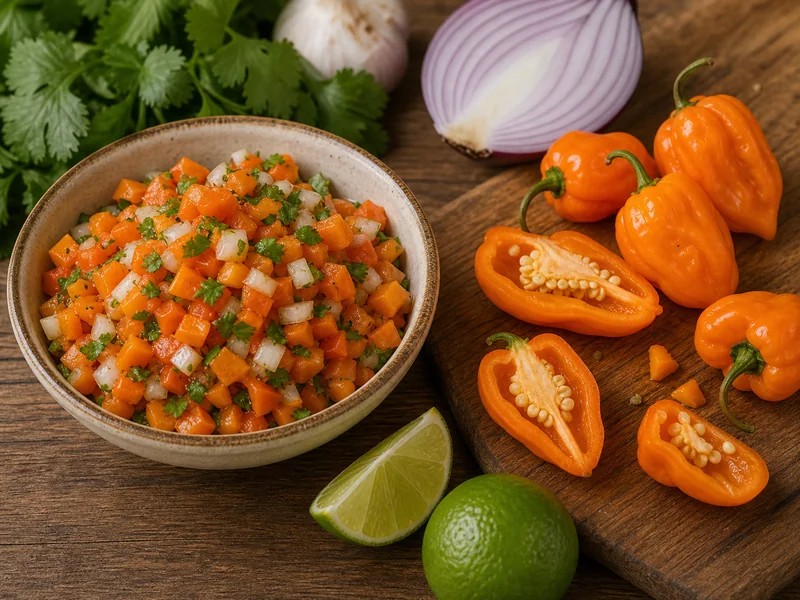
Habanero salsa is where most cooks start, and for good reason. The citrus-fruit notes amplify mango, pineapple, and peach in ways that milder peppers simply can't.
A small dice of fresh habanero in a mango salsa transforms the dish from sweet to complex. The aromatic chemistry is complementary: both tropical fruits and habaneros share overlapping ester profiles.
For hot sauce, the habanero's fruity character shines when fermented or blended with carrot and vinegar, a combination traditional to Yucatecan cuisine. Carrot tempers heat without eliminating it, adding natural sweetness that lengthens the aftertaste.
A standard ratio: 1 habanero per 2 medium carrots for a sauce that's hot but approachable. Double the habanero for serious heat.
Dairy works for heat reduction because capsaicin is fat-soluble - the fat in cream cheese, sour cream, or crema binds capsaicin molecules and removes them from contact with TRPV1 receptors in your mouth.
This is why a cream cheese-stuffed habanero feels less punishing than a raw one at the same SHU level. It's also why adding water to your mouth after eating a habanero does almost nothing.
Whole roasted habaneros blended into a Yucatecan-style salsa roja pair with cochinita pibil in a way that's hard to replicate with other peppers. The heat holds up against the richness of slow-cooked pork.
Dried and ground habanero powder lets you add controlled heat without fresh citrus notes, useful when you want the SHU without the fruity character. When fresh habaneros aren't available, the closest substitutes for habanero are generally Scotch bonnets, which share the C. chinense fruity profile.
How Do You Keep Habanero Fresh?
Habaneros are stocked year-round in most well-stocked groceries and in Latin markets. Look for firm, glossy pods without soft spots or wrinkling, wrinkling signals age and moisture loss.
Orange is the most common commercial color. Red habaneros indicate full ripeness and are slightly richer in flavor.
At home, unwashed habaneros keep 1 to 2 weeks in the refrigerator crisper. For longer storage, freeze whole pods in a zip-lock bag, they lose texture but retain full heat and flavor for up to 12 months.
Dried habanero powder keeps in a sealed jar for 6 to 12 months before losing significant potency.
When handling fresh habaneros, wear gloves. At this SHU level, capsaicin causes skin irritation that can last hours.
The oils transfer to surfaces and won't wash off easily with soap and water alone, oil or fat-based cleaners work better. Keep hands away from eyes and face until thoroughly washed.
| Form | Keeps for | What you give up |
|---|---|---|
| Fresh, refrigerated unwashed | 1 to 2 weeks | Nothing, if the pod was firm and glossy to begin with |
| Frozen whole | up to 12 months | Texture entirely, so cooked dishes only |
| Dried powder, sealed | 6 to 12 months | Potency past that point, gradually rather than suddenly |
What Is a Good Substitute for Habanero?
Compare substitutes for Habanero by form, flavor, and heat before choosing a ratio. Measured adjustments must account for the dish and the concentration of the replacement.
Direct comparisons show where flavor, form, and preparation differ in the Habanero vs Jalapeno and Habanero vs Serrano matchups.
Compare Habanero with: Habanero vs Carolina Reaper · Habanero vs Cayenne · Habanero vs Thai Chili · Habanero vs Fresno · Habanero vs Aji Amarillo · Habanero vs Datil · Habanero vs Fatalii · Habanero vs Habanada · Habanero vs Red Savina Habanero · Habanero vs Manzano · Habanero vs Ghost · Habanero vs Bulgarian Carrot
How Do You Start and Grow Habanero Peppers?
Starting habaneros from seed requires patience. Germination takes 10 to 21 days at soil temperatures of 80 to 85°F - a heat mat is essential, not optional.
Growing habaneros covers the stages from sowing to harvest.
Transplant seedlings outdoors only after nighttime temperatures stay consistently above 55°F. Habaneros are more temperature-sensitive than jalapeños and won't set fruit reliably if temperatures dip unexpectedly.
Space plants 18 to 24 inches apart for good airflow. Full sun - 8+ hours daily - produces the best yield and heat.
Habaneros in shade-stressed conditions produce smaller pods with less capsaicin accumulation.
They're also sensitive to extreme heat: above 95°F, blossom drop occurs and fruit set stalls until temperatures moderate. In hot climates, afternoon shade can improve yields during heat waves.
Fruits develop over 90 to 110 days from transplant - significantly longer than jalapeños' 70 to 85 days. A healthy plant produces 15 to 25 pods per season, somewhat fewer than jalapeños' 25 to 35.
The orange color in grocery stores is the commercial harvest stage. Fully ripe red habaneros have had another 2 to 4 weeks on the plant and carry a slightly deeper, less fruity flavor.
Growing habanero peppers in containers works well, use a 5-gallon pot minimum and keep plants in the warmest, most sun-exposed spot available. Container habaneros often outperform garden-bed plants in cooler climates because you can move them to capture maximum heat.
Habanero FAQ


- Codex Alimentarius, FAO and WHO, standard for chilli peppers
- Capsicum chinense Jacq. - USDA GRIN Taxonomy
- USDA FoodData Central, SR Legacy 170108, Peppers, hot chile, raw
Species classification: C. chinense - based on published botanical taxonomy.