
Habanero vs Manzano: A Small Dose of Tropical Heat or a Cup of Juicy Flesh
Habanero is far hotter and works as a small dose of tropical, floral heat in sauces and marinades. Manzano is a thick-walled Capsicum pubescens pepper with black seeds, juicy fruit, and enough structure for salsa, roasting, grilling, or stuffing.

Habanero
Extra-HotManzano Pepper
HotQuick Comparison
| Attribute | Habanero | Manzano Pepper |
|---|---|---|
| Scoville evidence | 100K-350K SHU | 12K-30K SHU |
| Heat Tier | Extra-Hot | Hot |
| vs Jalapeño | 44x hotter | 4x hotter |
| Flavor | fruity and citrusy | fruity and apple-like |
| Species | C. chinense | C. pubescens |
| Origin | Mexico | Mexico |
Which Is Hotter, Habanero or Manzano?
Habanero is decisively hotter, at 100,000-350,000 SHU compared with 12,000-30,000 SHU for manzano. The New Mexico State University Chile Pepper Institute explains that SHU estimates capsaicinoid concentration, while the wide ranges show why an exact pod cannot be predicted from its name alone.
At the midpoints, habanero is about 10.7 times hotter than manzano.
The most conservative endpoint comparison is still about 3.3 times, using a 100,000 SHU habanero against a 30,000 SHU manzano. The opposite endpoints create a gap near 29 times, which makes equal-pod substitution unsafe.
Habanero heat can dominate a full sauce even when only part of one pod is used.
Manzano remains a genuinely hot pepper rather than a mild alternative. Its 12,000-30,000 SHU range overlaps upper serrano territory and can produce a strong bite when served in visible pieces.
Cut size controls how quickly that heat reaches the dish because finely minced flesh exposes more inner tissue than a large slice.
The Chile Pepper Institute identifies placental tissue as the main capsaicinoid site, so removing loose seeds does not remove most of either pepper's heat. Trimming the inner ribs can reduce some concentrated tissue, but tasting is still necessary.
For diners who want fruit flavor with manageable heat, manzano gives the cook more room to adjust by visible pieces, while habanero is better treated as a concentrated seasoning.
Fat and total serving volume change how the burn spreads through a meal. A teaspoon of habanero puree in a cup of sauce creates a different exposure from the same amount distributed through a large stew, while manzano pieces can create isolated hot bites.
Build heat in stages by reserving part of either pepper, letting the first addition disperse, and tasting with the food that will actually carry the sauce.
Are Habanero and Manzano the Same Species?
These peppers belong to different domesticated species. Habanero is Capsicum chinense, while manzano is Capsicum pubescens, a distinction that explains several visible and growing traits.
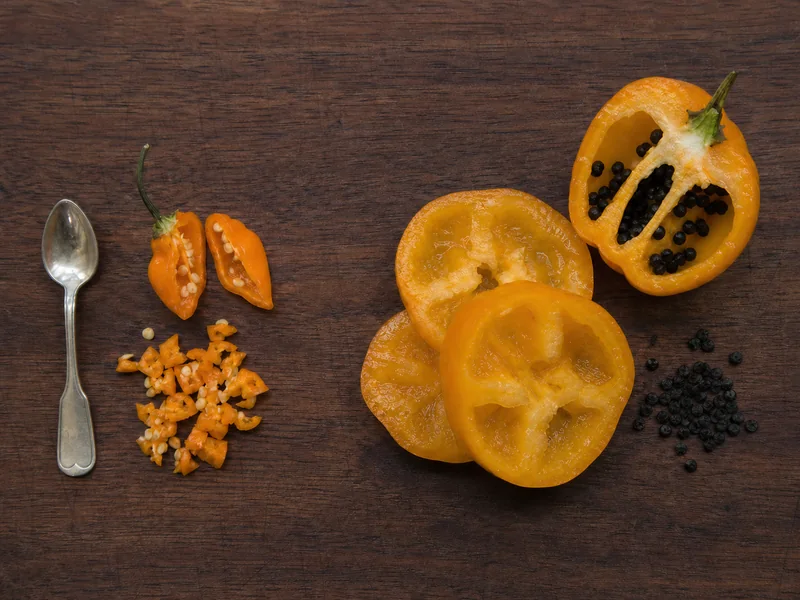
Manzano has dark brown to black seeds, thick juicy walls, and a round apple-like shape.
Capsicum pubescens plants are also known for hairy leaves and purple flowers. Bosland and Votava's Capsicum reference describes the species as adapted to cooler highland conditions than tropical Capsicum chinense types.
Habanero usually has pale seeds, thinner walls, and a small wrinkled lantern shape.
Ripe fruit color is not enough for identification because both peppers can appear orange. Shape, wall thickness, seed color, and the species information supplied by a reliable grower provide a stronger check.
A cut manzano with black seeds is therefore more diagnostic than a market sign using the Spanish name for apple.
Species also affects availability and garden behavior. Habanero favors long warm conditions, while manzano is associated with cooler highland cultivation and may remain productive under temperatures that slow many tropical peppers.
That difference does not make manzano frost-proof, but it explains why seeds, seedlings, and fresh pods are often found through specialty growers rather than beside habaneros in a typical supermarket.
How Do Manzano and Habanero Differ in Flavor and Texture?
Habanero brings tropical, citrus-like, floral aroma with intense heat. That combination supports mango, pineapple, sour orange, vinegar, and warm spices without requiring much pepper flesh.
Manzano tastes fruity too, but its flavor is juicier, greener, and closer to apple or berry than tropical perfume.
Texture changes the cooking decision as much as aroma. Habanero blends into a sauce quickly, while thick manzano pieces remain substantial enough to grill, roast, stuff, or bite in a chunky salsa.
Diana Kennedy's writing on Mexican cooking treats regional fresh chiles as ingredients with their own texture and aroma, not interchangeable heat units.
Roasting manzano softens its wall and deepens sweetness while preserving more body than a roasted habanero. Habanero aroma is clearest in raw or briefly cooked preparations, although the capsaicin remains powerful in longer-cooked sauces.
If a recipe needs a smooth tropical sauce, habanero fits the flavor architecture, while manzano is stronger when the pepper itself should remain visible and juicy.
Acid highlights both peppers but supports different outcomes. Sour orange, lime, or vinegar sharpens habanero's tropical aroma, while lime and tomato brighten manzano without removing the juicy apple-like impression of the flesh.
Smoke should be added only when the dish calls for it because neither pepper is inherently a smoked ingredient, and heavy smoke can bury the floral distinction that makes habanero useful.
Culinary Uses
Use habanero for concentrated aromatic heat. It suits Yucatecan salsa, Caribbean-style hot sauce, jerk-inspired marinades, mango glazes, fruit salsas, vinegar sauces, and hot honey where a small dose seasons the whole batch.
Rick Bayless's Yucatecan cooking pairs habanero with sour citrus and onion because the pepper's floral aroma remains recognizable beside sharp acid.
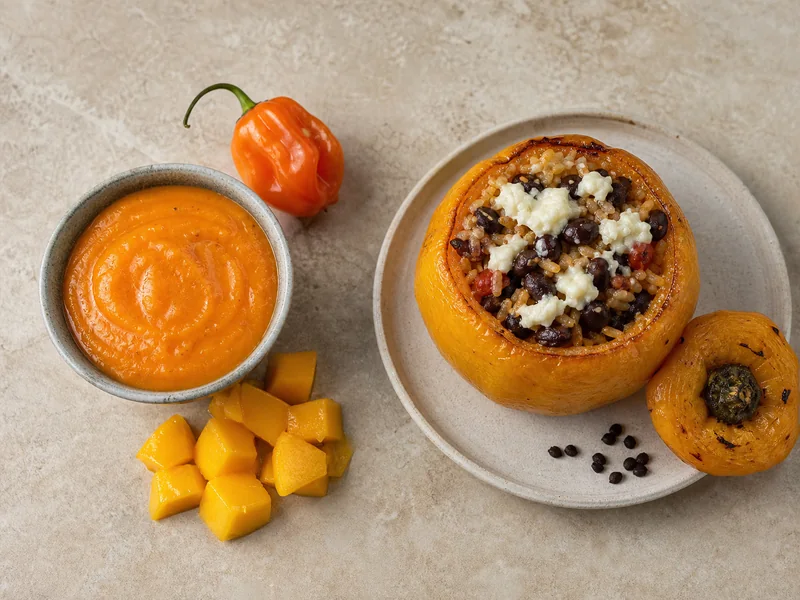
Use manzano for visible, thick-walled chile pieces. It works in fresh table salsa, roasted salsa, grilled halves, filled peppers, and highland Mexican dishes where black seeds and juicy flesh distinguish it from common thin-walled chiles.
Cut manzano into an even dice for salsa so each serving receives both fruit and heat.
For a stuffed preparation, remove the seed cluster, keep the wall intact, and pre-cook only enough to soften it before filling. A habanero is too small and too hot to replace that structural role.
For a thin vinegar sauce, habanero is easier to blend and strain because little flesh is required.
Both peppers work with fruit, but the proportions differ. Habanero should support the fruit from a small dose, while manzano can supply part of the sauce body without making the batch as extreme.
Do not assume cooking eliminates capsaicin because normal kitchen heat softens texture and changes aroma without making a hot pepper mild.
Ventilate the kitchen when chopping or heating a large amount of habanero because airborne droplets and steam can irritate eyes and airways. Keep the blender lid secure and allow hot mixtures to cool enough for safe processing.
Manzano requires the same capsaicin precautions even though it is milder, especially when several large fruits are cut for salsa or stuffing and expose more total inner tissue.
How Do You Swap Habanero and Manzano?
Match the role before the heat number. A habanero may be seasoning a whole sauce, while manzano may be providing both heat and a cup of juicy pepper flesh.
When habanero replaces manzano, begin with one-eighth of the manzano weight for heat planning and restore missing volume with a compatible mild pepper or other recipe ingredient.
| Original job | Replacement start | Expected change |
|---|---|---|
| Manzano in chunky salsa | Small amount of habanero plus mild pepper body | More tropical aroma, less juicy texture |
| Habanero in blended sauce | Manzano for fruit and volume | Much lower heat at equal weight |
| Stuffed manzano | Wait for manzano or another sturdy pepper | Habanero cannot provide the cavity |
| Habanero fruit sauce | Manzano plus a compatible hotter chile if needed | Thicker sauce, less floral aroma |
That one-eighth starting point is intentionally cautious because the published ranges allow a much wider gap than midpoint math.
When manzano replaces habanero, use it for flavor and body rather than trying to reach the same heat with a large quantity. Add a hotter compatible chile separately only if the recipe and diners require it.
For raw salsa, keep manzano pieces visible and taste after salt and acid are mixed in. For a smooth sauce, blend completely before judging the heat because one intact piece can misrepresent the full batch.
A scale is more reliable than pod count because one round manzano contains far more flesh than one small habanero.
Never serve an unmarked habanero sauce as though it were a moderate manzano salsa, especially when guests have different heat tolerances.
Separate the batch before increasing heat when only some diners want habanero intensity. Season the shared portion with manzano or another suitable base, then add measured habanero to the hotter portion so the adjustment stays reversible.
For meal planning, record pepper weight and finished sauce volume after a successful batch because those measurements are more useful next time than writing down one pod of an unknown size.
Buying Prep And Storage
Choose habaneros that feel firm, look glossy, and have no leaking spots or collapsed areas. Orange, red, yellow, and other cultivar colors can be valid, so buy from a source that names the variety.
Choose manzanos that feel heavy for their size and show a broad round shape with intact thick walls.
If identification matters, inspect a cut fruit for black seeds or ask the seller before buying. Black manzano seeds are normal and should not be mistaken for spoilage.
Refrigerate both peppers dry and unwashed until use, then wash and dry them immediately before cutting.
Use gloves for a large batch, keep hands away from the face, and wash knives, boards, and blender lids with dish detergent. Capsaicin residue can remain on equipment after a quick water rinse.
Freeze habanero for blended sauces when fresh supply is abundant. Freeze manzano mainly for cooked sauces because thawing softens the thick wall that makes it valuable for raw salsa or stuffing.
Label frozen bags and homemade sauces with the pepper and date, since two orange preparations can look similar while carrying dramatically different heat.
Which Should You Choose, Habanero or Manzano?
Pick habanero for small-dose tropical heat and manzano for juicy, visible pepper texture. The heat ranges, species, seed color, and wall thickness all point to different kitchen jobs.
Habanero is the better choice for hot sauce, marinades, fruit glazes, and smooth salsas where one pepper should season the whole batch.
Manzano is the better choice for chunky salsa, roasting, grilling, and stuffing where the cook wants a substantial bite with moderate-to-hot intensity. Its black seeds and thick wall also make substitution by pod count especially unreliable.
When one is unavailable, rebuild the missing heat and missing pepper volume separately instead of pretending the other is a direct one-for-one replacement.
Habanero vs Manzano Pepper FAQ
- Capsicum - USDA GRIN Taxonomy
- Bosland and Votava - Peppers: Vegetable and Spice Capsicums
- Capsicum - USDA GRIN Taxonomy
- Rick Bayless - Yucatecan Habanero Cooking